Event 1
Good Friday Agreement
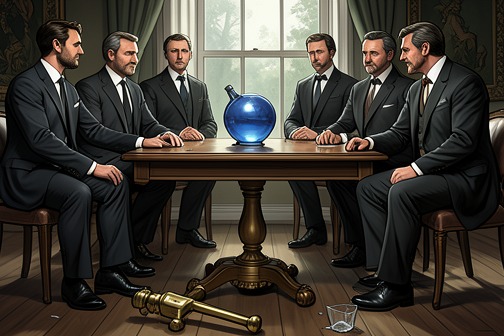
The [Good Friday Agreement](entity:event-recall-event-good-friday-agreement-f0a8e2fc0bef) was the 1998 settlement that established a framework for [Northern Ireland](entity:location-recall-location-northern-ireland-c23b7da68651)’s political future after three decades of conflict. It kept Northern Ireland within the [United Kingdom](entity:location-recall-location-united-kingdom-b48cd04982cf) unless a majority there chose otherwise, created a devolved assembly, and opened a path for Sinn Féin to participate in that assembly. Its achievement was to make consent, rather than armed force, the stated basis for constitutional change. Its limits were equally consequential: the agreement left no general mechanism for investigating or accounting for the violence of the past, so peace and unresolved questions of responsibility would coexist.
## From Ceasefire to Negotiations
The agreement emerged from a fragile sequence of ceasefires and renewed political engagement. An [IRA ceasefire](entity:state-recall-state-ira-ceasefire-30e7cb5cd2cc) had ended in 1996, when the organization detonated a bomb in [London](entity:location-recall-location-1bfd335cdd1b)’s Docklands, injuring more than one hundred people. The IRA blamed the [British government](entity:organization-recall-organization-66a95d21d932)’s refusal to negotiate with Sinn Féin until the IRA had decommissioned its weapons. A second ceasefire began in 1997 and held, creating conditions for negotiations. Press speculation that [Gerry Adams](entity:character-recall-character-gerry-adams-6d84cf7a2514) might not have known about the Docklands bombing reflected wider uncertainty about whether his commitment to the peace process had distanced him from the IRA’s armed wing.
In April 1998, negotiators spent a week at [Hillsborough Castle](entity:location-recall-location-hillsborough-castle-290062645f27), a Georgian mansion outside [Belfast](entity:location-recall-location-belfast-8a60016bc9a1), working through the terms of a settlement. The talks involved difficult questions about the structure of a new Northern Ireland assembly, the decommissioning of paramilitary weapons, the status of prisoners, and relations among Northern Ireland, the governments of [Ireland](entity:location-recall-location-ireland-3247a2c8bcbe) and Britain. Tony Blair, the new British prime minister, attended in person; [George Mitchell](entity:character-recall-character-george-mitchell-adeec0127603), a former Maine senator, served as chief negotiator. Mitchell’s patience and persistence helped sustain negotiations amid bluffing and quarrels over institutional details.
Outside the castle, sleet fell as Protestant and Catholic schoolchildren gathered at the gates, sang songs, and asked for peace. Adams came out with a tray of drinks for them. The scene placed the negotiations’ bureaucratic disputes beside a public appeal for an end to violence: the settlement had to arrange institutions, but its stakes reached beyond the rooms where those arrangements were debated.
## Terms and Political Change
On Good Friday, the parties emerged with a pact acceptable to all sides. Northern Ireland would remain part of the United Kingdom, with its own devolved assembly and close links to the [Republic of Ireland](entity:location-recall-location-republic-of-ireland-37b598657754). The agreement acknowledged the different majority preferences on either side of the constitutional question: a majority of people on the island wanted a united Ireland, while a majority in Northern Ireland’s six counties favoured remaining in the United Kingdom. It provided that, if a majority in Northern Ireland later wanted unity with Ireland, the governments of the United Kingdom and Ireland would have a binding obligation to honour that choice. Until such a decision, Northern Ireland would remain part of the United Kingdom.
The consent principle did not resolve the constitutional disagreement; it established a procedure through which that disagreement could be pursued without deciding the outcome in advance. The agreement’s settlement therefore depended on holding two positions together: Northern Ireland’s existing status would continue, and a change would be possible if its people chose one. For republicans, that was not the immediate achievement of a united Ireland. It was a change in the accepted means of pursuing political aims.
Sinn Féin agreed to set aside abstentionism and allow its representatives to serve in the newly created assembly. This marked a departure from a longstanding republican suspicion of parliamentary politics, rooted in the belief that participation could dilute revolutionary commitments. The change also belonged to a longer political shift: [Bobby Sands](entity:character-recall-character-bobby-sands-cb073d403dee)’s election campaign from prison had shown the mobilizing force of electoral politics, while later Sinn Féin campaigns made electoral work part of the movement’s strategy. Adams had helped cultivate that transition, even as he continued to insist that the ultimate aspiration of [Irish unity](entity:concept-recall-concept-irish-unity-b50744f64331) remained.
## Peace Without a Shared Account of the Past
The agreement concentrated on governing arrangements and the future; it did not establish a general truth-and-reconciliation process for the preceding conflict. Its provisions included the release of paramilitary prisoners held at the time of the agreement. Under the framework described in the book, future sentences for Troubles-related crimes would be capped at two years. But the agreement offered no general exchange of testimony for amnesty and no comprehensive structure for determining what had happened in the many violent episodes that remained contested.
This omission distinguished the Northern Ireland settlement from the post-apartheid process in South Africa, where people could give testimony in exchange for legal immunity, although that process itself was criticized as incomplete and political. Northern Ireland’s conflict ended in a stalemate rather than with an obvious victor, and the agreement envisioned power-sharing. There was no agreed institutional route for deciding how the society should remember the conflict, or even how it should understand it. Some structural discrimination challenged by the civil rights movement had largely gone, and the [RUC](entity:organization-recall-organization-845946bf4b89) was rebranded as the [Police Service of Northern Ireland](entity:organization-recall-organization-police-service-o-88a3814d22b2), but institutional change did not by itself settle the questions of responsibility and memory.
A limited exception concerned the recovery of the bodies of the disappeared. Legislation adopted in 1999 offered limited amnesty to people who voluntarily came forward with information about those cases. That narrow provision did not amount to a general mechanism for accounting for Troubles-related violence. The distinction mattered: information could be encouraged for the specific purpose of finding remains, while other unresolved crimes remained open to investigation and prosecution.
## Aftermath and Continuing Disputes
The absence of a comprehensive process for dealing with the past left later investigations to proceed case by case. Police inquiries, inquests, ombudsman investigations, and government inquiries addressed old crimes through an ad hoc system that left many people dissatisfied. The PSNI’s legacy unit faced a backlog of nearly a thousand Troubles-related cases, while investigators worked amid limited resources and persistent accusations of bias. In 2012, David Cameron acknowledged what he called shocking levels of state collusion, but the agreement had not supplied a broad framework for resolving such questions or determining accountability.
The political settlement also did not mean that every part of the republican movement had simply vanished. In 2015, a report by Northern Ireland’s secretary of state, based on PSNI and British intelligence material, said that the main paramilitary groups of the Troubles remained in existence. It described the Provisional IRA as continuing in much reduced form, retaining access to weapons but with a wholly political focus. Northern Ireland was peaceful apart from occasional dissident attacks, yet its neighbourhoods remained divided by peace walls, which were more numerous than at the height of the conflict.
Adams described the agreement as the end of one phase and the beginning of another, presenting peace as a transformation of struggle rather than the abandonment of republican aims. That formulation captures both the settlement’s accomplishment and its tension. The agreement created a durable political framework in which constitutional change depended on consent, and it helped move political competition into devolved institutions. It did not produce a shared verdict on the past, nor did it erase the divisions that had shaped the conflict. Its legacy is therefore a peace built through political compromise, accompanied by continuing arguments over how the violence should be remembered and who should answer for it.
Event 2
1916 Easter Rising
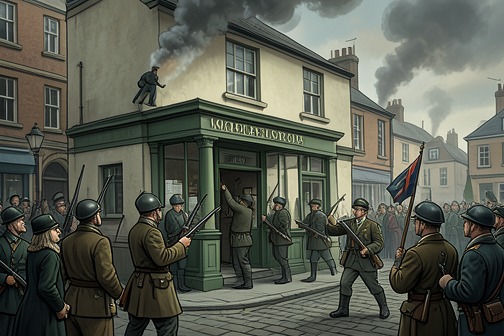
The [1916 Easter Rising](entity:event-recall-event-1916-easter-rising-0af06c0312af) was a short-lived rebellion against British rule that became a lasting source of Irish republican memory. In the Price household, its story connected the declaration of an independent republic to the martyrdom of [Patrick Pearse](entity:character-recall-character-patrick-pearse-7999e635aa59), and made remembrance itself part of political life: a legacy carried in ritual, contested history, and the silences surrounding later conflict.
## Background and Course
The Rising occupied a particularly prominent place in the history told at the Price family home on Slievegallion Drive. A group of Irish revolutionaries seized the post office in [Dublin](entity:location-recall-location-dublin-d76fcbad2c3f) and declared the establishment of a free and independent Irish Republic. The rebellion’s moment of triumph was brief. British authorities crushed it, and Pearse was court-martialled and executed by firing squad alongside fourteen of his comrades.
The book places the Rising within a longer history of British rule in [Ireland](entity:location-recall-location-ireland-3247a2c8bcbe), while distinguishing the rebellion from the later events that reshaped the island. After the [Irish War of Independence](entity:event-recall-event-baf332738c97), Ireland was partitioned in 1921: twenty-six counties in the South achieved a measure of independence as the Irish Free State, while six counties in the North remained under British rule. The Price family’s preference for calling the latter place the North of Ireland rather than [Northern Ireland](entity:location-recall-location-northern-ireland-c23b7da68651) shows how political meaning could attach even to a place name.
## Pearse and the Ideal of Sacrifice
As a child, [Dolours Price](entity:character-recall-character-dolours-price-f885017ba474) heard stories of the Rising’s dashing heroes and of Pearse, a poet and one of the rebellion’s leaders. The book presents him as an inveterate romantic, drawn to the idea that giving one’s life for a cause could be redemptive. He imagined bloodshed as a cleansing force and praised the Christlike deaths of earlier Irish martyrs. His writing before the Rising joined the battlefield to a vision of national renewal, making sacrifice not merely a consequence of rebellion but part of its imagined purpose.
The defeat and executions gave that ideal a powerful, dangerous afterlife. The Rising’s memory offered the Price family a story of national resistance, but the book also stresses the cost attached to devotion to the cause. Its history does not treat martyrdom as an abstract emblem: it shows how a language of sacrifice could shape the expectations inherited by later generations.
## Ritual and Inherited Memory
For Dolours, commemoration began as a childhood act. On Easter Sunday she wore her best white frock, carried a basket of eggs, and pinned an [Easter Lily](entity:expression-recall-expression-easter-lily-d5f0eb200ddd) to her chest in remembrance of the failed rebellion. The ritual felt to her like joining a secret league of outlaws. Yet it took place under the threat of regulation: commemoration was controlled under the [Flags and Emblems Act](entity:rule-recall-rule-flags-and-emblems-act-370d1aee3f01), and displaying the Republic’s tricolour in the North could lead to imprisonment. When Dolours saw a policeman approaching, she learned to cover the lily with her hand.
That small gesture brings the Rising’s memory into the present tense. A child’s emblem of remembrance was also something that had to be concealed from authority. The ritual joined family inheritance to public risk, showing how the rebellion’s defeat did not end the struggle over who could commemorate Irish nationalism, or how.
## The Rising in the Book’s Memory of Conflict
The book’s epigraph frames war as something fought again in memory after the battlefield has fallen silent. The Rising supplies an early and formative example of that second struggle: its defeat became a story of heroes and sacrifice, retold within a family and passed on through ritual. Its place in the narrative helps explain why the past in the Price household could feel immediate rather than settled.
That unsettled quality persists in the book’s account of later conflict. It describes the absence of a formal process for deciding how to commemorate or understand the Troubles, and the continuing influence of political silences and competing accounts. The Rising is not presented as a simple cause of those later disputes; rather, its place in the Price family’s inherited history illuminates how republican memory could be cherished, regulated, and contested across generations.
Event 3
1689 Siege of Derry
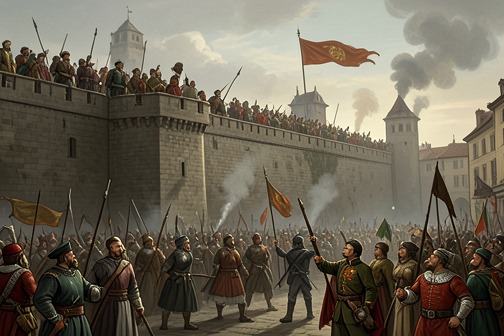
The [1689 Siege of Derry](entity:event-recall-event-1689-0da91a4bee93) was a defining episode in the city’s contested memory: Protestant forces loyal to William of Orange held [Derry](entity:location-recall-location-derry-d46e7068265a) against a Catholic army loyal to James II. In the book, the siege matters not only as a past military confrontation but as a story repeatedly brought into the present, where its meaning could shape how later political events were understood.
## The Siege and Derry’s Contested Identity
Although Derry’s population was predominantly Catholic, loyalists imagined the city as a continuing monument to Protestant resistance. The siege supplied a historical reference for that view: a Protestant defence of the city against a Catholic army. The account gives no further military detail, concentrating instead on the way the episode endured in communal memory.
## Annual Commemoration
Local Protestant organisations commemorated the siege each year with marches. This recurrence kept the historical confrontation publicly visible and gave it a place in the city’s political calendar. Rather than remaining a remote episode, the siege became a remembered struggle through which later generations could interpret their own sense of threat and belonging.
## Recasting the Past in a Later Conflict
When student civil-rights protesters planned to march into Derry, [Ian Paisley](entity:character-recall-character-ian-paisley-730e426351e6) and [Ronald Bunting](entity:character-recall-character-ronald-bunting-f77654eeb55b) presented the proposed march as a reenactment of the siege. That framing cast contemporary demonstrators as a renewed threat to Protestant Derry, connecting a civil-rights protest to the older communal conflict. The siege’s significance in the narrative therefore lies in how commemoration could turn history into a political instrument: the past was not simply recalled, but used to define the meaning of a march that had not yet taken place.
Event 4
Irish War of Independence
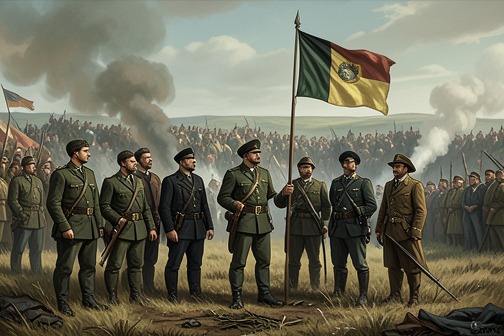
The [Irish War of Independence](entity:event-recall-event-baf332738c97) is significant in the book chiefly for what followed it: the 1921 partition of [Ireland](entity:location-recall-location-ireland-3247a2c8bcbe), which divided the island between a southern Irish Free State and a northern six counties that remained under British rule. The war also appears through family memory and scattered references to its violence, linking the Price family’s republican inheritance to a longer history of struggle and loss.
## Background and Political Outcome
The account places the war after the [1916 Easter Rising](entity:event-recall-event-1916-easter-rising-0af06c0312af), when Irish revolutionaries seized the post office in [Dublin](entity:location-recall-location-dublin-d76fcbad2c3f) and declared an independent republic. British authorities crushed the rebellion, and [Patrick Pearse](entity:character-recall-character-patrick-pearse-7999e635aa59) and fourteen of his comrades were executed. The book distinguishes that rising from the later Irish War of Independence: it is after the war that the narrative locates the 1921 partition. Twenty-six counties in the South achieved a measure of independence as the Irish Free State, while six counties in the North continued under British rule.
Partition did not settle the meaning of national belonging. The Price family, like other staunch republicans, refused to call the place where they lived [Northern Ireland](entity:location-recall-location-northern-ireland-c23b7da68651), preferring the North of Ireland. In the book’s account, even the name of a place could signal a political position. The war’s consequence therefore reaches beyond a change in territorial government: it shapes the language through which the family understands the division of the island.
## Violence and Family Memory
The conflict’s violence enters the narrative through a story [Brendan Hughes](entity:character-recall-character-brendan-hughes-1230acbdf136) told about his great-grandfather. During the War of Independence, his great-grandfather tried to throw a grenade at an armoured car; it exploded in his hand and blew his arm off. The anecdote is brief, but its blunt sequence—an attempted attack, a weapon’s premature detonation, and permanent injury—makes the danger of armed struggle part of inherited family history.
The book also notes, in its account of the disappeared, that people were disappeared during the War of Independence. It supplies no cases or further particulars in this reference, so the point remains a historical echo rather than a developed account. Set beside the grenade story, it places injury and disappearance among the recurring costs attached to Ireland’s republican conflicts.
## A Legacy of Defeat and Continuity
The war belongs to a history that later republicans recalled as one of noble failure. At the Felons Club, founded in part by [Gerry Adams](entity:character-recall-character-gerry-adams-6d84cf7a2514)’s father, veterans of earlier conflicts—including [Albert Price](entity:character-recall-character-albert-price-3e55cd4fc455)—met to drink, tell war stories, and consider what might have been. Their recollections made the past present in ordinary social life, passing the experience of struggle to a younger generation.
That inheritance carries both political conviction and a warning about its human cost. Elsewhere in the book, the Price family’s republican history is bound to commemoration, armed commitment, and personal suffering. The Irish War of Independence is not recounted here through a detailed military chronology; instead, its importance is registered in the divided political order it left behind and in the stories through which later generations understood resistance, defeat, and sacrifice.
Event 5
Partition of Ireland
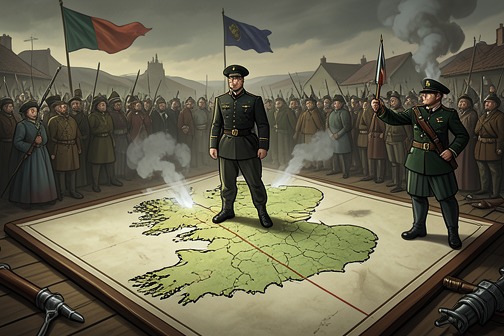
The [Partition of Ireland](entity:event-recall-event-f638a7305e88), following the [Irish War of Independence](entity:event-recall-event-baf332738c97), divided the island in 1921 into a twenty-six-county Irish Free State in the South and a six-county North that continued under British rule. The division established the political geography within which the Price family’s republican identity took shape, and it remains a necessary backdrop to the book’s later accounts of conflict, disappearance, and disputed memory.
## The division and its political language
The partition was not merely a line between territories: even the name used for the North carried political meaning. The staunchly republican Price family did not call the place where they lived [Northern Ireland](entity:location-recall-location-northern-ireland-c23b7da68651), preferring the North of [Ireland](entity:location-recall-location-ireland-3247a2c8bcbe). In the book’s account, this difference in naming makes visible how the division reached into ordinary speech; political allegiance could be expressed through the words used for a place.
## A contested chronology in the North
Decades later, the disappearance of [Jean McConville](entity:character-recall-character-jean-mcconville-defffff134a9) became a point at which competing accounts of the conflict’s past met. Her children maintained that she was abducted in early December 1972, believing the date to be 7 December. They recalled an earlier episode in which she was taken from a bingo hall, questioned and beaten, then found wandering by the army and brought home. The distinction between that first encounter and her later removal mattered because [Brendan Hughes](entity:character-recall-character-brendan-hughes-1230acbdf136)’s account, endorsed by [Dolours Price](entity:character-recall-character-dolours-price-f885017ba474) and maintained in statements by the IRA, described McConville as a repeat informant who was warned before she was abducted.
Nuala O’Loan’s review found a police log describing a beaten woman found wandering in [West Belfast](entity:location-recall-location-west-belfast-27ebba5f4bec) at 11 p.m. The log called her Mary McConville, but gave an address in [Divis Flats](entity:location-recall-location-divis-flats-f36db46c6064) associated with Jean, and recorded that men had warned her to stop giving information to the military. Crucially, the entry placed this encounter on 29 November, seven nights earlier than the date the children associated with the beating. If the log was reliable and the children’s abduction date accurate, more than one night may have separated the warning from the abduction, a chronology closer to Hughes’s account. The records thus complicate the family’s recollection without, by themselves, resolving the disputed allegation that McConville had informed.
## Testimony, evidence, and limits
The book also shows how later testimony entered the record by different routes. Dolours Price’s roughly fifteen hours of conversations with [Anthony McIntyre](entity:character-recall-character-anthony-mcintyre-a9506a6098eb) for the [Belfast](entity:location-recall-location-belfast-8a60016bc9a1) Project did not mention McConville; separate interviews conducted by [Ed Moloney](entity:character-recall-character-ed-moloney-9d7f20a1f93b) did address her disappearance in detail. In one of those conversations, Price said that she and others were called back to [Dundalk](entity:location-recall-location-dundalk-adc76dac93ed) after McConville had been held there for about four or five days. A local unit had dug a grave, she said, but its members did not want to shoot McConville, which Price attributed to her being a woman. These are Price’s reported recollections, not an independent resolution of what happened.
The later prosecution of [Ivor Bell](entity:character-recall-character-ivor-bell-e3c8d255e4f4) likewise exposed the limits of what a recording could establish. A voice analyst considered the speaker identified as Z likely to be Bell. A detective interpreted the recording as acknowledging a critical role in aiding and procuring McConville’s murder, while Bell’s lawyer argued that Z explicitly denied involvement. Hughes and Price both asserted that [Gerry Adams](entity:character-recall-character-gerry-adams-6d84cf7a2514) had ordered the murder, but prosecutors concluded that the evidence against Adams consisted of uncorroborated allegations. The Partition of Ireland does not settle these later disputes; it supplies the divided political landscape in which the conflict and its contested histories unfolded.
Event 6
Belfast Blitz
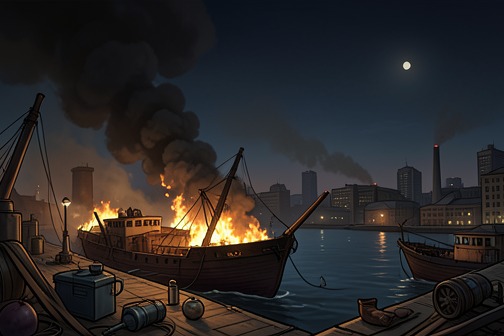
The [Belfast Blitz](entity:event-recall-event-7878a021af91) was a German air raid on [Belfast](entity:location-recall-location-belfast-8a60016bc9a1) in 1941 that brought the city’s wartime destruction into [Jean McConville](entity:character-recall-character-jean-mcconville-defffff134a9)’s childhood. On a night shortly before her seventh birthday, bombers crossed the waterfront and scattered parachute mines and incendiary bombs; [Harland & Wolff shipyard](entity:location-recall-location-harland-wolff-shipya-29521811f2c9) erupted into flame. The raid later served as a measure of devastation against which another generation’s violence would be judged.
## Wartime Belfast
During the [Second World War](entity:time-recall-time-c7bd852e004a), Belfast’s linen factories produced uniforms and its shipyards turned out naval vessels. Harland & Wolff, where Jean’s father worked, stood by the waterfront in a city shaped by industry and workers’ daily journeys between home and factory. The air raid struck this wartime landscape when Jean was still a young child.
## The Raid
In 1941, not long before Jean’s seventh birthday, air-raid sirens sounded as Luftwaffe bombers swept across the waterfront. They scattered parachute mines and incendiary bombs, and Harland & Wolff erupted into flame. The account establishes the shipyard’s burning as a defining image of the raid, without detailing the wider damage or casualties.
## A Measure of Destruction
The memory of the 1941 attack remained a point of comparison in Belfast. After a later wave of bombings in the city, the Belfast Telegraph invoked the German blitz of 1941 as the last time Belfast had experienced a day of comparable death and destruction. The comparison links Jean’s childhood wartime setting to the violence that would later surround the lives of her family, while marking how the city’s history of bombardment continued to shape the language used to describe new calamities.
Event 7
Mau Mau Uprising
The [Mau Mau Uprising](entity:event-recall-event-9f0e59475348) was the colonial rebellion in [Kenya](entity:location-recall-location-kenya-2ac496583e97) that introduced [Frank Kitson](entity:character-recall-character-frank-kitson-037047748b80) to counter-gang warfare, a method built on turning insurgents into sources of intelligence. The campaign was eventually suppressed, but its human toll was immense, and it did not prevent Britain’s withdrawal from Kenya in 1963. The contrast between that cost and the operation’s celebration as a military success frames the episode as both a formative lesson in counterinsurgency and a measure of the distance between tactical victory and lasting political control.
## Kitson’s assignment and purpose
In 1953, Kitson was assigned to Kenya, then a British colony, to help put down the uprising. Before departing, he worried that the colonial emergency might end before he arrived and that he would return without having seen action. Instead, he quickly embraced the work. He wrote down his objective—to provide the security forces with the information they needed to destroy the [Mau Mau](entity:organization-recall-organization-mau-mau-80060e0408f8)—and kept the note inside the Bible by his bed. That private statement makes intelligence, rather than combat alone, the centre of his account of the campaign.
Kitson’s interest in the conflict was practical and methodical. In Kenya’s forest, he went on night missions in black camouflage and an old bush hat, trying to pass at a distance, in poor light, for a local man. The experience of entering an unfamiliar environment formed part of his immersion in the campaign, but the decisive lesson came from the intelligence methods used against the rebels.
## The counter-gang and the pursuit of intelligence
Kitson encountered Mau Mau informers whose identities were concealed by white robes. They could observe prisoners and tell their British handlers who was who. He recognised this arrangement as a counter-gang: insurgents recruited to work against their former comrades, supplying information that security forces could not readily obtain by other means. The episode shifted his understanding of how an insurgency might be fought. Reliable intelligence depended on persuading people within the movement to change sides, and that persuasion in turn depended on trust.
Kitson sought to cultivate that trust through a calculated display of vulnerability. When courting a potential agent, he would take the man on patrol into the bush and hand him his pistol, keeping only a machete for himself. The gesture put Kitson at risk, but he believed it showed the recruit that he was being treated as part of the team. The tactic joined personal confidence to operational purpose: an informant’s cooperation was not simply extracted but built through a relationship in which the recruit was entrusted with a weapon and with Kitson’s safety.
## Suppression and human cost
The British eventually suppressed the rebellion, but the scale of violence and detention was staggering. The number of Kenyans killed is unknown; the account says it may have reached hundreds of thousands. About 1.5 million people were detained, many in internment camps. Interrogations of Mau Mau suspects included electric shocks, cigarette burns and sexual torture. These details place the counter-gang method within a much broader campaign of coercion and suffering, rather than allowing intelligence work to stand as an isolated or bloodless innovation.
The military outcome did not secure continued British rule. The campaign failed to forestall Britain’s withdrawal from Kenya in 1963. Yet back in [London](entity:location-recall-location-1bfd335cdd1b) the operation was celebrated as a great success. Kitson received the Military Cross for his service in Kenya in 1955, while later reflecting that he might have thought more like a terrorist than some of his commanders and wondering whether he had become callous, ruthless and treacherous. His doubts complicate the official language of success: the campaign rewarded him even as he questioned what its methods had made of him.
## A formative lesson, not a settled victory
For Kitson, Kenya established counterinsurgency as his vocation. After the campaign, he went on to Malaya, Oman and Cyprus, where he was sent to confront other insurgencies and conflicts. The Mau Mau Uprising therefore matters in his story not only as a British campaign in one colony, but as the setting in which he recognised the counter-gang as a weapon and began to develop his ideas about intelligence, recruitment and trust.
The episode’s ending remains divided between suppression and withdrawal, professional recognition and moral unease. Britain defeated the rebellion militarily but left Kenya a decade after Kitson’s assignment began. The campaign’s place in his career was clear; its human consequences and political limits resist the uncomplicated verdict of success that greeted it in London.
Event 8
IRA Border Campaign
The [IRA Border Campaign](entity:event-recall-event-4f26d726d696), conducted during the 1950s and early 1960s, is remembered as a failed effort that won little support and left the [Irish Republican Army](entity:organization-recall-organization-irish-republican-4bff46a4b2bf) ill-equipped for the crisis that followed. Its significance in the account lies less in a description of its operations—the campaign itself is only briefly recalled—than in the contrast between an ineffective older organisation and the later demands for protection, armed resistance, and political change in [Northern Ireland](entity:location-recall-location-northern-ireland-c23b7da68651).
## Political setting
The campaign belonged to a period when Catholics in Northern Ireland faced discrimination in employment, housing, and political power. The region’s political system was based at [Stormont](entity:location-recall-location-stormont-729677d071cf), yet no Catholic had held executive office during its first half-century. Catholics formed a majority on the island of [Ireland](entity:location-recall-location-ireland-3247a2c8bcbe) but a minority in Northern Ireland; Protestants, a majority in the region, were a minority across the island. The resulting sense of vulnerability on both sides sharpened communal boundaries, while Catholic emigration kept the Catholic population nearly static despite a substantially higher birth rate.
The boundary between communities was also part of everyday geography. In [Belfast](entity:location-recall-location-belfast-8a60016bc9a1), the [Falls Road](entity:location-recall-location-falls-road-59744141d01e) and the [Shankill Road](entity:location-recall-location-shankill-road-b0fe1425e60b) ran roughly parallel, separated by narrow cross streets where Catholic and Protestant territory met. During the 1969 riots, barricades formalised these divisions; later, peace walls would make them more permanent. This setting matters to the campaign’s legacy because republican claims to defend the Catholic minority would be tested not only as a political idea but against the safety of people in their homes.
## Failure and the protection crisis
The border campaign of the 1950s and early 1960s drew little support from the community and failed to establish the Irish Republican Army as an effective force. By the late 1960s the organisation had dwindled, and during the 1969 riots there were only about one hundred IRA members in Belfast. Many, including [Albert Price](entity:character-recall-character-albert-price-3e55cd4fc455), were veterans of earlier campaigns and were getting older. The organisation was also conspicuously short of weapons: in 1968 it had sold some of its remaining arms to the Free Wales Army, while its reputation for making crude explosives was undermined by bombers who sometimes blew themselves up.
That weakness acquired an immediate human and political meaning when loyalist violence drove Catholic families from their homes. The IRA had traditionally been looked to for protection during sectarian strife, but in 1969 it could do little to prevent the burnings. In the aftermath, people mocked the initials as meaning that the organisation had run away. The failed campaign did not alone account for this collapse, but it was part of the history of an organisation that entered the crisis with little community support and inadequate means to respond.
## From protest to armed organisation
The failure of protection unfolded alongside a civil-rights movement seeking an alternative route to change. On 1 January 1969, student protesters set out from [Donegall Square](entity:location-recall-location-donegall-square-84b8dc3fa653) in Belfast to march roughly seventy miles to [Derry](entity:location-recall-location-derry-d46e7068265a), protesting discrimination against Catholics. Some marchers believed that peaceful protest could expose injustice and bring change; they also imagined that political divisions might give way to a generational struggle between young people and entrenched authority. Yet, as the march proceeded through unionist villages, local men blocked the route and police redirected the protesters. By its final day, hundreds had joined, and the marchers accepted that they might be hurt.
The border campaign’s failure forms part of the background to the IRA’s subsequent internal rupture, but the account also identifies more immediate pressures: the organisation’s inability to defend Catholic neighbourhoods, disputes over its leadership and political direction, and the growth of a faction demanding a more aggressive response. In September 1969, [Billy McKee](entity:character-recall-character-billy-mckee-1dbb36715f57) and armed supporters challenged the leadership in Belfast. By early 1970 a breakaway organisation, the Provisional IRA, had formed, explicitly committed to armed resistance, while the older organisation became known as the Official IRA. The two wings would fight not only loyalists, the Royal Ulster Constabulary, and the British Army, but also one another.
The renewed movement altered the possibilities available to women as well as men. In 1971, [Dolours Price](entity:character-recall-character-dolours-price-f885017ba474) joined the Provisional IRA, taking an oath in her family home; [Marian Price](entity:character-recall-character-marian-price-658a98519733) joined too. Dolours had rejected the suggestion that she serve only in a female auxiliary role and insisted on being a fighting soldier. A special meeting of the Provisional IRA’s Army Council then allowed women to join as full members for the first time. The campaign’s earlier failure is not presented as the direct cause of this decision, but the contrast is telling: an organisation with a weak record of support and protection had been remade into a movement recruiting new members and changing its structure amid a widening conflict.
## Political afterlife
The subsequent republican turn toward electoral politics made the movement’s history more complicated than a simple passage from failed campaign to armed struggle. During the 1981 hunger strike, [Frank Maguire](entity:character-recall-character-frank-maguire-959d5f6d0c78)’s death created a by-election opportunity, and [Bobby Sands](entity:character-recall-character-bobby-sands-cb073d403dee) ran for his seat from prison. His candidacy challenged a long republican tradition of abstentionism. Sands won, although he died before taking his seat, and the electoral success helped inspire [Gerry Adams](entity:character-recall-character-gerry-adams-6d84cf7a2514)’s later political strategy.
Dolours Price, who had abandoned violence as her own means of pursuing [Irish unity](entity:concept-recall-concept-irish-unity-b50744f64331), canvassed for Adams in 1983 and drove voters to polling stations; he won the [West Belfast](entity:location-recall-location-west-belfast-27ebba5f4bec) seat while declaring that he would not attend [Westminster](entity:location-recall-location-westminster-797ba54e0a11). The shift toward elections did not erase the earlier armed history. Nearly two decades after the [Good Friday Agreement](entity:event-recall-event-good-friday-agreement-f0a8e2fc0bef), Northern Ireland was peaceful apart from occasional dissident attacks, but more than 90 per cent of children still attended segregated primary schools, many residents continued to live in religiously bounded neighbourhoods, and peace walls remained. In that longer account, the IRA Border Campaign marks an early, unsuccessful chapter in a conflict whose methods and political setting changed repeatedly without making communal division disappear.
Event 9
People’s Democracy march from Belfast to Derry
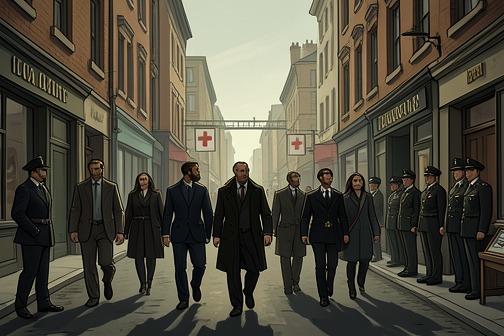
The [People’s Democracy march from Belfast to Derry](entity:event-recall-event-2a0d4d4289d8) was a four-day civil-rights protest against the systemic discrimination faced by Catholics in [Northern Ireland](entity:location-recall-location-northern-ireland-c23b7da68651). Its marchers set out to make exclusion visible through peaceful public action; their assault at [Burntollet Bridge](entity:location-recall-location-burntollet-bridge-7dc489249792) made the limits and risks of that strategy stark. For [Dolours Price](entity:character-recall-character-dolours-price-f885017ba474), who marched with her sister [Marian Price](entity:character-recall-character-marian-price-658a98519733), the experience became a decisive break with the belief that protest alone could bring change.
## Background and Purpose
On the cold, clear morning of 1 January 1969, student protesters assembled outside City Hall in [Donegall Square](entity:location-recall-location-donegall-square-84b8dc3fa653), [Belfast](entity:location-recall-location-belfast-8a60016bc9a1), intending to walk roughly seventy miles to [Derry](entity:location-recall-location-derry-d46e7068265a). They were challenging a political and social order in which Catholics were often shut out of good jobs and housing, while political power offered little prospect of redress. Although Protestants formed the majority in Northern Ireland, Catholics were a minority there; the partition of [Ireland](entity:location-recall-location-ireland-3247a2c8bcbe) had left both communities with a sense of vulnerability, but the marchers’ immediate protest was directed at the unequal treatment of Catholics in the six counties.
The marchers consciously took inspiration from the American civil-rights movement. They had studied the 1965 Selma-to-Montgomery march led by Martin Luther King and other civil-rights leaders. Bundled in duffel coats and linked arm in arm, they carried placards identifying their action as a civil-rights march and sang [“We Shall Overcome”](entity:expression-recall-expression-we-shall-overcome-bbdd8f561cc0). Among them was eighteen-year-old Dolours Price, accompanied by Marian Price. The sisters were unusually close and already part of a republican family, but the march itself was framed as a peaceful challenge to discrimination, not as an armed action.
## The Route and the Gathering Threat
As the procession moved through the countryside, it encountered Protestant villages that were unionist strongholds. Local men sometimes blocked the marchers with sticks, while police accompanying the procession directed it around the villages. Loyalist counterprotesters taunted the marchers; the beat of a Lambeg drum summoned others to join them. The journey therefore brought the protesters into repeated contact with opposition, even before the final-day assault.
The marchers did not all regard the possibility of violence as a reason to withdraw. The televised police crackdown on the Selma march had helped make visible the force being used against peaceful demonstrators, and some participants believed that a comparable overreaction might expose injustice in Northern Ireland. They hoped that political divisions could be recast as a conflict between young and old, or future and past, rather than an intractable confrontation between Catholics and Protestants, republicans and loyalists. That hope coexisted with an expectation that the march might provoke a violent response.
On the night before the final day, loyalists gathered in Derry at a meeting billed as a prayer meeting. [Ian Paisley](entity:character-recall-character-ian-paisley-730e426351e6) denounced the marchers as IRA men in disguise, while [Ronald Bunting](entity:character-recall-character-ronald-bunting-f77654eeb55b) urged those prepared to take a “manly role” to arm themselves with suitable protection. Men assembled stones in fields beside the route, using a tractor to collect large rocks and placing them at intervals. The preparations turned the countryside ahead into an ambush site.
## Burntollet Bridge
On the fourth day, ten miles outside Derry, an organizer addressed the growing procession through a megaphone and warned that stones might be thrown. When he asked whether the marchers were prepared to be hurt, they answered, “Yes!” [Eamonn McCann](entity:character-recall-character-eamonn-mccann-8c41ef953607) reminded them that they had committed themselves to nonviolence and said that the day would test that declaration. The procession continued slowly along a narrow lane bordered by hedges, toward Burntollet Bridge, where the road constricted as it crossed the River Faughan.
As the marchers approached, men wearing white armbands appeared on the rising ground above them and signalled to one another. More attackers emerged along the ridgeline and behind the hedges. With hundreds of people hemmed into the lane, the first rocks came down; stones, bricks, and milk bottles followed from several directions. Attackers also moved to block the way at the bridge. People at the front ran toward it while those behind retreated from the barrage. Dolours and Marian Price were caught in the middle of the crowd. The attack was not simply a confrontation at a bridge: the narrow lane, obstructed exits, and attackers positioned above and beside the marchers left them exposed to a coordinated assault.
## Consequences and Significance
The march did not persuade Dolours Price that peaceful protest could overcome the opposition she had encountered. After Burntollet, she concluded that marching would not bring the change Ireland needed. She later described joining the [Irish Republican Army](entity:organization-recall-organization-irish-republican-4bff46a4b2bf) as a return to the convictions of her republican family. In 1971 she was inducted at the Price family home, taking an oath to promote the organization’s objectives and obey orders; Marian Price joined as well. Their later commitment to armed activity was not merely a continuation of the march’s stated method: it marked Dolours’s abandonment of the nonviolent strategy she had initially embraced.
The assault also preceded a challenge to the gendered limits of republican organization. When [Seán Mac Stíofáin](entity:character-recall-character-se-n-mac-st-of-in-855d1ac623f6) proposed that Dolours Price join [Cumann na mBan](entity:organization-recall-organization-cumann-na-mban-b3f9855e0907), the women’s auxiliary, she insisted that she wanted to fight as a soldier rather than perform a supporting role. A special meeting of the Provisionals’ Army Council then decided that women could join as full members for the first time. The account presents Price’s insistence as an important influence on that decision, while also noting that mass arrests of men may have strengthened the organization’s practical reasons for admitting women.
The wider movement’s subsequent turn toward electoral politics belongs to a later stage, not to the march’s immediate outcome. After [Frank Maguire](entity:character-recall-character-frank-maguire-959d5f6d0c78)’s death created a by-election, republicans put imprisoned hunger striker [Bobby Sands](entity:character-recall-character-bobby-sands-cb073d403dee) forward as a candidate; his election demonstrated the political force that a campaign could gain through the ballot box. In 1983, Dolours Price canvassed for [Gerry Adams](entity:character-recall-character-gerry-adams-6d84cf7a2514) in [West Belfast](entity:location-recall-location-west-belfast-27ebba5f4bec) and drove voters to polling stations, supporting a strategy that combined electoral politics with the movement’s armed history. The march’s significance lies in the contrast between its original promise of peaceful collective protest and the divergent paths that followed: for Price, Burntollet became the point at which that promise gave way to armed struggle, while the movement later developed an electoral strategy as well.
Event 10
Formation and split of the Provisional IRA
The formation and split of the Provisional IRA transformed a weakened [Irish Republican Army](entity:organization-recall-organization-irish-republican-4bff46a4b2bf) into a breakaway movement explicitly committed to armed resistance. The rupture grew out of the violence of 1969, disputes over whether political action or the gun could deliver change, and the organization’s failure to protect Catholic communities. It was not a clean division between politics and violence: the new movement’s later inclusion of women and eventual turn toward electoral campaigning show how its methods continued to change.
## Crisis in [Belfast](entity:location-recall-location-belfast-8a60016bc9a1)
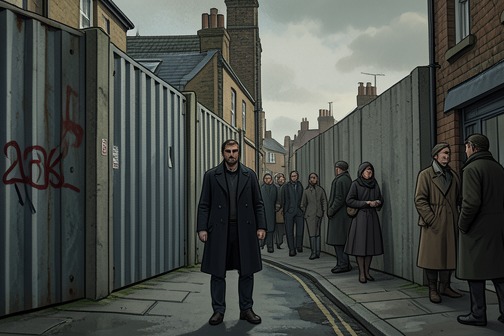
The immediate setting was a city divided by neighbourhood and street. The [Falls Road](entity:location-recall-location-falls-road-59744141d01e) was a Catholic stronghold, while the [Shankill Road](entity:location-recall-location-shankill-road-b0fe1425e60b) was Protestant; narrow cross streets linked the two, with Catholic territory giving way to Protestant territory along the way. During the 1969 riots, barricades hardened these boundaries. Later, peace walls would replace many of them, making the separation visible in steel and concrete.
The political grievance behind the unrest was longstanding discrimination against Catholics in [Northern Ireland](entity:location-recall-location-northern-ireland-c23b7da68651). On 1 January 1969, student protesters set out from Belfast to march roughly seventy miles to [Derry](entity:location-recall-location-derry-d46e7068265a), challenging that injustice through peaceful protest. Some marchers believed confrontation might expose the authorities’ response and help force change; others hoped political action could redraw the conflict’s lines, away from Catholics against Protestants and toward young people against an older order. The experience of protest and violence formed part of the setting in which armed resistance gained force, but the march itself did not determine the later split.
By the summer of 1969, the Irish Republican Army was ill-prepared to defend Catholic residents as loyalist mobs burned families out of their homes. The organization had lost support after a failed border campaign in the 1950s and early 1960s, and some of its [Dublin](entity:location-recall-location-dublin-d76fcbad2c3f) leadership had turned toward Marxist ideas and peaceful political resistance. In Belfast, only about a hundred members remained. Many were veterans, including [Albert Price](entity:character-recall-character-albert-price-3e55cd4fc455), but the organization was conspicuously short of weapons: in 1968 it had sold some of its remaining arms to the Free Wales Army. Its inability to protect the community fed a bitter judgment on the streets that its initials meant it had run away.
## The Cyprus Street rupture
In September 1969, Belfast commander Liam McMillen convened a leadership meeting in a room on Cyprus Street. McMillen was widely blamed for the failure to defend the community during the riots. Twenty-one armed men burst into the meeting, led by [Billy McKee](entity:character-recall-character-billy-mckee-1dbb36715f57), a veteran republican who had spent time in prison in every decade since joining the movement’s youth wing at fifteen. McKee challenged McMillen’s authority and accused him of being a Dublin communist. The confrontation made visible a factional conflict already taking shape: some members wanted to restore the IRA as an instrument of violent change, while others had moved toward a more political course.
By early 1970, a breakaway organization had formed as the Provisional IRA, committed explicitly to armed resistance. The older organization became the [Official Irish Republican Army](entity:organization-recall-organization-official-irish-r-bc859f24585b). In Belfast, people called the two wings the Provos and the Stickies. The nicknames referred to how members wore Easter lilies: the more politically inclined Officials supposedly used adhesive, while the Provos pinned paper lilies to their shirts. The distinction was more than a sartorial joke. It marked a bitter disagreement about whether political participation would dilute revolutionary aims, and whether armed defense remained essential. The division did not end violence: the two wings fought loyalist groups and British forces, and also turned against one another.
## Membership and methods change
The new organization’s development was not limited to the choice between armed action and politics. In 1971, [Dolours Price](entity:character-recall-character-dolours-price-f885017ba474) approached a local commander and asked to join. She was sworn in at her family home, pledging to promote the IRA’s objectives and obey orders from superior officers. Her initial proposal to join the women’s auxiliary was rejected by her own ambition: she wanted to serve as a fighting soldier, not be confined to support work. A special meeting of the Provisional IRA’s Army Council then determined that women could join as full members for the first time. Price’s republican family background and insistence on equal participation helped press the change; she also later suggested that the mass imprisonment of men may have made women’s admission a practical necessity.
The decision altered the organization’s formal boundaries, though not necessarily its daily treatment of recruits. Soon after her induction, Price was ordered to scrub a heap of filthy, mismatched, rusty bullets with steel wool. She considered the task menial and suspected it was a test, but obeyed the order she had sworn to follow. Her experience shows the distance between formal membership and actual equality, as well as the discipline the organization expected from its members.
## From armed resistance to electoral politics
The split’s argument over political action persisted into later decades. During the 1981 hunger strike, the death of nationalist MP [Frank Maguire](entity:character-recall-character-frank-maguire-959d5f6d0c78) created a by-election in Fermanagh and South Tyrone. Republicans proposed that hunger striker [Bobby Sands](entity:character-recall-character-bobby-sands-cb073d403dee) run for the vacant seat, turning a prison protest into an electoral campaign. Sands’s candidacy marked a departure from the movement’s longstanding suspicion of parliamentary politics and abstentionism. His success helped demonstrate how an election could amplify the prisoners’ cause and influence the strategy that followed.
By 1983, [Gerry Adams](entity:character-recall-character-gerry-adams-6d84cf7a2514), Price’s former commanding officer, was seeking election to [Westminster](entity:location-recall-location-westminster-797ba54e0a11) for [West Belfast](entity:location-recall-location-west-belfast-27ebba5f4bec). He promised to boycott Parliament if elected, retaining an element of republican abstentionism while taking part in elections. Price campaigned for him, urged voters to support Sinn Féin, and drove people to polling stations. Adams won. Her work on his campaign embodied a later adaptation of republican politics: electoral activity had joined armed struggle rather than simply replacing the movement’s earlier history.
## A divided aftermath
The [Good Friday Agreement](entity:event-recall-event-good-friday-agreement-f0a8e2fc0bef) brought an end to the period of large-scale violence, but the social divisions that had formed the backdrop to the split remained conspicuous. Nearly two decades after the agreement, Belfast’s peace walls were more numerous than at the height of the conflict. Slurs on opposite sides of the barriers continued to mark Catholics and Protestants as enemies. More than 90 per cent of children in Northern Ireland still attended segregated primary schools, and residents in some parts of Belfast walked farther to wait at a bus stop where they would feel safer. Union Jack flags remained common in Protestant neighbourhoods; Catholic areas displayed the tricolour and sometimes Palestinian flags, expressing solidarity and a continuing sense of occupation.
The split therefore belongs both to the history of the armed movement and to the longer story of political adaptation. It began amid failed protection, inadequate weapons, and disagreement over the legitimacy of political strategy. Its consequences included an organization built for armed resistance, a change in who could join it as a full member, and later campaigns that used elections to pursue republican aims. The boundaries between communities and between political and armed action remained contested long after the original rupture.
Event 11
Lower Falls Curfew
The [Lower Falls Curfew](entity:event-recall-event-a3014cefa9e8) was a July 1970 British Army operation in [West Belfast](entity:location-recall-location-west-belfast-27ebba5f4bec) that transformed a weapons search into a neighbourhood-wide siege. Troops sealed off the Lower Falls, imposed a curfew, and searched homes with destructive force; during the ensuing weekend, they fired 1,600 canisters of tear gas. In the book’s account, the operation is both a sharply concrete episode of the Troubles and a formative memory of how military action could intensify the hostility it was meant to contain.
## Background and Escalation
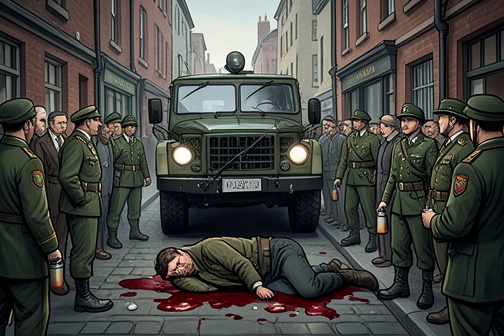
One July afternoon, a company of British soldiers entered the maze of alleys around Balkan Street, off the [Falls Road](entity:location-recall-location-falls-road-59744141d01e), seeking a concealed arms cache. In one house they found fifteen pistols, a rifle, and a Schmeisser sub-machine gun. As the soldiers climbed back onto their armoured vehicles to leave, local people confronted them and began throwing stones. The driver of one vehicle reversed into the crowd and crushed a man. The injury inflamed the confrontation; a second company of troops was sent in, and soldiers fired tear-gas canisters into the crowd.
The episode’s escalation was not presented as a simple progression from search to withdrawal. The discovery of weapons gave the soldiers’ presence an official purpose, while the vehicle striking a man and the use of gas brought the consequences of that presence directly into the streets. The crowd’s stone-throwing and the Army’s response became mutually intensifying actions. What began in one part of the neighbourhood drew in more troops and spread from the immediate search to the wider population of the Lower Falls.
## The Curfew and the Siege
Before long, three thousand soldiers had converged on the Lower Falls. Under the stated purpose of searching for weapons, they forced their way into narrow houses, axed down doors, disembowelled sofas, overturned beds, and peeled linoleum from floors. They prised up floorboards and pulled out gas and water pipes. The damage made the search feel, in the narrator’s description, less like a limited operation than an act of revenge.
As darkness fell, a military helicopter hovered over the Falls Road and announced that a curfew was being imposed: residents had to remain inside or face arrest. Soldiers used their rifle tips to unspool bales of concertina wire across the streets, closing the Lower Falls off. They patrolled in body armour and riot shields, their faces blackened with charcoal. From the windows, residents watched with undisguised contempt. The loudspeaker, wire, and armed patrols turned the restriction into a visible enclosure: movement was controlled not only by the warning of arrest but by the physical barriers laid across familiar streets.
## Tear Gas and Local Response
The gas became one of the operation’s defining features. Over the course of the weekend, the Army fired 1,600 canisters into the neighbourhood. Cartridges skittered across the pavement, trailing clouds that sent adolescent rock-throwers scattering; the gas then drifted through narrow lanes and seeped into the cracks of draughty houses. It brought panic into homes as well as streets, irritating residents’ eyes and throats. Young men soaked rags in vinegar, bathed their faces, and returned to throw stones.
The account emphasizes the paradox of the gas: it dispersed people in the moment, yet also contributed to a shared opposition. One correspondent described it as a substance that could “weld a crowd together in common sympathy and common hatred for the men who gassed them”. That image makes the canister more than a weapon in the scene. Its effects crossed the boundary between street and home, and the common exposure gave separate residents a common grievance. The use of force did not simply suppress resistance; it helped bind the neighbourhood in hostility toward those imposing it.
## A Child’s Experience and the Event’s Afterlife
For [Michael McConville](entity:character-recall-character-michael-mcconville-3858b6472f65), the operation belonged to a childhood in which danger had become ordinary. He had already known the fear of gunfire in [Divis Flats](entity:location-recall-location-divis-flats-f36db46c6064): after the death of nine-year-old Patrick Rooney, who was shot inside his family’s flat, Michael’s family sometimes moved their mattresses to the centre of their own flat and slept on the floor during gun battles. The Lower Falls Curfew belongs to this same lived landscape of military searches, sudden violence, and children adapting to conditions adults insisted were not technically a war.
Michael grew up sceptical of authority. In his view, the British Army was no different from the police: he had watched men thrown against walls and seen fathers and brothers taken from their homes for detention without trial. The book situates that outlook amid material deprivation as well as violence; [Arthur McConville](entity:character-recall-character-arthur-mcconville-70e302da3ea2) was unemployed, as were many residents of Divis Flats, where half the population relied entirely on welfare. About a year after the curfew, Arthur became severely weak, was diagnosed with lung cancer, and died at home on 3 January 1972. His death was not presented as a consequence of the operation, but it marks the bereavement that followed within the family’s already precarious life. As Michael watched his father’s coffin lowered into the ground, he thought that things could not possibly get worse.
The episode also gains significance from the book’s broader concern with how conflict persists in memory after open violence recedes. Its epigraph observes that wars are fought first on the battlefield and then in memory. Later passages describe continuing political denials, competing accounts of republican history, and [Belfast](entity:location-recall-location-belfast-8a60016bc9a1)’s commemorative landscape, where former combatants guide visitors through Troubles-era flashpoints while the city’s divisions remain visible. The Villiers report, as the book recounts it, argued that surviving paramilitary hierarchies could restrain members and help manage the transition away from extreme violence; that interpretation sits uneasily beside the curfew’s portrait of force provoking shared anger. The Lower Falls Curfew is therefore remembered not as a closed incident with a single settled meaning, but as part of the contested history through which residents and political actors continue to interpret authority, resistance, and the aftermath of the Troubles.
Event 12
1971 mass internment operation in Northern Ireland
The [1971 mass internment operation in Northern Ireland](entity:event-recall-event-1971-5df0c702cdb3) was a large-scale sweep of nationalist areas that detained people without trial under the [Special Powers Act](entity:rule-recall-rule-special-powers-act-fc6c167b61f9). Intended to disrupt the armed struggle through arrests, it instead exposed the costs of relying on partial and outdated intelligence: the sweep missed many of its intended targets, detained people with no involvement in the conflict, and further convinced many Catholics that the state was acting against them as a community.
## Background and Preparation
Internment was not new in [Northern Ireland](entity:location-recall-location-northern-ireland-c23b7da68651); authorities had used detention without trial periodically. The August 1971 operation, however, was unprecedented in scale. Its planners relied on intelligence supplied by the Royal Ulster Constabulary, a largely Protestant police force whose partiality was later acknowledged by a British commander. The problem was not only bias in the selection of targets. The lists were also out of date, leaving the operation vulnerable to mistaken identities and allowing those who knew what was coming to evade arrest.
[Frank Kitson](entity:character-recall-character-frank-kitson-037047748b80), the army’s leading counterinsurgency thinker in Northern Ireland, later said he had warned his superiors that this particular operation would be counterproductive. His objection, as the book presents it, was chiefly to the way internment was introduced, not to the measure in principle: he had endorsed internment elsewhere, including in [Kenya](entity:location-recall-location-kenya-2ac496583e97), as a means of removing potential participants from a conflict. In Northern Ireland, he argued, the operation’s lack of surprise undermined its purpose. In late July, the army had conducted searches and arrests that [Brendan Hughes](entity:character-recall-character-brendan-hughes-1230acbdf136) read as a preparatory effort to gather intelligence and check addresses. A new prison camp was also being built at a former air-force base twelve miles outside [Belfast](entity:location-recall-location-belfast-8a60016bc9a1). Hughes inferred that a mass sweep was imminent and went underground with his men before it began.
## The Sweep and Its Errors
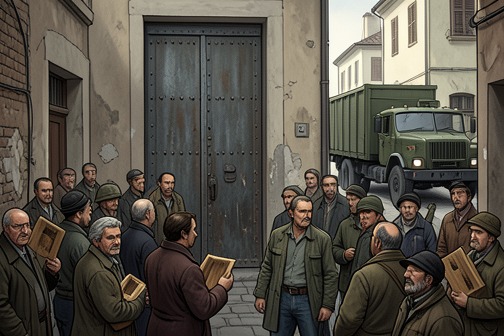
Just before dawn on a morning in August, 3,000 British troops descended on nationalist districts across Northern Ireland. They broke down doors and dragged men from their beds. The operation was legally enabled by the Special Powers Act, which allowed people to be held indefinitely without trial. Yet of the nearly 350 suspects arrested, not one was a loyalist, despite the presence of loyalist paramilitaries engaged in terrorism. That stark imbalance gave the arrests a sectarian character in the eyes of many Catholics.
The intelligence failures also reached into family homes. In a society where sons were often named after their fathers, soldiers sometimes arrested elderly men thinking they were seeking their sons, or sons mistaken for their fathers. In some cases, when both men were at home and the troops could not determine which one was listed, they took both. Nearly a third of those seized were released after two days. The sweep thus arrested many people it was not looking for while failing to capture most of those it did seek.
The errors were not merely administrative. The arrests reached people whose families were already entangled in the conflict, including [Francie McGuigan](entity:character-recall-character-francie-mcguigan-df6f25197fbd), a childhood friend of [Dolours Price](entity:character-recall-character-dolours-price-f885017ba474). He was asleep when soldiers burst into the room and dragged him into the street in his underpants; another soldier pulled his father outside. His father collapsed on the pavement, but Francie was thrown into the back of a lorry and could only look back at him through its window as it drove away. Francie’s mother was already serving a sentence in [Armagh jail](entity:location-recall-location-armagh-jail-d62b9335578b) for taking part in a peaceful protest, and all seven children in the family would eventually serve time. The scene shows how the sweep’s reach extended beyond its stated list of suspects, bringing the force of detention into family life.
## Evasion and Immediate Repercussions
Hughes’s preparations meant that the operation failed to net him. After the sweep, the Provisional IRA held a press conference to announce with satisfaction that the massive operation had caught hardly any of its members. The announcement underscored the difference between the scale of the deployment and its practical result: troops had made hundreds of arrests, but advance warning and faulty targeting had blunted the operation against the organization it was meant to disrupt.
The social effect was more enduring than the arrests alone. [Detention without trial](entity:state-recall-state-07b8b17ccbdf), applied so unevenly and on such a scale, compounded existing Catholic bitterness and strengthened the impression that the army was another instrument of sectarian oppression. An official British Ministry of Defence study later called internment a major mistake; one officer who took part in the sweep described it as lunacy. The operation’s failure therefore lay both in its execution and in the political damage it inflicted: coercive force could remove people from their homes, but it could also deepen the distrust that made cooperation with the authorities less likely.
## Political Meaning and Legacy
The August sweep became inseparable from the wider dispute over whether republican volunteers were combatants or criminals, and whether detention without trial was a legitimate security measure or an instrument of oppression. Internment eventually ended in 1975. Thereafter, suspects were charged as ordinary criminals, and convicted paramilitaries were confined in individual cells in the H Blocks at [Long Kesh](entity:location-recall-location-long-kesh-90c48f775ab3) rather than held under the earlier arrangements. That later change sharpened the political stakes of imprisonment, but it did not erase the impact of the 1971 operation: the mass arrests had already helped make state policy itself part of the conflict.
The episode also exemplifies the book’s broader concern with how violence persists in memory after the immediate action ends. The raid’s numbers and failures mattered, but so did the images it left behind: doors broken before dawn, fathers and sons taken under mistaken identities, and a young man driven away while his father lay on the pavement. Those consequences help explain why internment was remembered not simply as a security operation, but as a demonstration of unequal power that further alienated the population it was supposed to control.
Event 13
Enhanced interrogation of the Hooded Men
[Enhanced interrogation of the Hooded Men](entity:event-recall-event-5000427f823b) was a covert British Army operation in which detainees, including [Francis McGuigan](entity:character-recall-character-francis-mcguigan-fdef3103289c), were subjected to prolonged sensory deprivation and physical and psychological abuse at an undisclosed barracks. The interrogation sought intelligence about the [Irish Republican Army](entity:organization-recall-organization-irish-republican-4bff46a4b2bf), but its methods left prisoners unable to identify themselves or orient themselves in time and space. Its aftermath exposed the gap between official euphemism, documented harm, and the contested legal definition of torture.
## Capture and Transfer
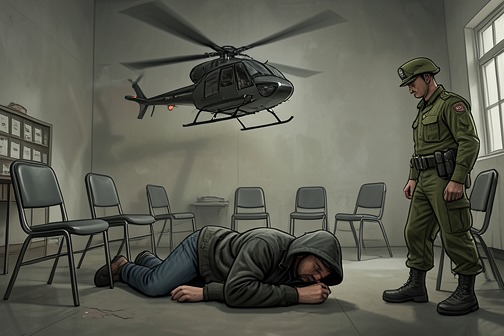
What Francis McGuigan’s father could not discover through calls to the police and army was that his son had been selected with eleven other prisoners for a different fate. McGuigan was hooded, the hood carrying the stale smell of dirty laundry, and loaded with other detainees into a Wessex helicopter. The prisoners were given no explanation of where they were going. During the flight, McGuigan heard the door slide open and felt hands moving him toward it; in panic, he curled his body into a ball before he was pushed out.
The apparent fall ended only a few feet below the aircraft. The helicopter had been hovering close to the ground, and another group of hands caught him and hurried him into a facility. It was a remote barracks on an old [Second World War](entity:time-recall-time-c7bd852e004a) airfield in County [Derry](entity:location-recall-location-derry-d46e7068265a), chosen for its distance from public scrutiny and any mechanism of accountability. Still hooded, McGuigan could not know his location. He and the other detainees were stripped and examined by a doctor before the procedures began.
## Methods and Intelligence Aims
The army’s bureaucratic term for the procedures was interrogation in depth. For days, the prisoners were deprived of food, water, and sleep; made to stand for long periods in stress positions; kept hooded; and exposed to piercing, high-pitched noise. These conditions worked together to disorient and exhaust them, making the passage of time difficult to judge and ordinary tasks increasingly hard to perform.
The interrogators wanted information about the [Belfast Brigade](entity:organization-recall-organization-belfast-brigade-ce62dcc93e5e): McGuigan’s position, the names of staff members, and the identities of his commanding officers and fellow volunteers. They sought names including [Gerry Adams](entity:character-recall-character-gerry-adams-6d84cf7a2514) and [Brendan Hughes](entity:character-recall-character-brendan-hughes-1230acbdf136). As the questioning continued, McGuigan became so impaired by hunger, sleep loss, and noise that he garbled the spelling of his own name and could not count to ten. For an extended period, he was chained to a cast-iron radiator; the cuffs rubbed his wrists until the skin was raw. Some prisoners hallucinated. Convinced he would not survive, McGuigan struck his head against the radiator until blood ran down his face.
## An Inherited [Counterinsurgency](entity:concept-recall-concept-e6b1ad82db77) Practice
The book traces these methods through a history that complicates any account of them as an improvised response to the conflict. British forces had studied the experiences of soldiers held by the Nazis and by North Korean and Chinese forces during the Korean War. Techniques initially taught to British soldiers as a means of resisting harsh interrogation migrated from defensive training into the interrogation of others. They had also been used against insurgents in British-controlled territories, including Palestine, Malaya, [Kenya](entity:location-recall-location-kenya-2ac496583e97), and Cyprus.
The practices were not preserved in a written manual. Instead, they were passed from one generation of interrogators to another, an oral inheritance that made coercive methods both repeatable and difficult to locate in a formal doctrine. Anthony Farrar-Hockley, who had commanded land forces in [Northern Ireland](entity:location-recall-location-northern-ireland-c23b7da68651) until the previous month and had himself been a prisoner of war in North Korea, argued that IRA members who called themselves soldiers should expect to be frightened when captured and interrogated. His remark places the treatment within a military argument about what capture permits, while the account of McGuigan’s disorientation and injury records its human consequences.
## Release and Legal Aftermath
The interrogation ended after a week. Some of the men were so debilitated that they could not remember their own names. Their eyes appeared hollow and haunted; one prisoner described them as two pissholes in the snow. Another detainee, who had entered with jet-black hair, came out with completely white hair and died not long after release from a heart attack at forty-five. When McGuigan was eventually returned to Crumlin Road jail, his father saw him and broke down crying. The return reunited them, but it came only after the father had searched for his missing son without knowing whether he was alive.
The legal record did not settle the meaning of what had happened. The book notes that no public record establishes [Frank Kitson](entity:character-recall-character-frank-kitson-037047748b80)’s views on interrogation in depth, while suggesting that rough tactics were consistent with the colonial campaigns in which he specialised. A review of his counterinsurgency treatise criticised its omission of the Geneva conventions, which Britain had signed and which were relevant to the subject. A later [British government](entity:organization-recall-organization-66a95d21d932) investigation found that some interrogation methods used against the Hooded Men constituted criminal assault. In 1978, however, the [European Court of Human Rights](entity:organization-recall-organization-european-court-o-2fcb9898e667) held that the methods were inhuman and degrading but did not amount to torture. After the terrorist attacks of 11 September 2001, officials in the administration of George W. Bush relied explicitly on that decision in defending their own enhanced interrogation techniques. The episode thus continued beyond the barracks: its methods, injuries, and legal language became part of a later argument over what states may do to prisoners and what name that conduct should bear.
Event 14
Murder of three Scottish soldiers
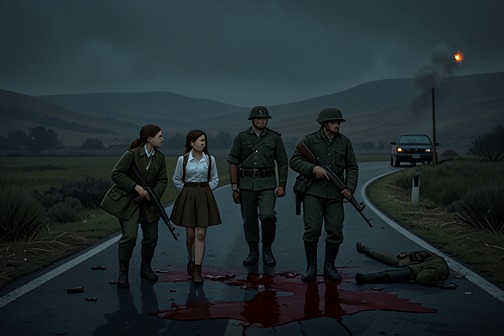
The [Murder of three Scottish soldiers](entity:event-recall-event-0a6fc1fd6d0b) was a 1971 killing in which three off-duty soldiers, approached in central [Belfast](entity:location-recall-location-belfast-8a60016bc9a1) by two girls who invited them to a party, were shot on a lonely road outside the city. The account places the attack within the [Irish Republican Army](entity:organization-recall-organization-irish-republican-4bff46a4b2bf)’s use of women in covert operations, but makes clear that [Dolours Price and Marian Price](entity:relation-recall-relation-dolours-price-and-ma-f3ddddaf4796) disdained this method. For Dolours, the killings brought a question of conduct into the heart of armed struggle: she insisted that soldiers should be attacked in uniform.
## Background: Protest and the turn to arms
The killings came amid a conflict shaped by discrimination against Catholics in [Northern Ireland](entity:location-recall-location-northern-ireland-c23b7da68651). On 1 January 1969, student protesters set out from [Donegall Square](entity:location-recall-location-donegall-square-84b8dc3fa653) in Belfast on a march to [Derry](entity:location-recall-location-derry-d46e7068265a), seeking to challenge Catholics’ exclusion from good jobs and housing and their lack of political power. The marchers hoped peaceful protest might force change, and some believed a violent overreaction could expose injustice to a wider public. But attacks on the march, including the ambush at [Burntollet Bridge](entity:location-recall-location-burntollet-bridge-7dc489249792), helped disillusion [Dolours Price](entity:character-recall-character-dolours-price-f885017ba474) with nonviolent resistance. In 1971 she joined the Irish Republican Army, describing the decision as a return to her family’s republican inheritance.
Women’s participation in the armed movement was itself changing. The organization’s Army Council decided that women could join as full members for the first time; the decision reflected both Dolours Price’s insistence on being treated as a fighting soldier and the mass imprisonment of men. This shift placed women in operational roles beyond the traditional support work associated with [Cumann na mBan](entity:organization-recall-organization-cumann-na-mban-b3f9855e0907). Some IRA women set honey traps, approaching British soldiers in bars and luring them toward ambushes. The killing of the three Scottish soldiers is presented in that context, although the account does not identify the girls or establish that either Price sister took part.
## The killing
One afternoon in 1971, three off-duty Scottish soldiers were drinking in central Belfast when two girls approached them and invited them to a party. On the way, the soldiers stopped beside a lonely road outside town to urinate. Someone shot all three in the head. The account gives no names for the soldiers, identifies no shooter, and does not describe what happened to the girls afterward; its emphasis is on the method and its place in the evolving conflict.
The invitation made the approach appear social rather than military. It also distinguished a honey trap from an open attack on soldiers in uniform: the victims were off duty, and the lure brought them to a place where they were vulnerable. The episode thus sits uneasily beside the claim that peaceful protest could redraw the conflict’s lines. The hope that young people might confront injustice without reproducing old divisions gave way, for some, to participation in a clandestine war in which the boundary between civilian appearance and combatant status could be deliberately blurred.
## Dolours Price’s objection
The Price sisters rejected honey-trap operations. Dolours Price specifically asked never to be assigned to one, and defended her position with the principle, “Soldiers should be shot in their uniforms.” Her objection did not amount to a renunciation of armed struggle: she had joined the IRA and pledged obedience to its orders. Rather, it marked a limit she wanted observed within that struggle, separating an attack on a uniformed soldier from an ambush arranged through a social deception.
That distinction also complicates any simple account of women’s entry into the IRA as liberation from traditional roles. Women could become full members and participate in frontline operations, yet their presence could be treated as threatening by more traditional Cumann na mBan veterans, who disparaged some of them as “Army girls.” The honey trap made gendered presentation part of the operation; Dolours Price’s refusal shows that women’s expanded role did not mean that all tactics were acceptable to them.
## Significance
The killings belong to the early period in which belief in peaceful change and the growth of armed organization stood in direct tension. For Dolours Price, the march and its violent aftermath helped turn her away from nonviolent resistance, while her response to the soldiers’ deaths reveals that commitment to armed struggle did not erase her own rules about how it should be conducted. The episode therefore carries both a historical and a personal contrast: women moved into operational roles, but Dolours drew a line against using sexual attraction and deception to bring soldiers within reach of an ambush.
Event 15
Burning of the British Embassy in Dublin
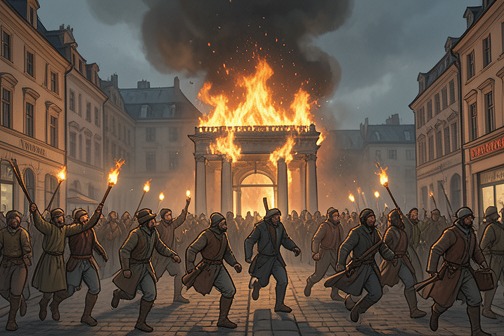
The [Burning of the British Embassy in Dublin](entity:event-recall-event-f60cc746b436) was a protest action in February 1972, following the killing of thirteen people by British paratroopers on [Bloody Sunday](entity:event-recall-event-bloody-sunday-6d124ab1fb60). In the book’s account, it belongs to a chain of events in which the failure of peaceful protest appeared increasingly stark, republican anger intensified, and political life moved into a new phase.
## Political setting and the immediate catalyst
The event followed years of Catholic discrimination in [Northern Ireland](entity:location-recall-location-northern-ireland-c23b7da68651). Catholics were often excluded from good jobs and housing, while the devolved government at [Stormont](entity:location-recall-location-stormont-729677d071cf) had, for half a century, never placed a Catholic in executive office. Against this background, students began a peaceful march from [Belfast](entity:location-recall-location-belfast-8a60016bc9a1) to [Derry](entity:location-recall-location-derry-d46e7068265a) on 1 January 1969, protesting systemic discrimination. Some marchers believed peaceful action could expose injustice and help redraw the conflict’s divisions; they were prepared for the possibility of injury, but their hope was that change might come through protest rather than violence.
The book sets the embassy burning against the sharp reversal of that hope on Bloody Sunday. On a Sunday in January 1972, British paratroopers opened fire on a crowd in Derry, killing thirteen men and wounding fifteen. The soldiers claimed they had been fired upon and had shot only people carrying weapons; neither claim proved true. The massacre became a galvanising event for [Irish republicanism](entity:concept-recall-concept-irish-republicanism-a9ec44c2450c). Dolours and [Marian Price](entity:character-recall-character-marian-price-658a98519733) were in [Dundalk](entity:location-recall-location-dundalk-adc76dac93ed) when they heard reports of it, and the news filled them with overpowering anger.
## The burning and its immediate aftermath
In February, protesters set fire to the British Embassy in [Dublin](entity:location-recall-location-dublin-d76fcbad2c3f). The account presents the action as part of the public response to Bloody Sunday, not as an isolated episode: the sequence runs from the massacre, through the protesters’ anger and the embassy fire, to a further political rupture the following month. In March, the [British government](entity:organization-recall-organization-66a95d21d932) suspended Northern Ireland’s Unionist parliament and imposed direct rule from [Westminster](entity:location-recall-location-westminster-797ba54e0a11).
The book does not detach the embassy fire from the broader movement between street protest and armed struggle. The sisters’ anger arose in a setting where peaceful demonstrators had been shot, while their own earlier experiences had already brought them into the Provisional IRA. The massacre intensified an existing conflict; it did not, in their case, mark the beginning of their involvement.
## A point in a longer political trajectory
The episode sits within a history that later moved beyond armed action as well as deeper into it. In March 1972, [Dolours Price](entity:character-recall-character-dolours-price-f885017ba474) travelled to Milan to speak about the oppression of Catholics and the lack of civil rights. Years later, she adapted to electoral politics: she canvassed for [Gerry Adams](entity:character-recall-character-gerry-adams-6d84cf7a2514), supported his campaign for [West Belfast](entity:location-recall-location-west-belfast-27ebba5f4bec), and ferried voters to polling stations. Placed beside the embassy burning, that later work makes visible the changing forms through which republican politics pursued influence, without suggesting that the fire itself caused the later shift.
## Violence and the struggle over memory
The book’s epigraph frames war as something fought both on the battlefield and in memory. Its later account of Northern Ireland describes a conflict that ended without a clear victor or a formal process for deciding how it should be commemorated or understood. Gerry Adams’s refusal to acknowledge that he had been in the IRA, and Sinn Féin’s effort to discredit critics as dissidents or opponents of the peace process, form part of that unsettled legacy. The burning therefore appears not only in a chronology of escalation but within a larger account of how violence, political narratives, and silence continued to shape the public memory of the conflict.
Event 16
The “Magnificent Seven” escape from HMS Maidstone
[The “Magnificent Seven” escape from HMS Maidstone](entity:event-recall-event-935097c15cab) turned a prison ship’s cold-water perimeter into a route to freedom, and a daring escape into a story of improvised solidarity. In January 1972, seven republican prisoners escaped from the vessel in [Belfast](entity:location-recall-location-belfast-8a60016bc9a1) Lough, reached shore in the dark, and found clothes, transport, and shelter among republican sympathisers before the British Army could catch them.
## A prison ship and its perimeter
[HMS Maidstone](entity:location-recall-location-hms-maidstone-52187f81580a) had served the Royal Navy during the [Second World War](entity:time-recall-time-c7bd852e004a), supporting submarines. When the Troubles began, it was hastily recommissioned first as emergency accommodation for two thousand British troops arriving in Belfast, then as a prison. The five-hundred-foot vessel lay at a jetty in Belfast Lough, about twenty feet from land. Below deck, prisoners were confined in two stuffy, overcrowded bunkhouses, sleeping in three-tiered bunks under dim light from a few small portholes. The ship’s proximity to shore offered an apparent possibility of escape, but the water and the security around it made the crossing dangerous.
The prison’s guards and staff were particularly bitter and security especially tight after the escape. A barbed-wire net had been placed in the water around the ship, but the prisoners had watched a seal navigate it. That observation supplied the unlikely practical clue for their plan: the barrier could be passed, and the channel could be swum.
## The escape through Musgrave Channel
On a frigid January evening, the seven stripped to their underwear and coated themselves with butter and black boot polish, using the grease as insulation against the cold. They sawed through an iron bar, squeezed through a porthole, and dropped one by one into the icy water of Musgrave Channel. They swam several hundred yards to the opposite shore; all seven made it across and scrambled out of the water.
The escape did not end at the waterline. Soaking wet and smeared with polish, the men hijacked a bus. One of them had been a bus driver before joining the IRA and took the wheel, steering the unlikely getaway vehicle into central Belfast. Their escape depended on a sequence of practical improvisations: the seal had suggested a way through the wire, the bus driver could handle the stolen vehicle, and the bus carried them away from the shore before the authorities closed in.
## Help on the route out
In a neighbourhood with many republican sympathisers, local children immediately began stripping the bus for parts. The fugitives hurried into the nearest pub, still mostly naked and blackened with boot polish. The people at the bar initially looked up in shock; then, without waiting for much explanation, they began taking off their own clothes and offering them to the escapees. A patron tossed them his car keys and told them to go.
The scene abruptly shifts the escape from a contest between prisoners and guards to an act enabled by a surrounding community. Ordinary objects—clothes and car keys—became essential to getting away. By the time the army mobilised six hundred troops for a manhunt, the men had vanished. They slipped across the border and held a triumphant press conference in [Dublin](entity:location-recall-location-dublin-d76fcbad2c3f), where newspapers gave them the name the Magnificent Seven.
## Consequences and narrative significance
The successful escape helps explain why the prison ship’s security was so tight when [Gerry Adams](entity:character-recall-character-gerry-adams-6d84cf7a2514) was brought aboard in March 1972. The earlier breakout gives that later confinement a concrete history: a porthole, an iron bar, and a stretch of icy water had already proved insufficient to keep prisoners contained. Not long after Adams arrived, the authorities closed the ship as the new prison at [Long Kesh](entity:location-recall-location-long-kesh-90c48f775ab3) was completed; the account places that closure after his arrival without making it a direct consequence of the escape.
The episode’s name and its improbable details—the seal, the boot polish, the stolen bus, the stripped-down vehicle, the pub’s sudden generosity—give the escape the shape of an audacious adventure. Yet its outcome depended not only on the prisoners’ nerve but also on rapid assistance from local residents. The pursuit mobilised hundreds of troops; the fugitives were already beyond reach.
Event 17
British Army secret operation to capture Brendan Hughes
The British Army’s secret operation to capture [Brendan Hughes](entity:character-recall-character-brendan-hughes-1230acbdf136) was a covert assault in [West Belfast](entity:location-recall-location-west-belfast-27ebba5f4bec) that failed in its immediate aim but revealed the reach and ambiguity of the army’s clandestine campaign. On 2 September 1972, a plainclothes team attacked Hughes from a green van; he escaped through familiar streets, reached an IRA safe house, and returned fire with an Armalite. The attackers’ disappearance in British Army vehicles transformed a suspicious encounter into evidence of an operation by the very force that officially presented itself as a neutral authority.
## Background and Surveillance
On the Saturday morning of the operation, Hughes stood with associates from D Company opposite a vacant house on Leeson Street, near Varna Gap. The derelict building was part of a landscape marked by flight and abandonment: its residents had gone, and its openings had been partly sealed. Hughes, twenty-four and the officer commanding D Company, was already living underground. He had reason to fear several armed opponents, including loyalist paramilitaries, the police, the British Army, and the Official IRA. His predecessor, his cousin Charlie, had been shot dead by the Officials, and Hughes knew that staying on the run in [Belfast](entity:location-recall-location-belfast-8a60016bc9a1), where people knew one another, made concealment precarious.
A green van approached along Leeson Street. Hughes watched it closely; its unfamiliar driver appeared nervous, but the vehicle passed without stopping. Hughes was unarmed because an associate had borrowed his handgun to steal a car. He sent a runner to fetch another weapon, a precaution that would prove urgent. The van’s first pass gave no clear sign of an attack, and its return five minutes later initially repeated the same pattern: it drove past Hughes again, then continued towards McDonnell Street and the Grosvenor Road. Behind the apparently empty building across from him, however, British soldiers had spent the night at a concealed observation post, watching Hughes and his associates from within D Company’s territory.
## The Ambush and Escape
The runner had not returned with a weapon when the van came back. After passing Hughes a second time, it continued for about twenty yards before braking. Its rear doors opened and several men in civilian clothes—tracksuits and trainers—jumped out. One carried a .45 in each hand; two others had rifles. As Hughes turned to run, all three opened fire. He sprinted onto Cyprus Street with the gunmen pursuing him and shooting, then zigzagged through the narrow streets, using his knowledge of alleys, fences and vacant houses to evade them.
The streets offered more than cover. Local residents sometimes allowed republican paramilitaries to cut through their homes or hide there; some cooperated under pressure, while others acted from solidarity. Hughes had cultivated relationships in the neighbourhood and paid families compensation when his operations damaged their property. In one instance, residents saw him carry the disabled Squire Maguire to the pub on his back and return to take him home. During the chase, a back door opened long enough for Hughes to slip inside and shut behind him. The episode gives the neighbourhood a double significance: it was both the terrain of the pursuit and a network of civilian homes through which a fugitive could disappear.
Hughes was trying to reach a call house on Sultan Street, an ordinary family home that also served as a clandestine refuge and sometimes as an arms depot. At the corner, a baker’s van was delivering bread when the pursuers fired a volley that punctured it and shattered its windows. Hughes ran on toward the house, nearly overshot it, and crashed through its front window as he swung the door open at speed. He picked himself up in the front room, retrieved an [Armalite rifle](entity:object-recall-object-armalite-rifle-2e15fd2a195e), went outside and fired at the men as they approached. They scattered for cover and returned fire.
Two Saracen armoured vehicles then appeared and stopped abruptly in the street. The gunmen disappeared. Their civilian clothing had suggested that they were paramilitaries, but their escape in British Army vehicles revealed that they were soldiers. Hughes was left panting and bleeding, with the attackers gone and their identity newly exposed. The immediate outcome was a failed capture attempt; the encounter also showed how the ordinary signs of armed conflict could be deliberately blurred by an army operation conducted in disguise.
## The Official Account and the MRF
The failed operation left a documentary trace that later clarified what Hughes had encountered. A declassified British Army account acknowledged that soldiers in civilian dress had engaged in the mission, but described it as a “snatch attempt,” not an effort to assassinate him. The distinction softened the operation’s stated purpose without changing its outcome: the soldiers had failed to capture or kill Hughes, but had seen him at close range and now knew what he looked like. The covert observation post and the van-borne attack were parts of a single surveillance operation conducted inside D Company’s own territory.
The attackers belonged to the MRF, a clandestine unit whose initials were expanded in different ways, including Military Reaction Force. Its members, selected from across the British Army, operated in plain clothes and used unmarked vehicles. The unit’s work went beyond reconnaissance: the green van team’s attempt on Hughes was an assassination operation. MRF teams also carried weapons associated with paramilitary groups so that ballistics might point suspicion toward the IRA or loyalists rather than the army. The tactic sought to blur responsibility for violence and weaken the armed groups’ standing in their communities, while preserving the army’s public image as a neutral, law-abiding force.
That broader method gives the encounter its political significance. The gunmen’s tracksuits and trainers initially made them look like civilians or paramilitaries; their departure in Saracen vehicles disclosed their military identity only after the shooting. The same streets that sheltered Hughes through residents’ homes and hidden routes had also been penetrated by soldiers watching from a derelict building. In the episode, local knowledge helped him escape, but it could not prevent the army from observing him at the heart of his own operational territory.
## Immediate Aftermath
[Gerry Adams](entity:character-recall-character-gerry-adams-6d84cf7a2514) came to Hughes himself after the attack. Once a doctor had stitched Hughes’s wounds and left, Adams ordered him to get out of Belfast and lie low: the gunmen had plainly targeted him, and another attempt seemed likely. Hughes resisted leaving, but Adams insisted. The operation therefore forced a brief retreat from the city even though it had failed to capture him.
Hughes went to [Dundalk](entity:location-recall-location-dundalk-adc76dac93ed), just across the border, and booked a room in a bed-and-breakfast. He lasted only a week. He was impatient to return to Belfast, where he had remained on the streets with D Company rather than withdraw to the countryside or across the border. That presence had mattered to Adams: local people knew Hughes was there, and his willingness to share the danger gave his men an incentive. The short absence thus marks the operation’s limited practical consequence. It could drive Hughes temporarily from his territory, but not detach him from the city or the people whose support helped him operate there.
Event 18
Killing of Jean Smyth-Campbell
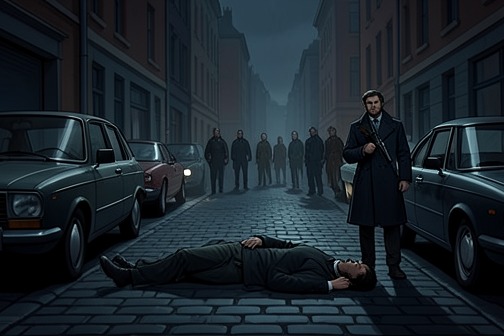
The killing of Jean Smyth-Campbell was a civilian death later linked, with strong but not absolute certainty, to the British Army’s clandestine MRF. The immediate public account denied security-force involvement and pointed toward paramilitary groups; the eventual reversal revealed how covert violence and deliberate misattribution could leave a family grieving under a false understanding of who had killed their daughter.
## The MRF and covert violence
The MRF operated in plain clothes and used unmarked vehicles, combining surveillance with lethal attacks. Its members carried weapons associated with paramilitary groups, so that the evidence left by a killing might suggest the [Irish Republican Army](entity:organization-recall-organization-irish-republican-4bff46a4b2bf) or loyalist gunmen rather than the army. The intended confusion was not incidental: it was meant to damage paramilitaries’ standing in their communities while preserving the army’s appearance as a neutral, law-abiding force.
The unit’s own concealment extended to its relationship with regular troops. One former member explained that its camouflage was so effective that British soldiers at an army outpost might mistake an MRF team carrying a weapon for an enemy and shoot. That account conveys the operational risks of a force whose usefulness depended on passing as something it was not. The MRF had also attempted to kill [Brendan Hughes](entity:character-recall-character-brendan-hughes-1230acbdf136) in [West Belfast](entity:location-recall-location-west-belfast-27ebba5f4bec), placing the Smyth-Campbell case within a wider pattern of covert operations rather than an isolated encounter.
## The shooting in 1972
One summer night in 1972, Smyth-Campbell, aged twenty-four, was sitting in the passenger seat of a car at a bus terminal on the Glen Road. A bullet came through the window and struck her. The account identifies her as an unaffiliated civilian; the shooting occurred as the MRF was seeking to assassinate targets, but the evidence does not establish that Smyth-Campbell was the intended target.
The authorities publicly stated that no security forces had been involved in her death. Their account instead implied a possible connection to political bodies in the area, a phrase that directed suspicion toward paramilitary groups. Smyth-Campbell’s family came to believe that the Irish Republican Army had shot her. In this way, the operation’s capacity to obscure responsibility shaped not only the public explanation but also the family’s understanding of the loss.
## Delayed attribution and significance
It took four decades for the family to learn that Smyth-Campbell had almost certainly been killed by the MRF. The qualification matters: the account presents the attribution as highly probable, not as an uncontested finding. The long delay nevertheless marks the distance between the official explanation at the time and the later recognition of the army unit’s likely role.
Her death illustrates the human consequence of a strategy designed to make responsibility difficult to trace. The MRF’s use of paramilitary-style weapons and the immediate denial of security-force involvement could redirect suspicion even when the victim had no affiliation. For Smyth-Campbell’s family, the result was decades in which the wrong organization was believed to have caused her death; for the history of the conflict, the case shows how covert action could blur the boundary between counterinsurgency and the violence it claimed to oppose.
Event 19
1972 London talks between the IRA and the British government
The July [1972 London talks between the IRA and the British government](entity:event-recall-event-1972-d4e53d62b240) were a secret, high-stakes encounter between leaders of the Provisional IRA and British officials, convened during a fragile ceasefire. The Irish delegation demanded recognition of the right of all Irish people to self-determination and a British commitment to withdraw its forces. The meeting ended without agreement: the demands collided with Britain’s commitment not to abandon [Northern Ireland](entity:location-recall-location-northern-ireland-c23b7da68651)’s Protestant population, while the delegates’ wary attention to the ceremony and clothing around them made the encounter a contest over status as well as policy.
## Background and Participants
The talks followed the ceasefire initiated by the IRA on 26 June, to which the British Army agreed to reciprocate. Before the truce, bombings and shootings had increased; some observers suggested that the escalation may have been intended to make the contrast of a sudden stop in violence more striking. The IRA declared that it had a peace plan but would reveal it only at an appropriate time. That opening was contested from the outset: many people objected to any dialogue with the IRA, insisting that the government should not negotiate with it.
The secret trip reflected the importance of [Gerry Adams](entity:character-recall-character-gerry-adams-6d84cf7a2514) to the IRA leadership. [Ivor Bell](entity:character-recall-character-ivor-bell-e3c8d255e4f4) had argued that there could be no discussions with the British unless Adams was released from internment. Still only twenty-three, Adams had become an important figure in the organisation. In July, he travelled with a small delegation that included [Seán Mac Stíofáin](entity:character-recall-character-se-n-mac-st-of-in-855d1ac623f6), Bell, [Martin McGuinness](entity:character-recall-character-martin-mcguinness-d891600c5db8), Dáithí Ó Conaill and Seamus Twomey. McGuinness was the IRA officer commanding in [Derry](entity:location-recall-location-derry-d46e7068265a). Their journey itself was discreet: the delegates boarded a British military plane and landed at an air force base in Oxfordshire, where two large limousines were waiting.
## The Journey and Its Signals
The limousines carried the Irish delegation into [London](entity:location-recall-location-1bfd335cdd1b) and to a large house in Chelsea facing the Thames. The polished arrangements could have suggested that the visitors were expected to enter a formal British setting on British terms. Bell countered that expectation before the meeting: he would not wear a suit and tie. In his view, British formality could make Irish representatives feel ill at ease, and he intended to reverse that effect. Adams made a similar choice, wearing a pullover with a hole in it.
The delegates were not indifferent to the setting. On entering the house, Adams noticed a blue plaque marking it as a former home of the painter James McNeill Whistler. The detail sits beside the group’s resistance to the ceremony around them: they had been brought by limousine to a grand Chelsea residence, yet refused to dress as though the setting had already determined their place. Their clothing became a small, visible expression of a broader concern not to be patronised or cowed.
## The Meeting and the Demands
The Irish representatives were shown into a book-lined drawing room. [William Whitelaw](entity:character-recall-character-william-whitelaw-96a806f8cce7), the British secretary of state for Northern Ireland, greeted them in a polished, genial manner. He made a point of pronouncing Seán Mac Stíofáin’s adopted name correctly, a courtesy that Mac Stíofáin appreciated. Adams, meanwhile, noticed that Whitelaw’s palms were sweating as they shook hands. The courteous greeting did not remove the underlying distrust; it briefly made that distrust visible in the room.
Whitelaw acknowledged the long and difficult history between England and [Ireland](entity:location-recall-location-ireland-3247a2c8bcbe) and said he hoped the visitors would see him as a British minister they could trust. Mac Stíofáin then read a prepared statement setting out the IRA’s demands. The organisation sought a public British declaration recognising the right of all Irish people, in both the North and the South, to self-determination. It also demanded a declaration that British forces would be withdrawn from Irish soil by 1 January 1975. These were not modest preliminary requests: they placed the question of British withdrawal and Ireland’s political future at the centre of the encounter.
## The Impasse and Its Significance
Frank Steele, a British intelligence officer who had worked secretly with IRA representatives before the meeting, watched Mac Stíofáin present the demands as though the IRA had already brought the British to a military standstill. Steele regarded the delegation’s effort to present itself through the language and trappings of a conventional army with disdainful amusement. In his later assessment, the representatives wanted to be seen as an army rather than a group of terrorists. The meeting brought that disagreement over representation into the room alongside the concrete political demands.
The gulf was not simply a matter of presentation. The [British government](entity:organization-recall-organization-66a95d21d932) could not accept a demand to withdraw from Northern Ireland if doing so meant abandoning its guarantee to the Protestant population there. As the discussion proceeded, Whitelaw grew frustrated; in his memoirs he called the encounter a non-event, derailed by what he described as the IRA’s absurd ultimatums. The delegation’s demands and the British position left little ground for agreement, and the encounter produced no settlement.
Adams spoke little during the meeting, but Steele had formed a different impression of him at preliminary meetings. Rather than the arrogant, streetwise figure Steele had expected, Adams appeared personable, articulate and self-disciplined—qualities that made him, in Steele’s view, a potentially effective adversary. In one of their exchanges, Steele told Adams that renouncing violence would leave him free to attend university. Adams replied that he first had to help get the British out. The exchange condensed the political choice exposed by the talks: a personal future beyond the conflict was imaginable, but Adams described it as inseparable from the struggle against British presence.
The talks therefore occupy an uneasy place between a ceasefire and continuing conflict. The delegates had been permitted to meet British representatives directly, yet their central demands could not be reconciled with the British government’s stated responsibility to Northern Ireland’s Protestant population. The limousines, the drawing room and the careful greeting offered the outward form of diplomacy; the exchange over withdrawal revealed the limits of what that form could accomplish. The meeting’s failure did not make the contact insignificant: it made plain both the possibility of negotiation and the distance separating the parties’ political aims.
Event 20
Disappearance and execution of Joe Lynskey
The disappearance and execution of [Joe Lynskey](entity:character-recall-character-joe-lynskey-d01379c0207e) followed an internal Provisional IRA inquiry into an attempted murder that he had engineered and then concealed. Rather than publicly announce his fate, the organization secretly removed him from [Belfast](entity:location-recall-location-belfast-8a60016bc9a1). [Dolours Price](entity:character-recall-character-dolours-price-f885017ba474), a friend who was ordered to drive him south, later recalled the journey: she knew the destination was his execution, yet continued driving while Lynskey sat beside her with an overnight bag. His disappearance was then covered by silence and a false story that he had gone to America, leaving his family without the truth for years.
## Lynskey and the inquiry
Lynskey’s path into the IRA differed from that of many of its members. He had entered a monastery at sixteen, left it in his twenties, and returned to Belfast to work in a silk and rayon factory in Clonard. His education included a particular interest in the injustices suffered by working-class Catholics in [Ireland](entity:location-recall-location-ireland-3247a2c8bcbe), but he did not come from a republican family. After joining the IRA, he became close to Price, who was fond of his awkward, gentle manner. [Brendan Hughes](entity:character-recall-character-brendan-hughes-1230acbdf136), by contrast, regarded him as a strange figure from an older generation: erudite, a chain-smoker, and often aloof.
The immediate crisis arose from Lynskey’s affair with Joe Russell’s wife. Lynskey instructed a younger IRA gunman to kill Russell, telling him that Russell was an informer. The gunman went to Russell’s door but lost his nerve and shot him in the stomach before fleeing. When Hughes and others began investigating the shooting, they consulted Lynskey in his role as brigade intelligence officer. Rather than admit his involvement, he blamed the Stickies. The investigation therefore uncovered not only an attempted killing of a fellow volunteer, but also an effort to divert suspicion that left an innocent man wounded.
The IRA’s response was an internal court-martial, a formal process intended to judge members rather than simply kill them without procedure. Lynskey faced charges for attempting to murder a fellow volunteer and for concealing his role in a way that had harmed another person. The account describes the court-martial as a mechanism of internal accountability, while making clear that its proceedings were not known for acquittals and that the gravity of Lynskey’s actions made his fate appear bleak.
## A secret assignment
The task of transporting Lynskey across the border fell to the [Unknowns](entity:character-recall-character-unknowns-b130c4534a21), a small, secretive unit that answered directly to [Gerry Adams](entity:character-recall-character-gerry-adams-6d84cf7a2514) rather than fitting neatly into the IRA’s ordinary command structure. Brendan Hughes described them as a handpicked group for dangerous and sometimes unsavoury work. Price had joined the unit with her friend [Hugh Feeney](entity:character-recall-character-hugh-feeney-52ae40f86edb), and her sister [Marian Price](entity:character-recall-character-marian-price-658a98519733) was also a member. The assignment placed Price in a direct relationship with the man she was to deliver: she was not an investigator or judge, but the driver responsible for carrying out an order.
By then Price had sworn allegiance to the IRA and vowed to obey orders from a superior officer. She had insisted on joining as a full fighting soldier rather than being assigned an auxiliary role. That commitment frames her later recollection, but does not settle the moral meaning of the journey. She described the possibility of taking Lynskey to a ferry and letting him escape, then recognized that neither of them could act on that possibility while bound to the movement. Her account makes obedience the circumstance of her decision, not an excuse that erases its consequence.
## The drive south
When Price arrived at Lynskey’s sister’s house, she did not tell him that he was being summoned to his execution. She said there was a meeting in the [Republic of Ireland](entity:location-recall-location-republic-of-ireland-37b598657754). Lynskey came downstairs freshly bathed and shaved, carrying an overnight bag as if setting off for a short trip. The two drove south alone. Price realized that he understood where they were going, although he did not try to overpower her or escape. Instead, he tried to explain what had happened. Price replied, “I don’t want to know, Joe. I don’t want to know. I just have this very difficult thing to do.”
During the drive, Price considered taking him to the ferry and later claiming that he had run away to England. She also wondered why he did not jump from the car or strike her and flee. In her recollection, the same loyalty that prevented her from disobeying an order also seemed to prevent Lynskey from trying to save himself. When they reached [County Monaghan](entity:location-recall-location-county-monaghan-3013209cdc16), men were waiting beneath a lamp post. Lynskey thanked Price for driving him and shook her hand. She said she would see him again, though she knew she would not, and cried all the way home. The account gives the handclasp and the overnight bag particular weight: ordinary gestures persist at the threshold of a death concealed as a journey.
## Disappearance and its cover story
Lynskey’s disappearance was not accompanied by a public verdict, a body left in the street, or an explanation to IRA members about the real circumstances of Russell’s shooting. No one told the rank and file that Lynskey had ordered the attack or that he had blamed the Stickies. His vanishing was thus not simply the result of a secret execution; it also depended on suppressing the story that had led to it. The group’s silence hid both the punishment and the underlying crime.
Because Lynskey’s work often took him away for long periods, his family did not immediately realize that his absence was permanent. A rumor circulated that he had gone to America to begin a new life, as others did during those years. This was a deliberate campaign of misinformation. In New York, a nephew encountered an Irish republican who claimed, “You just missed Joe. He was here the other week.” When Lynskey’s mother died three years later, she still believed that he was alive in the [United States](entity:location-recall-location-united-states-2f533bc8d0b9). The reassurance extended the disappearance beyond the original journey: his family was denied not only knowledge of his death but also the chance to understand why he had vanished.
## Later disclosures and unresolved limits
Years afterward, Price gave [Ed Moloney](entity:character-recall-character-ed-moloney-9d7f20a1f93b) a detailed account of [Jean McConville](entity:character-recall-character-jean-mcconville-defffff134a9)’s disappearance in recordings separate from her conversations with [Anthony McIntyre](entity:character-recall-character-anthony-mcintyre-a9506a6098eb). That distinction matters because claims about what a particular interview contained could obscure the existence of another recording. In the later account, Price said that the local unit had dug a grave for McConville but did not want to shoot her because she was a woman; she said that others were called back to [Dundalk](entity:location-recall-location-dundalk-adc76dac93ed). This is evidence about a different killing, not a new account of Lynskey’s execution, and should not be conflated with the journey she described taking him on.
The narrative establishes Lynskey’s attempted murder of Russell, the internal inquiry, Price’s role in transporting him, and the deliberate concealment of his fate. It does not describe the execution itself or identify the men waiting beneath the lamp post as the people who carried it out. Keeping that boundary in view preserves the difference between what Price’s recollection establishes and what the account leaves outside the scene. The event’s force lies partly in that gap: the reader reaches the place where Lynskey is handed over, while the organization’s silence and the family’s false hope carry the story beyond it.
Event 21
Abduction and disappearance of Jean McConville
The abduction and disappearance of [Jean McConville](entity:character-recall-character-jean-mcconville-defffff134a9) began at her home in [Divis Flats](entity:location-recall-location-divis-flats-f36db46c6064), [West Belfast](entity:location-recall-location-west-belfast-27ebba5f4bec), on 7 December 1972. A masked group took the widowed mother of ten in front of her children, promising that she would return after a brief conversation. She did not come back. The scene’s force lies in the collision between the domestic details of an ordinary evening and the organized violence that carried a mother out of her children’s sight; its long aftermath shows how a private family catastrophe could be surrounded by public silence.
## Circumstances and Setting
Jean was thirty-eight. She had given birth to fourteen children and lost four, and her surviving children ranged in age from twenty-year-old Anne to six-year-old twins [Billy McConville](entity:character-recall-character-billy-mcconville-645bed2f81c4) and [Jim McConville](entity:character-recall-character-jim-mcconville-5123fbade2ac). After her husband, [Arthur McConville](entity:character-recall-character-arthur-mcconville-70e302da3ea2), died following a gruelling illness, Jean was left with a meagre pension, no paid job of her own and a large family to care for. The children helped look after one another while she remained mostly at home, trying to manage both grief and the demands of the household.
The family had recently moved from the flat where Arthur had spent his final days to a slightly larger dwelling in Divis Flats, a vast public-housing complex in West Belfast. It was a cold December evening, and darkness came early. The cooker in the new home had not yet been connected, so Jean sent her fifteen-year-old daughter, [Helen McConville](entity:character-recall-character-helen-mcconville-d4eeef44c1f2), to buy fish and chips. While the children waited for her, Jean took a bath. The detail is more than domestic scene-setting: the locked bathroom door was one of the few places where a mother with young children could find privacy. She had just dressed when a knock came at the front door. The children thought Helen had returned with their dinner.
The setting was a city already shaped by communal division and political violence. The 1969 march from [Belfast](entity:location-recall-location-belfast-8a60016bc9a1) to [Derry](entity:location-recall-location-derry-d46e7068265a) had protested discrimination against Catholics, who faced exclusion from desirable jobs and housing and from political power in [Northern Ireland](entity:location-recall-location-northern-ireland-c23b7da68651). Peaceful protest had seemed to some young marchers a possible route to change, but the violence at [Burntollet Bridge](entity:location-recall-location-burntollet-bridge-7dc489249792) helped convince [Dolours Price](entity:character-recall-character-dolours-price-f885017ba474) that marching alone would not deliver it. In 1971, she joined the [Irish Republican Army](entity:organization-recall-organization-irish-republican-4bff46a4b2bf), and the Provisionals began admitting women as full members. These events establish the wider conflict in which the abduction occurred; they do not, by themselves, explain the particular decisions or identities of the people who took Jean.
## The Abduction
When the door opened, a group burst into the flat. The children could not agree on its size: they estimated roughly eight people, but thought there might have been ten or twelve. Men and women were present. Some wore balaclavas; others had nylon stockings pulled over their heads, distorting their faces. At least one carried a gun.
Jean emerged as the intruders surrounded her frightened children and told her, ‘Put your coat on.’ Trembling, she asked, ‘What’s happening?’ The children tried to hold on to her. Eleven-year-old [Michael McConville](entity:character-recall-character-michael-mcconville-3858b6472f65) reached for his mother, while Billy and Jim McConville clung to her and wailed. The abductors tried to quiet them, saying they only needed to talk to Jean and would bring her back in a few hours.
[Archie McConville](entity:character-recall-character-archie-mcconville-955429557eb4), sixteen and the oldest child at home, asked to go with his mother. The group agreed. Jean put on a tweed overcoat and a head scarf while the younger children were herded into a bedroom. Some of the intruders addressed the children by name. Two men were unmasked, and Michael recognized them as neighbours. The family’s terror therefore came with the shock of recognition: the people taking Jean were not strangers from outside the community.
The route out of the flat ran through the concrete maze of Divis Flats. The lifts were often out of order, so the group carried Jean through a corridor and down the stairs. Archie noticed that the complex, normally busy even on winter evenings, seemed eerily empty; nobody was there to raise an alarm. At the bottom, a larger masked group waited, perhaps as many as twenty people. Several had guns. A blue Volkswagen van was idling at the kerb.
When Archie stayed close to his mother, one of the men turned on him and pressed a pistol barrel against his cheek, ordering him to leave. He was outnumbered and unarmed. He climbed back upstairs, then watched through vertical openings in a wall—the children called them ‘pigeon holes’—as Jean was bundled into the van. The van drove away. Only then did Archie understand that the promise to let him accompany her had been a means of getting Jean out of the flat. Her last words to him were, ‘Watch the children until I come back.’
## The Children Left Behind
By January 1973 Jean had been gone for more than a month. The [Northern Ireland Civil Rights Association](entity:organization-recall-organization-northern-ireland-7b13ac1a4a2b)’s newsletter had publicized the case under the headline WHERE IS JEAN MCCONVILLE, describing her as a widowed mother of ten who had been removed from her home on 7 December. The Belfast Telegraph followed with an article on 16 January, headlined ‘SNATCHED MOTHER MISSING A MONTH’, and appealed for information the next day. The report noted that none of the children had reported the abduction to the police.
A BBC crew found Helen and the younger children living alone in the flat. On camera, they sat huddled together on a sofa against striped yellow wallpaper and tried to recount what had happened. Agnes McConville said that young women had ordered the children upstairs before taking their mother. Asked what Jean had said as she left, Agnes replied that she had made ‘a big squeal’. She was thirteen and held on to a small, vivid hope: Jean had been wearing red slippers. Agnes imagined that detail as a possible clue and said the children would keep their fingers crossed and pray for their mother’s return.
The children could draw on Jean’s pension, but the surrounding community offered little visible help. Neighbours did not rally around with meals or assistance; the family seemed to be left alone in the flat. The account leaves open why people looked away, noting both the general crisis in Belfast and the possibility of a darker reason. A social worker’s file recorded that Jean appeared to have been abducted by ‘an organisation’, shorthand for a paramilitary group. Jean’s mother-in-law, [Granny McConville](entity:character-recall-character-granny-mcconville-cffb50d9fdef), described Helen as capable and apparently managing the household. The children, meanwhile, believed their mother would come home, and Granny was afraid to report the disappearance to the police, though the precise reason was not stated.
## Silence and the Afterlife of the Event
The abduction’s public and private aftermath unfolded within a wider culture in which silence could protect people, enforce discipline or deepen uncertainty. The book’s epigraph observes that ‘All wars are fought twice, the first time on the battlefield, the second time in memory.’ Jean’s disappearance belongs to both arenas: first as a violent removal witnessed by her children, then as a story whose meaning and accountability remained contested.
After the [Good Friday Agreement](entity:event-recall-event-good-friday-agreement-f0a8e2fc0bef), Northern Ireland had no formal process for establishing how the conflict should be commemorated or understood. [Gerry Adams](entity:character-recall-character-gerry-adams-6d84cf7a2514) continued to deny that he had ever been in the Irish Republican Army, and the book presents such denials as part of an unsettled public climate in which people could not be sure whether it was safe to speak openly about their roles. In 2001, [Martin McGuinness](entity:character-recall-character-martin-mcguinness-d891600c5db8) acknowledged his membership of the Provisionals in the context of the [Bloody Sunday](entity:event-recall-event-bloody-sunday-6d124ab1fb60) inquiry, where he received immunity from prosecution. Sinn Féin’s leadership, meanwhile, was described as maintaining a powerful preferred account of the republican armed struggle and discrediting critics as opponents of the peace process.
The post-conflict landscape made the distance between apparent peace and unresolved division visible. Belfast’s centre could seem cosmopolitan, and former combatants took tourists on Troubles tours, explaining murals and former flashpoints as if they belonged to distant history. Yet more than 90 per cent of Northern Ireland’s children still attended segregated primary schools, and physical barriers and sectarian symbols remained part of everyday life. A report on continuing paramilitary groups argued that their hierarchies could restrain members and help manage the transition away from extreme violence; critics such as [Brendan Hughes](entity:character-recall-character-brendan-hughes-1230acbdf136), Dolours Price, [Marian Price](entity:character-recall-character-marian-price-658a98519733) and [Anthony McIntyre](entity:character-recall-character-anthony-mcintyre-a9506a6098eb) saw the same discipline as self-interested and cruel. That tension illuminates the wider conditions in which Jean’s abduction was remembered: order could be presented as a safeguard against renewed violence, while the silence and control that sustained it could also obstruct scrutiny. The event’s defining image remains smaller and more intimate than those later political arguments—the children watching the van disappear, still expecting their mother to return.
Event 22
Jean McConville abduction and disappearance case
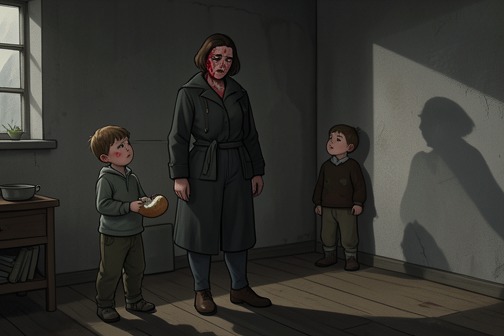
The [Jean McConville abduction and disappearance case](entity:event-recall-event-jean-mcconville-1534de365a94) concerns the removal of a widowed mother of ten from [Divis Flats](entity:location-recall-location-divis-flats-f36db46c6064) in 1972 and the uncertainty that followed. Her children were left to fend for themselves, while competing accounts of the date, the reason for the abduction, and the people responsible complicated later efforts to establish what happened. The case became both a family’s prolonged search for answers and a larger struggle over silence, testimony, and the public memory of the conflict.
## Abduction and the children left behind
The children said that Jean had first been taken for questioning after being found at a bingo hall, beaten, and later brought back to Divis Flats by the army. In their recollection, she was still bruised when she was taken away the following evening. They believed the abduction happened on 7 December 1972, although no official record fixed the date. Their account placed the two removals close together; later evidence would make that chronology difficult to settle.
The consequences were immediate. The children remained in the flat, short of food and without an adult to care for them. Michael, then eleven, was caught stealing food with one of his brothers and told police that the children had gone several days without eating. The authorities eventually made them wards of court and began arranging their transfer to orphanages. Their abandonment was compounded by rumours that Jean had left of her own accord, including a story that she had gone away with a British soldier. The children had to live with both their mother’s absence and the suspicion cast on her.
There was little prospect of an official explanation. The Royal Ulster Constabulary files contain no record of an investigation into Jean’s disappearance. A detective visited the flat on 17 January, but the police had no substantive clues and do not appear to have pursued the case. Two local Members of Parliament condemned the kidnapping and appealed for information; nobody came forward. In February, boys from the IRA youth wing seized Michael, tied him up, stabbed his leg with a penknife, and warned him not to discuss what had happened to his mother. The threat made the family’s uncertainty part of a wider culture in which asking questions could itself be dangerous.
## Evidence, memory, and the disputed timeline
About a week after the abduction, a young man unknown to the children brought them Jean’s purse and the three rings she had been wearing: her engagement ring, wedding ring, and eternity ring from Arthur. He said he knew nothing about their mother and had only been told to deliver the belongings. Michael later identified that visit as the moment he understood that Jean was probably dead. The rings offered a tangible trace of her, but no explanation of her fate.
A police log later recovered by Nuala O’Loan introduced a significant complication. It recorded a woman found wandering in [West Belfast](entity:location-recall-location-west-belfast-27ebba5f4bec) at 11 p.m., beaten and warned to stop giving information to the military. The log named her as Mary McConville, but gave Jean’s address at Divis Flats. It appeared to support the claim that she had been questioned and warned, while dating that encounter to 29 November rather than the date the children recalled. If the log was reliable and the family’s date for the abduction was accurate, more than one night separated the warning from her removal. If the children had misremembered the dates, the interval could have been shorter. Their accounts from early 1973 consistently placed the abduction in early December, but they had been children living through upheaval, not keeping a calendar.
The date mattered because accounts associated with [Brendan Hughes](entity:character-recall-character-brendan-hughes-1230acbdf136), endorsed by [Dolours Price](entity:character-recall-character-dolours-price-f885017ba474) and repeated in IRA statements, portrayed Jean as an informer who had been warned and then continued assisting the British. The family’s recollection and the police log did not resolve whether that accusation was true. Nor did later discussion of an alleged radio settle the question: Hughes had not said that he personally saw the device, and the practical risks of covert transmissions in the crowded flats were considerable. The evidence therefore leaves distinct issues unresolved: whether Jean was an informer, when the warning occurred, and how much time passed before she was taken away.
## Later testimony and the killing
Years later, Dolours Price discussed Jean’s disappearance in a separate recorded interview with [Ed Moloney](entity:character-recall-character-ed-moloney-9d7f20a1f93b). This account was distinct from her roughly fifteen hours of recorded conversations with [Anthony McIntyre](entity:character-recall-character-anthony-mcintyre-a9506a6098eb) for the [Belfast](entity:location-recall-location-belfast-8a60016bc9a1) Project, in which she did not mention Jean. In the interview with Moloney, Price said that she and others were called back to [Dundalk](entity:location-recall-location-dundalk-adc76dac93ed) after Jean had been held there for four or five days. A local unit had dug a grave, she said, but its members did not want to carry out the killing, in her view because Jean was a woman. Price’s account placed her group in the operation that followed, though her response when Moloney pressed her about who had to do it was a silence and a small murmur rather than a detailed explanation.
Price and Hughes both maintained that [Gerry Adams](entity:character-recall-character-gerry-adams-6d84cf7a2514) had ordered the murder. Adams denied ever having been in the IRA, and the later case against [Ivor Bell](entity:character-recall-character-ivor-bell-e3c8d255e4f4) exposed the limits of what the recordings could establish. A voice analyst said the Belfast Project speaker known as Z was likely Bell. Bell’s lawyer argued that the speaker explicitly denied involvement in Jean’s murder; a police detective who had heard the interview said that the speaker acknowledged a critical role in aiding and procuring it. Prosecutors ultimately judged the allegations against Adams uncorroborated and insufficient for prosecution. These disputes did not produce a settled account of who ordered or carried out the killing; they showed how oral testimony could implicate its speaker while remaining contested when it implicated someone else.
## Aftermath and the struggle over memory
The case endured beyond the immediate loss because disappearance left Jean’s family suspended between hope and bereavement. For years, her children could imagine that she might reappear, perhaps unaware that she had left her life in Belfast behind. The return of her purse and rings pointed toward a terrible outcome without confirming it. Later testimony supplied accounts of a grave and a killing, but competing timelines and disputed claims continued to shape what could be known.
That uncertainty belongs to the larger afterlife of the conflict. The book’s epigraph observes that wars are fought again in memory, and Jean’s case shows how that second struggle can take place through family recollection, police records, confidential interviews, denials, and political narratives. The Belfast Project interviews were gathered under a promise that they would remain sealed until participants’ deaths, yet material from the archive became relevant to criminal investigations. Meanwhile, the political leadership’s efforts to maintain a coherent account of republican history met resistance from former participants and critics. Jean’s disappearance thus remained not only an unresolved crime but also a measure of the costs of silence and the difficulty of turning testimony into an agreed history.
Event 23
1969 IRA split
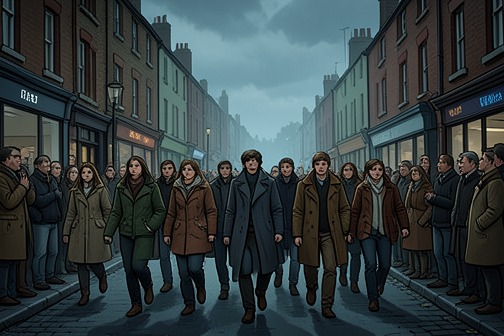
The [1969 IRA split](entity:event-recall-event-1969-de7eea8beff1) divided the republican movement over a strategic fault line: whether politics could advance its aims or would soften them into accommodation. Its significance is visible not only in the emergence of the Provisionals, but in the later tension between armed struggle and electoral participation—a tension that shaped [Dolours Price](entity:character-recall-character-dolours-price-f885017ba474)’s path and [Gerry Adams](entity:character-recall-character-gerry-adams-6d84cf7a2514)’s political strategy.
## Political setting
The split came amid demands for change in a deeply unequal [Northern Ireland](entity:location-recall-location-northern-ireland-c23b7da68651). On 1 January 1969, student protesters set out from [Donegall Square](entity:location-recall-location-donegall-square-84b8dc3fa653) in [Belfast](entity:location-recall-location-belfast-8a60016bc9a1) for [Derry](entity:location-recall-location-derry-d46e7068265a), a march of about seventy miles, to challenge discrimination against Catholics. Catholics were often excluded from good jobs and housing and had little access to political power: over half a century of devolved government at [Stormont](entity:location-recall-location-stormont-729677d071cf), no Catholic had held executive office. Many left Northern Ireland to find work, and despite a Catholic birth rate approximately twice the Protestant rate, the Catholic population had remained virtually static over the preceding three decades.
The marchers’ hopes belonged to a wider confidence in peaceful protest. Some believed that the example of the Selma march showed how a violent crackdown could expose injustice and help bring change. They imagined that political lines might be redrawn, so that the conflict would be understood less as Catholics against Protestants or republicans against loyalists than as the young against the old. That confidence was severely tested as the march encountered hostile crowds in unionist villages and the prospect of violence became immediate.
## The strategic division
The split is presented through a dispute over the place of politics in republicanism. For generations, many republicans had followed abstentionism, staying out of electoral politics for fear that participation would dilute revolutionary purpose. The 1969 division between the [Official Irish Republican Army](entity:organization-recall-organization-official-irish-r-bc859f24585b) and the Provisionals reflected the belief that the Officials had become too political, and that politics would inevitably lead to accommodation. The split therefore concerned more than competing organizational identities: it expressed opposing judgments about whether political engagement could be used without changing the movement’s aims.
The later course of the movement makes that disagreement especially consequential. The Provisionals’ suspicion of parliamentary politics did not prevent a subsequent turn toward elections; instead, armed struggle and electoral action came to be pursued in parallel. This development did not erase the earlier divide. It made the question at its heart—whether political participation meant compromise or offered another means of struggle—newly urgent.
## Membership and the armed movement
In 1971, after the [Burntollet Bridge ambush](entity:event-recall-event-burntollet-bridge-ambus-f2cf8809f70e) had persuaded Dolours Price that peaceful resistance alone would not bring the change [Ireland](entity:location-recall-location-ireland-3247a2c8bcbe) needed, she joined the IRA. She understood the choice as a return to her family’s republican convictions. Her sister Marian joined as well; by day the two attended school, while their nighttime activity and the organization’s secrecy kept their membership from ordinary discussion at home.
Price wanted full participation, not an auxiliary role. When [Seán Mac Stíofáin](entity:character-recall-character-se-n-mac-st-of-in-855d1ac623f6) proposed that she join [Cumann na mBan](entity:organization-recall-organization-cumann-na-mban-b3f9855e0907), she insisted that she wanted to fight as a soldier. A special meeting of the Provisionals’ Army Council then determined that women could join as full members for the first time. The account suggests two possible pressures behind the decision: Price’s ambition and republican lineage, and the authorities’ mass imprisonment of men. Her induction thus shows how the movement’s organization and membership were changing in response to both individual demands and political repression.
## From abstentionism to the ballot
A later break with abstentionism came after [Frank Maguire](entity:character-recall-character-frank-maguire-959d5f6d0c78)’s death created a by-election in Fermanagh and South Tyrone. Republicans urged that [Bobby Sands](entity:character-recall-character-bobby-sands-cb073d403dee), then on hunger strike in prison, stand for the seat. His candidacy was a dramatic use of electoral politics: a prisoner’s campaign could attract support from people who might not support IRA violence. Gerry Adams saw the election as an opportunity to build a new form of republican politics, working with [Danny Morrison](entity:character-recall-character-danny-morrison-fbca12bc94b0) to develop a strategy in which Sinn Féin would contest elections while the IRA continued its armed campaign.
Dolours Price later supported Adams’s electoral turn. When he stood for [West Belfast](entity:location-recall-location-west-belfast-27ebba5f4bec) in 1983, promising to boycott [Westminster](entity:location-recall-location-westminster-797ba54e0a11) if elected in deference to republican abstentionism, she canvassed for him and drove voters to polling stations. Adams won. Her campaign work marks a striking contrast with her earlier insistence on joining the armed organization: the old strategic divide persisted, but political participation had become a field in which republicans could act without abandoning the movement’s wider claim to [Irish unity](entity:concept-recall-concept-irish-unity-b50744f64331).
Event 24
Four Square Laundry intelligence-network raids
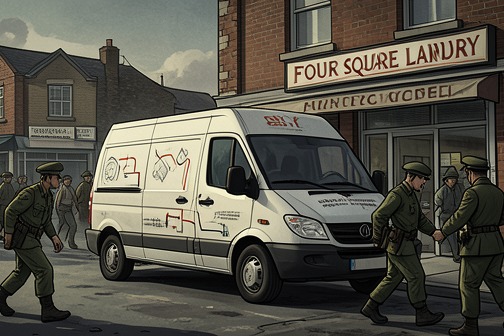
The [Four Square Laundry intelligence-network raids](entity:event-recall-event-four-square-laundry-79cdd68c2e79) were a coordinated [Irish Republican Army](entity:organization-recall-organization-irish-republican-4bff46a4b2bf) attack on a British intelligence operation in [Belfast](entity:location-recall-location-belfast-8a60016bc9a1). Built around a seemingly ordinary laundry business, the network turned clothing, household routines, and a delivery van into means of surveillance; the raids struck three of its locations in rapid succession. They killed undercover soldier [Ted Stuart](entity:character-recall-character-ted-stuart-285c9d8c3bf3) and disrupted the apparatus, but did not establish that every person involved had been reached. The operation’s tactical success and its uncertain details alike became part of the contested record of the conflict.
## The intelligence network
The operation came to light through Seamus Wright and [Kevin McKee](entity:character-recall-character-kevin-mckee-2ebb49a4613c), men who had been recruited by British handlers and then caught by the IRA. Rather than execute them immediately, [Brendan Hughes](entity:character-recall-character-brendan-hughes-1230acbdf136) proposed using them as triple agents. They were to provide the British with low-level information or misinformation, while supplying the IRA with intelligence. Hughes promised that if they delivered, they could earn immunity for their original offence. The arrangement exposed Wright and McKee to danger from both sides, but the information they brought back revealed a substantial British intelligence network around Belfast.
[Four Square Laundry](entity:organization-recall-organization-dcea1500d4b0) provided a real door-to-door collection and delivery service, with a city-centre office and clothes sent on to an industrial laundry for washing. Before that happened, however, British authorities examined garments for traces of explosives, which could suggest that bombs were being made or stored at a property. They also compared the clothes collected at an address with the apparent number, ages, and genders of its residents. A mismatch might indicate an arms drop or a safe house. The service made ordinary domestic evidence available for intelligence work, folding surveillance into a routine customers could mistake for a purely commercial errand.
The van extended that surveillance into the street. Its hollow roof concealed a soldier, who could photograph people and houses through a hidden opening. The network also included a massage parlour above a house on the Antrim Road. There, according to the information gathered by Hughes’s men, a chatty masseuse could prompt relaxed customers to disclose information. What appeared to be separate, modest operations—the laundry, the office, the parlour—formed an apparatus whose value lay in collecting and connecting details.
## Planning the coordinated attacks
Hughes wanted to move against the network as soon as he learned of it. [Gerry Adams](entity:character-recall-character-gerry-adams-6d84cf7a2514) urged caution and further intelligence-gathering instead. The delay was tactical: attacking one location would warn the people running the others, allowing the wider operation to disappear or change. By early October, Hughes and his team judged that they knew enough to act. They planned three near-simultaneous strikes on the van, the city-centre office, and the massage parlour, aiming to hit the whole apparatus within about an hour.
The plan made coordination essential. The IRA teams were not simply to attack a single vehicle or premises; they were to prevent the first strike from alerting the other sites. At the van, the target was not only the two people operating the laundry service. The gunmen were also ordered to fire through its ceiling, where the concealed soldier might be hiding. This instruction reflected the network’s physical design: the hollow roof that enabled surveillance also made the vehicle a potential hiding place during the attack.
## The raids and their immediate result
Ted Stuart was driving the van. A twenty-year-old undercover British sapper with the Royal Engineers, he had wanted to be a soldier since childhood and had been serving in [Northern Ireland](entity:location-recall-location-northern-ireland-c23b7da68651) since June. The IRA hit team opened fire on the vehicle, and Stuart died almost instantly. His partner, [Sarah Jane Warke](entity:character-recall-character-sarah-jane-warke-0dd7aaf3a25d), was also an undercover soldier, serving with the Women’s Royal Army Corps. When the gunmen turned on her, she ran into a nearby woman’s house, bringing the woman and her children inside. Thinking quickly, Warke told them that the attack must be a loyalist ambush. The woman helped her escape through the back door.
The other teams attacked the massage parlour and the office. Neither attack hit any other members of the [Mobile Reaction Force](entity:organization-recall-organization-mobile-reaction-5d75c723e523). At the van, the gunmen did not fire through the ceiling as ordered. The account leaves open whether a third soldier was concealed there; if so, that person survived. The omission may have resulted from haste or panic, but the evidence does not settle which. The difference between the intended operation and what happened on the ground is important: the network was struck at all three points, yet the attackers did not conclusively eliminate everyone the plan had targeted.
## Tactical victory and the unresolved aftermath
The raids were remembered within the republican account as a major success. Hughes was proud of how they had unfolded, and decades later Adams described the operation as a devastating blow to the British. That assessment captures the scale of the intelligence network exposed and the value of striking its sites together. It does not, by itself, erase the failed attempt to reach the possible soldier in the van or the fact that the attacks on the other locations hit no further members of the Mobile Reaction Force.
Wright and McKee presented a separate, troubling aftermath. On the day of the operation, Wright told his wife, Kathleen, that he needed to be careful because, before his release by the British, he had signed papers relating to the Official Secrets Act. That night a car arrived at the family home on Bombay Street. Wright spoke briefly with the driver, got into the passenger seat, and disappeared. When Kathleen asked the IRA what had happened, she was told that it had not taken him. The army denied involvement as well, while military sources suggested to the press that he might have gone to Scotland. McKee vanished around the same time. Thus the intelligence supplied by the two men helped bring about a celebrated attack, but their own fates remained hidden from their families in its immediate aftermath.
## The operation in the politics of memory
The raids’ later significance sits within a wider struggle over how the conflict would be remembered. The conflict ended in a political stalemate, and the [Good Friday Agreement](entity:event-recall-event-good-friday-agreement-f0a8e2fc0bef) established power sharing without creating a formal process to determine how the past should be understood or commemorated. Gerry Adams’s refusal to acknowledge IRA membership further sharpened the sense that public admission of wartime roles remained fraught. In this context, the operation’s history—its operational details, the deaths and disappearances around it, and the claims made years later—could not be treated as a settled story merely because one side called it a victory.
The later landscape of Belfast made that tension visible. A Troubles Tour could guide visitors to former flashpoints and decode murals of battles, martyrs, and gunmen, making the conflict appear like distant history. Yet division persisted in neighbourhoods and public life. A report on paramilitary groups after their ceasefires argued that their continuing hierarchies could help restrain members and manage the transition away from extreme violence. Critics such as Brendan Hughes, [Dolours Price](entity:character-recall-character-dolours-price-f885017ba474), [Marian Price](entity:character-recall-character-marian-price-658a98519733), and [Anthony McIntyre](entity:character-recall-character-anthony-mcintyre-a9506a6098eb), by contrast, saw the political leadership’s discipline as self-interested and intolerant of dissent. The raids therefore belong both to the history of intelligence and counter-intelligence and to a later contest over who could narrate republican armed struggle, what could be admitted, and which uncertainties would remain in public memory.
Event 25
Abduction and execution of Seamus Wright and Kevin McKee
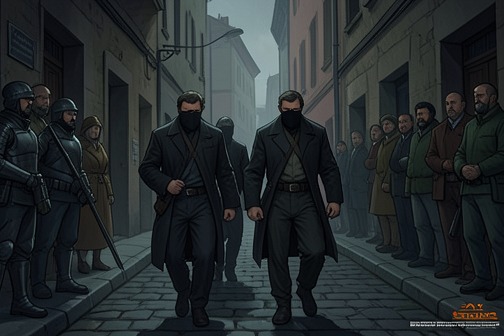
The abduction and execution of Seamus Wright and [Kevin McKee](entity:character-recall-character-kevin-mckee-2ebb49a4613c) began as an intelligence reversal and ended in the killing of two men who had briefly been offered a way to survive their betrayal. After the Provisional IRA discovered that they were working with the British, [Brendan Hughes](entity:character-recall-character-brendan-hughes-1230acbdf136) used them as triple agents. Their intelligence helped expose the [Four Square Laundry](entity:organization-recall-organization-dcea1500d4b0) surveillance network, but their usefulness ended with the raids against it. The promise of immunity that Hughes had given them could not protect them: both men disappeared into IRA custody and were executed, leaving Hughes with a broken word that troubled him for the rest of his life.
## Exposure and the double-agent plan
Wright and McKee had both confessed under interrogation to betraying the organisation and working with the British. McKee’s appearance made the arrangement especially visible: the [Mobile Reaction Force](entity:organization-recall-organization-mobile-reaction-5d75c723e523) had given him a pistol and shoulder holster, and he had worn the holster openly. As a Fred, he was permitted to carry the weapon and use the firing ranges at an army base. The Provisional IRA now knew that the British had recruited men from within its own world, although the full dimensions of the intelligence operation remained unclear.
The ordinary fate of a discovered informer, as the account describes it, was a court-martial, a guilty verdict, a shot in the back of the head, and a body dumped beside a road. But the British did not appear to know that Hughes had uncovered the breach, and Wright and McKee were willing to do whatever might save their lives. Hughes chose to exploit that opening rather than execute them immediately: they could return to their British handlers while secretly supplying information to the IRA.
The arrangement offered no safety. Wright was instructed to give the Freds low-level information or, better still, misinformation. If asked to identify a Provisional IRA member on a street corner, he could point to a Sticky instead. Discovery by the army might mean prison or death at the hands of the Mobile Reaction Force. Hughes nevertheless told both men that useful intelligence would earn them immunity for their original betrayal. Their continued lives now depended on serving two organisations whose interests were irreconcilable.
## The Four Square operation and the loss of leverage
Wright and McKee delivered information about a British intelligence network built around Four Square Laundry. The business operated as a genuine door-to-door laundry service, collecting clothes and linens and sending them to an industrial laundry. Before the items reached the laundry, British authorities examined them for traces of explosives and compared the clothing with the reported number, ages, and genders of the people living at an address. A mismatch could suggest that a property was being used as an arms drop or call house. The laundry van had also been fitted with a hollow roof, allowing a concealed soldier to photograph people and houses through a hidden opening.
The Provisional IRA mounted simultaneous attacks on the network’s sites. Gunmen attacked the laundry operation and its associated locations, including an office and a massage parlour. [Sarah Jane Warke](entity:character-recall-character-sarah-jane-warke-0dd7aaf3a25d), an undercover soldier who was with [Ted Stuart](entity:character-recall-character-ted-stuart-285c9d8c3bf3), escaped into a local woman’s house and was helped out through the back door. The attackers had also been ordered to fire into the van’s ceiling to kill any soldier hidden there, but they did not do so; if a soldier was inside, he survived. The operation was a major intelligence success for the Provisional IRA. [Gerry Adams](entity:character-recall-character-gerry-adams-6d84cf7a2514) later described it as a devastating blow to the British.
That success did not secure Wright and McKee’s freedom. On the day of the raids, Wright told his wife, Kathleen, that he needed to be careful because he had signed papers relating to the Official Secrets Act before his release by the British. That night a car came to the family’s home on Bombay Street. Wright spoke briefly with the driver, got into the passenger seat, and was driven away. When he did not return, Kathleen went to the Provisional IRA on Leeson Street and was told that it had not taken him. She feared the army had seized him, but the army also denied involvement. Military sources suggested to the press that he might have left for Scotland.
McKee disappeared around the same time. An aunt had warned him that the IRA was looking for him, but he replied that he had done nothing wrong. His family did not contact the police, believing the authorities would be more hindrance than help. Rumours placed him in art school or in England. The truth, as the narrative later establishes, was that the IRA had taken both men. Once the Four Square raids were complete, their intelligence had served its purpose and they no longer possessed leverage. Hughes had promised immunity, but he had not been authorised to guarantee it. Their initial betrayal remained unforgivable to the organisation, notwithstanding their subsequent work as triple agents.
## Across the border and the executions
The [Unknowns](entity:character-recall-character-unknowns-b130c4534a21) were summoned, and [Dolours Price](entity:character-recall-character-dolours-price-f885017ba474) drove Wright and McKee south across the border into the Republic. She had been raised to despise informers, but concealed her contempt during the journey. The men were relaxed after the success of the operation and believed they had earned their lives back. They had been told they were going for a week of rest and recovery. Price assured them that they would get their strength back; as far as she knew, that was true, though she suspected otherwise and was following orders. In Monaghan, she left them with the local unit.
McKee was held in [County Monaghan](entity:location-recall-location-county-monaghan-3013209cdc16) at a house belonging to the family of Fergal O’Hanlon, an IRA man killed in the 1950s. Senior leaders were expected to cross the border for McKee’s court-martial, so he waited with the people guarding him. They grew fond of him: he was a good cook and an engaging companion. At one point he borrowed the use of a nearby priest’s home to telephone his mother and ask her to bring a change of clothes. His mother and aunts made the journey, but when they reached the house McKee was gone. A man there told them to take the clothes away because he would not be coming back.
When the local volunteers were expected to execute McKee, they could not bring themselves to shoot a man they had come to like. Hughes understood their attachment as a reversal of Stockholm syndrome: the captors had grown attached to their hostage. Two gunmen from [Belfast](entity:location-recall-location-belfast-8a60016bc9a1) were sent in their place. Before the killing, a priest was summoned to give McKee the last rites. The execution followed a practised sequence: a bag over the head, hands bound behind the back, and the condemned man kneeling in the grass before the shot. The ritual preparations sharpened the contrast between the human ties McKee had formed with his guards and the organisation’s final decision to kill him.
## Hughes’s broken promise and the event’s record
Hughes felt betrayed by the decision to disappear Wright and McKee. He had given them his word that they would not be killed, but the assurance exceeded the authority he actually possessed. Their executions therefore marked more than the end of the double-agent operation: they exposed the cost of a promise made in a clandestine organisation where one commander’s word could not overrule the organisation’s punishment for informing. Hughes remained troubled by the breach for the rest of his life.
The event’s later recovery depended in part on testimony produced under unusually guarded conditions. [Ed Moloney](entity:character-recall-character-ed-moloney-9d7f20a1f93b) proposed that former combatants speak for an oral-history archive whose contents would remain sealed until after participants’ deaths; [Anthony McIntyre](entity:character-recall-character-anthony-mcintyre-a9506a6098eb), himself a former Provisional IRA member, conducted long interviews and sent recordings and transcripts to [Boston College](entity:location-recall-location-boston-college-d69f5179339f) under coded names. Brendan Hughes was one of those participants, identified in the project materials as C. The archive’s confidentiality assurances later proved vulnerable: Boston College’s contracts had not been reviewed by university lawyers and did not warn that a court order might compel disclosure. That history matters to the reconstruction of the killings because testimony about clandestine actions was gathered within a culture in which speaking could carry personal and legal risks.
The book also places the episode against the uncertainties that surround other disappearances and retrospective accounts of the conflict. In the case of [Jean McConville](entity:character-recall-character-jean-mcconville-defffff134a9), her children’s recollection of the abduction date differed from the date suggested by a police log later examined by Nuala O’Loan; the discrepancy affected how the sequence of warning and disappearance could be understood. That separate case does not resolve the fate of Wright and McKee, but it illustrates why chronology, official records, and remembered testimony must be distinguished rather than collapsed into a single seamless account. Here, the clearest sequence is the one the narrative traces: confession, conditional use as double agents, intelligence success, loss of leverage, secret transfer, and execution. The success against Four Square could be celebrated as a victory over British surveillance, but it did not redeem the men who had made it possible.
Event 26
1973 Provisional IRA London bombings
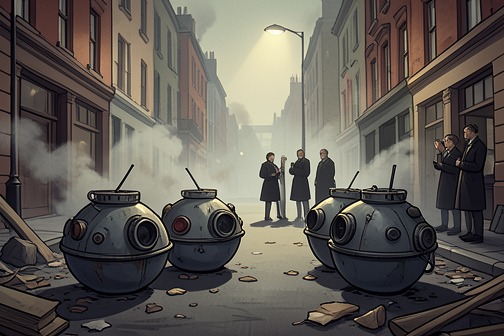
The [1973 Provisional IRA London bombings](entity:event-recall-event-1973-25f9a5766f25) were conceived as a political strike at the heart of the British capital: four car bombs would dramatize the [Northern Ireland](entity:location-recall-location-northern-ireland-c23b7da68651) conflict in England, while advance warnings were meant to prevent civilian deaths. The plan instead produced two devastating explosions, nearly 250 injuries and one death, turning an intended symbolic attack into a catastrophe whose consequences included the capture of its organizers.
## Background and Planning
The operation grew out of a conflict in which Catholics in Northern Ireland faced discrimination in employment, housing and political power. The civil-rights march from [Belfast](entity:location-recall-location-belfast-8a60016bc9a1) to [Derry](entity:location-recall-location-derry-d46e7068265a) on 1 January 1969 challenged those conditions through peaceful protest. But the ambush at [Burntollet Bridge](entity:location-recall-location-burntollet-bridge-7dc489249792) helped change [Dolours Price](entity:character-recall-character-dolours-price-f885017ba474)’s view of what protest could achieve. In 1971, she joined the IRA, swearing allegiance in her family’s front room and promising to obey the orders of a superior officer. Her entry also coincided with a change in the Provisionals’ rules: after a special Army Council meeting, women were admitted as full members for the first time. Price had rejected a supporting role and insisted on serving as a fighting soldier.
The [London](entity:location-recall-location-1bfd335cdd1b) mission was designed to make the conflict impossible for the British public to regard as a distant emergency. The [Unknowns](entity:character-recall-character-unknowns-b130c4534a21) selected targets intended to evoke political questions and sought approval from the leadership in Belfast. The date was deliberate: the bombing was scheduled for the day of a referendum on whether Northern Ireland should remain part of the [United Kingdom](entity:location-recall-location-united-kingdom-b48cd04982cf). In February 1973, six cars were hijacked at gunpoint in Belfast and taken to the [Republic of Ireland](entity:location-recall-location-republic-of-ireland-37b598657754). By early March, they had been repainted and fitted with false number plates. Four continued to England: a Ford Corsair, a Hillman Hunter, a Vauxhall Viva and a green Ford Cortina. Each carried more than a hundred pounds of powder explosives, with a sausage of gelignite, concealed beneath the rear seat and connected to a timer fashioned from a household alarm clock.
About a month before the attack, Price travelled to London with [Martin Brady](entity:character-recall-character-martin-brady-04c2682b8939) to scout the city. On 5 March, the team split into two groups. [Hugh Feeney](entity:character-recall-character-hugh-feeney-52ae40f86edb) led the first across the Irish Sea with the Cortina and Viva; [Marian Price](entity:character-recall-character-marian-price-658a98519733) led the second the following day with the Corsair and Hunter. At customs in Liverpool, officials held up the Hunter over its number plate. Brady was driving, with [Roisin McNearney](entity:character-recall-character-roisin-mcnearney-c4b7b1cd01e4) in the back. She left the car to use the toilet, and, while the questioning customs officer was called away, another official waved the group through. The scare prompted the team to cancel the journey of the last two cars rather than risk bringing more bombs into England.
As group leader, Dolours Price did not take the ferry. She flew from [Dublin](entity:location-recall-location-dublin-d76fcbad2c3f) under the assumed name Una Devlin. By 7 March, the crew had gathered in London, parked the cars in public garages and checked into separate hotels. The four intended targets were a British Army recruiting centre in [Whitehall](entity:location-recall-location-whitehall-ae3b9db3b8cd), the British Forces Broadcasting Service on [Dean Stanley Street](entity:location-recall-location-dean-stanley-street-050183b89d78), [New Scotland Yard](entity:location-recall-location-new-scotland-yard-4bcbd3c3ddaf) and the [Old Bailey](entity:location-recall-location-old-bailey-1fe06b0bf1ce). Telephone warnings were to be made shortly before 2 p.m.; the timers were set to detonate an hour later, giving the team time to return to Dublin on a late-morning flight from Heathrow. In view of the civilian toll of [Bloody Friday](entity:event-recall-event-bloody-friday-a9adac883a82), the team had been ordered to avoid casualties. At the National Gallery in Trafalgar Square, Price finalized arrangements and handed out plane tickets. She told the team members not to acknowledge one another on the street and warned them against drinking. Yet some went out drinking, and one became so drunk that he had to be carried out of a pub.
## Warnings, Explosions, and the Human Cost
On 8 March 1973, London’s early-spring calm was sharpened by an unusual traffic jam: a rail strike had forced commuters into cars, and parking restrictions had been suspended to accommodate them. Shortly after 2 p.m., Elizabeth Curtis, newly employed on the news desk at The Times, took a call from a man with a thick Irish accent who rapidly listed cars and their locations. Before hanging up, he warned that the bombs would explode in an hour. Journalist Martin Huckerby heard the information being relayed and ran to the Old Bailey, searching for a green Ford Cortina estate whose registration Curtis had transcribed. The warning gave the police a narrow window, but the city’s ordinary bustle and the scattered vehicles made the search a race against the timers.
At one of the cars, bomb-disposal officers found a thin white cord running beneath the carpet and nearly two hundred pounds of explosives packed under the rear seat. Its alarm-clock timer was audibly ticking. They cut the cord and prevented that bomb from exploding; investigators estimated that it would otherwise have detonated at about 3 p.m., although the minute hand had been removed. The long delay between the warning and the blast suggested that the bombers might be trying to escape, so Special Branch officers at ports and airports were ordered to close the exit routes and question Irish people preparing to leave. The authorities later presented their advantage as luck, while press reports raised the possibility that police had prior notice. The Price sisters and Hugh Feeney believed the operation had been betrayed. Decades later, a retired Special Branch officer said that a senior Provisional had warned him fourteen hours in advance, including that there would be four bombs and that the team included [Gerry Kelly](entity:character-recall-character-gerry-kelly-a0f8dd1a7cde) and two sisters named Price.
The warning did not prevent the explosions. In Whitehall, police found the Hillman Hunter outside the army recruiting centre with only five minutes remaining. An explosives expert climbed through a broken window but could not disarm the device in time. He and a sergeant tried to pull the detonating cord clear with a hook and long line as the timer reached its limit. The car split apart in a sheet of flame that rose forty feet; the blast lifted people from the pavement, shattered windows a quarter of a mile away and sent glass and metal fragments through the surrounding streets. A ruptured gas main added smoke and fire. Meanwhile, officers had dismantled the bomb in the Vauxhall Viva on Dean Stanley Street. At the Old Bailey, however, the response came too late. A policeman warned children leaving a school bus to run for cover, and they reached safety before the bomb exploded.
The Old Bailey blast tore away the front of the George pub, exposing its lounge, and hurled a police photographer across the street. A policeman evacuating jurors was thrown twenty feet; a cyclist was flung against a wall, and Martin Huckerby suffered cuts to his face and hands and was taken to St Bartholomew’s Hospital. Through smoke and hot dust, injured people tried to escape or help one another amid a carpet of broken glass. The two detonations injured nearly 250 people. The scene, familiar in Northern Ireland but jarring in the capital, recalled the Blitz to older Londoners. Nearby hospitals were also affected by a strike of non-medical workers, but workers abandoned their picket lines to help the bloodied casualties arriving at emergency wards.
Frederick Milton, a fifty-eight-year-old caretaker at Hillgate House beside the Old Bailey, was covered in blood by the blast. He refused medical advice to go to hospital and instead stayed to help other survivors. He collapsed hours later and died in hospital. An autopsy found that his heart attack had begun before the explosion, so the medical evidence did not support a murder charge. The distinction did not lessen the human cost of the attack: a mission planned as a symbolic strike, with warnings intended to avert civilian deaths, had killed a man and left hundreds injured.
Dolours Price attributed the casualties to the authorities’ slow response to the warnings, and the police acknowledged that human error in the control room had garbled the message about the Old Bailey, substantially delaying the search. A British prosecutor later argued that the warning had been a last-minute attempt to reduce punishment after the bombing team had been arrested at the airport, and speculated that killing people had been the mission’s intention. [Brendan Hughes](entity:character-recall-character-brendan-hughes-1230acbdf136), by contrast, said that the operation was envisaged as symbolic and ideally bloodless, as Bloody Friday had been. The account leaves both the stated precautions and their disastrous inadequacy in view: with explosives of such power, the warnings could not guarantee safety, and the plan unravelled with devastating consequences. Hughes later focused less on the human toll than on the failed escape strategy. He regretted that the IRA had not left the bombers in England to make their way home gradually, instead of trying to get them out quickly—a decision with momentous consequences.
## Arrest and Political Prisoner Status
After the bombing team was arrested at the airport, its members were taken to a nearby police station and stripped so their clothes could be tested for explosive residue. Dolours Price was photographed naked. The authorities’ forensic procedure was followed by a dispute over the status the prisoners claimed for themselves: some accepted prison uniforms, but Dolours and Marian Price refused them, regarding themselves as captured soldiers of a legitimate army rather than ordinary criminals. The sisters draped rough prison blankets over their bodies; Hugh Feeney refused even a blanket and stood naked in his cell.
The prisoners were separated, though the sisters briefly crossed paths in an interview room. Their refusal of prison clothing made the political meaning of the operation continue after its bombs had exploded: they insisted that capture did not convert armed service into common criminality. The episode thus joined the material aftermath of the attack—searches for explosive traces and detention—to the republican claim that its participants were political prisoners.
## Political Afterlife and Memory
The bombing’s aftermath extended beyond imprisonment into a political landscape that was changing the terms of republican action. In 1981, the death of [Frank Maguire](entity:character-recall-character-frank-maguire-959d5f6d0c78) created a by-election opportunity, and [Bobby Sands](entity:character-recall-character-bobby-sands-cb073d403dee)’s decision to contest his seat from prison brought electoral politics into the struggle over the hunger strike. Sands’s campaign marked a departure from the abstentionist tradition that had long made republicans wary of parliamentary participation. Two years later, Dolours Price canvassed for [Gerry Adams](entity:character-recall-character-gerry-adams-6d84cf7a2514) in [West Belfast](entity:location-recall-location-west-belfast-27ebba5f4bec), urged voters to support him and drove voters to polling stations; Adams won. Price had abandoned violence as a means of pursuing [Irish unity](entity:concept-recall-concept-irish-unity-b50744f64331), but not republicanism: her campaigning showed how a former participant in the London operation could support the movement’s turn toward electoral politics.
The meaning of the bombings also remained entangled with the wider struggle over who could speak for the past. After the [Good Friday Agreement](entity:event-recall-event-good-friday-agreement-f0a8e2fc0bef), Northern Ireland had no formal process for deciding how to understand or commemorate the conflict. Gerry Adams continued to deny that he had been in the IRA, while Sinn Féin’s leadership maintained a disciplined account of republican armed struggle and peace, leaving critics such as [Anthony McIntyre](entity:character-recall-character-anthony-mcintyre-a9506a6098eb) outside its preferred narrative. The later oral-history work associated with [Boston College](entity:location-recall-location-boston-college-d69f5179339f) sought testimony from former republicans, but the stigma attached to speaking to outsiders showed how the movement’s code of silence could outlast the operations it had once protected. In that unresolved contest over memory, the London bombs were more than a completed attack: they belonged to a history whose violence had ended without producing agreement about how it should be told.
Event 27
Trial of the London bombing defendants at Winchester Castle
The 1973 trial of the [London](entity:location-recall-location-1bfd335cdd1b) bombing defendants at [Winchester Castle](entity:location-recall-location-winchester-castle-21b00e4ec0e0) brought [Dolours Price](entity:character-recall-character-dolours-price-f885017ba474), [Marian Price](entity:character-recall-character-marian-price-658a98519733), and eight other captured defendants before a jury in an improvised courtroom. It ended in convictions for the remaining defendants and long prison sentences, but the sentencing also transformed the dock into a public political arena: after months of refusing to discuss their IRA membership, the defendants declared themselves republican volunteers and prisoners of war.
## Setting and Stakes
The proceedings began in autumn 1973, after the London bombing had damaged the [Old Bailey](entity:location-recall-location-old-bailey-1fe06b0bf1ce). The courthouse remained under repair, the government wanted the case expedited, and trying defendants accused of seeking to destroy the Old Bailey inside that same building risked appearing prejudicial. The trial was therefore transferred to the Great Hall of Winchester Castle, a thirteenth-century chamber whose medieval stone, marble columns, and stained glass gave the proceedings a setting unlike an ordinary modern courtroom.
The hall’s history sharpened that contrast. Sir Walter Raleigh had been convicted of treason there in 1603 for plotting against King James I. An enormous oak replica of the surface of King Arthur’s round table hung on one wall, its bands of green radiating from a Tudor Rose. In this old seat of judgment, the prosecution sought to establish the defendants’ part in a contemporary bombing campaign. The ten defendants faced charges of conspiring to cause an explosion likely to endanger life.
[Michael Mansfield](entity:character-recall-character-michael-mansfield-8ace65de6b26) agreed to represent the Price sisters despite the political hostility surrounding the case. He had been injured when the bomb exploded and his Triumph was ripped apart, yet he accepted the brief and was curious to meet the women accused. They sat on plastic chairs with their knees drawn up and spoke to him about abuses against Catholics, internment, [Bloody Sunday](entity:event-recall-event-bloody-sunday-6d124ab1fb60), and the loyalist attack at [Burntollet Bridge](entity:location-recall-location-burntollet-bridge-7dc489249792). Mansfield, who considered himself a radical, saw that they had chosen a life more exposed to danger than his own legal vocation. His personal proximity to the bombing did not prevent him from defending its accused perpetrators.
## Evidence and the Fracture in the Defence
The defendants mostly denied the charges. Nineteen-year-old William McLarnon pleaded guilty on the first day; the others maintained their innocence. Dolours Price said she had come to London the day before the bombing for a short holiday with Marian and [Hugh Feeney](entity:character-recall-character-hugh-feeney-52ae40f86edb). She explained that she had used the name Una Devlin because her republican family background brought unwanted attention from the authorities, and giving a false name had become almost instinctive.
The courtroom performance was at odds with the gravity of the allegations. The sisters appeared lively and confident, and laughed when the prosecution displayed a photograph of Mansfield’s wrecked car. Mansfield reminded them that he might have been inside it. Their composure did not remove the pressure of the evidence. At the airport, Dolours had been stopped with a black canvas shopping bag containing, among other things, a [Brian Friel](entity:character-recall-character-brian-friel-4fa15c162519) play programme, makeup, two screwdrivers, and a spiral-bound notebook. Its surviving pages included religious reflections and calorie lists, but other pages had been torn out. A forensic witness showed the jury indentations left on the blank pages: they formed a bomb-timing diagram. Mansfield, who had previously challenged handwriting evidence successfully, could not blunt the force of this exhibit.
A more consequential fracture came from [Roisin McNearney](entity:character-recall-character-roisin-mcnearney-c4b7b1cd01e4), the youngest member of the team. At first she repeated the others’ account that she was merely visiting London. During police questioning, however, she said that she supported a united [Ireland](entity:location-recall-location-ireland-3247a2c8bcbe) but opposed violence, and feared that disclosing what she knew would bring a bullet. She told investigators she had joined the IRA six months earlier and described her part in the operation, while presenting herself as a minor figure at its edge. Although she confessed and cooperated, she pleaded not guilty. The others did not learn until the trial began that she had given the police a detailed account.
## Verdict and Political Defiance
The ten-week trial presented McNearney’s cooperation as a concealed breach within the group, but it did not immediately reveal its consequences to the defendants. On the day of the verdict, security at the makeshift courthouse was unusually conspicuous: entrants were searched, fifteen prison officers accompanied the defendants, detectives sat behind the jury, and the doors were bolted. Mansfield thought the arrangements fostered an atmosphere of guilt. The public gallery, crowded with Irish supporters, watched as the jury delivered its decisions.
Judge Shaw first announced McNearney’s acquittal. He addressed her as she stood in a white shawl and pink blouse, expressing the hope that she had learned not to become involved in murderous enterprises and warning that he could not know what dangers might await her outside court. The defendants responded with a funeral march: they hummed Handel’s “The Dead March” from Saul as McNearney was led away. Hugh Feeney threw a coin after her and called it blood money. McNearney fled the hall in tears. The scene made the group’s judgment of her betrayal audible and public, even as the court released her.
The remaining defendants were convicted. Judge Shaw imposed the maximum so-called life sentence, which in practice meant twenty years for five of the bombers. He gave Dolours, Marian, and Hugh Feeney thirty years because of their leadership roles. Dolours called the sentence a death sentence. Shaw then reduced the three sentences to twenty years, but the defendants objected loudly enough that he ordered them to be quiet. The Price sisters refused.
Their silence about IRA membership ended only after the sentences had been passed. The defendants began speaking at once, turning from legal defence to political declaration while friends and relatives applauded from the gallery. Marian announced that she stood before the court as an IRA volunteer and considered herself a prisoner of war; supporters called for the Provisionals and shouted that there would be no surrender. Judge Shaw insisted that the dock was a court of law, not a political arena. By then, his attempt to define the meaning of the room had lost control of the moment.
## Memory and Later Reassessment
The trial’s importance did not end with the verdict. Its courtroom disclosures, denials, and divided loyalties became part of a larger struggle over who could speak about the conflict and whose account would be believed. Years later, the children of [Jean McConville](entity:character-recall-character-jean-mcconville-defffff134a9) recalled that she had been abducted in early December 1972, after being questioned and beaten. A police log reviewed by Nuala O’Loan recorded a woman identified as Mary McConville, apparently Jean, found wandering in [West Belfast](entity:location-recall-location-west-belfast-27ebba5f4bec) after being warned to stop giving information to the military. The log dated that episode to 29 November, complicating both the family’s chronology and [Brendan Hughes](entity:character-recall-character-brendan-hughes-1230acbdf136)’s later account. The discrepancy illustrates why recollections and official records could not simply be made to fit a single, settled story.
The same tension reappeared in oral-history disputes. Dolours Price did not mention Jean McConville in her recorded conversations with [Anthony McIntyre](entity:character-recall-character-anthony-mcintyre-a9506a6098eb) for the [Belfast](entity:location-recall-location-belfast-8a60016bc9a1) Project, but separate interviews [Ed Moloney](entity:character-recall-character-ed-moloney-9d7f20a1f93b) conducted with her included a detailed discussion of the disappearance. In one exchange, Price said that she and others had been called back to [Dundalk](entity:location-recall-location-dundalk-adc76dac93ed) after McConville had been held for several days. A local unit had dug a grave, she said, but its members did not want to shoot her, perhaps because she was a woman. These later accounts were not evidence presented at the Winchester trial; they show how its unresolved questions continued to circulate through testimony and retrospective investigation.
The book’s wider account places the trial within a post-conflict contest over public memory. It describes Sinn Féin’s leadership as maintaining a coherent account of republican armed struggle and peace, while critics such as McIntyre regarded that discipline as a monopoly over memory. A later assessment of paramilitary cohesion, by contrast, suggested that continuing hierarchies could restrain members and help prevent a return to violence. Those interpretations do not settle the truth of the trial’s disputed claims. They echo the conflict already visible in Winchester: a court sought to classify acts and assign sentences, while the defendants and their supporters insisted that the same proceedings must also be read as a political struggle.
Event 28
Price sisters’ 206-day hunger strike
The [Price sisters’ 206-day hunger strike](entity:event-recall-event-price-3b7bdbcecee0) was a confrontation over who controlled the prisoners’ bodies, their political identity, and where they would serve their sentences. [Dolours Price and Marian Price](entity:relation-recall-relation-dolours-price-and-ma-f3ddddaf4796) refused food after their conviction at [Winchester Castle](entity:location-recall-location-winchester-castle-21b00e4ec0e0), demanding political-prisoner status and transfer to [Northern Ireland](entity:location-recall-location-northern-ireland-c23b7da68651). Their protest became an ordeal of repeated force-feeding and deliberate resistance; it ended only after the [British government](entity:organization-recall-organization-66a95d21d932) assured them they would be transferred, and even then their return was not immediate.
## Background and Demands
After their conviction, the sisters announced that they would refuse food until they were recognised as political prisoners and sent to Northern Ireland to serve their sentences. They were taken to [Brixton Prison](entity:location-recall-location-brixton-prison-1f2109b23cb2), an all-male institution where they were treated as an exceptional security risk. The prison assigned Dolours the number 286185, an administrative identity that stood in stark contrast to the political identity she and her sister were asserting. They had no intention of remaining in prison for the lengthy sentences imposed on them; both were prepared to continue the strike until death if necessary.
Their demand was not simply to leave Brixton. They insisted that their actions belonged to a political struggle, not ordinary criminality, and that this distinction should determine their treatment and place of imprisonment. [Hugh Feeney](entity:character-recall-character-hugh-feeney-52ae40f86edb) and [Gerry Kelly](entity:character-recall-character-gerry-kelly-a0f8dd1a7cde), held in other prisons, joined the protest. The sisters’ strike thus became a collective demand, while their transfer to Northern Ireland remained its specific objective.
The action drew on a long Irish tradition of fasting as protest. For Dolours, the prison was where an [Irish Republican Army](entity:organization-recall-organization-irish-republican-4bff46a4b2bf) volunteer’s allegiance to the cause was tested, and she regarded the possibility of dying in Brixton as an extension of the deaths of volunteers on the streets. She connected the sisters’ imprisonment to the memory of [Terence MacSwiney](entity:character-recall-character-terence-macswiney-649b7fd810a1), who had died on hunger strike, and to the wider history of Irish suffering under British rule. In her political framing, the body itself could become a weapon: the prisoners had little physical power against the state, but their threatened deaths could make the authorities answer publicly for what happened to them.
## Force-Feeding at Brixton
The British government faced the prospect that a prisoner’s death would provoke a political crisis and feared the possibility of retaliatory violence. It nevertheless refused, at first, to meet the sisters’ demands. On 3 December, after Dolours had been on strike for about two and a half weeks, prison doctors and nurses took her from her cell and strapped her to a chair bolted to the floor. They forced open her mouth, placed a wooden gag-like device between her jaws, and pushed a rubber tube down her throat. A blended mixture of raw eggs, orange juice, and liquid Complan was poured through the tube. Dolours vomited soon after the feeding, but the intervention was repeated.
Two days later, Marian was force-fed as well. The procedure became a daily ritual: at ten each morning, doctors and nurses entered the sisters’ cells, restrained them, and fed them through tubes. They were weak from refusing food, and sometimes vomited while the tube was still in place, nearly choking. The process was not only an attempt to keep them alive; it subjected their bodies to an imposed routine that they had not chosen. The sisters faced that coercion while continuing to reject the food and the political terms represented by their imprisonment.
Their letters reached the press, prompting public criticism of force-feeding. The [Home Office](entity:organization-recall-organization-3649e856c858) initially defended the practice as an effort to prevent prisoners from killing themselves. The sisters, however, did not regard survival under compulsion as a resolution of their protest. Their determination to remain on strike, alongside the physical risks of the procedure, turned the prison’s attempt to preserve their lives into an increasingly dangerous contest.
## Resistance and the End of Feeding
In May, the government stopped force-feeding the sisters after doctors could no longer safely continue. By then, the doctors had artificially fed them for 167 days. The end came not because the sisters had withdrawn their demands, but after they changed how they confronted the procedure. Rather than endure it with as little outward resistance as possible, they struggled forcefully as staff tried to restrain them and insert the tubes. Dolours described the encounters as involving clamps, restraint, and screaming; the sisters made clear that an attempt to feed them could result in the doctors killing them.
Their resistance made the procedure difficult and dangerous to perform. After several such encounters, the doctors refused to continue. The decision was clinical rather than political: the minimum cooperation needed to carry out artificial feeding had been withdrawn. [Roy Jenkins](entity:character-recall-character-roy-jenkins-c36c373cec9f), responsible for explaining the change in policy, publicly attributed the cessation to the sisters’ refusal to cooperate and criticized their parents, [Albert Price](entity:character-recall-character-albert-price-3e55cd4fc455) and [Chrissie Price](entity:character-recall-character-chrissie-price-f0fd93015262), for encouraging them. The episode exposed the limits of the government’s chosen response: feeding could keep the sisters alive, but it could not make them accept the state’s terms, and the attempt to impose it carried its own risk of death.
## Settlement and Delayed Transfer
On 8 June, after 206 days on hunger strike, Dolours and Marian issued a statement with Gerry Kelly and Hugh Feeney announcing that they would end the protest. They said that Roy Jenkins had assured them they would be returned to Northern Ireland. Their statement presented the decision as conditional on that assurance and maintained that the strike had not been intended as suicide, but as a means of securing what they regarded as modest demands. The end of the fast was therefore a negotiated pause in a political confrontation, not a renunciation of its purpose.
The promised transfer did not happen at once. Instead, the sisters were moved to the women’s wing at [Durham Prison](entity:location-recall-location-durham-prison-f68831b4c679). In March 1975, the prison governor summoned them to their cells and told them they were being sent to [Armagh Prison](entity:location-recall-location-armagh-prison-95d8bdc1b3df). Dolours had begun packing before the announcement, sensing that a move might be imminent; when told the destination, she accepted it as near enough to home. The distance between the assurance that ended the strike and the eventual transfer gives the ending its qualification: the protest secured a commitment, but the sisters remained in English custody for months afterward.
## Significance
The strike made the dispute over political status visible through a conflict over physical control. Brixton’s prisoner numbers, locked cells, restraints, and feeding tubes placed the sisters under institutional power; their continued refusal and later struggles asserted a form of agency within that confinement. The government could keep them alive by force, but could not thereby resolve the political demand that had led them to stop eating.
The episode also brought together personal solidarity and a wider political tradition. Dolours refused Marian’s offer to come off the strike alone, insisting that they would end it together or not at all. Their shared position made the protest more than two parallel refusals: each sister’s fate was bound to the other’s. Its eventual conclusion, after an assurance of transfer and a prolonged delay before they reached [Armagh](entity:location-recall-location-armagh-b71dc3c3893d), preserved that tension between collective resolve and the state’s control over the conditions of imprisonment.
Event 29
Brendan Hughes's escape from Long Kesh Prison
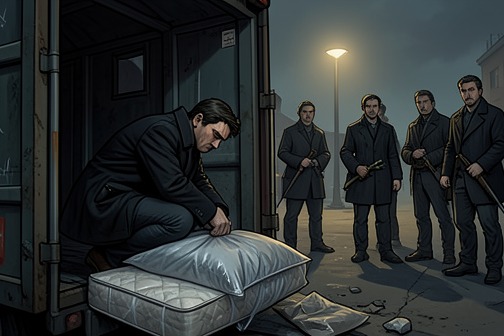
[Brendan Hughes’s escape from Long Kesh](entity:action-recall-action-long-kesh-5f65b8a564f8) Prison in December 1973 turned the prison’s most ordinary routine into a way out: concealed inside a discarded mattress, he rode a rubbish lorry through the camp and past its gates. The escape was neither swift nor clean. It depended on help from [Thomas Valliday](entity:character-recall-character-thomas-valliday-74fe5cd19843), exposed Hughes to the possibility of being impaled during a refuse inspection, and ended with him stranded in a loyalist area without the car arranged to collect him.
## The plan and the prison routine
Hughes had told the police when he was captured that he intended to escape, and he meant it. Within thirty-six hours of arriving at [Long Kesh](entity:location-recall-location-long-kesh-90c48f775ab3) the previous summer, he was already discussing possible routes with comrades. [Gerry Adams](entity:character-recall-character-gerry-adams-6d84cf7a2514) considered Hughes important enough to the current phase of the struggle that he should escape before Adams himself. Yet the camp’s security made a straightforward breakout unlikely: it was ringed with barbed wire and surrounded by troops, and the few previous escapes had depended on disguises rather than force. [Francie McGuigan](entity:character-recall-character-francie-mcguigan-df6f25197fbd) had walked out in borrowed black robes among a visiting delegation of priests; John Francis Green later escaped through a clothes switch with his priest brother.
The rubbish lorry offered a different possibility, built around a familiar task. As an orderly, Thomas Valliday rode in the truck on its daily rounds, collecting refuse from different parts of the camp. Discarded mattresses were among the objects left beside the rubbish outside the barbed-wire cages around the prisoners’ Nissen huts. On a Saturday morning in December, Valliday lifted one such mattress onto the truck. It was much heavier than usual, but he showed no surprise: Hughes was rolled up inside it.
The plan drew on what prisoners believed about the lorry’s inspections. Before the truck left the grounds for the dump, guards were supposed to probe rubbish bags with a spear. The IRA had an intelligence network inside the prison, and information from it suggested that the guards had recently stopped doing so. Another escape, Seamus Twomey’s helicopter extraction from [Mountjoy Prison](entity:location-recall-location-mountjoy-prison-3182e764f643) in [Dublin](entity:location-recall-location-dublin-d76fcbad2c3f), had encouraged the prisoners, even as it contributed to tighter security. The lorry’s rounds, twice daily, seemed to offer a less conspicuous route—but one whose safety rested on uncertain intelligence.
## Concealed in the load
The mattress became both hiding place and immediate danger. Hughes climbed into its centre while others rolled it around him. As the lorry moved through the camp, rubbish was periodically dumped on top. The cheap mattress was filled with sawdust, which pressed into his nose and eyes and made breathing difficult. He had brought an orange to suck for fluid and blood sugar, and kept it in his mouth as he waited, unable to see what was happening around him.
At one stop, Valliday whispered that the truck could not yet leave: it had to collect more rubbish, and a head count was due at four o’clock. If Hughes were found missing, the guards would lock down the camp and raise the alarm. Valliday advised him to get out and sneak back to his cage. Hughes stayed hidden. The lorry then entered the British Army compound, carrying him not toward freedom but into a particularly dangerous part of the camp. Sawdust irritated one eye so badly that he could not open it, but he remained still.
Near the exit, the lorry stopped again. Hughes knew the route should take it over two security ramps before turning right out of Long Kesh. Then a large spike plunged into the refuse just beside him. A second spike probed the bags on the other side. The intelligence had been wrong: the guards were still checking the load. Hughes considered giving himself up rather than risk being struck by the next thrust, and thought of his two young children back in [Belfast](entity:location-recall-location-belfast-8a60016bc9a1). The lorry moved before he did. It crossed both ramps, turned right, and left the camp.
## Outside the gates
On the open road, Hughes tried to cut through the mattress with a small penknife, but the blade bent. He clawed and kicked his way free instead, dislodging rubbish onto the road as he escaped the makeshift wrapping. He feared the driver might see the movement in the rearview mirror, but the lorry continued toward the dump.
At the top of Hillsborough Road, Hughes knew the lorry would make a sharp right turn followed by a sharp left. He used those turns to jump down unnoticed. He watched the truck drive away, anxious that the driver might have spotted him, but it continued on its route. The escape had carried him beyond the prison perimeter; it had not delivered him to safety.
Gerry Adams had arranged for a car to meet Hughes outside, but the lorry had taken so long to complete its rounds that Hughes missed the rendezvous. He stood caked in filth, with one eye swollen shut, and had no change of clothes or immediate getaway. Unlike the prisoners who had escaped from the Maidstone prison ship and found help in a local pub, Hughes was in the middle of a loyalist area. He had not put enough distance between himself and Long Kesh, and expected that troops would flood the surrounding area once his absence was discovered at the head count. He needed to reach the [Republic of Ireland](entity:location-recall-location-republic-of-ireland-37b598657754), had little time, and was now the most wanted man in [Northern Ireland](entity:location-recall-location-northern-ireland-c23b7da68651).
## Significance
The escape’s tension comes from the gap between a plan’s apparent simplicity and the material world resisting it at every turn. The ordinary mattress becomes a cramped enclosure; the rubbish lorry, a vehicle of possible escape and sudden exposure; the inspection spike, a routine security tool with the power to turn concealment into a fatal trap. Hughes gets beyond the gates not through a cleanly executed operation but through delay, chance, and his decision to remain hidden when Valliday’s warning offered a safer return to the cage.
The episode also makes the prison’s routines legible as both constraints and opportunities. Hughes’s escape depended on the movements of the refuse truck, Valliday’s access to it, and information about the guards’ habits; yet those same routines carried Hughes into the army compound and brought the inspection spikes down beside him. The exit therefore marks a precarious change of circumstance rather than a settled end: outside Long Kesh, he was free of the camp but alone, exposed, and still in immediate danger.
Event 30
La Mon House hotel bombing
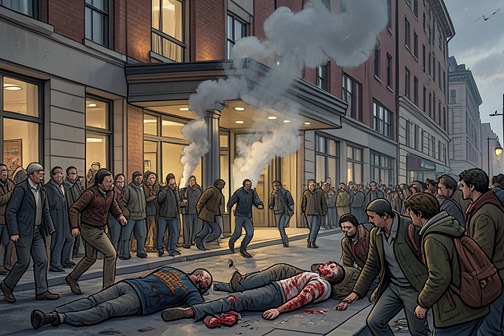
The [La Mon House hotel bombing](entity:event-recall-event-la-mon-house-5527380be6f9) was an [Irish Republican Army](entity:organization-recall-organization-irish-republican-4bff46a4b2bf) attack outside [Belfast](entity:location-recall-location-belfast-8a60016bc9a1) in February 1978 that killed twelve people and severely burned dozens more. Its significance in the book extends beyond the scale of the civilian casualties: for [Dolours Price](entity:character-recall-character-dolours-price-f885017ba474), the attack made the human consequences of the cause she had served impossible to set aside, helping turn prison dissent into a break with the organisation.
## The Attack and Its Victims
In February 1978, the hotel was crowded with civilians when the bomb exploded. The book records twelve deaths and dozens of people severely burned. It gives no further account here of the attack’s planning or operational details; its focus is on the civilian toll and on the questions that toll provoked for Dolours, then imprisoned with [Marian Price](entity:character-recall-character-marian-price-658a98519733) in [Armagh Prison](entity:location-recall-location-armagh-prison-95d8bdc1b3df).
The timing mattered to Dolours because her days in prison had become a period of reconsideration. She and Marian had not joined other women in the dirty protest. As the weeks passed, Dolours grew preoccupied with the small square of sky visible from her window and began to question the movement’s direction. The attack at La Mon brought that unease into sharper focus: she asked herself whether she had accepted imprisonment in order to burn people to death. The bombing did not begin her doubts, but it made their moral stakes stark.
## From Doubt to Separation
The sisters’ refusal to join the dirty protest did not mean that Dolours had already left the Irish Republican Army. The decisive conflict came when the organisation ordered her not to associate with republican women who had chosen to abstain from the protest. She could not obey that order, and she resigned. The sequence matters: the civilian deaths at La Mon deepened her questioning, while the demand to sever those relationships became the immediate point at which she broke with the organisation.
That break altered the meaning of her earlier sacrifices. Dolours and Marian had become known in the Irish Republican Army for what they had endured, but Dolours thereafter described herself as a freelance republican. Her departure did not erase her republican commitments; it marked a separation from an organisation whose actions and discipline she could no longer accept without question. The bombing stands in this arc as a violent civilian cost that made continued allegiance harder to justify to herself.
## The Event in the Book’s Memory of the Conflict
The account presents La Mon not only as an episode of violence but as part of Dolours’s later effort to understand what that violence had meant. The book’s broader framing stresses that conflict is fought again in memory: after the battlefield, competing accounts, denials, and silences shape what can be acknowledged. In its discussion of the post-conflict period, it describes the unsettled character of public remembrance and the political pressure to maintain a unified account of republican armed struggle. Those wider tensions do not establish a special public response to the [La Mon bombing](entity:event-recall-event-la-mon-bombing-c87ae925d7fe); they provide the context in which an individual’s recollection and moral break acquire historical weight.
The event’s narrative force therefore rests on a contrast: the organisation’s demand for discipline on one side, and Dolours’s growing inability to reconcile that discipline with the killing and burning of civilians on the other. The book does not present the bombing as the sole cause of her departure. It shows instead how La Mon sharpened questions already forming in prison, before a later order made her refusal consequential.
Event 31
Long Kesh blanket protest
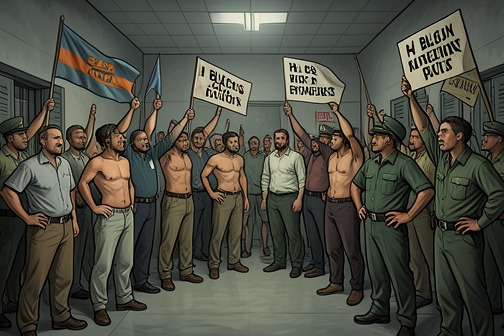
The [Long Kesh blanket protest](entity:event-recall-event-long-kesh-92b1c7c42a1e) began in the autumn of 1976, when republican prisoners refused to wear prison-issued uniforms in the H Blocks. What appeared to be a dispute about clothing expressed a larger refusal to be classified as ordinary criminals: the prisoners sought recognition as political combatants, while the authorities rejected that claim. As guards and prisoners answered one another’s actions with further restrictions and defiance, the protest escalated into the dirty protest, making the prison itself a visible site of the conflict over status.
## Causes and Stakes
Internment officially ended towards the close of 1975. Paramilitary suspects would now be charged and imprisoned as ordinary criminals rather than detained indefinitely as political prisoners. The distinction mattered to republican identity: if [Irish Republican Army](entity:organization-recall-organization-irish-republican-4bff46a4b2bf) volunteers were criminals, the political basis on which they had taken up arms was being denied. Internment had allowed prisoners to wear their own clothes and associate freely with colleagues, despite its own severe injustice of detention without charge or trial. The new system at [Long Kesh](entity:location-recall-location-long-kesh-90c48f775ab3) instead placed convicted prisoners in individual cells and issued them uniforms indistinguishable from those worn by common thieves.
In the autumn of 1976, prisoners refused those clothes and wrapped themselves naked in blankets. Their demand was [Special Category Status](entity:rule-recall-rule-special-category-status-6c6ca91d0837), which would effectively recognise them as prisoners of war. The protest therefore challenged more than prison dress. The uniform made the government’s classification tangible; refusing it made the prisoners’ competing account of themselves equally visible. A song sung by the protesters rejected the convict’s uniform and the meek acceptance of a sentence, giving their refusal a collective voice.
## From Blanket Protest to Dirty Protest
At first, the prisoners still left their cells to shower and use the toilet. Guards sometimes beat them on those trips and restricted their access to towels, which they needed to cover and dry themselves. The prisoners responded by refusing to leave their cells at all. The practical consequences of that decision changed the form of the protest: guards had to collect and empty chamber pots, but prisoners began tipping them so that urine ran beneath the doors and into the corridors. What had started as a refusal to wear prison clothes became a no-wash protest, then the dirty protest.
[Brendan Hughes](entity:character-recall-character-brendan-hughes-1230acbdf136), the prisoners’ commanding officer, was consulted about what to do with their faeces. He suggested smearing it on the walls. The prisoners, naked and unwashed, began spreading their waste into patterns across the cells. The account describes maggots, the growing threat of disease, and guards hauling prisoners out to hose them down while other staff scrubbed the rooms with water and disinfectant. Moving a prisoner to a clean cell did not end the protest: the space could be defiled again. The bodily and material conditions of the prison thus became part of the confrontation, and each attempt to restore order was met by renewed refusal.
## Prison Precedents and Escalation
The Long Kesh protest had a precedent in the Price sisters’ imprisonment after their conviction at [Winchester Castle](entity:location-recall-location-winchester-castle-21b00e4ec0e0). At [Brixton Prison](entity:location-recall-location-brixton-prison-1f2109b23cb2), [Dolours Price and Marian Price](entity:relation-recall-relation-dolours-price-and-ma-f3ddddaf4796) were the only women in an overcrowded, overwhelmingly male facility. They refused food except water and sought repatriation to serve their sentences as political prisoners in [Northern Ireland](entity:location-recall-location-northern-ireland-c23b7da68651). They had also used blankets after their arrest in [London](entity:location-recall-location-1bfd335cdd1b). Their case showed that refusal of prison clothing and refusal of food could make political status a matter of bodily endurance; it also differed from Long Kesh, where prisoners’ central demand was Special Category Status and the protest developed into a collective confrontation over prison conditions.
The sisters’ hunger strike exposed another consequence of such defiance. On 3 December, after more than two weeks without food, officials restrained [Dolours Price](entity:character-recall-character-dolours-price-f885017ba474) and force-fed her through a tube. She later told Marian about the ordeal and said she did not think she could endure it again; Marian told her she could leave the strike. This episode does not describe the Long Kesh protest itself, but it underscores the coercive choices that could arise when prisoners used their bodies to resist the state’s terms.
## Political Meaning and Afterlife
The prisoners’ immediate demands were specific: the right not to wear the uniform, to associate freely with other prisoners, and to receive mail. Yet the escalating protest did not produce an easy resolution. The authorities refused Special Category Status, and each side’s actions hardened the other’s resolve. The prisoners’ treatment as criminals and their own insistence that they were political actors remained in direct conflict, expressed first through clothing and then through the degrading conditions of the cells.
The book places this prison struggle within a wider contest over how the conflict would be remembered. The epigraph frames war as something fought both on the battlefield and later in memory. After the [Good Friday Agreement](entity:event-recall-event-good-friday-agreement-f0a8e2fc0bef), [Gerry Adams](entity:character-recall-character-gerry-adams-6d84cf7a2514)’s refusal to acknowledge IRA membership and Sinn Féin’s control over its account of republican armed struggle are presented as part of an unresolved politics of silence and historical interpretation. The Long Kesh protest belongs to that continuing argument not as a settled origin of later developments, but as a stark example of how political identity, state classification, and the memory of armed conflict remained entangled.
Event 32
Long Kesh dirty protest
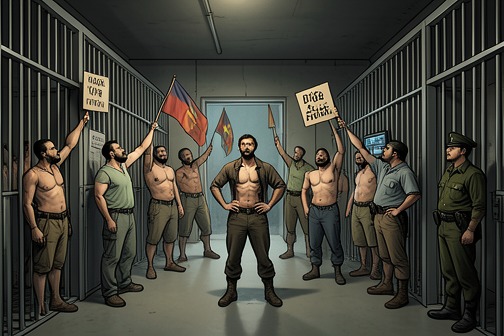
The [Long Kesh dirty protest](entity:event-recall-event-long-kesh-3dd71500e826) grew out of prisoners’ refusal to accept ordinary prison discipline while seeking recognition as political detainees. What began as a protest against wearing prison uniforms escalated through restrictions on washing and sanitation into a sustained confrontation over dignity, control, and the prisoners’ demands. The process turned the cells themselves into the means of protest, making the dispute impossible to keep at a distance from either prisoners or guards.
## Background and Demands
The prisoners wanted special category status, which would effectively classify them as prisoners of war. The authorities refused. Inside [Long Kesh](entity:location-recall-location-long-kesh-90c48f775ab3), relations between inmates and guards deteriorated into mutual escalation. The prisoners initially left their cells to shower and use the toilet, despite refusing to wear prison clothes. Guards sometimes beat them on these trips and restricted their access to towels, leaving them with fewer ways to cover or dry themselves.
The demands behind the protest were specific: the right not to wear prison uniform, to associate freely with other prisoners, and to receive mail. The conflict therefore concerned more than clothing. The prisoners were contesting the authorities’ effort to treat them as ordinary inmates, while the authorities resisted concessions that could confer a different status.
## From Blanket Protest to Dirty Protest
After beatings and restrictions on towels, the prisoners began refusing to leave their cells at all. Guards had to go from cell to cell to collect chamber pots. The prisoners then tipped the pots, sending urine beneath the doors and into the corridor. [The blanket protest](entity:expression-recall-expression-the-blanket-protes-a77113779be5), already a no-wash protest, had become the dirty protest: a tide of urine spread through the prison, and the guards were left to clean it.
The remaining problem was what to do with solid waste. When the prisoners raised it with [Brendan Hughes](entity:character-recall-character-brendan-hughes-1230acbdf136), the commanding officer inside the prison, he suggested smearing it on the walls. Hughes and the men under his command were naked, filthy, bearded, and unwashed. They painted the walls with their own excrement, swirling it into patterns the account compares to van Gogh moons. The cell walls, ordinarily instruments of confinement, became surfaces on which the prisoners made their refusal visible.
## Conditions and Escalation
The cells became squalid, with maggots appearing and disease becoming a threat. Guards entered the encrusted rooms and dragged the gaunt prisoners out; one group hosed the men down while another cleaned the cells with water and disinfectant. Moving a protesting prisoner into a fresh cell did not resolve the problem. Within a single metabolic cycle, the prisoner could soil it again.
A visiting priest compared the men to people living in sewer pipes in the slums of Calcutta. The account presents the protest as grotesque, even as a kind of theatre of the absurd, but insists that beneath its shocking physical form lay a familiar contest of brinkmanship. Each escalation intensified the pressure without bringing either side closer to yielding.
## Significance
[The dirty protest](entity:expression-recall-expression-the-dirty-protest-663db0b84586) made the conflict over political status and prison discipline bodily and inescapable. Its progression—from refusing uniforms, to refusing the journey to showers and toilets, to spilling urine into the corridors and covering cell walls with excrement—registered both the prisoners’ resistance and the worsening conditions in which they were held. The authorities’ response, including beatings, restricted towels, forced removals, and repeated cleaning, became part of the same cycle.
The account does not present the protest as a resolution: it leaves the central question open, asking which side would yield first. Its grotesque spectacle therefore does not displace the political stakes. Instead, the squalor exposes how a dispute over status and basic rights had become a contest in which every act of resistance and every attempt to contain it deepened the confrontation.
Event 33
Assassination of Lord Mountbatten
The assassination of Lord Mountbatten was a 1979 bombing in Donegal Bay that destroyed a fishing boat and killed Lord Louis Mountbatten and three others. In the book’s account, the attack makes the persistence of armed violence unmistakable at a moment when [Gerry Adams](entity:character-recall-character-gerry-adams-6d84cf7a2514) was pressing for a political dimension to accompany the IRA’s military campaign.
Event 34
Assassination of Airey Neave
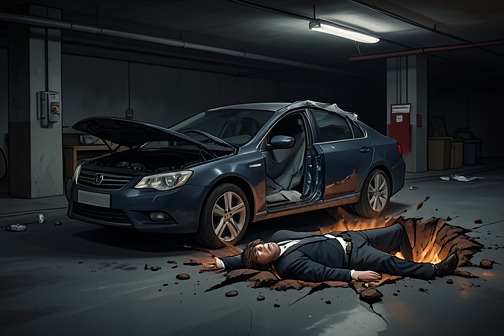
The [Assassination of Airey Neave](entity:event-recall-event-9271815f6674) was a car bombing at the House of Commons on 30 March 1979, carried out by the [Irish National Liberation Army](entity:organization-recall-organization-2007cafab960). Neave, a close adviser to [Margaret Thatcher](entity:character-recall-character-margaret-thatcher-be3b0ca8af0a) and her campaign manager, was killed as he drove out of an underground car park. The attack came shortly before Thatcher became prime minister and reinforced the hard-line outlook she brought to [Northern Ireland](entity:location-recall-location-northern-ireland-c23b7da68651): in the book’s account, Neave’s murder helped set the stage for her refusal to treat republican violence as political action deserving political status.
## Political setting
The bombing belongs to a wider history of political exclusion and escalating conflict. Northern Ireland’s Catholic minority faced discrimination in employment and housing, while its devolved government at [Stormont](entity:location-recall-location-stormont-729677d071cf) had not given a Catholic executive office in half a century. Catholics were also leaving in search of work; despite a birth rate about twice that of Protestants, their population remained nearly static in the decades before the civil-rights march from [Belfast](entity:location-recall-location-belfast-8a60016bc9a1) to [Derry](entity:location-recall-location-derry-d46e7068265a).
That march began on 1 January 1969 as a peaceful protest against discrimination. Some students believed that nonviolent action could expose injustice and prompt change, even if they expected the possibility of violence. The book places that hope alongside the movement toward armed struggle: after the attack at [Burntollet Bridge](entity:location-recall-location-burntollet-bridge-7dc489249792), [Dolours Price](entity:character-recall-character-dolours-price-f885017ba474) concluded that marching alone would not bring the change [Ireland](entity:location-recall-location-ireland-3247a2c8bcbe) needed, and in 1971 she joined the IRA. The contrasting paths form part of the conflict’s background, but the book does not present the march or Price’s decision as a direct cause of Neave’s killing.
## The bombing
On 30 March 1979, Neave was driving out of an underground car park at the House of Commons when a bomb beneath the driver’s seat exploded. He was killed. The Irish National Liberation Army, not the Provisional IRA, set the bomb and claimed the attack. That distinction matters in a conflict where armed republican groups were not a single organization, even when their campaigns were directed toward related political ends.
Neave’s position made the killing consequential beyond its immediate target. He was Thatcher’s closest adviser on Northern Ireland and had served as her campaign manager. His personal history also shaped the book’s portrait of him: he had been a prisoner of war and escaped from Colditz Castle. The account identifies him as a hawkish influence on Thatcher, though it does not reduce her policy to his advice alone.
## Thatcher’s response and its aftermath
Thatcher learned of Neave’s murder shortly after it happened. Struggling to maintain her customary composure, she praised him as a courageous and steadfast defender of freedom. The attack occurred less than two months before she became prime minister; the book presents it as a decisive factor reinforcing her already uncompromising position toward [Irish republicanism](entity:concept-recall-concept-irish-republicanism-a9ec44c2450c).
Thatcher viewed Northern Ireland through an analogy with the Sudetenland: in her understanding, Catholics might be victims of geography, but that did not entitle them to leave the [United Kingdom](entity:location-recall-location-united-kingdom-b48cd04982cf) and join a neighbouring country. Once in office, she maintained that there could be no political status for republican prisoners and rejected the description of political murder or bombing as distinct from crime. Her firm stance was consistent with, and hardened by, the outlook she had developed with Neave’s counsel and the shock of his death.
## Violence and political change
The book sets Neave’s assassination within a period in which armed action and electoral politics developed alongside each other. While Thatcher was entering office, hundreds of republican prisoners at [Long Kesh](entity:location-recall-location-long-kesh-90c48f775ab3) were engaged in the dirty protest, and the Provisional IRA continued to attack off-duty prison officers. The [British government](entity:organization-recall-organization-66a95d21d932) did not yield on prisoners’ political status. This wider context helps explain why the killing became part of a struggle over whether republican violence would be treated as warfare or as criminality; it does not make the bombing an episode in the prisoners’ protest itself.
The account also traces a political turn that was not a simple consequence of Neave’s death. During the 1981 hunger strike, the decision to run [Bobby Sands](entity:character-recall-character-bobby-sands-cb073d403dee) for a parliamentary seat challenged a long republican tradition of abstentionism. Later, Dolours Price canvassed for [Gerry Adams](entity:character-recall-character-gerry-adams-6d84cf7a2514) in [West Belfast](entity:location-recall-location-west-belfast-27ebba5f4bec) and drove voters to polling stations when he stood for [Westminster](entity:location-recall-location-westminster-797ba54e0a11) in 1983, while supporting his decision not to take his seat. These developments show the competing strategies unfolding in the conflict: Neave’s assassination marked the force of armed republican violence, even as republican politics increasingly sought an electoral route.
Event 35
1980 Irish republican prisoners' hunger strike
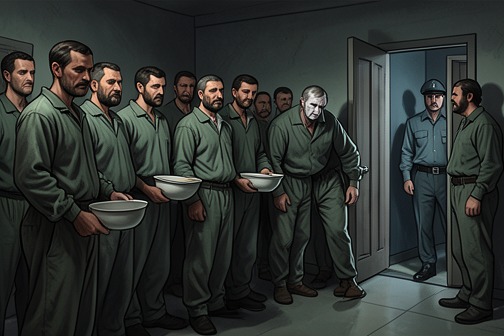
The [1980 Irish republican prisoners' hunger strike](entity:event-recall-event-1980-06795ad00c4e) at [Long Kesh](entity:location-recall-location-long-kesh-90c48f775ab3) brought the conflict over political status into a stark confrontation between collective strategy and the life of an individual prisoner. Led by [Brendan Hughes](entity:character-recall-character-brendan-hughes-1230acbdf136), seven men began refusing food in the last week of October. After 53 days, Hughes ordered that the failing [Seán McKenna](entity:character-recall-character-se-n-mckenna-00d33ae20130) be fed, keeping a promise to a younger comrade but ending the strike. The decision exposed the tactical cost of beginning together: the prisoners’ shared protest had become a choice about whether to let one of them die.
## Background: Criminalisation and protest
The strike followed the [British government](entity:organization-recall-organization-66a95d21d932)’s refusal to recognise republican prisoners as political prisoners. After internment ended, suspects were charged and convicted as ordinary criminals. At Long Kesh, prisoners were confined in individual cells in the H Blocks, issued prison uniforms, and denied the freedom of association they had experienced as internees. For the republican movement, the change was more than a new prison regime: calling volunteers criminals challenged their claim to be soldiers in a war.
Prisoners had already resisted that change through the blanket protest, refusing prison clothes and wrapping themselves in blankets. As conflict with prison officers escalated, the protest developed into a refusal to wash and then the dirty protest. Under Hughes’s command, prisoners smeared their own waste on cell walls; officers dragged them out to hose them down and disinfect the cells, only for the cycle to begin again. The immediate demands included the right not to wear uniforms, to associate with other prisoners, and to receive mail. The government held to the opposite position. [Margaret Thatcher](entity:character-recall-character-margaret-thatcher-be3b0ca8af0a) insisted, “There is no such thing as political murder, political bombing, or political violence,” and declared, “Crime is crime is crime.”
Against this background, Hughes announced in autumn 1980 that he intended to organise a hunger strike and asked for volunteers. More than a hundred prisoners came forward. A team of seven was chosen, with Hughes as its leader. He had long taken pride in not asking a subordinate to do anything he would not do himself, and this time he joined the fast rather than directing it from a distance.
## The strike and its first tactical mistake
The seven men began refusing food in the last week of October. Hughes grew visibly weaker in his cell, his cheeks sunken beneath his ragged black beard and long hair. The prison doctor, David Ross, treated him with kindness: each morning he brought a flask of fresh spring water, which he said was better than the prison’s tap water, and sat with Hughes talking about fishing, mountains, rivers, and streams. Such ordinary conversation took place alongside the physical deterioration on which the protest depended.
Hughes later recognised a consequential error in the plan. All seven men had started at the same time, so one would inevitably reach the brink of death before the others. The remaining strikers would then face a terrible choice: stop the protest to save him, or continue and allow him to die. One of the youngest was Seán McKenna, a 26-year-old from Newry. Hughes had not wanted him to join the strike, but McKenna insisted. As his health worsened, McKenna was moved to the hospital wing and confined to a wheelchair. Growing fearful, he asked Hughes, “Dark, don’t let me die.” Hughes promised that he would not.
## The decision to end the strike
Just before [Christmas](entity:time-recall-time-0cffe7da2c4d), McKenna began slipping in and out of a coma. Hughes saw orderlies rushing him through the hospital wing on a stretcher, with two priests and Dr Ross nearby. By then, the decision was no longer an abstract calculation about tactics. If Hughes did nothing, McKenna would die and Hughes would break his promise. If he intervened, the strike would end and the prisoners would lose the leverage they had sought to build.
The physical conditions sharpened that dilemma. Hughes was aware of the smell of the hospital ward and of his own body consuming itself. At last he shouted, “Feed him!” A doctor instructed the orderlies to prepare scrambled eggs, and McKenna began eating again. Hughes, too, ended his 53-day fast, slowly recovered, and regained weight. But survival did not bring relief. He felt deeply ashamed, believing that he had mishandled the strike and squandered its leverage. The ending therefore turned on two responsibilities that could not be reconciled: the discipline of a collective campaign and a leader’s promise to a frightened individual.
## Aftermath and the next strike
The prisoners decided almost immediately to mount a second hunger strike. This time, they would stagger the starts, with each successive striker beginning about a week after the previous one. That arrangement was intended to avoid repeating the first strike’s central tactical flaw: rather than forcing the entire group to decide together when one man approached death, it would leave each striker to decide whether to continue or die.
Hughes was still recovering and was not selected to lead the new protest. The prisoners chose [Bobby Sands](entity:character-recall-character-bobby-sands-cb073d403dee), the young volunteer who had coordinated the prison arts programme. Sands would begin first and was expected to be the first to die. The 1980 strike thus ended not with the prisoners’ demands secured, but with its method revised and the contest carried forward by a new leader. Its decisive memory was both strategic and personal: a simultaneous fast had made one man’s imminent death the test of the whole campaign, and Hughes chose to keep his word.
Event 36
1981 Irish republican prisoners' hunger strike
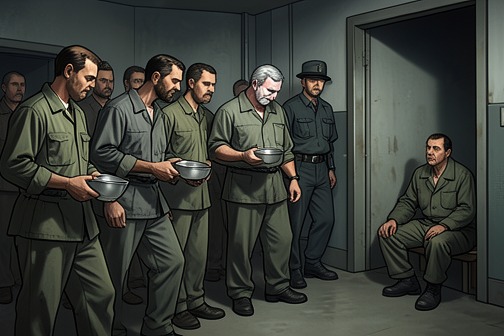
The [1981 Irish republican prisoners' hunger strike](entity:event-recall-event-1981-4943f4c0afec) was a protest by republican prisoners at [Long Kesh](entity:location-recall-location-long-kesh-90c48f775ab3) against their treatment as ordinary criminals and the denial of political status. It became both a deadly confrontation with the [British government](entity:organization-recall-organization-66a95d21d932) and a turning point in republican electoral strategy: [Bobby Sands](entity:character-recall-character-bobby-sands-cb073d403dee) won a seat in Parliament while refusing food, but died before the authorities met the prisoners’ demands.
## From political status to protest
The strike grew out of a dispute over how paramilitary prisoners would be classified and treated. After internment ended in 1975, people convicted of paramilitary activity were held in individual cells in the H Blocks at Long Kesh, issued prison uniforms, and treated under the same regime as ordinary criminals. Republicans regarded themselves as soldiers and rejected the implication that their actions were simply criminal. Their earlier demands for special category status—which would in effect recognise them as political prisoners—had been refused.
The prison protest had already escalated through the blanket protest and the dirty protest. Prisoners refused prison clothes, then resisted leaving their cells to wash or use the toilet after guards beat them and restricted their access to towels. They tipped chamber pots into the corridors, and, at [Brendan Hughes](entity:character-recall-character-brendan-hughes-1230acbdf136)’s suggestion, spread their own waste on the cell walls. The grotesque physical conditions were part of a contest over clothing, association, mail, and ultimately the prisoners’ right to define themselves politically.
The Price sisters’ earlier hunger strike in [Brixton Prison](entity:location-recall-location-brixton-prison-1f2109b23cb2) formed another part of this history. After their conviction at [Winchester Castle](entity:location-recall-location-winchester-castle-21b00e4ec0e0), Dolours and [Marian Price](entity:character-recall-character-marian-price-658a98519733) refused food and demanded transfer to [Northern Ireland](entity:location-recall-location-northern-ireland-c23b7da68651) to serve their sentences as political prisoners. On 3 December, after more than two weeks of their strike, officials restrained Dolours and force-fed her through a tube. The [World Medical Association](entity:organization-recall-organization-a53686c3d1f9) subsequently declared force-feeding unethical, and [Roy Jenkins](entity:character-recall-character-roy-jenkins-c36c373cec9f) announced that hunger strikers in British prisons would no longer be force-fed. By 1981, the state’s response to a hunger strike had changed; the possibility that prisoners might die of starvation had not gone away.
## Sands begins the strike
On 1 March 1981, Bobby Sands stopped eating at Long Kesh. His last morsel was a prison-ration orange, which he found bitter. He marked the beginning of the strike by writing on a scrap of toilet paper. Two weeks later, a second prisoner began fasting; a third followed a week after that. The protest expanded until ten men were on hunger strike. [Margaret Thatcher](entity:character-recall-character-margaret-thatcher-be3b0ca8af0a) presented the action as a last resort by a failing movement, while the strikers’ refusal made the question of political status a matter of life and death.
Four days after Sands began his strike, [Frank Maguire](entity:character-recall-character-frank-maguire-959d5f6d0c78) died. As a nationalist member of the British House of Commons, Maguire’s death created a by-election in Fermanagh and South Tyrone. Republicans persuaded his brother not to seek the seat, and Sands became their candidate. The plan joined the prison protest to electoral politics: a government might allow a prisoner to die, the argument went, but the election of a serving hunger striker would make that position harder to sustain. The candidacy also departed from the republican tradition of abstentionism, which had long treated participation in parliamentary politics as a risk to revolutionary principles.
## Election and death
On 10 April, after forty-one days without food, Sands was elected to Parliament. His victory did not secure the prisoners’ demands. As his health deteriorated, Thatcher remained unwilling to yield; in a conversation with Northern Ireland Secretary [Humphrey Atkins](entity:character-recall-character-humphrey-atkins-854fea75b46c), she recognised that Sands had only days left, though the precise time was uncertain.
Sands died on 5 May 1981, the sixty-sixth day of his strike. His death drew international attention and brought 100,000 people onto the streets of [Belfast](entity:location-recall-location-belfast-8a60016bc9a1) to accompany his coffin to the cemetery. Support for the republican cause surged on both sides of the border in [Ireland](entity:location-recall-location-ireland-3247a2c8bcbe). Thatcher publicly maintained that Sands was a convicted criminal who had chosen to take his own life, rather than acknowledge the political claim at the centre of the protest. The confrontation ended for Sands not with a change in prison policy, but with his death; the other nine hunger strikers died one by one over the course of the summer.
## Consequences and political legacy
The strike’s political consequences extended beyond the prison. Sands’s election showed that people who did not support the IRA’s violence might still vote for a republican hunger striker. [Gerry Adams](entity:character-recall-character-gerry-adams-6d84cf7a2514), already arguing that armed struggle needed a political dimension, saw the result as an opportunity for a new republican politics. The campaign brought electoral participation into closer alignment with the continuing armed campaign, rather than treating the two as incompatible. The precedent later informed [Dolours Price](entity:character-recall-character-dolours-price-f885017ba474)’s support for Adams’s 1983 campaign: she canvassed for him and drove voters to polling stations, although she had abandoned violence as her own means of pursuing [Irish unity](entity:concept-recall-concept-irish-unity-b50744f64331).
For Dolours, the strike also carried a painful personal consequence. In April, while still imprisoned in [Armagh](entity:location-recall-location-armagh-b71dc3c3893d), she was transferred to the secure ward at [Musgrave Park Hospital](entity:location-recall-location-musgrave-park-hospit-40868e7e9c39) weighing seventy-six pounds. She hoped Sands would be brought there so she could offer him a final salute. He never arrived. Two weeks before his death, she herself was released on medical grounds, with the remainder of her sentence remitted because she was considered at imminent risk of collapse and death. In later years she wept over the contrast between Sands’s death and her own release. She also wondered whether the end of force-feeding, which followed her earlier strike, had helped create the conditions in which the ten prisoners could die in 1981. Her anguish linked two hunger strikes across seven years: a struggle that had once kept her alive had helped shape the changed circumstances in which Sands and the others were allowed to starve.
Event 37
Bobby Sands elected to Parliament
[Bobby Sands](entity:character-recall-character-bobby-sands-cb073d403dee)’s election to Parliament on 10 April 1981 made a hunger striker an elected representative and gave a new political form to a movement long suspicious of parliamentary participation. The victory did not secure the prisoners’ demands, but it demonstrated the potential of electoral support for republicanism even among people who might reject IRA violence, and it sharpened the emerging strategy of pursuing votes while the armed campaign continued.
## Background: From hunger strike to by-election
Sands began refusing food on 1 March 1981. Four days later, the death of [Frank Maguire](entity:character-recall-character-frank-maguire-959d5f6d0c78), the nationalist MP for Fermanagh and South Tyrone, created the prospect of a by-election. Maguire’s brother initially considered standing in his place, but republicans urged him to reconsider. The proposal that Sands run from prison joined two forms of protest: the bodily pressure of the hunger strike and the public contest of an election.
The candidacy also confronted a long-standing republican reluctance to participate in parliamentary politics. [Abstentionism](entity:concept-recall-concept-abstentionism-14fb6ea34713) reflected the fear that electoral politics would draw revolutionaries into accommodation with the system they opposed. That suspicion had contributed to the 1969 split between the Official IRA and the Provisionals, with some republicans seeing the Officials as too political. Sands’s proposed candidacy therefore carried significance beyond the seat itself: it tested whether electoral participation could serve the movement without displacing its armed struggle.
## The campaign and its political meaning
[Gerry Adams](entity:character-recall-character-gerry-adams-6d84cf7a2514) saw the by-election as an opportunity to reach voters who might not support IRA violence but could support a republican hunger striker. Working with [Danny Morrison](entity:character-recall-character-danny-morrison-fbca12bc94b0), editor of Republican News, he developed a political approach that did not require the armed campaign to stop. Morrison later condensed its logic into the image of taking power with a ballot paper in one hand and an Armalite in the other. The image made the strategy’s tension explicit: electoral politics and armed action were to operate together, not as mutually exclusive choices.
Adams’s position represented a departure from the tradition of staying outside electoral politics. He argued that republicans would eventually make Sinn Féin a political power. The election offered a practical demonstration of that possibility: a jailed candidate could attract votes from people whose support might not extend to the IRA’s violence. At the same time, Sands’s candidacy remained inseparable from his condition as a hunger striker. The campaign sought to turn the authorities’ treatment of prisoners into a matter with electoral as well as prison consequences.
## Victory and immediate consequences
On 10 April, after forty-one days without food, Sands won the seat. The result transformed the political stakes of the strike: the candidate was no longer only a prisoner demanding a change in status but also an elected representative. Yet victory did not bring the prisoners’ demands closer to fulfilment. Sands’s condition continued to deteriorate, and the [British government](entity:organization-recall-organization-66a95d21d932) did not grant them.
The win did not resolve the contradiction at the heart of the new strategy. Sands died before taking his parliamentary seat, even as his election showed that a republican could win office while the IRA continued its armed campaign. His victory gave electoral politics a new place in the movement’s calculations, but it did not replace the struggle that had made his candidacy possible. The result stood both as a political breakthrough and as evidence of the limits of what an election alone could change.
Event 38
Operation Flavius
[Operation Flavius](entity:event-recall-event-operation-flavius-c320217ffe2e) was the killing of [Mairéad Farrell](entity:character-recall-character-mair-ad-farrell-f1db9af9155e) and two associates by plainclothes British commandos in [Gibraltar](entity:location-recall-location-gibraltar-f21480db6ca2) on 6 March 1988. The team had travelled to the British territory to launch a bombing mission, but the three were unarmed and had not carried out the attack when they were approached and shot. The episode became both a lethal interruption of an intended operation and the beginning of a highly visible public mourning in [Belfast](entity:location-recall-location-belfast-8a60016bc9a1).
## Background and Mission
The book places the shootings in a spring it describes as a season of funerals in Belfast. Farrell, thirty-one, had been imprisoned in [Armagh jail](entity:location-recall-location-armagh-jail-d62b9335578b) alongside [Dolours Price and Marian Price](entity:relation-recall-relation-dolours-price-and-ma-f3ddddaf4796). Unlike the Price sisters, she returned to active service after leaving prison. She travelled to Gibraltar as part of an [Irish Republican Army](entity:organization-recall-organization-irish-republican-4bff46a4b2bf) team intending to carry out a bombing mission on the British territory at the southern tip of Spain.
The distinction between the planned attack and the circumstances of the deaths is central to the account: the team had not had the chance to carry out its mission, and its members were walking unarmed when plainclothes British commandos approached them. The book reports that they were executed. Some would claim the shootings expressed a secret army policy of shooting to kill; the account presents that as a disputed claim, rather than an established official explanation.
## The Shootings and Funeral
The three volunteers’ bodies were transported back to [Northern Ireland](entity:location-recall-location-northern-ireland-c23b7da68651) with great fanfare. Their return culminated in a massive funeral procession through Belfast, followed by thousands of mourners. The movement from a street in Gibraltar to a public procession at home gave the killings a second, collective life: the operation ended in the deaths of its intended participants, while their funerals made those deaths visible to a city already shaped by conflict and remembrance.
[Father Alec Reid](entity:character-recall-character-father-alec-reid-9312736ed5e7) helped officiate at the graveside. His presence connected the funeral to a wider vantage on the conflict: before the Troubles, he had moved to Belfast and joined [Clonard Monastery](entity:location-recall-location-clonard-monastery-637a43ac2151), situated between the republican [Falls Road](entity:location-recall-location-falls-road-59744141d01e) and the loyalist [Shankill](entity:location-recall-location-shankill-05b9297040d4). In the episode’s aftermath, the graveside was not merely the last stage of the funeral. It was also a place where individual loss entered public ritual.
## Memory and Significance
The account gives the event significance through the contrast between its intended violence and its aftermath. A bombing mission was planned, but the team was shot before carrying it out; the deaths then produced a funeral procession on a scale that brought thousands into the public remembrance of the dead. The shootings and the funerals therefore mark different kinds of action: the first was sudden and lethal, while the second made mourning collective and conspicuous.
That contrast belongs to the book’s broader interest in how the conflict continued in memory after events on the battlefield. The mass procession and graveside ceremony show remembrance taking public form, while the disputed claim of a secret shoot-to-kill policy leaves the circumstances open to political interpretation. Operation Flavius is thus presented not only as a deadly encounter in Gibraltar but as an episode whose meaning continued to be contested and commemorated in Belfast.
Event 39
Harrods bombing
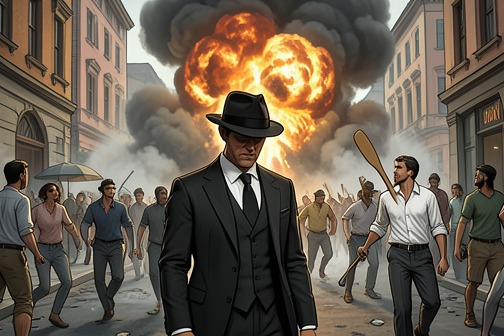
The [Harrods bombing](entity:event-recall-event-c5d2fbcb6cdf) was an IRA attack in [London](entity:location-recall-location-1bfd335cdd1b) shortly before [Christmas](entity:time-recall-time-0cffe7da2c4d) 1983, killing five people and injuring ninety. Its significance in the book lies not only in its human toll but in the contradiction it exposes: even as [Gerry Adams](entity:character-recall-character-gerry-adams-6d84cf7a2514) began considering a way to end the conflict, the armed campaign continued, while he maintained that violence and political activity could proceed together.
## Political Strategy and Continuing Violence
Adams had become president of Sinn Féin and, in his first address in that role, made clear that he would not renounce violent methods. The book sets the Harrods bombing within this political position: Adams maintained that he had never personally ordered or participated in violence, yet he did not call for the armed campaign to end. The attack therefore appears not as an isolated departure from political strategy, but as violence continuing alongside the party’s political activity.
The timing sharpens that tension. Adams was beginning to contemplate, and then act upon, a scheme to bring the conflict to an end; nevertheless, the Provisional IRA carried out deadly operations. [Harrods](entity:location-recall-location-harrods-27ae4a1be710) was one of them. The narrative does not explain the bomb’s intended target or operational details, but records its consequences plainly: five deaths and ninety injuries.
## The Attack and Adams’s Response
Adams said the bomb “had not gone right.” The remark is brief and leaves the nature of the failure unspecified. It does, however, place the attack within his political account of armed operations, rather than presenting it as an event separate from the strategy he defended. The book does not supply further detail about his response to the victims or the circumstances of the bombing, and the limits of the account leave the human consequences—five people killed and ninety injured—as its clearest measure.
The passage distinguishes Harrods from the attack that followed. In October 1984, a time bomb exploded at the Grand Hotel in [Brighton](entity:location-recall-location-brighton-198006e5b23f) during the Conservative Party conference, killing five people; [Margaret Thatcher](entity:character-recall-character-margaret-thatcher-be3b0ca8af0a) survived. That later operation and its accompanying IRA statement receive separate treatment. The sequence underscores that the Harrods bombing belonged to a continuing campaign, while keeping its date, location, and casualties distinct from the Brighton attack.
## Violence and the Politics of Memory
The book’s wider account treats the end of violence and the interpretation of the conflict as separate, unresolved matters. It describes a post-conflict stalemate without a formal process for deciding how the Troubles should be understood or commemorated. Gerry Adams’s refusal to acknowledge that he had ever been in the IRA forms part of this unsettled landscape, while Sinn Féin’s leadership is described as maintaining a particular narrative about the armed struggle and the peace process. These later disputes do not establish a specific afterlife for the Harrods bombing; they frame the difficulty of accounting for violent acts in a society where memory remained politically contested.
The epigraph’s distinction between war on the battlefield and war in memory resonates with this structure. The Harrods attack is recounted as a concrete episode of lethal violence, but it also sits within a narrative concerned with what political leaders acknowledged, what remained unspoken, and who could shape the public account of the conflict. The event’s place in that larger story rests on the tension between Adams’s emerging effort to end the conflict and his continued defense of violence as a political instrument.
Event 40
Brighton hotel bombing
The [Brighton hotel bombing](entity:event-recall-event-0ce77895ea6b) was a Provisional IRA attack on the [Grand Hotel, Brighton](entity:location-recall-location-grand-hotel-brighton-54641b3a84a3), during the 1984 Conservative Party conference. A volunteer placed a time bomb in a room where [Margaret Thatcher](entity:character-recall-character-margaret-thatcher-be3b0ca8af0a) and many of her cabinet were expected to stay; the explosion killed five people but did not kill Thatcher. In the book’s account, the bombing is decisive not only for its intended target and human cost, but for the way it makes the gap between political transformation and continuing armed violence impossible to ignore. The attack also produced a stark strategic message: the IRA might have to be lucky only once, while its opponents would have to remain lucky every time.
## Background and Political Context
The bombing took place as [Gerry Adams](entity:character-recall-character-gerry-adams-6d84cf7a2514) was advancing a strategy that joined political activity to the continuation of violence rather than treating them as alternatives. He had begun to contemplate a way to bring the conflict to an end, but deadly operations continued. The book places the [Brighton](entity:location-recall-location-brighton-198006e5b23f) attack after the bombing at [Harrods](entity:location-recall-location-harrods-27ae4a1be710) in [London](entity:location-recall-location-1bfd335cdd1b), which had killed five people and injured ninety. This sequence matters: the public turn toward electoral politics did not mean that the Provisional IRA had stopped using lethal force. The emerging political project and the armed campaign existed together, in an unstable relationship that the bombing brought into sharp relief.
The target made that contradiction especially visible. The bomb was planted in a hotel room during a major party conference, where Thatcher and members of her cabinet were staying. The operation put the British prime minister within reach of the armed campaign at a moment when Adams was becoming a more prominent political figure. The book does not present the attack as proof that a political settlement had already been rejected; instead, it shows how the IRA’s continuing capacity for violence accompanied political moves toward ending the conflict. The possibility of negotiation and the reality of the bomb occupied the same political moment.
## The Attack and Its Immediate Consequences
In October 1984, a Provisional IRA volunteer placed a time bomb in a room at the Grand Hotel, Brighton. It exploded while the Conservative Party conference was under way. Five people were killed. Thatcher survived. The difference between the intended reach of the attack and its actual outcome shaped both its immediate significance and its later telling: the prime minister was not killed, but the operation had struck the conference setting and caused multiple deaths.
The IRA’s statement after the bombing distilled the attack into a claim about unequal risk: “Today we were unlucky, but remember, we only have to be lucky once. You will have to be lucky always.” The sentence turned survival into a temporary reversal rather than reassurance. Thatcher had escaped this attack, but the statement insisted that the threat persisted; the burden of avoiding catastrophe would fall repeatedly on the intended targets. Its compact contrast between one moment of luck and continual vigilance gave the bombing a message beyond the immediate damage, without undoing the fact that five people had died.
## Public Justification and Private Fear
Adams defended the bombing as both justifiable and necessary. He described the fatalities as “sad symptoms of the British presence in this country” and rejected the charge that the attack was a blow against democracy, calling it instead “a blow for democracy.” The language recast deaths at a political conference as consequences of British policy and placed violence within a claimed democratic struggle. The book presents this defence alongside Adams’s broader position that armed action should continue in tandem with political work. The contrast is not resolved: a political leader could contemplate an end to the conflict while defending an operation that killed five people.
Thatcher was shaken by the attack. In private, she became convinced that the Provisional IRA would eventually succeed, saying, “They’ll probably get me in the end.” Her fear gives the IRA’s statement a counterpart from the other side. The public declaration stressed the attackers’ need for only one success; Thatcher’s private words registered the pressure of having to remain safe against repeated attempts. The prime minister survived, but survival did not erase the sense of vulnerability produced by the bombing.
## Memory and the Meaning of the Bombing
The book’s epigraph observes that wars are fought first on the battlefield and then in memory. The [Brighton bombing](entity:event-recall-event-brighton-bombing-640093f8af98) illustrates that second struggle through the competing accounts attached to the attack: the IRA presented its violence as a strategic threat and a blow for democracy, while its deaths and its proximity to the [British government](entity:organization-recall-organization-66a95d21d932) remained central to how the event could be understood. Neither political argument changes the immediate outcome: five people were killed, and Thatcher was not.
The attack also sits within the book’s wider account of the afterlife of the Troubles. The conflict ended in a stalemate, with no formal process established to determine how its history should be understood or commemorated. Later, the Troubles could be presented to visitors as distant history on a tour of [Belfast](entity:location-recall-location-belfast-8a60016bc9a1), even as political organizations continued to contest who controlled the memory of republican armed struggle. Against that backdrop, the Brighton bombing is more than an episode preceding a political transition. It shows how the armed campaign remained active within that transition, and how a single operation could become both a lethal event and a durable argument about power, legitimacy, and the past.
Event 41
Attempted assassination of Gerry Adams
The [Attempted assassination of Gerry Adams](entity:event-recall-event-6db0d8051586) in 1984 brought the danger surrounding the [West Belfast](entity:location-recall-location-west-belfast-27ebba5f4bec) MP into public view: gunmen opened fire on his car in central [Belfast](entity:location-recall-location-belfast-8a60016bc9a1), wounding him and three others, but none of the four died.
## The attack
Adams’s journey to court came after his entry into electoral politics. In 1983, he had won election as the MP for West Belfast, while maintaining the traditional republican position that, if elected, he would boycott [Westminster](entity:location-recall-location-westminster-797ba54e0a11) rather than take his seat. The campaign marked a change from his earlier role in the armed movement, but did not remove the risks associated with his public profile.
In 1983, the [RUC](entity:organization-recall-organization-845946bf4b89) had arrested Adams during an attempt to stop a Sinn Féin motorcade displaying tricolour flags. By the spring of 1984, he was on trial in Belfast, charged with disorderly behaviour and obstructing the police. The proceedings made his location unusually predictable: despite years spent on the run and efforts to keep his movements uncertain, it was widely known that he would be at court in the city centre.
Adams had become so concerned for his safety that he applied for a licence to carry a firearm for self-defence. The RUC rejected the application. He also spoke of believing that there was a 90 per cent chance he might be assassinated, a stark measure of how he understood the danger even as he moved through public life.
During a lunch break in the trial, Adams left the Magistrates Court and got into a car with associates for the short drive back to West Belfast. On Howard Street, traffic slowed and a brown vehicle pulled alongside. Two gunmen fired a dozen shots. Adams was hit in the neck, shoulder and arm; three other people in the car were also wounded. The attackers did not kill anyone.
## Aftermath and political response
The gunmen were quickly apprehended and identified as members of the [Ulster Freedom Fighters](entity:organization-recall-organization-e579fbdae947). From his bed at [Royal Victoria Hospital](entity:location-recall-location-royal-victoria-hospi-280ae011ce52), Adams alleged that the authorities had known in advance about the attack and hoped it would succeed. The account presents the allegation as his claim, not as an established finding. [Ian Paisley](entity:character-recall-character-ian-paisley-730e426351e6) responded publicly by invoking Adams’s past association with deaths, while fellow members of the [British Parliament](entity:organization-recall-organization-866525c52f6d) offered no expressions of sympathy or condemnation. Their silence left the shooting framed not only as an attempt on Adams’s life but also as evidence of his continuing political isolation.
## The electoral turn
The path into electoral politics had been opened in part by [Bobby Sands](entity:character-recall-character-bobby-sands-cb073d403dee)’s 1981 candidacy. After nationalist MP [Frank Maguire](entity:character-recall-character-frank-maguire-959d5f6d0c78) died, republicans urged Sands, then on hunger strike in prison, to contest the resulting by-election. His success showed that a prison protest could also command support through the ballot box, although Sands died before he could take his seat.
For generations, many republicans had distrusted parliamentary politics, fearing that participation would dilute revolutionary aims. That suspicion had contributed to the 1969 split between the Official IRA and the Provisionals, amid the belief that the Officials had become too political and were moving toward accommodation. [Gerry Adams](entity:character-recall-character-gerry-adams-6d84cf7a2514)’s own electoral strategy therefore combined a new use of the ballot with a promise to boycott Westminster. The attempted assassination unfolded within that unresolved shift: electoral participation had changed the movement’s public course, but it had not removed the danger surrounding its leaders.
## Significance
The attack crystallized the contradiction at the heart of Adams’s public position: electoral politics brought him into the institutions and visibility of public life, while his association with the armed movement continued to shape how others regarded him. The shooting did not settle that contradiction. Instead, the parliamentary silence and Adams’s allegation of prior official knowledge left the episode suspended between political violence and contested trust in the authorities.
Event 42
Bloody Friday bombing operation recalled by Brendan Hughes
The [Bloody Friday](entity:event-recall-event-bloody-friday-a9adac883a82) bombing operation is recalled as both a military action and a lasting moral wound. [Brendan Hughes](entity:character-recall-character-brendan-hughes-1230acbdf136), who oversaw the operation on the ground, later insisted that there had been no intention to kill civilians and expressed regret for the deaths. His account also assigned responsibility upward: he said [Gerry Adams](entity:character-recall-character-gerry-adams-6d84cf7a2514) had made the decisions, leaving Hughes to live with the consequences of orders he said were not his alone to make.
## The operation and its stated intent
Bloody Friday involved bombs exploding across civilian areas in [Belfast](entity:location-recall-location-belfast-8a60016bc9a1). In a later interview, Hughes told his interviewer, Mackers, “There was no intention to kill people that day,” and added, “I have a great deal of regret about that.” The recollection offers no detailed sequence of explosions or casualty figures; its emphasis falls instead on the distinction Hughes drew between the operation’s intent and its consequences. Regret did not erase the deaths, but it became central to the way he described the day.
## Disputed responsibility
Hughes’s account made command a central issue. He recalled being the man on the ground, while Gerry Adams, in his telling, was the person calling the shots: “Gerry was the man who made the decisions.” That claim placed the operation within a wider conflict between the two former comrades. Hughes had directed operations and understood the burden of sending volunteers into danger; he described that burden as a senior commander’s obligation to make decisions that could get subordinates killed. In recounting Bloody Friday, he therefore presented himself not as free of responsibility, but as carrying responsibility for actions whose decisive choices he attributed to Adams.
## Competing public accounts
Adams’s public response to questions about Bloody Friday also acknowledged civilian deaths, but framed responsibility differently. He said, “I would certainly not attempt to justify any action in which civilians are killed. I naturally regret very much all such deaths.” He then argued that, because killing civilians was not IRA policy, he could not condemn the IRA for accidental killings. The contrast is not simply between regret and its absence: both accounts used regret, while differing over what that regret required politically and morally. Adams’s formulation distinguished policy from accidental outcomes; Hughes’s later testimony concentrated on who had made the decisions and who was left to bear the deaths.
## The memory’s aftermath
For Hughes, the operation’s cost remained bound to the larger question of what the armed struggle had achieved. He said that if the bloodshed had forced the British out of [Ireland](entity:location-recall-location-ireland-3247a2c8bcbe), he might have found a way to justify his actions to himself. But he believed that outcome had not been achieved, and concluded, “not one death was worth it.” Bloody Friday thus returned in his account not as a closed episode but as an unresolved reckoning: regret for civilian deaths, a charge about command, and the collapse of the political rationale by which he had once understood sacrifice.
Event 43
1980 Irish hunger strike
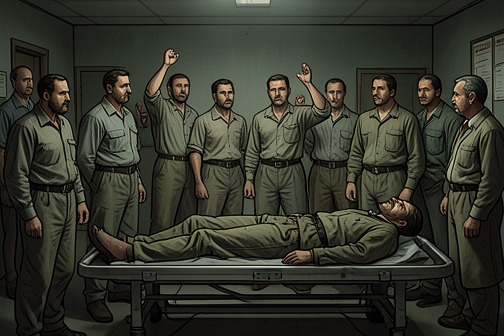
The [1980 Irish hunger strike](entity:event-recall-event-1980-bcdb8e65aa35) at [Long Kesh](entity:location-recall-location-long-kesh-90c48f775ab3) was an act of collective pressure that became, for its leader [Brendan Hughes](entity:character-recall-character-brendan-hughes-1230acbdf136), a choice between the movement’s leverage and a promise to a dying young prisoner. Hughes ended the strike when [Sean McKenna](entity:character-recall-character-sean-mckenna-2fca400bae05), already gravely ill, slipped into a coma. The decision saved McKenna from death, but it also ended the protest and burdened Hughes with a guilt that returned long after the prisoners had begun eating again.
## Background and organization
The strike arose amid a confrontation over the status of republican prisoners. [The dirty protest](entity:expression-recall-expression-the-dirty-protest-663db0b84586) at Long Kesh had grown to involve several hundred men, and the IRA was also killing prison officers who were off duty. The [British government](entity:organization-recall-organization-66a95d21d932) nevertheless maintained its refusal to recognize political status. [Margaret Thatcher](entity:character-recall-character-margaret-thatcher-be3b0ca8af0a) took the same position as her predecessor, treating the prisoners’ actions as criminal rather than political. Against that impasse, a hunger strike offered prisoners another means of exerting pressure, at the cost of their own bodies.
In the autumn of 1980, Hughes announced that a hunger strike would begin and asked for volunteers. Accounts differ on how many prisoners offered themselves: one estimate puts the number at 170, while Hughes later recalled that it was more than ninety. A team of seven was selected, with Hughes at its head. He chose to take part himself, consistent with his practice of not asking a subordinate to do what he would not do. The men began refusing food in the last week of October. Their common start date gave the action a striking collective force, but it also created a tactical problem that would determine how it ended.
## The strike and its turning point
As the weeks passed, Hughes weakened in his cell. His cheeks sank, and his long hair and ragged black beard made him appear markedly altered. The prison doctor, David Ross, treated him with kindness. Each morning Ross brought a flask of fresh spring water, saying it was better than the prison’s tap water, and sat with Hughes to talk about fishing, mountains, rivers, and streams. This daily encounter continued inside a protest defined by the prisoners’ refusal of food and their confrontation with the prison authorities.
Because all seven men had begun fasting together, one of them was bound to approach death before the others. The remaining strikers would then have to choose between ending the action to save him or continuing and allowing him to die. McKenna, a twenty-six-year-old from Newry, became that first endangered striker. Hughes had not wanted him on the team, but McKenna insisted on participating. As his health deteriorated, he was confined to a wheelchair in the hospital wing and grew increasingly frightened. He asked Hughes not to let him die, and Hughes promised that he would not.
Just before [Christmas](entity:time-recall-time-0cffe7da2c4d), McKenna began drifting in and out of a coma. Hughes saw orderlies rush him through the hospital wing on a stretcher, with two priests and Dr Ross nearby. The decision confronting Hughes was immediate: if he intervened, the strike would end and the prisoners would lose the leverage they had built; if he did not, McKenna might die and Hughes would break his promise. The ward’s physical reality sharpened the choice. Hughes could smell the bodies of the patients and was conscious of his own body consuming itself. He finally ordered the staff to feed McKenna. With that intervention, the strike was over.
A doctor instructed the orderlies to prepare scrambled eggs. Hughes began eating again after a fifty-three-day fast and slowly regained his strength and weight. The modest meal marked a decisive reversal: a protest sustained through weeks of refusal ended not with a settlement described in the account, but with food being prepared for the men who had refused it.
## Aftermath and the next strike
Hughes felt deeply ashamed that the strike had ended in this way. The prisoners moved almost immediately toward a second hunger strike, but changed its design. Rather than having every participant begin together, they would stagger the starts, with one striker beginning and others following about a week apart. This would prevent the decision to continue from becoming a single collective choice when the first man neared death. Each striker would instead face the question of whether to go on alone.
Because Hughes was still recovering, the prisoners chose a new leader for the next action: [Bobby Sands](entity:character-recall-character-bobby-sands-cb073d403dee), the young volunteer who had coordinated the arts programme. He would begin first and, under the staggered arrangement, was expected to be the first to die. The change in structure registered what the first strike had revealed. Solidarity could make a protest powerful, but a simultaneous fast also bound every participant’s fate to the first body to fail.
## Recollection and lasting injury
The first strike remained present for Hughes in the years that followed. He repeatedly considered whether allowing McKenna to die might have prevented the second strike and saved ten men. These questions did not produce an answer; they made the ending recur as an unsettled counterfactual. When Hughes encountered McKenna in [Dundalk](entity:location-recall-location-dundalk-adc76dac93ed) long after the strike, McKenna had brain damage and permanent damage to his eyesight. He blamed Hughes for having saved him rather than letting him die, turning the promise that had guided Hughes’s intervention into a source of lasting anguish.
Hughes also carried physical effects of the fast, and his eyesight later began to deteriorate. He sometimes thought about killing himself. In his later interviews, he recalled the hospital’s smell as a death smell that returned to him, and said that for years he had been unable to speak about it. The strike therefore ended in two different senses: the organized action stopped when Hughes called for food, but its bodily and psychological consequences continued. Its unresolved moral pressure lies in the choice at its center: Hughes preserved a life by ending the protest, while the consequences of that decision became part of the suffering he could not put behind him.
Event 44
1981 Irish hunger strike
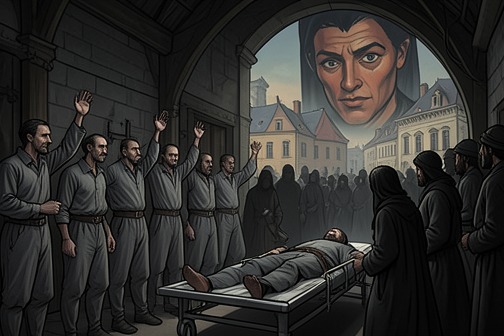
The [1981 Irish hunger strike](entity:event-recall-event-1981-ef2dce2b096b) turned the treatment of republican prisoners into a confrontation over political identity, bodily endurance and the future direction of the republican movement. Beginning at [Long Kesh](entity:location-recall-location-long-kesh-90c48f775ab3) on 1 March, it became a public crisis when [Bobby Sands](entity:character-recall-character-bobby-sands-cb073d403dee) was elected to Parliament while refusing food. His death on the sixty-sixth day brought enormous attention and support to the republican cause; nine other men also died. The strike’s legacy remained contested, not only because of the deaths, but because later testimony questioned whether the protest could have ended earlier.
## Background: criminal status and political identity
By the end of 1975, internment had officially ended. Paramilitary suspects would henceforth be charged and imprisoned as ordinary criminals rather than detained indefinitely as political prisoners. The distinction was more than a change in legal procedure: it challenged the republican claim that IRA volunteers were soldiers engaged in a war and should be treated as prisoners of war. The [British government](entity:organization-recall-organization-66a95d21d932) could refuse to call the conflict a war, while republicans regarded the criminal label as an attack on the basis of their armed struggle.
Prison protest had already become part of that dispute. In Long Kesh’s H Blocks, the blanket and dirty protests expressed prisoners’ refusal to accept ordinary criminal status. The hunger strike carried the argument further: the prisoners’ bodies became the means by which they insisted that their political claims could not simply be classified away. The strike therefore concerned material demands, including the right to wear their own clothes, but also the recognition of who the prisoners were and what their actions meant.
## Sands’s strike and election
Sands grew up Catholic in a Protestant neighbourhood. When he was seven, after a neighbour discovered that his family were Catholic, they were forced from their home. He later joined the IRA. On 1 March 1981, he began refusing food. His last morsel was a prison ration orange, which he found bitter. As he started the strike, he wrote on a scrap of toilet paper: “I am standing on the threshold of another trembling world. May God have mercy on my soul.”
The protest widened as other prisoners joined at intervals: a second man began two weeks after Sands, a third one week later, and eventually ten men were on hunger strike at Long Kesh. The government’s position appeared unlikely to change. [Margaret Thatcher](entity:character-recall-character-margaret-thatcher-be3b0ca8af0a) had shown little sympathy for the prisoners’ demands, and her public description of them as men of violence framed the strike as a matter of criminality rather than political negotiation.
A sudden political opening came four days after Sands began his strike, when [Frank Maguire](entity:character-recall-character-frank-maguire-959d5f6d0c78), a nationalist MP for Fermanagh and South Tyrone, died. His death required a by-election. After republican approaches persuaded Maguire’s brother not to seek the seat, Sands became the candidate, running for Parliament from prison. His candidacy joined a visible act of protest to the electoral process: a man who was starving in prison could also ask voters to represent him.
[Gerry Adams](entity:character-recall-character-gerry-adams-6d84cf7a2514) saw the election as an opportunity to broaden republican support beyond those who endorsed IRA violence. Working with [Danny Morrison](entity:character-recall-character-danny-morrison-fbca12bc94b0), he helped develop a strategy in which Sinn Féin would contest elections while the IRA continued its armed campaign. On 10 April, after forty-one days without food, Sands was elected to Parliament. The result did not secure his demands, and his condition continued to deteriorate. It did, however, show how a hunger striker’s electoral victory could shift the political significance of a prison protest.
## Deaths and public consequences
Sands died on 5 May 1981, the sixty-sixth day of his strike. His death became an international news story. About one hundred thousand people gathered in [Belfast](entity:location-recall-location-belfast-8a60016bc9a1) as his coffin was carried to the cemetery, and the republican cause received a major upsurge of support on both sides of the Irish border. Thatcher did not retreat from her position after his death; she described him as a convicted criminal who had chosen to take his own life, contrasting his death with the victims of his organisation.
Sands was the first of the ten strikers to die; nine others followed over the summer. The scale of the losses made the strike a source of both political momentum and profound grief. For Adams, Sands’s death had an international impact greater than that of any other event in [Ireland](entity:location-recall-location-ireland-3247a2c8bcbe) in his lifetime. For the prisoners and their families, political consequences could not erase the deaths themselves. The strike demonstrated that a protest conducted inside prison could command attention far beyond its walls, but that visibility was achieved at terrible cost.
## The secret-offer account and its disputed meaning
Years later, Ricky O’Rawe described a private account he had held back during his interviews with Mackers. In the summer of 1981, after Sands and three other hunger strikers had died, O’Rawe was helping to lead negotiations from inside the prison. He said the prisoners received a secret offer from Thatcher that would have granted almost all their demands. It was not a complete capitulation, but it guaranteed that they could wear their own clothes, one of their principal requirements, along with other concessions.
According to O’Rawe, he and another negotiator sent a message to the Provo leadership outside, indicating that they were inclined to accept the offer and end the strike. The response, he said, came from Gerry Adams: the offer was insufficient, and the strikers should continue. O’Rawe was not privy to the discussions of the Army Council that made the decision. His later account therefore presented both a claim about what the prisoners had been willing to accept and a question about the movement’s decision-making, rather than direct knowledge of every discussion behind it.
O’Rawe said six more men died before the strike ended. For years he had not publicly challenged the account that the prisoners themselves had insisted on continuing. He came to regard that version as a carefully shaped narrative and felt guilty that he had not argued more forcefully at the time. When he finally told Mackers what he remembered, after avoiding the subject through eight interviews, he broke down in tears. After two decades of silence, he said he felt emotionally purged by speaking about the men who had died.
O’Rawe’s interpretation went beyond the immediate negotiations. He came to believe that Adams had prolonged the strike to build on the broad public support generated by Sands’s candidacy and death, although he acknowledged that he could not know what the Army Council had discussed. He reasoned that the electoral success had revealed a political opportunity that armed violence had not produced on the same scale. Yet the argument resisted a simple verdict: O’Rawe also conceded that without the strike’s political consequences, the war might not have ended as it did. The possibility that the eventual peace process followed from those deaths did not settle whether the price was justified.
## Guilt, memory and political legacy
O’Rawe was not the only participant to revisit the strike through guilt and counterfactuals. [Brendan Hughes](entity:character-recall-character-brendan-hughes-1230acbdf136), who had called off an earlier, abortive hunger strike after the young prisoner [Seán McKenna](entity:character-recall-character-se-n-mckenna-00d33ae20130) slipped into a coma, repeatedly wondered whether allowing McKenna to die might have prevented the later strike and saved the ten men. When Hughes later encountered McKenna in [Dundalk](entity:location-recall-location-dundalk-adc76dac93ed), McKenna had brain damage and permanently affected eyesight. He told Hughes, “You should have let me die.” The encounter gave Hughes’s retrospective calculations a human presence: the question of what might have been was spoken by someone who had survived with lasting injuries.
Hughes also remembered Dr Ross, the physician who had cared for him during his own hunger strike and brought him fresh water from a mountain spring. Sands had distrusted Ross and called him a “mind manipulator,” while Hughes remembered his kindness. Ross later took his own life with a shotgun in 1986, after watching all ten men die. His fate formed another part of the aftermath, extending the strike’s burden beyond the prisoners who had starved.
The hunger strike helped make electoral politics central to republican strategy and contributed to the later tension between Sinn Féin’s political activity and the IRA’s armed campaign. Its historical meaning, however, remained divided between the political gains that followed and the deaths through which those gains became possible. O’Rawe’s testimony reopened that divide; Hughes’s memories showed how it persisted as personal responsibility and grief. The strike’s legacy is therefore not only its transformation of republican politics, but the unresolved question of how its consequences should be remembered alongside the lives it cost.
Event 45
1996 London Docklands bombing
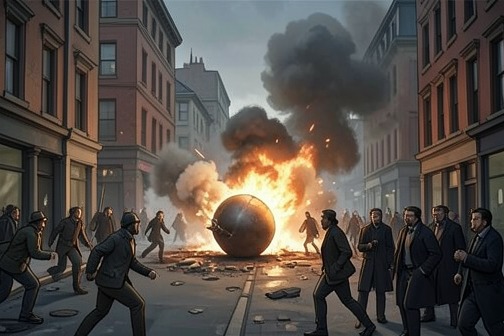
The [1996 London Docklands bombing](entity:event-recall-event-1996-7ccdc6822c9a) ended the [Irish Republican Army](entity:organization-recall-organization-irish-republican-4bff46a4b2bf)’s ceasefire and injured more than one hundred people, abruptly exposing how vulnerable the peace process remained to the unresolved dispute over negotiations and weapons. The group blamed the [British government](entity:organization-recall-organization-66a95d21d932)’s refusal to negotiate with Sinn Féin until the Irish Republican Army had decommissioned its weapons. A second ceasefire began in 1997 and held, but the bombing marked a rupture in a transition whose political settlement still left the past largely unaddressed.
## Background and the End of the Ceasefire
The bombing came amid an effort to move from armed conflict to political negotiation. The ceasefire had created a sense of possibility, but that opening rested on contested conditions: the British government was refusing to negotiate with Sinn Féin until the Irish Republican Army decommissioned its weapons. The group’s statement attributed the bombing to that refusal, placing the attack within the political dispute over whether disarmament should precede talks.
The attack ended the ceasefire in 1996. Its immediate consequence was not simply a return to violence but the exposure of how easily the new political space could close. The possibility of negotiations depended on a fragile alignment between the Irish Republican Army’s military decisions and Sinn Féin’s political role; the bombing made that tension impossible to overlook.
## The Attack and Its Political Aftermath
The bombing injured more than one hundred people. The Irish Republican Army’s statement connected the attack to the British government’s position on negotiations and decommissioning. That explanation gives the event a stated political context, but the book also records uncertainty about what [Gerry Adams](entity:character-recall-character-gerry-adams-6d84cf7a2514) knew beforehand. Some press speculation suggested that he might not have known about the bombing in advance and that his commitment to the peace process may have distanced him from the Irish Republican Army’s armed wing. The account presents this as speculation, not an established fact.
A second ceasefire was initiated in 1997, and this one held. In April 1998, negotiators met at [Hillsborough Castle](entity:location-recall-location-hillsborough-castle-290062645f27) to work out the details of a peace agreement. The sequence sets the bombing between two different possibilities: the breakdown of a ceasefire and the later persistence of negotiations. The eventual agreement did not erase the political and historical disputes that the attack had brought into view.
## A Peace Without an Agreed Accounting
The [Good Friday Agreement](entity:event-recall-event-good-friday-agreement-f0a8e2fc0bef) addressed the future but did not establish a truth-and-reconciliation mechanism for examining the violence of the preceding decades. Unlike the South African process described in the book, there was no general exchange in which people could tell the truth in return for legal immunity. [The Troubles](entity:state-recall-state-the-troubles-358150e12a16) had ended in a stalemate rather than a clear victory, and the agreement offered power sharing rather than a shared account of what had happened.
That absence shaped how the bombing and the ceasefire’s collapse could be remembered. Gerry Adams’s continued refusal to acknowledge that he had been in the Irish Republican Army reinforced a wider reluctance to speak openly about participants’ roles. The book describes a political landscape in which the past remained charged even as the peace process advanced: memory was contested, disclosure could carry risks, and the ceasefire’s return did not settle questions of responsibility.
## Significance in the Narrative
The bombing is presented as a rupture within an unfinished transition, not as a self-contained episode with a settled meaning. Its account connects the immediate injury and the end of the ceasefire to the larger problem of making negotiations possible while leaving the conflict’s history unresolved. The Irish Republican Army’s return to a ceasefire in 1997 and the negotiations that followed show that the rupture was not final; the lack of an agreed process for confronting the past shows why a restored ceasefire could not, by itself, resolve the conflict’s legacy.
The book’s opening epigraph observes that wars are fought first on the battlefield and then in memory. The Docklands bombing belongs to both struggles in this account: it interrupted the movement toward peace, while the disputes over what the attack meant, who knew about it, and how the wider conflict should be remembered continued beyond the ceasefire.
Event 46
1997 IRA ceasefire
The [1997 IRA ceasefire](entity:event-recall-event-1997-a60eaefe0387) was the renewed truce that held after an earlier ceasefire broke down in 1996. Its importance lay not in resolving the conflict’s history, but in making sustained negotiations possible: talks at [Hillsborough Castle](entity:location-recall-location-hillsborough-castle-290062645f27) in April 1998 produced the [Good Friday Agreement](entity:event-recall-event-good-friday-agreement-f0a8e2fc0bef), even as questions of accountability remained unsettled.
## From the Failed Truce to a New Ceasefire
The preceding ceasefire ended in 1996 when the IRA detonated a bomb in [London](entity:location-recall-location-1bfd335cdd1b)’s Docklands, injuring more than one hundred people. The IRA blamed the [British government](entity:organization-recall-organization-66a95d21d932)’s refusal to negotiate with Sinn Féin until the organization had decommissioned its weapons. The bombing exposed how fragile the earlier truce had been and how closely the prospect of negotiation was bound to disputes over weapons and political recognition.
A second ceasefire began in 1997. The account gives no detailed terms for its announcement, but distinguishes it from the earlier truce by its outcome: this one held. That durability changed the political conditions around the conflict, allowing negotiations to continue rather than being overtaken by a renewed bombing campaign.
## From Truce to Agreement
In April 1998, negotiators spent a week at Hillsborough Castle, a Georgian mansion outside [Belfast](entity:location-recall-location-belfast-8a60016bc9a1), working through the details of a settlement. British prime minister Tony Blair attended in person, while former Maine senator [George Mitchell](entity:character-recall-character-george-mitchell-adeec0127603) served as chief negotiator. The discussions addressed the structure of a new [Northern Ireland](entity:location-recall-location-northern-ireland-c23b7da68651) assembly, the decommissioning of paramilitary weapons, prisoner status, and relations among Northern Ireland, [Ireland](entity:location-recall-location-ireland-3247a2c8bcbe), and Britain.
The negotiations were contentious and often concerned with institutional questions, but they took place against a public appeal for peace: Protestant and Catholic schoolchildren gathered at the castle gates, singing and asking for peace. The Good Friday Agreement established a power-sharing arrangement. The ceasefire’s significance therefore extended beyond the suspension of violence; it helped open a path to a political settlement that neither side could claim as a military victory.
## The Unresolved Past
The agreement looked forward more clearly than it looked backward. It provided for the release of paramilitary prisoners held at the time and capped future sentences for conflict-related crimes at two years, but it established no formal truth-and-reconciliation mechanism through which the population could account for the preceding decades of violence. Unlike post-apartheid South Africa, where testimony could be exchanged for legal immunity, Northern Ireland had no equivalent general process.
That omission shaped the legacy of the 1997 ceasefire. The truce and the agreement it enabled changed the political landscape, but did not settle how killings, state collusion, or other unresolved crimes should be addressed. The agreement’s criminal-justice provisions and its lack of a broader mechanism for dealing with the past left accountability as a continuing dispute within the peace that the ceasefire helped make possible.
Event 47
Belfast Agreement
The [Belfast Agreement](entity:event-recall-event-8460f428496d) was the negotiated settlement announced on Good Friday in 1998 to provide a way out of [Northern Ireland](entity:location-recall-location-northern-ireland-c23b7da68651)’s three-decade conflict. It paired a devolved assembly and closer relations with the [Republic of Ireland](entity:location-recall-location-republic-of-ireland-37b598657754) with a constitutional guarantee that Northern Ireland would remain part of the [United Kingdom](entity:location-recall-location-united-kingdom-b48cd04982cf) unless a majority of people there chose unity with [Ireland](entity:location-recall-location-ireland-3247a2c8bcbe). The agreement made consent central to that choice, and Sinn Féin agreed to enter the new assembly. It established a political route beyond armed conflict, but offered no comprehensive mechanism for accounting for the violence that had preceded it.
## From ceasefire to negotiations
The agreement emerged from a process marked by both renewed hope and the possibility of renewed violence. An earlier [IRA ceasefire](entity:state-recall-state-ira-ceasefire-30e7cb5cd2cc) had ended in 1996, when the IRA detonated a bomb in [London](entity:location-recall-location-1bfd335cdd1b)’s Docklands, injuring more than one hundred people. The group blamed the [British government](entity:organization-recall-organization-66a95d21d932)’s refusal to negotiate with Sinn Féin until the IRA had decommissioned its weapons. Press speculation questioned whether [Gerry Adams](entity:character-recall-character-gerry-adams-6d84cf7a2514), increasingly committed to a political process, had known of the bombing in advance or had become estranged from the IRA’s armed wing. A second ceasefire began in 1997 and held, creating the opening for negotiations.
For a week in April 1998, representatives gathered at [Hillsborough Castle](entity:location-recall-location-hillsborough-castle-290062645f27), a Georgian mansion outside [Belfast](entity:location-recall-location-belfast-8a60016bc9a1), to work through the terms of a settlement. The new British prime minister, Tony Blair, attended in person, staying inside the building for three days and subsisting on sandwiches and Mars bars. [George Mitchell](entity:character-recall-character-george-mitchell-adeec0127603), a former senator from Maine, served as chief negotiator. Quiet and patient, he pursued agreement with a determination that one observer likened to fanaticism. The work was not a simple reconciliation: representatives bluffed and quarrelled over the detailed arrangements that would govern an assembly, the decommissioning of paramilitary weapons, prisoners’ status, and future relations among Northern Ireland, Ireland, and Britain.
## The settlement and the principle of consent
Outside the castle, sleet fell as Protestant and Catholic schoolchildren gathered at the gates, singing and asking for peace. Gerry Adams came out with a tray of drinks for them. The scene placed an image of ordinary hope beside negotiations over institutions, weapons, and the terms on which former adversaries might share power. On Good Friday, the parties emerged to announce that they had reached a pact acceptable to all sides, intended as a mechanism for ending the conflict.
The settlement did not immediately unite Ireland or remove Northern Ireland from the United Kingdom. Northern Ireland would remain within the UK while receiving its own devolved assembly and maintaining close links with the Republic of Ireland. The agreement acknowledged the island-wide majority favouring [Irish unity](entity:concept-recall-concept-irish-unity-b50744f64331) and the majority in the six northern counties favouring continued membership of the United Kingdom. Its governing principle was consent: if a majority in the North ever chose unity with Ireland, the British and Irish governments would have a binding obligation to honour that decision. Until then, Northern Ireland’s constitutional position would remain unchanged.
The arrangement turned a dispute over sovereignty into a conditional political process rather than declaring either side the victor. Sinn Féin accepted participation in the newly created assembly and set aside its traditional principle of abstention. The agreement thus altered not only the machinery of government but also the political strategy of a republican movement that had long regarded parliamentary participation with suspicion.
## Adams and the new political phase
Gerry Adams had helped secure the agreement, while his carefully maintained ambiguity about his relationship to the IRA enabled interlocutors to negotiate with him. The book presents that ambiguity as politically useful: people who might have been unwilling to appear to negotiate with terrorists could engage with a leader whose paramilitary past was publicly obscured. Even after the settlement, [Bill Clinton](entity:character-recall-character-bill-clinton-7fedda7b8056) wondered aloud about the true nature of Adams’s relationship with the IRA. The uncertainty did not disappear with the signing; it was part of the political space in which negotiations had become possible.
Adams did not describe the settlement as a final victory. In a speech at Wolfe Tone’s grave several months later, he said the struggle would continue until British rule ended. He also presented the agreement as the close of one phase and the beginning of another, imagining an Ireland in which guns were permanently silent and people lived at peace with one another and with their neighbours in Britain. That combination of continuing republican aspiration and acceptance of a consent-based process captured the settlement’s tension: it did not resolve competing national aims, but set rules for pursuing constitutional change without immediate violence.
## Prisoners, the past, and unresolved accountability
The agreement included specific criminal-justice provisions, notably the release of paramilitary prisoners held at the time of the accord. Under the framework described in the book, future sentences for Troubles-related crimes would be capped at two years. These measures addressed imprisonment and helped make the settlement workable, but they did not establish a broad truth-and-reconciliation process. Unlike post-apartheid South Africa, where testimony could be exchanged for legal immunity, Northern Ireland had no comparable formal mechanism for hearing accounts of the conflict. The agreement concentrated on the future and on power-sharing; it did not create an agreed procedure for deciding how the preceding decades should be investigated or remembered.
That omission left old crimes within the ordinary criminal-justice system. The conflict was not formally declared a war, so killings associated with paramilitary and state activity would not be prosecuted as war crimes. Apart from a limited amnesty under 1999 legislation for people who voluntarily provided information to help recover the bodies of the disappeared, there was no general exchange of testimony for immunity. Unsolved murders remained open cases, and former paramilitaries and soldiers could still face prosecution. Later, the absence of a shared process for addressing the past fed continuing disputes over whether investigations treated different sides equally. Northern Ireland’s legacy caseload became a recurring political and legal burden rather than a settled chapter.
## Historical significance
The lack of a formal accounting helped prompt the Belfast Project, an effort to gather secret interviews with former republican and loyalist participants. Its founders saw a need the peace settlement had left unmet: the agreement had ended neither the arguments about what had happened nor the desire to preserve testimony about it. The project’s premise was that a political settlement could create peace without producing a common historical record, or a process through which painful accounts might be heard.
The agreement’s achievement and limitation therefore remain bound together. It provided institutions for shared government, recognized that constitutional change required consent, and gave Sinn Féin a place in electoral politics. It also left accountability to an ad hoc and contested set of investigations, prosecutions, and limited provisions for recovering the disappeared. The settlement could end one phase of struggle without making the past politically inert; its promise of a peaceful future existed alongside the unresolved claims and memories that continued to shape public life.
Event 48
Disappearance and murder of Jean McConville
[Jean McConville](entity:character-recall-character-jean-mcconville-defffff134a9), a widowed mother of ten, was taken from her home in [Divis Flats](entity:location-recall-location-divis-flats-f36db46c6064) in 1972, accused by the IRA of informing for the British, and secretly killed and buried. Her disappearance left her children without a body or a settled account of what had happened. Years later, the IRA acknowledged its responsibility for taking her, while her children rejected the allegation used to justify her death. Testimony by [Brendan Hughes](entity:character-recall-character-brendan-hughes-1230acbdf136) and [Dolours Price](entity:character-recall-character-dolours-price-f885017ba474) traced the killing to the IRA’s internal command structure, but documentary clues complicated the chronology, and the competing accounts never converged into a single uncontested record. The case became a struggle over a killing and over who had the authority to name its victim, explain its purpose, and define its place in the history of the conflict.
## Abduction and the informer allegation
Brendan Hughes described McConville’s case in interviews with [Anthony McIntyre](entity:character-recall-character-anthony-mcintyre-a9506a6098eb) for the [Boston College](entity:location-recall-location-boston-college-d69f5179339f) [Belfast](entity:location-recall-location-belfast-8a60016bc9a1) Project. According to Hughes, the IRA first suspected her after a local volunteer encountered one of her children, who mentioned that their mother had something in the house. Hughes said he sent a unit to investigate and that its members found a radio transmitter. He acknowledged that he had not been present for the initial inquiry and was recounting information passed to him by subordinates. In the account he gave, the IRA took McConville for questioning, she admitted passing information to the British Army by radio, and the men seized the device before allowing her to return to her children with a warning.
Hughes said that, several weeks later, another transmitter was found in the flat. He then considered McConville certain to be executed. His account cast her not as a first-time suspect but as someone who had been warned and had allegedly resumed informing. He further claimed that she had her children gather information about IRA volunteers moving around Divis Flats. The children fiercely rejected any suggestion that they had helped spy on their neighbours, and their brother Michael later questioned whether the alleged radio story was credible: Hughes had never said that he personally saw the device, and the claim might have hardened into accepted fact through repetition.
The family offered a sharply different account of McConville’s character and circumstances. They described an overworked, depressed, psychologically fragile mother of ten who had recently lost her husband to cancer and spent her days caring for the children and doing laundry by hand. They recalled her helping a wounded British soldier in Divis Flats shortly before her disappearance; afterward, the words BRIT LOVER were painted across the family’s door. For the children, this memory supported their belief that sectarian hostility, not espionage, had made their mother a target. They also suspected the possibility of mistaken identity, while maintaining that any supposed confession under torture could not establish guilt.
## Command, execution, and secret burial
Hughes told Mackers that [Gerry Adams](entity:character-recall-character-gerry-adams-6d84cf7a2514) knew of and approved the operation against McConville. He identified the secret squad run by [Pat McClure](entity:character-recall-character-pat-mcclure-26b23269b576), known as the [Unknowns](entity:character-recall-character-unknowns-b130c4534a21), as the group responsible for escorting her across the border, and named Dolours Price as one of its members involved. In another account, Hughes stated that the killing had been justified because McConville was an informer. These were Hughes’s claims, grounded in his position within the IRA but, as he noted about the earlier inquiry, not always in his own presence at the events he described.
Hughes also recounted disagreement within the IRA over what should happen to McConville’s body. According to him, [Ivor Bell](entity:character-recall-character-ivor-bell-e3c8d255e4f4) opposed burying her secretly: if she was to be killed, Bell argued, her body should be left in public so that the movement’s reason for the killing would be visible. Hughes said the leadership rejected that position. He speculated that McConville’s being a woman and a widowed mother might have made an openly displayed killing damaging to the IRA’s reputation, but described the decision to kill her in secret as the outcome of internal deliberation. In his account, Adams was the person who ultimately authorized her execution.
Price’s later account supplied a distinct detail about the killing. She told [Ed Moloney](entity:character-recall-character-ed-moloney-9d7f20a1f93b) that she and others were called back to [Dundalk](entity:location-recall-location-dundalk-adc76dac93ed) after McConville had been held there for four or five days. A grave had already been dug, she said, but the local unit did not want to take McConville across a field and shoot her. Price’s brief response to Moloney’s suggestion that her group therefore had to do it left the circumstances stark: the assigned unit had balked, and the decision fell to those who had been called back. Her account placed her participation beyond the earlier task of transporting McConville and brought the killing itself into the record.
## Conflicting timelines and uncertain evidence
The date and sequence of events remained difficult to establish. McConville’s children consistently said that she was taken in early December. In their recollection, she had gone to play bingo, was seized and beaten, and was later found wandering in a daze before being returned to Divis Flats. They believed she was taken away the following evening, on 7 December 1972, while still bearing bruises from the earlier assault. The family’s accounts to social services and in early press interviews, beginning in January 1973, also placed the abduction in early December.
A police log located during Nuala O’Loan’s investigation introduced another date. It recorded a beaten woman found wandering in [West Belfast](entity:location-recall-location-west-belfast-27ebba5f4bec) at 11 p.m.; although the name was written as Mary McConville, the address, St Jude’s Walk in Divis Flats, indicated Jean. The log said she had been accosted by men and warned to stop giving information to the military. Crucially, it placed this episode on 29 November, seven nights earlier than the date the children associated with the beating. If the log was accurate, an interval may have separated the first interrogation and warning from McConville’s removal. That would make Hughes’s description of a warning followed by a later discovery of another transmitter less difficult to reconcile with the chronology, though it does not establish that his account of the transmitters was true.
The children’s memory of the wounded soldier was also left unsettled by the documentary record. O’Loan found no army record of a British soldier wounded near Divis Flats at the time. The absence could reflect incomplete records, confusion about the soldier’s injuries, or a mistaken date; it did not by itself establish that the family’s memory was false. The discrepancy nevertheless showed how even an intimate family recollection could be challenged by archival silence. The case therefore contains not one cleanly resolved timeline but an accumulation of testimony and records with differing dates, limits, and implications.
## The family, the public record, and the search
In 1995, Gerry Adams met members of the McConville family and expressed sympathy. During one meeting, he told Michael that he apologized for what the republican movement had done to his mother, while not accepting personal responsibility. He also said that he had been in prison when McConville disappeared. That statement was inaccurate: Adams had been released from [Long Kesh](entity:location-recall-location-long-kesh-90c48f775ab3) in June 1972 for the [London](entity:location-recall-location-1bfd335cdd1b) peace talks and was not imprisoned again until the following July. He later said he had confused the dates. Hughes regarded Adams’s visits and promise to investigate as morally intolerable, because he believed Adams had ordered the execution in the first place.
The search for the missing began to enter public view through the families’ efforts to locate those who had been abducted and murdered but never found. At a press conference at the [Linen Hall Library](entity:location-recall-location-linen-hall-library-33d460c9a337) in central Belfast, McConville’s daughter Helen spoke as one of the family’s representatives. She recalled that four women and eight men had come into the family home and taken her mother, and challenged the women involved to consider the guilt of what they had done. Helen had a family of her own but could not bring herself to move to Australia with her husband and children; her husband explained that she held on to the possibility that her mother might come back.
In 1998, [Bobby Storey](entity:character-recall-character-bobby-storey-0e12f5aacfe4), a close confidant of Adams, approached former IRA members to ask what they remembered about McConville. When he approached Price, she suggested that he ask Adams. The following year, the IRA stated that McConville had admitted being a British Army informer. Her children were relieved that the organization had acknowledged responsibility for her murder and hoped it might help locate her remains, but they rejected its description of her as an informer. Their campaign to clear her name was inseparable from the search for her body: without a grave, the family remained unable to complete its mourning, while the accusation continued to shape how others treated them.
## Memory, testimony, and accountability
The disappearance acquired a second history in the arguments over who could speak about it and on what terms. In his Boston College interviews, Hughes attributed authorization to Adams and described McConville as an informer; Price’s separate recorded conversations with Moloney included detailed discussion of the disappearance and her own role in the killing. These accounts were not interchangeable, nor did their existence settle every point. Hughes’s narrative included information received from others, while the children challenged both the informer claim and the chronology. A police record offered evidence of a warning but did not prove that the alleged radio existed or that McConville had passed intelligence.
The case unfolded amid a wider absence of an agreed process for understanding the conflict. The peace settlement had left [Northern Ireland](entity:location-recall-location-northern-ireland-c23b7da68651) in a political stalemate rather than producing a clear victor, and no formal mechanism existed to determine how the past should be commemorated or explained. Gerry Adams’s refusal to acknowledge IRA membership reinforced a culture in which former participants might doubt that it was safe to speak openly. At the same time, Sinn Féin leaders were accused by critics of maintaining a monopoly over the memory of republican armed struggle and of discrediting dissenters as opponents of the peace process.
The later prosecution of Ivor Bell brought the historical dispute into court without resolving its central question. A voice analyst testified that the interviewee identified as Z was likely Bell. The defense argued that the recording explicitly denied his involvement in McConville’s murder; a [Police Service of Northern Ireland](entity:organization-recall-organization-police-service-o-88a3814d22b2) detective who had heard it interpreted the interview as acknowledging a critical role in aiding and abetting the killing. Although Hughes and Price both alleged that Adams had ordered the murder, prosecutors concluded that the evidence against Adams consisted of uncorroborated allegations and would not support a successful prosecution. The contrast sharpened the case’s lasting significance: recordings could expose competing memories and implicate people in the past, but they did not produce a complete, shared account or equal legal consequences for everyone named. Like the history of the conflict more broadly, McConville’s disappearance was fought over again in memory, through testimony, records, family grief, and the limits of what could be proved.
Event 49
Break-in at the Castlereagh police facility
The break-in at the [Castlereagh](entity:location-recall-location-castlereagh-6bc76b4e4fbb) police facility on St Patrick’s Day 2002 turned the security forces’ own intelligence hub into the target of a precisely planned raid. The thieves left with files identifying informants inside the IRA and other paramilitary groups, setting off an urgent effort to protect those whose cover might have been exposed and leaving the operation’s authorship contested.
## A Fortress in Transition
Just after ten o’clock on a quiet Sunday night in [East Belfast](entity:location-recall-location-east-belfast-88a3f99c3f0f), three men in suits drove up to the gates of the heavily fortified Castlereagh complex. The Royal Ulster Constabulary had ceased to exist four months earlier under the [Good Friday Agreement](entity:event-recall-event-good-friday-agreement-f0a8e2fc0bef), and the facility’s policing role now belonged to the [Police Service of Northern Ireland](entity:organization-recall-organization-police-service-o-88a3814d22b2), whose new mission included more inclusive recruitment and a less exclusively Protestant association. The institutional change had not softened the site’s appearance: high walls topped with barbed wire still made it resemble a forward operating base, and it was reputed to be among Europe’s most secure buildings.
Castlereagh housed police, the British Army and intelligence personnel. Only about twenty people were on duty across the compound that night. Its mixture of agencies and personnel, however, also meant that not every guard could be expected to recognize every visitor. The three men exploited that ordinary weakness in a place built to resist extraordinary threats: they presented what appeared to be army identification at the gate, were waved inside, and showed credentials again at the front desk. Both checks were passed without raising suspicion.
Their destination was not a public office but a room known as 2/20, the secret, round-the-clock nerve centre of the security forces’ intelligence network in [Belfast](entity:location-recall-location-belfast-8a60016bc9a1). Hundreds of informants across the city could use its hotline to contact handlers in the police, the army and MI5. The operation had been moved temporarily because its usual office was being renovated, but the thieves knew where to find its replacement. That foreknowledge turned a daring intrusion into a carefully targeted raid on the network’s heart.
A lone Special Branch constable was manning the phones. When he opened the door, one of the men struck him hard in the jaw. The intruders taped his mouth, hooded him, tied him to an office chair and put headphones over his ears, playing music from a Walkman. They used keys left on the desk to open drawers and filing cabinets, taking documents while periodically checking that the constable was breathing. Once they stopped checking, he could not tell whether anyone remained in the room; when he eventually worked free and removed the blindfold, the men had vanished and the shelves were empty.
The stolen trove included notebooks and files containing informants’ details and code names, including people working inside the IRA and other paramilitary groups. The thieves had entered unmasked and unarmed, and nobody noticed them leaving. Their only apparent trace was a lapel badge left behind, bearing the words “SAVE THE [RUC](entity:organization-recall-organization-845946bf4b89)”—a detail that could have belonged to the disguise or been a taunt.
## Fallout and Contested Authorship
The discovery triggered immediate alarm. Police contacted informants to warn that their identities might have been compromised and eventually relocated more than three hundred people. A security source described the break-in as “an act of war” and a wilful violation of the peace process. The IRA rejected responsibility, claiming instead that the operation was an inside job by the authorities. Most observers ultimately concluded that the Provisional IRA had carried it out, but the apparent precision of the raid suggested assistance from within Castlereagh: the thieves had known that the intelligence operation had been moved to a temporary location.
Investigators sought a Castlereagh cook for questioning because he was an associate of Denis Donaldson, a former IRA leader who worked as a Sinn Féin official at [Stormont](entity:location-recall-location-stormont-729677d071cf). That connection helped sustain suspicion of an insider, but it did not settle who had planned or executed the theft. One press report suggested that the goal might have been to identify a particular informer said to occupy an exceptionally senior position within the Provisional IRA. The name attached to the suspected agent circulated in several forms—Stakeknife, Steak Knife and Stake Knife—while the image remained that of a dagger at the heart of the organization. A 1999 account had called the supposed agent the crown jewel of British intelligence in Ulster.
The raid therefore became entangled with a larger, unresolved question: whether British intelligence had penetrated the republican movement at its highest levels, and who that agent might be. In March 2003, [Dolours Price](entity:character-recall-character-dolours-price-f885017ba474) told a visitor at her [Dublin](entity:location-recall-location-dublin-d76fcbad2c3f) home that she had heard the rumours but had not worked out the identity of the informer. In anger, she sometimes joked that it could be [Gerry Adams](entity:character-recall-character-gerry-adams-6d84cf7a2514), she acknowledged, but added that she did not think he was Stakeknife. Her uncertainty preserved the distinction between suspicion and proof. The stolen records made the danger of exposure concrete, while the suspected high-level spy remained a figure of rumour; the break-in intensified the search for an answer without conclusively providing one.
## The Informant Question Beyond the Heist
The raid’s significance sits alongside a wider uncertainty about how informant allegations were made, recorded and later tested. In the investigation into [Jean McConville](entity:character-recall-character-jean-mcconville-defffff134a9)’s disappearance, Nuala O’Loan found no official document fixing the precise date she was taken. A police log recorded that a woman identified as Mary McConville had been found beaten at 11 p.m. after being warned to stop giving information to the military; her address showed that the woman was Jean. The children remembered the warning and beating as occurring on 6 December, the night before their mother was abducted, but the log placed the incident on 29 November.
That difference mattered because the competing dates altered how the allegation against McConville could be understood. The family consistently placed her abduction in early December, while [Brendan Hughes](entity:character-recall-character-brendan-hughes-1230acbdf136)’s account described her as returning to informant work after a warning and being caught with another radio later. If the police log’s date was correct, more than one night could have separated the warning from her removal, making Hughes’s sequence more plausible; the record did not, however, settle what happened. The Castlereagh theft exposed the vulnerability of secret intelligence files, but neither the raid nor the competing recollections supplied a conclusive answer about every person suspected of informing.
Event 50
Stakeknife identity revealed
[Stakeknife identity revealed](entity:event-recall-event-stakeknife-47fd631a04be) was a public exposure with consequences far beyond naming one informant: [Freddie Scappaticci](entity:character-recall-character-freddie-scappaticci-2cd929fe9e08), trusted to help the [Irish Republican Army](entity:organization-recall-organization-irish-republican-4bff46a4b2bf) find spies, had himself worked for British Army intelligence for roughly a quarter of a century. Newspapers in England and [Ireland](entity:location-recall-location-ireland-3247a2c8bcbe) identified him just over a year after the [Castlereagh break-in](entity:event-recall-event-ef3b89dc0fcf). The disclosure exposed a structural vulnerability at the heart of the IRA, shook republican confidence, and sharpened questions about what testimony and intelligence could—and could not—prove.
## Exposure and Identification
The story broke in several newspapers in England and Ireland. Stakeknife, previously liable to be dismissed as a rumour or an intelligence fabrication, was presented as a real, paid informant of British Army intelligence. Scappaticci had initially offered his services to the authorities in 1978, and his work continued for decades. British ministers were regularly briefed on his information; one British Army commander called him “our most important secret” and “a golden egg.” The importance attributed to his intelligence was thus measured not only by his access but by the senior attention his reports received.
Scappaticci appeared at his solicitor’s office in [Belfast](entity:location-recall-location-belfast-8a60016bc9a1) after the press exposure and denied the allegations: “I am not guilty of these allegations.” The account describes him as composed, despite the danger that exposure brought. A former handler’s maxim to informants was never to confess, because confession meant death. Before anyone could attack him, Scappaticci left Belfast and went into hiding, presumably with assistance from his handlers. The precise reason he first became an informant remains uncertain. He was reportedly a walk-in, and revenge after an IRA beating was suggested as a possible motive, but the account does not settle the question.
## The Security Unit’s Double Role
The disclosure’s central paradox was that the IRA had entrusted Scappaticci with rooting out moles. In the late 1970s, the Provisional IRA had adopted a cellular structure: operational units were meant to know little about one another, limiting the damage an infiltrator could do. But the internal security unit, known as the Nutting Squad, had an organisation-wide remit. It needed access to personnel, weapons supplies, and attack plans to investigate suspected penetration. A former Provo compared it to a junction box connecting the organisation.
That arrangement made the security unit both a defence against infiltration and a uniquely valuable point of entry. British intelligence had placed an informant inside the body that could reach across the cells. The source account concludes that the Castlereagh break-in, apparently undertaken in hopes of discovering Stakeknife’s identity, failed: his name was presumably too sensitive to appear in the files taken there. The episode therefore set two intelligence methods against one another—an attempt to uncover the mole through stolen records, and an agent whose position gave him access to the organisation’s internal machinery. Its irony lies not simply in Scappaticci’s concealment, but in the trust and institutional access his assignment required.
## Shock, Denial, and Another Informer
The exposure produced intense shock in republican circles. Some Sinn Féin leaders urged scepticism about the “unsubstantiated allegations” against Scappaticci. Dennis Donaldson, one of [Gerry Adams](entity:character-recall-character-gerry-adams-6d84cf7a2514)’s most trusted officials, told an American journalist, “I still can’t believe it,” then shook his head. His disbelief acquired a bitter afterlife: Donaldson himself was exposed as a paid British intelligence informer.
In December 2005, Adams announced at a hastily assembled press conference that Donaldson had confessed to informing for the previous twenty years. Adams argued that parts of the military and intelligence establishment still refused to accept that the British war in Ireland was over. He described agents as people who were “blackmailed, bullied, coerced, bought, broken, used, abused, and then thrown to one side”. Donaldson went into hiding in an isolated cottage in Donegal, without running water or electricity. He grew a beard and chopped wood for heat; a horseshoe hung above the door. Someone later came to the cottage and killed him. Who shot Donaldson, and who ordered the killing, was never established. Adams and the Provisional IRA denied involvement, while Adams contested in legal action a BBC report that he had ordered it. The juxtaposition did not establish that the cases were identical; it showed how the exposure of one informer could be followed by the unmasking—and violent death—of another.
## Testimony and the Limits of Proof
The exposure also belongs to a wider struggle over informers, the disappearance of [Jean McConville](entity:character-recall-character-jean-mcconville-defffff134a9), and the credibility of retrospective testimony. Accounts of McConville’s abduction differed over when she was questioned and warned. Her children remembered the abduction as occurring in early December 1972. A police log later found by Nuala O’Loan described a woman listed as Mary McConville, at the [Divis Flats](entity:location-recall-location-divis-flats-f36db46c6064) address, wandering in [West Belfast](entity:location-recall-location-west-belfast-27ebba5f4bec) after being beaten and warned to stop giving information to the military; the report placed that episode on 29 November, not 6 December. If the log and the children’s remembered abduction date were both accurate, more than one night separated the warning from the abduction. That possibility lent some support to [Brendan Hughes](entity:character-recall-character-brendan-hughes-1230acbdf136)’s account of a longer interval, without resolving whether McConville had informed or what happened between the events.
Later recordings and legal proceedings made the distinction between an allegation and proof especially consequential. [Dolours Price](entity:character-recall-character-dolours-price-f885017ba474) did not mention McConville in her recorded conversations with [Anthony McIntyre](entity:character-recall-character-anthony-mcintyre-a9506a6098eb), but a separate interview recorded by [Ed Moloney](entity:character-recall-character-ed-moloney-9d7f20a1f93b) contained extensive discussion of the disappearance. Price later said that the group had been called back to [Dundalk](entity:location-recall-location-dundalk-adc76dac93ed) after McConville had been held for four or five days; a local unit had dug a grave, but its members did not want to shoot her. In the prosecution of [Ivor Bell](entity:character-recall-character-ivor-bell-e3c8d255e4f4), a voice analyst testified that the recorded speaker known as Z was likely Bell. The parties then disputed what the recording established: Bell’s counsel argued that Z explicitly denied involvement, while a police detective said the interview acknowledged a critical role in aiding and procuring the murder. These disputes did not establish Scappaticci’s involvement in McConville’s killing. They demonstrate why the exposure matters as context: an organisation penetrated at its centre, contested recollections, and recordings capable of implicating some speakers but not necessarily proving accusations against others.
Event 51
Murder of Denis Donaldson
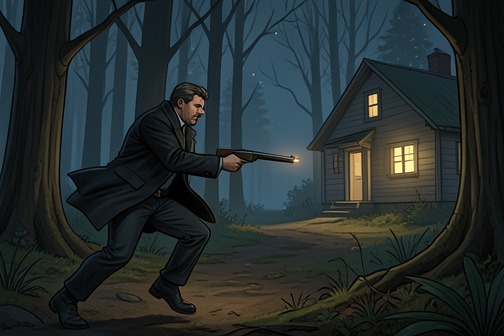
The [Murder of Denis Donaldson](entity:event-recall-event-e16e94c75ee2) followed the exposure of a trusted Sinn Féin official as a long-term paid informer for British intelligence. Donaldson went into hiding after his confession and was killed at an isolated cottage in Donegal. The account leaves the central question of responsibility unresolved: it records the denials by [Gerry Adams](entity:character-recall-character-gerry-adams-6d84cf7a2514) and the Provisional IRA, as well as Adams’s legal action against the BBC after it reported that he had ordered the killing, but identifies neither the shooter nor the person who gave the order.
## Background and Exposure
The killing’s political context was shaped by another informer’s exposure. When [Freddie Scappaticci](entity:character-recall-character-freddie-scappaticci-2cd929fe9e08) was identified in the press as Stakeknife, the shock in republican circles was intense. Donaldson, then a senior Sinn Féin official and one of Adams’s most trusted aides, had expressed disbelief to a visiting American journalist. His own role emerged in December 2005, when Adams announced at a hastily assembled press conference that Donaldson had confessed to being a paid British intelligence informer over the previous twenty years. The apparent disbelief at one exposure thus preceded the revelation of a second, reaching into the movement’s trusted political ranks.
Adams situated Donaldson’s case nearly eight years after the [Good Friday Agreement](entity:event-recall-event-good-friday-agreement-f0a8e2fc0bef), arguing that parts of the military and intelligence establishment still rejected the idea that the British war in [Ireland](entity:location-recall-location-ireland-3247a2c8bcbe) had ended. He described agents as vulnerable to blackmail, coercion, purchase and abuse before being discarded. The account presents that warning against the backdrop of Donaldson’s own long service as an informer, without establishing the circumstances in which he became one or the details of his intelligence work.
## Hiding in Donegal
After the confession, Donaldson went into hiding in an isolated cottage in Donegal, a building that predated the nineteenth-century famine. It had neither running water nor electricity. A horseshoe hung over the door; Donaldson grew a beard and chopped wood to heat the cottage. These concrete details mark the abrupt contrast between his former position as a trusted political insider and his retreat into a place of rural isolation.
The narrative does not describe a confrontation or identify anyone approaching him. It states only that, one day, someone arrived at the cottage and killed him. The sparse account preserves the uncertainty around the attack rather than supplying a motive or reconstructing a final scene.
## Investigation and Disputed Responsibility
It was never established who shot Donaldson or who ordered the shooting. Gerry Adams and the Provisional IRA both strenuously denied any role. The BBC later reported that Adams had ordered the killing; Adams initiated legal action against the broadcaster to contest that claim. The report and lawsuit extended the dispute into public view, but the account offers no resolution to the question of responsibility.
## Informers and the Unresolved Aftermath
Donaldson’s murder sits within the book’s wider examination of informers operating at high levels during an undeclared conflict, and of the possible complicity of handlers who know that an agent is committing murder. British Army sources later claimed that double agents had saved many lives, while acknowledging that the numbers were only estimates. The account warns that such calculations can turn into speculative arithmetic in which lives taken are weighed against lives supposedly saved. Donaldson’s case sharpens that dilemma: his exposure revealed a long-running intelligence relationship, while his killing left both the identity of his killer and the chain of responsibility unresolved.
Event 52
Murder of Pat Finucane
Patrick Finucane was a solicitor murdered at home in February 1989 by loyalist gunmen who had received information about him from an informant working for the state. The inquiry that followed stopped short of finding an overarching state conspiracy, but concluded that he would not have been killed without state involvement. The gap between that finding and his family’s conviction that the inquiry concealed a broader conspiracy became emblematic of the unresolved question of accountability for violence during the Troubles.
## Background and Targeting
Finucane was thirty-nine and lived with his wife, Geraldine, and their three children in a prosperous neighbourhood in North [Belfast](entity:location-recall-location-belfast-8a60016bc9a1). He had advised many republicans, but was not himself a member of the IRA. Some members of the Royal Ulster Constabulary had complained that lawyers were effectively in the pockets of terrorists, and the authorities regarded Finucane as having become too close to the organisation.
The information that helped make him a target came through [Brian Nelson](entity:character-recall-character-brian-nelson-d36dd5b24d74), a former army officer who had become a loyalist paramilitary and then an informant for the Force Research Unit. Nelson’s role within the paramilitary organisation included gathering intelligence and compiling dossiers on republicans who might be selected for assassination. He supplied information about Finucane to the men who carried out the killing. The weapons used in the attack came from a different man, who was also a police informant.
## The Murder
One night in February 1989, gunmen smashed through the front door of the Finucane home with a sledgehammer while the family was eating Sunday dinner. They shot Patrick Finucane twelve times. A ricocheting bullet hit Geraldine, and their young children witnessed the attack. The killing thus struck not only a solicitor whom loyalists and authorities associated with republican clients, but a family in the midst of an ordinary evening at home.
Nelson’s role formed part of a wider pattern of intelligence entanglement rather than an isolated allegation. He would be linked to some fifty murder plots. In another case, he tipped off his handlers about a loyalist plot against [Gerry Adams](entity:character-recall-character-gerry-adams-6d84cf7a2514), and the authorities allowed that attack to proceed. That broader record helps explain why the question surrounding Finucane was not simply who pulled the trigger, but how state intelligence and loyalist violence intersected.
## Inquiry and Contested Findings
A subsequent inquiry examined the murder and the involvement of state agents. It stopped short of concluding that there had been an overarching state conspiracy to kill Patrick Finucane. Its finding was nevertheless stark: he would not have been murdered without the involvement of elements of the state. The distinction left the central issue partly acknowledged and partly unresolved—state involvement was established, while the inquiry did not endorse the family’s wider account of a coordinated conspiracy.
Finucane’s family rejected the findings as a cover-up and a sham, remaining convinced that an overarching conspiracy had existed. The disagreement was not a minor dispute over phrasing: it concerned whether the inquiry had fully accounted for the relationships among intelligence handlers, informants, loyalist gunmen, and the institutions meant to investigate the crime.
## The Unresolved Past
The case unfolded in a post-conflict settlement that had prioritised a shared political future without creating a general truth-and-reconciliation process for the preceding decades. The [Good Friday Agreement](entity:event-recall-event-good-friday-agreement-f0a8e2fc0bef) provided for the release of paramilitary prisoners and capped at two years sentences imposed in future for Troubles-related crimes, but did not establish a mechanism through which testimony could be exchanged for amnesty. Nor were killings of this kind prosecuted as war crimes: the conflict had never formally been declared a war. Unsolved murders therefore remained open criminal cases, with former paramilitaries and former soldiers potentially liable to prosecution.
There was a limited exception for information about the bodies of the disappeared: legislation passed in 1999 offered a restricted amnesty to people who voluntarily came forward with relevant information. That narrow provision did not amount to a wider system for reckoning with killings such as Finucane’s. In 2012, Prime Minister David Cameron acknowledged frankly shocking levels of state collusion, but the absence of a comprehensive process left old cases to be addressed piecemeal. The police legacy unit devoted to Troubles-related crimes faced a backlog of nearly a thousand cases, within a system whose investigations could be accused of bias and whose resources were limited. Finucane’s murder consequently remained both a specific family’s demand for an account of a killing and a test of how far the institutions of the peace could confront the violence that preceded it.
Event 53
Murder of Francisco Notarantonio
The [Murder of Francisco Notarantonio](entity:event-recall-event-7096b8dbd3e9) was a 1987 killing in which British Army handlers redirected a loyalist assassination effort away from [Freddie Scappaticci](entity:character-recall-character-freddie-scappaticci-2cd929fe9e08) by presenting Notarantonio as a senior Provisional IRA figure. A sixty-six-year-old former taxi driver and family man, Notarantonio was not an IRA member. His death exposed the lethal consequences of an intelligence network that protected one informant by making another man its substitute target.
## The Targeting Scheme
A loyalist boss supplied [Brian Nelson](entity:character-recall-character-brian-nelson-d36dd5b24d74) with a list of Provisional IRA members being considered for assassination. Nelson passed the list to his handlers in the Force Research Unit, as he was expected to do. Freddie Scappaticci appeared on it. Scappaticci had already been a valuable informant for a decade, and his handlers regarded the intelligence he might provide in the future as too important to lose.
Nelson did not know that Scappaticci was also an informant; the book notes that one informant rarely knew about another. To protect Scappaticci, the handlers devised a diversion, described by one member of the unit as an effort to switch attention to someone else. They gave Nelson the name Francisco Notarantonio and portrayed him as a major Provisional IRA figure, a supposed godfather on a par with Scappaticci. The account presents that false identification as the means by which the threat was redirected.
## The Killing
Notarantonio was a [Belfast](entity:location-recall-location-belfast-8a60016bc9a1) Italian, a retired taxi driver, a father of eleven and a grandfather. He was not a member of the IRA. One morning, while he was in his bedroom at home with his wife of thirty-nine years, gunmen climbed the stairs and shot him dead in his bed. The contrast between the intelligence picture supplied to Nelson and the man killed in the operation is stark: the supposed senior paramilitary was, in fact, an elderly civilian.
A few days later, crowds of mourners accompanied Notarantonio’s funeral procession. Freddie Scappaticci was among them. He did not know that the innocent man in the coffin had been killed so that Scappaticci himself might live. His presence at the funeral brings the operation’s concealed purpose into view: the person whose life the handlers had sought to preserve stood among those mourning the man used to divert danger from him.
## Intelligence, Deception, and Consequence
The killing depended on a chain of deliberate deception. A loyalist list put Scappaticci at risk; the Force Research Unit chose to preserve its source; and Notarantonio was falsely represented to Nelson as an equivalent target. Nelson passed on the information without knowing the crucial fact that made the substitution possible. The operation therefore turned the separation between informants into an instrument: each participant acted on only part of the truth, while Notarantonio bore the final consequence.
The book places the episode within a wider account of the Force Research Unit and collusion between loyalist paramilitaries and the state. It shows how the protection of intelligence assets could be pursued through the manipulation of loyalist violence, and how the distinction between gathering intelligence and directing the conditions of a killing could become perilously thin. Notarantonio’s murder was not merely a mistaken identification in the narrative: his name was deliberately offered as a substitute, and his ordinary family life was extinguished to shield a covert source.
Event 54
Moors murders
The [Moors murders](entity:event-recall-event-2f481387077e) were the killings of five children by Myra Hindley and Ian Brady over a two-year period beginning in 1963. Their bodies were buried in the countryside, and the case remained unfinished in a particularly stark sense: initially, only two victims had been found. The 1986 search for Pauline Reade brought one of the missing children back into view and made the recovery of human remains, as well as the crimes themselves, central to the episode’s later history.
## The killings and the buried victims
The murders began in 1963 and continued over two years. Hindley and Brady killed five local children and buried them in the countryside. At first, investigators discovered only two of the bodies. The others remained undiscovered, leaving the crimes with an unresolved physical dimension: the perpetrators had been identified and imprisoned, but not every victim had been recovered.
## The search for Pauline Reade
In 1986, more than two decades after the killings began, retired detective Geoff Knupfer was introduced to Hindley, who was serving a life sentence. She agreed to help search for another victim’s body and was flown by police helicopter to the moors. In poor health and unsteady on the rough ground, Hindley was guided by Knupfer as they crossed the terrain. The search led to the discovery of the unmarked grave of Pauline Reade, who had been sixteen and on her way to a dance when Hindley and Brady murdered her.
## Recovery and the return of the past
Reade’s body had been preserved in dense peat for decades. Once exposed to the atmosphere, it began to deteriorate rapidly. The contrast between long preservation underground and immediate decay after recovery gives the search its grim force: locating the body made it possible to identify a grave that had remained hidden, but exposure also began to undo the physical preservation that had kept the remains intact.
The episode also became a bridge to later searches for people disappeared during the conflict in [Northern Ireland](entity:location-recall-location-northern-ireland-c23b7da68651). Knupfer’s experience recovering Reade’s body preceded his involvement in those searches. In that later context, the recovery of remains carried a further human consequence: burial rites and the ability to mourn had been denied to families left without certainty about what had happened to their loved ones. The Moors murders therefore enter the book not only as a case of serial child murder, but as an early account of how concealed bodies can keep violence present long after the killings themselves.
Event 55
Discovery of Jean McConville's remains
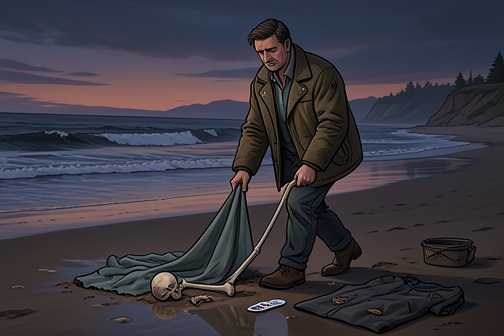
The 2003 discovery of [Jean McConville](entity:character-recall-character-jean-mcconville-defffff134a9)’s remains ended the search for her body but left the circumstances of her abduction and killing legally unresolved. On [Shelling Hill Beach](entity:location-recall-location-shelling-hill-beach-25a42e807a62), erosion brought a long-hidden grave to the surface; a nappy pin among the recovered clothing helped her family recognize her, and a later ruling kept the criminal case open. The discovery turned a private family vigil into a public confirmation, while exposing how little agreement there was about who could account for the past and on what terms.
## The grave exposed
One late-summer evening in 2003, John Garland was walking along Shelling Hill Beach near Carlingford in the [Republic of Ireland](entity:location-recall-location-republic-of-ireland-37b598657754) with his son and daughter. They had visited his mother’s grave in a nearby cemetery, and the children were looking for crabs as the tide went out. Garland noticed a scrap of fabric protruding from the sand. He tried to pull it free with a piece of driftwood, but it would not move; when he pulled harder, the material came loose and he saw human bones.
The discovery came four years after the [McConville children](entity:character-recall-character-1903e5824008) had kept vigil during a search of the same stretch of beach in 1999. The grave lay several hundred yards from the area then comprehensively excavated. Recent storms had eroded the shore, gradually exposing what had remained hidden for decades. The family’s earlier search had not reached the burial place. The elements, rather than a confession or an official investigation, finally made it visible.
The remains were those of an adult woman. A pathologist described disarticulated, crumbling bones with plant growth on them and no soft tissue remaining. The examination identified a single gunshot wound to the back of the head, sufficient to cause death; a flattened lead bullet was recovered near the skull. The discovery therefore established not just that the missing woman had been buried there, but that her death had been violent.
## Identification by what remained
The skeleton’s left femur was sent for genetic profiling, alongside DNA samples from [Archie McConville](entity:character-recall-character-archie-mcconville-955429557eb4) and Agnes McConville. While the identification process proceeded, the family was shown the clothing found with the bones. At a nearby morgue, Jean McConville’s children were brought in one by one to examine garments laid out on a table: tights, underwear, the remains of a skirt, a pink woollen top, and the sole of a shoe.
Archie went in first but could not bring himself to look. Instead, he asked, “Is there a nappy pin?” A police officer checked the garments and initially said there was not. Then he folded back a corner of fabric, revealing the pin. The small object supplied a point of recognition amid remains that had been buried and exposed to the elements for decades. Thirty-one years after Jean McConville vanished, her body had been found.
At a subsequent inquest, Archie remembered his mother as “a very good mother to all of us” and said, “All of our lives has been hell without her.” The discovery answered the question of where she had been taken, a question that had shaped the family’s lives since 1972. It could not restore the missing years or settle every dispute about what had happened before the killing.
## Burial and the open case
Jean McConville was reburied that November. Her coffin was decorated with flowers, and her children accompanied it through [West Belfast](entity:location-recall-location-west-belfast-27ebba5f4bec). When the procession passed [Divis Tower](entity:location-recall-location-divis-tower-1ee16b53cafa), where [Brendan Hughes](entity:character-recall-character-brendan-hughes-1230acbdf136) still lived, it paused for a moment of silence. [Father Alec Reid](entity:character-recall-character-father-alec-reid-9312736ed5e7), who had been instrumental in the peace process, attended the funeral. Yet some mourners felt the streets were strangely quiet, as if local people had been told to stay away. The family’s return with their mother’s coffin thus brought public mourning and a renewed sense of exclusion into the same procession.
The legal consequences depended on how the body had been found. Legislation passed in 1999 to help recover the remains of The Disappeared offered a limited amnesty to people who voluntarily came forward with information about such cases. The coroner ruled that Jean McConville’s remains did not qualify: no IRA information had led investigators to the grave; Garland, an uninvolved member of the public, had encountered it by chance. The ruling had a direct consequence. As the coroner put it, “The criminal case remains open.”
That distinction left the discovery carrying two different meanings. For the family, it brought the recovery and burial of their mother. For the authorities, it did not close the inquiry or grant immunity in connection with her death. The location of the grave had been disclosed by erosion, not by the voluntary assistance contemplated in the law, and the route by which the truth emerged therefore mattered as much as the fact of its emergence.
## A discovery without a settled account
Jean McConville had disappeared after being abducted in December 1972. Years later, accounts of the events around her disappearance remained contested. The children remembered an initial abduction and beating, followed by her being found wandering and brought home, and believed she was taken away the next evening. A police log later found by Nuala O’Loan recorded a beaten woman named Mary McConville, at Jean’s address, who had been warned to stop giving information to the military. The log dated that incident to 29 November, rather than the early-December date remembered by the children. If the log and the family’s abduction date were both accurate, more than one night separated the warning from her removal; if the children had misremembered the dates, the chronology could instead be closer to the sequence described by Brendan Hughes. The discovery of the body settled neither possibility.
The remains also entered a wider struggle over remembrance. The book’s account of the aftermath of the [Good Friday Agreement](entity:event-recall-event-good-friday-agreement-f0a8e2fc0bef) describes an unresolved conflict in which there was no formal process for deciding how the Troubles should be understood or commemorated. The continued refusal of [Gerry Adams](entity:character-recall-character-gerry-adams-6d84cf7a2514) to acknowledge IRA membership, alongside the political management of competing accounts, reinforced a culture in which disclosure remained fraught. Against that background, the beach yielded material evidence, but not a complete public reckoning.
The discovery’s final significance lies in that separation between finding a body and establishing a shared account of a death. Jean McConville could be returned to her children and buried, and the family’s long uncertainty about her whereabouts could end. But the bullet, the grave, and the nappy pin did not identify every participant or resolve the disputed chronology and responsibility. The case remained open, while the search for truth continued to occupy the uneasy space between private memory, official evidence, and political silence.
Event 56
IRA decommissioning
The [Irish Republican Army](entity:organization-recall-organization-irish-republican-4bff46a4b2bf)’s decommissioning reached its final stage in 2005, when a clattering assortment of weapons was destroyed under the observation of [Father Alec Reid](entity:character-recall-character-father-alec-reid-9312736ed5e7) and Methodist minister Harold Good. The last batch included assault rifles, flamethrowers, mortars and shoulder-fired missiles. Its destruction proceeded without incident, but the final handover gave the process a stark closing image: one loaded Kalashnikov, held by a gunman until he solemnly surrendered it.
## Background and oversight
The decommissioning process had unfolded in phases. Reid and Good had agreed to witness the destruction of the Irish Republican Army’s weapons, while the precise technique used to render them beyond use remained a closely guarded secret. It was said to involve sealing the weapons in concrete; the account does not establish that this was the method used for every weapon or for the final batch.
By the time Reid and Good were summoned in 2005, they were overseeing the destruction of the final consignment. Their role placed two clergymen beside an operation whose purpose was not symbolic alone: weapons were being made unusable and removed from the organization’s arsenal.
## The remaining gun and the security threat
As Reid watched the process, his attention was drawn to a Provo official standing nearby with an AK-47. Reid believed the weapon was loaded. Its presence initially seemed an unsettling counterpoint to the disarmament taking place, but he concluded that it was not meant to intimidate the clergymen. The Irish Republican Army needed to guard against dissident paramilitaries who were not ready to stop fighting and might attempt to repossess the arsenal.
The gun therefore marked a limit as well as a safeguard: the weapons were being destroyed, yet the operation still took place in the shadow of those who might try to reverse it. The feared ambush did not occur. The destruction went ahead without incident, and after the larger assortment had been disposed of, the Kalashnikov in the official’s hand was the only weapon left.
## The final handover
Reid watched as the gunman solemnly handed over the remaining rifle. The man became emotional, and Reid thought he understood its meaning to him: this was the last gun. The phrase captures the event’s human and material scale at once. The destruction of the rifles, heavy weapons and missiles was a process carried out in phases; the final rifle made its completion visible in a single act of surrender.
The account presents decommissioning not as the disappearance of all danger, but as a consequential step taken while the possibility of renewed armed action remained close enough to require a loaded guard weapon. That rifle was not used to interrupt the process. It, too, was handed over, bringing the final batch to its end.
Event 57
Jean McConville’s abduction and murder
[Jean McConville’s abduction and murder](entity:event-recall-event-jean-mcconville-s-abduc-2218d6c6e8de) became one of the most painful and contested cases of the Troubles. The [Irish Republican Army](entity:organization-recall-organization-irish-republican-4bff46a4b2bf)’s accusation that she was an informer supplied a justification for her removal and killing, but later investigations found no record that she had worked as an agent. Accounts of when she was questioned and abducted also diverged. Decades afterward, [Dolours Price](entity:character-recall-character-dolours-price-f885017ba474) described taking McConville across the border and being present at her death, making the event a test of what testimony can establish—and what a culture of silence leaves unresolved.
## The accusation and the disputed timeline
The McConville family’s account began with an episode they placed in early December 1972. They said Jean went to play bingo, was seized and beaten, and was later found wandering in a daze before the army brought her home to [Divis Flats](entity:location-recall-location-divis-flats-f36db46c6064). The children believed she was abducted the following evening, on 7 December, while still nursing the bruises. They could not be certain of the date, but their recollection was that their mother had first been questioned and then taken away soon afterward.
A police log later located by Nuala O’Loan complicated that sequence. It recorded a woman found wandering in [West Belfast](entity:location-recall-location-west-belfast-27ebba5f4bec) at 11 p.m., beaten and warned by a number of men to stop giving information to the military. The log called her Mary McConville, but gave the address of Jean’s home at St Jude’s Walk in Divis Flats. Crucially, it placed the incident on 29 November, seven nights earlier than the date the children associated with the beating. The record appeared to corroborate that a warning had been given, but it also raised the possibility that family memories had conflated the questioning and the abduction—or that the accounts described events on different dates.
The discrepancy mattered because the Irish Republican Army’s version, later recounted by [Brendan Hughes](entity:character-recall-character-brendan-hughes-1230acbdf136) and endorsed by Price, described McConville as a repeat informer: she had supposedly been warned, returned to spying, and was killed after being caught again. If the police log’s date was right and the children’s date for the abduction was right, that sequence left very little time for her to have resumed work and been supplied with another transmitter. The log could not settle what McConville had done, but it made the chronology—and the confidence attached to the accusation—harder to treat as straightforward.
## Price’s account of the killing
In a recorded interview with [Ed Moloney](entity:character-recall-character-ed-moloney-9d7f20a1f93b), Price said she had already helped make people disappear before she was ordered to take McConville across the border. She said she had not known McConville, or even known of her, before receiving that order. Price nevertheless insisted that McConville had confessed to informing for money and described a transmitter being discovered at her flat. She also supplied a separate allegation: McConville had been seen at a barracks on Hastings Street, concealed behind a blanket with a slit through which she could watch an IRA lineup. According to Price, one volunteer recognized her slippers. These details were Price’s testimony, not an independently established account of McConville’s activities.
Price said three members of the [Unknowns](entity:character-recall-character-unknowns-b130c4534a21) were present when McConville died: Wee [Pat McClure](entity:character-recall-character-pat-mcclure-26b23269b576), another volunteer, and Price herself. They had only one gun. Worried about their consciences, they decided that each would fire a shot, so none could be certain who had delivered the fatal one. Price said she deliberately missed; one of the others fired, and McConville collapsed. The group left her in the grave, which a local unit in [Dundalk](entity:location-recall-location-dundalk-adc76dac93ed) then sealed. Her account thus placed Price not simply among those who transported McConville, but at the killing itself, while also describing an attempt to distribute responsibility among the participants.
## Investigation and the struggle over memory
In 2006, [Northern Ireland](entity:location-recall-location-northern-ireland-c23b7da68651) Police Ombudsman Nuala O’Loan reported that the authorities had never conducted a proper investigation into the abduction. Files contained rumours that McConville had been taken because she was an informer, but searches of military and police records found no mention of her before her disappearance and no suggestion that she had worked as an agent in Divis Flats. The [United Kingdom](entity:location-recall-location-united-kingdom-b48cd04982cf) maintained a policy of neither confirming nor denying whether an individual had served as a clandestine agent. O’Loan nevertheless emphasized that the allegation had caused the family extensive harm: McConville was not recorded as having been an agent, she concluded, and was an innocent woman who had been abducted and murdered. Her finding vindicated her children’s long insistence that their mother had been falsely maligned.
That vindication did not erase the conflicting testimony or restore the missing years. Revelations from Hughes and Price reopened a question the family had believed settled, while the police log both supported the existence of a warning and unsettled the family’s chronology. [Michael McConville](entity:character-recall-character-michael-mcconville-3858b6472f65) also questioned the transmitter story, noting that Hughes had never said he personally saw the radio. In his view, a rumour could harden into accepted fact through repetition. The case therefore turned not only on whether McConville was an informer, but on how an accusation could circulate without documentary confirmation and continue to shape the family’s grief.
Price’s interviews were stored in the [Belfast Project archive](entity:object-recall-object-belfast-project-archiv-6928f4ef3b8c) at [Boston College](entity:location-recall-location-boston-college-d69f5179339f). In July 2013, detectives from the [Police Service of Northern Ireland](entity:organization-recall-organization-police-service-o-88a3814d22b2) travelled to [Boston](entity:location-recall-location-boston-aded649f4602) to collect material they had been authorized to retrieve; the university handed over Moloney’s interviews with Price along with other material. The following spring, [Gerry Adams](entity:character-recall-character-gerry-adams-6d84cf7a2514) was arrested in connection with McConville’s abduction and murder, forty-one years after she had disappeared. The case’s afterlife joined a family’s demand for truth to the legal and political consequences of recorded testimony. The book’s epigraph—“All wars are fought twice, the first time on the battlefield, the second time in memory.”—frames that struggle: McConville’s fate was not only a past act of violence, but an enduring contest over which account would be believed.
Event 58
Joe Lynskey’s disappearance and murder
[Joe Lynskey’s disappearance and murder](entity:event-recall-event-joe-lynskey-s-disappear-b4640d330682) exposed the distance between private knowledge and public acknowledgment in the history of the IRA. Court-martialled after ordering a hit on a love rival, an action that led to a shooting at the Cracked Cup, Lynskey became the first person disappeared in the Troubles. For years, his fate was not publicly accounted for by the IRA; when [Dolours Price](entity:character-recall-character-dolours-price-f885017ba474) later described her own involvement, her remorse made the case both a personal burden and a challenge to the silences surrounding the conflict.
## Background and Disappearance
Lynskey’s disappearance followed an internal IRA court martial over his order to attack a love rival. The resulting shooting at the Cracked Cup formed part of the circumstances behind his punishment. The account identifies him as the first person disappeared in the Troubles after that court martial, linking his fate to discipline within the organization rather than to a publicly acknowledged process of arrest or trial.
In 1999, the IRA acknowledged that it had disappeared people and released a list that included the informants Seamus Wright and [Kevin McKee](entity:character-recall-character-kevin-mckee-2ebb49a4613c), as well as [Jean McConville](entity:character-recall-character-jean-mcconville-defffff134a9). Lynskey’s name was absent. That omission left his family without the acknowledgment that the list appeared to offer other families. Before publishing the story in [Voices from the Grave](entity:object-recall-object-voices-from-the-grave-59589fc5bdfb), [Ed Moloney](entity:character-recall-character-ed-moloney-9d7f20a1f93b) was the person who first told the Lynskey family that the IRA had disappeared him. The disclosure came through reporting and an oral-history account, not through the organization’s own list.
## Price’s Account and Adams’s Response
In February 2010, shortly before Voices from the Grave was published, [Gerry Adams](entity:character-recall-character-gerry-adams-6d84cf7a2514) discussed Lynskey in an interview with the Irish News. He described Lynskey as a neighbour and said that he had known him and that Lynskey had disappeared. Adams also encouraged anyone with information about the disappearance to come forward. The matter was not new to him as a distant historical episode: his account acknowledged personal acquaintance, while offering no explanation of what had happened.
Dolours Price read the interview at her home outside [Dublin](entity:location-recall-location-dublin-d76fcbad2c3f) and was angered by the casualness with which Adams had spoken of Lynskey’s disappearance. She had once known Lynskey as a friend and regarded him as a gentleman. Speaking to [Allison Morris](entity:character-recall-character-allison-morris-d4c1b96383b8) the following day, Price said she should not have allowed him to go to his death and should have helped him flee the country. She described the experience as devastating and said that it continued to trouble her. When Morris pointed out that Price was implicating herself, Price said she no longer cared and called Adams a liar.
Price’s account did not end with the admission that she had allowed Lynskey to be taken toward his death. In a later recorded conversation with Moloney, she described being called back to [Dundalk](entity:location-recall-location-dundalk-adc76dac93ed) after Lynskey had been there for about four or five days. A local unit had dug a grave, she said, but its members did not want to carry out the killing. Price thought that his being a woman explained their reluctance; Moloney’s question about whether Price and the others therefore had to do it received no spoken answer, only a small murmur. The exchange places her testimony at the edge of an explicit account of an execution, while leaving the precise allocation of actions unstated.
## The Search and the Wrong Grave
In autumn 2014, the [Independent Commission for the Location of Victims’ Remains](entity:organization-recall-organization-independent-comm-50ecea2ebf16) received a tip that Lynskey’s remains might be in a particular area of [County Meath](entity:location-recall-location-county-meath-d6b8857c4725). The commission stressed that people with information could approach it in confidence, despite the controversy over the [Boston](entity:location-recall-location-boston-aded649f4602) tapes. A search team led by retired Manchester detective Geoff Knupfer used a sniffer dog, a forensic anthropologist and ground-penetrating radar to investigate anomalies in the ground. Lynskey’s niece Maria expressed hope that the search would find his remains and allow him a proper burial, but months of digging produced no discovery.
The search resumed into the following summer. At lunchtime one day, investigators found bones and, setting aside mechanical excavators, carefully cleared the earth with trowels. Maria Lynskey was called to the site. Later that evening, the team found a second set of human remains lying beneath the first. The searchers realized that the two bodies had been buried together. They had been looking for Lynskey, but the remains were identified as those of Seamus Wright and Kevin McKee, young men described as triple agents whom Price had driven to their deaths. Maria was devastated by the discovery, even as she felt relief for Wright’s and McKee’s families. At Wright’s requiem Mass, his sister Breige appealed for information about Lynskey and the other victims still missing.
## Memory and Unresolved Fate
The discovery of Wright and McKee did not resolve Lynskey’s disappearance: the search had found two other men, and his remains were still being sought. The change from hopeful excavation to the recognition of a different grave made the search a fresh encounter with the same history of concealed deaths. For the Lynskey family, the identification of other victims brought a measure of relief for another family but no burial place for their own relative.
The competing accounts also show how remembrance remained contested after the violence. Adams acknowledged knowing Lynskey but urged others to provide information; Price’s testimony connected her personally to the chain that led to his death and expressed lasting regret. The IRA’s 1999 list, by contrast, had not named him. In a society where political leaders and organizations continued to shape accounts of the past, Lynskey’s case made the difference between acknowledging that someone had disappeared and explaining who was involved, how it happened, and where the dead were buried. His remains’ absence kept those questions open.
Event 59
Four Square Laundry operation
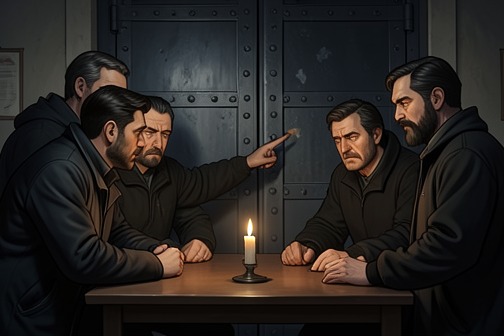
The [Four Square Laundry operation](entity:event-recall-event-four-square-laundry-ope-13b95836fcea) became consequential not only because it exposed Seamus Wright and [Kevin McKee](entity:character-recall-character-kevin-mckee-2ebb49a4613c) as double agents, but because the two men were subsequently executed and buried in secret. Their discovery years later, in the same grave as [Joe Lynskey](entity:character-recall-character-joe-lynskey-d01379c0207e), brought a hidden strand of the IRA’s internal conflict into view and renewed questions about what its political leadership knew.
## The operation and the men’s exposure
Wright and McKee were informants whose connection to the Four Square Laundry operation placed them at the centre of a struggle over intelligence and trust. [Gerry Adams](entity:character-recall-character-gerry-adams-6d84cf7a2514) later wrote approvingly about the IRA’s discovery of the operation. When investigative journalist Darragh MacIntyre questioned him about Wright and McKee, however, Adams said he had known nothing about the IRA’s decision to kill them.
MacIntyre challenged that distinction: Adams’s own account celebrated the discovery, but the IRA had learned of it only after Wright and McKee confessed to being double agents. Adams offered no coherent explanation of how he could have known about the operation yet remained unaware of the men’s fate. Asked whether he had been curious about what happened to them, he replied, “I learned a long time ago, if you don’t ask, you can’t tell.” The episode made the boundary between knowledge and deliberate ignorance a central part of its later history.
## Execution and secret burial
The men did not simply disappear from public view. The later account identifies Wright and McKee as young triple agents who were executed and buried together. Their deaths formed part of the wider practice of secretly disposing of people deemed informers, leaving families without bodies and unresolved answers.
The eventual discovery came during a search for Joe Lynskey. Investigators first uncovered bones, then, beneath them, a second set of human remains. The two bodies had been placed one on top of the other. The searchers had been looking for Lynskey; instead, they found Wright and McKee, the men [Dolours Price](entity:character-recall-character-dolours-price-f885017ba474) had driven to their deaths. The unexpected discovery redirected the search and gave the families of Wright and McKee a grave to mourn, even as Lynskey remained among the missing.
## Competing accounts and public memory
The operation’s history was also shaped by the struggle over who could speak about the past and what could be acknowledged. In the aftermath of the [Good Friday Agreement](entity:event-recall-event-good-friday-agreement-f0a8e2fc0bef), [Northern Ireland](entity:location-recall-location-northern-ireland-c23b7da68651) had no formal process for determining how to understand or commemorate the conflict. Gerry Adams’s continuing refusal to acknowledge his IRA membership contributed to a wider uncertainty about whether former participants could safely disclose their roles.
Sinn Féin’s leadership, meanwhile, was described as maintaining a particular account of the conflict and the peace process, with critics discredited as opponents of the peace process. That contest over memory gives the Four Square Laundry operation significance beyond the exposure of two agents: the men’s fate became part of a larger dispute over the IRA’s internal history, leadership knowledge and the limits of public confession.
## Aftermath and significance
The discovery of Wright and McKee’s remains brought a physical answer to one part of the story, but did not resolve every absence. At a requiem Mass for Wright, his sister appealed for information about Lynskey and the other victims still undiscovered. The grave therefore marked both recovery and continuing loss: two families could grieve over remains found together, while another search remained unfinished.
The episode also sits within the book’s broader account of a conflict fought again in memory. Even after armed groups entered a political landscape, their hierarchies and authority could continue to shape what members said and how dissent was managed. In this setting, the Four Square Laundry operation is remembered through scattered admissions, contested accounts and the eventual unearthing of bodies—evidence that changes what can be known without making the whole history settled.
Event 60
Discovery of Seamus Wright and Kevin McKee’s remains
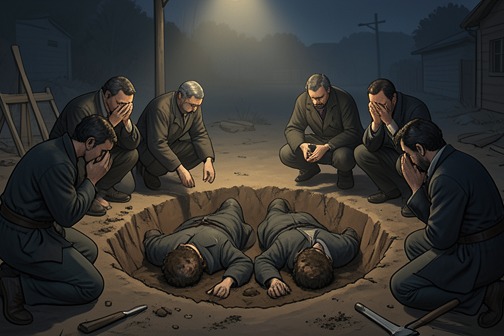
The [Discovery of Seamus Wright and Kevin McKee’s remains](entity:event-recall-event-discovery-of-seamus-wri-da00072d884a) came about during a search for [Joe Lynskey](entity:character-recall-character-joe-lynskey-d01379c0207e), turning an unsuccessful investigation into a discovery that answered one family’s question while deepening another’s uncertainty. In [County Meath](entity:location-recall-location-county-meath-d6b8857c4725), investigators found two bodies buried together: Wright and McKee, whose remains had lain beneath the bones they first uncovered. The find confirmed that the men driven to their deaths by [Dolours Price](entity:character-recall-character-dolours-price-f885017ba474) had been buried in the same grave, but Lynskey was still missing.
## The search for Joe Lynskey
The search began after the [Independent Commission for the Location of Victims’ Remains](entity:organization-recall-organization-independent-comm-50ecea2ebf16) received a tip in autumn 2014 indicating that Lynskey’s remains might be in a particular area of County Meath. The [Boston College](entity:location-recall-location-boston-college-d69f5179339f) tapes scandal had made the commission’s work more difficult: commissioners felt they had to assure the public that people with information about the disappeared could still approach them in complete confidence.
A team led by retired Manchester detective Geoff Knupfer searched the indicated area with a sniffer dog and a forensic anthropologist. They also used ground-penetrating radar to identify anomalies in the earth. In December, Lynskey’s niece Maria expressed cautious hope that his remains would be found and that he could receive a proper burial. The months of digging that followed produced no discovery.
## Two bodies in one grave
The search changed course one lunchtime the following summer, when someone called out that something had been found. Investigators set aside the mechanical excavators and crouched over the earth, carefully clearing it with trowels. They gradually exposed a set of bones. Knupfer, described as quiet and methodical, was excited by the find, though the discovery was necessarily bittersweet. Maria Lynskey was alerted and drove to the site.
The team was still working that evening. At about 8:30, investigators cried out from the grave: underneath the first bones lay a second set of human remains. The arrangement made the mistake in their search plain. They had come looking for Lynskey, but the two bodies were Wright and McKee, lying one above the other in a shared grave. The discovery identified them as the young triple agents whom Price had driven to their deaths.
## A discovery without closure
Maria was devastated that the remains were not her uncle’s, but she was also glad for the families of Wright and McKee. The discovery thus carried two truths at once: it ended the uncertainty surrounding the whereabouts of Wright and McKee’s bodies, while leaving the search for Lynskey unfinished. The grave had answered a question the investigators had not come to ask.
At a requiem Mass for Wright, his sister, Breige, appealed for information about Lynskey and the other victims whose remains had yet to be found. Her plea placed the discovery within the continuing effort to locate the disappeared: finding two men did not bring that wider search to an end. In the book’s account, the unearthing is both a material recovery and a reversal of expectation, in which the ground yields an answer—but not the one the waiting family came to seek.
Event 61
Bloody Sunday
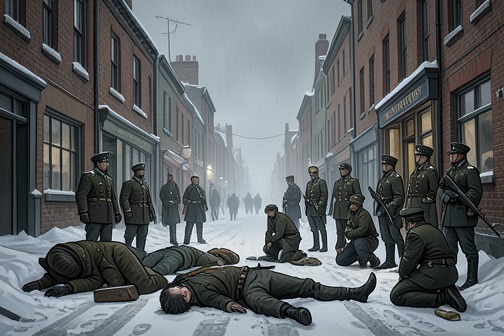
[Bloody Sunday](entity:event-recall-event-bloody-sunday-6d124ab1fb60) was the killing and wounding of demonstrators by British soldiers in [Derry](entity:location-recall-location-derry-d46e7068265a) on 30 January 1972. Its significance lies not only in the violence of that day but in the struggle over what the violence meant: an inquiry soon after the shootings largely accepted the soldiers’ account, while a later investigation rejected their claim that they had fired in response to attacks. The event became a source of enduring anger and a defining episode in the increasingly violent conflict.
## Background and setting
The shootings took place on a chilly Sunday afternoon in January 1972, in Derry. They occurred amid a conflict already marked by rising casualty figures and profound political division. The book situates the event within a period in which systemic discrimination against Catholics and the limits of political power had helped fuel civil-rights protest, while confrontation and violence were escalating across [Northern Ireland](entity:location-recall-location-northern-ireland-c23b7da68651). By 1972, the conflict had reached its bloodiest year.
The available account identifies the dead and injured as central to the immediate reporting of the event, but does not supply their names or a total here. That absence matters to the way the episode is presented: the violence is registered not as an abstract clash between opposing sides, but through the consequences for people killed and wounded and the anger those consequences provoked.
## The shootings and their immediate aftermath
British soldiers subsequently maintained that they themselves had come under fire and that their shooting consisted of aimed shots at gunmen and bomb throwers attacking them. That version placed the soldiers’ actions within a claim of response to an armed threat. The later inquiry’s findings directly challenged that account: it concluded that, despite the soldiers’ contrary evidence, none had fired in response to attacks.
The event generated an overpowering anger, and its consequences were visible beyond Derry. In February, protesters set fire to the British Embassy in [Dublin](entity:location-recall-location-dublin-d76fcbad2c3f). The burning was a dramatic expression of public reaction, extending the political shock of the killings across the border. The sequence continued in March, when the [British government](entity:organization-recall-organization-66a95d21d932) suspended Northern Ireland’s devolved government and imposed direct rule. Bloody Sunday therefore unfolded not as an isolated episode but as a turning point within a rapidly worsening political crisis.
## Competing accounts and inquiries
An initial inquiry led by Lord Widgery reported just eleven weeks after the shootings. Its conclusions largely exonerated the British soldiers and accepted at face value their claim that they had come under fire and had aimed at gunmen and bomb throwers. The speed of that inquiry and the substance of its findings became part of the controversy: the investigation was widely condemned as a whitewash.
A second inquiry, led by Mark Saville, was convened in 1998 and reported in 2010. Its conclusion—that none of the soldiers had fired in response to attacks—stood in direct opposition to the central justification advanced in the earlier account. The interval between the two inquiries made the conflict over evidence part of the event’s legacy. Bloody Sunday was not only a disputed day of violence; it was also a prolonged dispute over whether official investigation would establish what had happened and whose account would be believed.
## Significance
The consequences of Bloody Sunday joined immediate anger to a longer contest over responsibility. The February protest and the March suspension of devolved government show how swiftly the shootings resonated through public action and political change. The later reversal of the initial inquiry’s account further ensured that the event remained present in public memory rather than settling into a closed episode of the past.
Within the wider narrative of the conflict, Bloody Sunday stands at the point where civilian deaths, official explanations, and political rupture converge. Its story is carried by the contrast between the soldiers’ claim, the Widgery inquiry’s acceptance of that claim, and the Saville inquiry’s later finding. That contrast gives the episode its enduring weight: the violence prompted anger, but the struggle to establish an authoritative account continued for decades.
Event 62
Burntollet Bridge attack
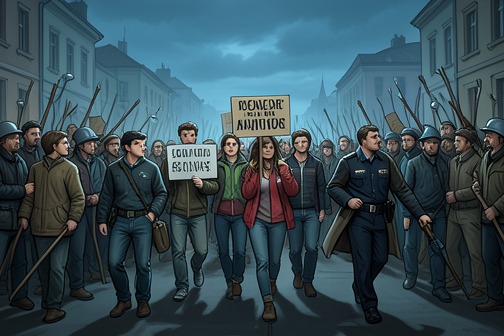
The [Burntollet Bridge attack](entity:event-recall-event-burntollet-bridge-attac-b76d0719f6f2) was an assault on civil-rights marchers travelling from [Belfast](entity:location-recall-location-belfast-8a60016bc9a1) to [Derry](entity:location-recall-location-derry-d46e7068265a) in January 1969. Its significance extended beyond the immediate violence: for [Dolours Price](entity:character-recall-character-dolours-price-f885017ba474), the attack helped turn a commitment to peaceful protest into a conviction that armed struggle was necessary, while the march itself had tested whether young people could challenge entrenched injustice without reproducing the divisions around them.
## Background and the March
On 1 January 1969, students assembled outside City Hall in [Donegall Square](entity:location-recall-location-donegall-square-84b8dc3fa653), Belfast, and set out on a roughly seventy-mile march to Derry. They were protesting discrimination against Catholics in [Northern Ireland](entity:location-recall-location-northern-ireland-c23b7da68651), where Catholics were often excluded from good jobs and housing and had little access to political power. The march was intended to take several days, carrying the civil-rights campaign from the city into communities along the route.
The procession passed through Protestant villages that were unionist strongholds. Local men came out with sticks to block the marchers, while police accompanying the procession directed it around the villages. Men associated with Major Bunting walked alongside, taunting the students; one beat a Lambeg drum, whose sound summoned other counter-protesters. The marchers had seen the televised police response to the Selma march and some believed that peaceful protest, even when met with violence, could expose injustice and provoke change. They hoped the conflict might be reframed as a struggle between young and old rather than Catholics against Protestants or republicans against loyalists.
## The Attack at [Burntollet Bridge](entity:location-recall-location-burntollet-bridge-7dc489249792)
On the march’s fourth and final day, at a crossroads about ten miles outside Derry, the danger was put to the marchers plainly. A speaker warned through a megaphone that stones might be thrown and asked whether they were prepared to be hurt. Hundreds of people now filled the road; they answered yes. The exchange made the march’s commitment to nonviolence concrete: the participants understood that continuing might mean injury, but did not treat that risk as a reason to turn back.
At Burntollet Bridge, that risk became an assault. The attackers, some wearing motorcycle helmets, descended on the marchers; contemporary accounts describe a curtain of projectiles and the crowd breaking apart as people fled. The violence was not simply a clash along a country road. It exposed how vulnerable a peaceful procession could be when local hostility met the failure to protect its participants, and it made the march’s hopes of winning change through nonviolent witness newly precarious.
## From Protest to Armed Politics
The attack’s most consequential personal aftermath unfolded over the next two years. Dolours Price returned to school, then began studying education at St Mary’s Teacher Training College in 1970. She had once hoped to attend art school, but the experience at Burntollet Bridge had changed her understanding of what peaceful protest could achieve. She came to believe that marching alone would not bring the change [Ireland](entity:location-recall-location-ireland-3247a2c8bcbe) needed; joining the [Irish Republican Army](entity:organization-recall-organization-irish-republican-4bff46a4b2bf) would later feel to her like a return to her family’s republican inheritance.
In 1971, Price approached a local commander and asked to join. Her induction took place in the front room of the family home on Slievegallion Drive, where she swore allegiance and promised to obey orders from a superior officer. Her mother sat in the next room, apparently unaware of the ceremony. [Marian Price](entity:character-recall-character-marian-price-658a98519733) joined as well. The sisters continued attending school, while keeping their nighttime activities from their family, reflecting the secrecy surrounding membership in a banned organization.
Price’s decision also challenged the role assigned to women within republicanism. [Seán Mac Stíofáin](entity:character-recall-character-se-n-mac-st-of-in-855d1ac623f6) initially proposed that she join [Cumann na mBan](entity:organization-recall-organization-cumann-na-mban-b3f9855e0907), the women’s auxiliary, but she wanted to serve as a fighting soldier rather than provide support. A special meeting of the Provisionals’ Army Council then decided that women could join as full members for the first time. Price’s insistence was likely an important force behind the decision; she also later suggested that the mass imprisonment of men may have made the organization more willing to admit women. The change in status did not spare her from menial work: soon after her induction, she was ordered to scrub a heap of rusty bullets with steel wool. She complied, treating obedience to the order as part of the test.
The shift from protest to armed activity did not determine Price’s entire political course. A decade later, after abandoning violence as her own means of pursuing [Irish unity](entity:concept-recall-concept-irish-unity-b50744f64331), she canvassed for Sinn Féin and supported [Gerry Adams](entity:character-recall-character-gerry-adams-6d84cf7a2514)’s 1983 [Westminster](entity:location-recall-location-westminster-797ba54e0a11) campaign. That later turn makes the march’s legacy more complicated than a simple conversion from nonviolence to militancy: political methods changed, while the struggle over how to achieve Irish unity continued.
## The Attack in Retrospect
The book treats Burntollet not as an isolated eruption but as a moment whose meaning continued to change as its consequences unfolded. For Dolours Price, the assault became a dividing line in her political understanding: peaceful protest, which she had believed could overcome injustice, no longer seemed sufficient. Yet the narrative does not make the attack a complete explanation for her later choices. Her family’s republican inheritance, the discrimination that had brought the march into being, and her own demand for a direct military role all belong to the larger sequence. Burntollet gave those forces a particular direction; it did not reduce them to a single cause.
That distinction matters in a book concerned with how conflict survives as memory. The epigraph’s image of wars being fought again in recollection applies to Burntollet: the march’s immediate hope of exposing injustice through peaceful action is read alongside the later turn toward armed struggle, and neither erases the other. The attack thus marks both the vulnerability of civil-rights protest and the cost of interpreting violence as proof that nonviolence has failed. In the years after the conflict, political accounts of the past remained contested, while public tours and murals could make the Troubles seem distant even as divisions endured. Burntollet’s place in the narrative resists that distance. It remains a remembered encounter between a movement seeking change through public witness and a society in which the conditions for such witness were themselves violently contested.
Event 63
Battle of the Bogside
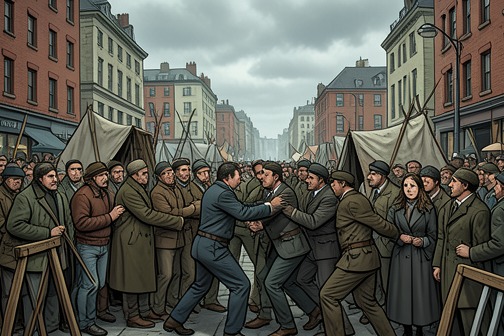
The [Battle of the Bogside](entity:event-recall-event-battle-of-the-bogside-5698a6640c2f) was the 1969 eruption of violent disorder in [Derry](entity:location-recall-location-derry-d46e7068265a) that helped carry communal conflict into the streets of [Belfast](entity:location-recall-location-belfast-8a60016bc9a1). What began amid an annual commemorative march became a wider confrontation: homes were attacked, residents built barricades, and Catholic neighbourhoods faced the brunt of policing. The sequence exposed how a local clash could ignite violence well beyond its starting point, against a background of political exclusion and worsening mutual suspicion.
## Background and Immediate Setting
[Northern Ireland](entity:location-recall-location-northern-ireland-c23b7da68651)’s divisions were shaped by partition and by unequal political and economic power. Catholics formed a minority in Northern Ireland and faced discrimination in access to housing, employment, and political influence; for half a century, no Catholic had held executive office in the devolved government at [Stormont](entity:location-recall-location-stormont-729677d071cf). Many left the region in search of work. Those inequalities formed the wider setting for a confrontation that was not simply about a procession or a single day’s disorder.
In Derry, the annual [Apprentice Boys of Derry](entity:organization-recall-organization-apprentice-boys-3116f1660af4) march commemorated the young Protestants who, in 1688, shut the city gates against the Catholic forces of King James. The marchers traditionally ended their festivities on the city walls, throwing pennies down onto the pavements and houses of the Catholic [Bogside](entity:location-recall-location-bogside-6c82fa5cc7c7) below. In 1969, that provocation was no longer left unanswered. Violent riots broke out and engulfed the city; the episode became known as the Battle of the Bogside.
The violence followed a period in which activists had still invested hope in peaceful protest. On 1 January 1969, students had set out from Belfast on a march to Derry against systemic discrimination. Some believed that nonviolent action might expose injustice and bring change, as protest movements elsewhere had done. That hope existed alongside mounting communal suspicion and the danger of attack. The outbreak in Derry showed how fragile the prospects for peaceful political change had become.
## From Derry to Belfast
Word of the clash travelled to Belfast, where the riot spread through Catholic neighbourhoods. Protestant youths broke windows and set homes alight; Catholics fought back with stones, bottles, and Molotov cocktails. The movement of violence between cities made the episode more than a local confrontation. In Belfast, residents experienced the crisis at street level, as attack and defence rapidly reshaped familiar neighbourhoods.
The Royal Ulster Constabulary and the B-Specials responded, but Catholics complained that the police stood by while loyalists committed crimes. Their account of the response sharpened an existing distrust: the forces charged with maintaining order were not experienced as protecting everyone equally. The conflict thus involved not only rival groups in the streets, but a deep dispute over whose safety the authorities would defend and whose grievances they would recognize.
As the violence continued, people hijacked school buses and bread vans, turned them on their sides, and used them to block streets. These improvised barricades turned ordinary vehicles into defensive fortifications around Catholic districts. Young residents prised paving stones from the ground to reinforce the barriers or throw at police. The materials of daily life and the street itself became part of an urgent effort to hold neighbourhood space against attack.
## Escalation and Street Defence
The Royal Ulster Constabulary deployed squat armoured vehicles known as Pigs through the narrow streets. Their gun turrets swivelled as they moved; stones fell on them, while petrol bombs broke across their steel bonnets and spilled blue flame. The image of armour advancing through residential streets captures the change in scale: disorder was no longer only a clash at a march but a sustained confrontation involving residents, police, and improvised weapons and barriers.
The violence also produced moments of anarchic spectacle. Two children took a bulldozer left at a building site and drove it down a [West Belfast](entity:location-recall-location-west-belfast-27ebba5f4bec) street to cheers from their companions. They lost control and crashed into a telegraph pole; someone then threw a petrol bomb, setting the machine on fire. The episode joined exhilaration to danger, as a machine briefly commandeered for play became another object consumed by the violence.
The barricades, the armoured vehicles, and the burning bulldozer reveal different dimensions of the same escalation. Residents sought to defend streets that they believed the police would not protect; the police entered those streets in armoured vehicles; and even an improvised act of bravado ended in flames. These were not separate from the underlying political crisis. They made visible how quickly fear, self-defence, and retaliation could turn a neighbourhood into a contested space.
## Consequences and Historical Significance
The Battle of the Bogside belongs to the opening escalation of the Troubles. The conflict had not begun with this one event, and the violence in Derry did not by itself explain the discrimination or mistrust that preceded it. But the episode made their consequences immediate and public: riots in Derry were followed by attacks in Belfast, while the disputed conduct of the police added to Catholic grievances. Its course demonstrates how a local confrontation could spread through existing communal divisions and change the conditions in which people judged peaceful protest, public authority, and their own security.
The book also connects the violent turn of 1969 to later choices without reducing those choices to a single cause. [Dolours Price](entity:character-recall-character-dolours-price-f885017ba474) had been drawn to peaceful resistance, but experiences of violence during the civil-rights march and its aftermath altered her view; in 1971 she joined the IRA, describing the decision as a return to her family’s republican convictions. That later trajectory places the Battle of the Bogside within a wider period in which political opportunity, repression, and personal experience shaped movement from protest toward armed action. The battle’s significance lies in both the immediate spread of street violence and the way it formed part of a turning point after which peaceful action seemed less capable, to some participants, of securing change.
Event 64
1969 Belfast riots
The [1969 Belfast riots](entity:event-recall-event-1969-belfast-riots-0401405f57be) were a wave of street violence and attacks on homes that made [Belfast](entity:location-recall-location-belfast-8a60016bc9a1)’s divisions physically dangerous and drove thousands of people from where they lived. Between July and September, an estimated 1,820 families fled their homes, including 1,505 Catholic and 315 Protestant families. The scale of that displacement reveals the riots not simply as clashes in public space, but as a crisis that forced residents to abandon the places where ordinary life had been rooted.
## Background and rising tensions
The riots unfolded within a society shaped by partition and unequal political power. Catholics were a minority in [Northern Ireland](entity:location-recall-location-northern-ireland-c23b7da68651), although a majority on the island as a whole; Protestants formed a majority in Northern Ireland but a minority across the island. Catholics faced discrimination in access to good jobs and housing, while the devolved government at [Stormont](entity:location-recall-location-stormont-729677d071cf) had not had a Catholic in executive office during its first half-century. Many left Northern Ireland in search of work unavailable to them at home.
The Belfast-to-[Derry](entity:location-recall-location-derry-d46e7068265a) march on 1 January 1969 made those grievances visible. Student protesters set out from [Donegall Square](entity:location-recall-location-donegall-square-84b8dc3fa653) to walk roughly seventy miles in protest against discrimination. As the procession crossed unionist strongholds, local men carrying sticks blocked the route, police directed marchers around villages, and men associated with Major Bunting’s supporters taunted them. A Lambeg drum’s pounding drew counterprotesters into the streets. The marchers believed peaceful protest could expose injustice and change public opinion; some also expected that a violent response might itself force change. On the march’s final day, hundreds answered affirmatively when asked whether they were prepared to be hurt. That confidence in nonviolent resistance stood in stark contrast to the systematic violence that the later riots brought into neighbourhoods.
## From street violence to threatened homes
As rioting spread, loyalist gangs began moving systematically. The evidence of the attacks is registered through abrupt, concrete scenes: people converging on a house, a family given an hour to leave, and residents staggering through the streets. The surviving account does not turn these into a single continuous encounter; taken together, they show how violence could reach a household and make its occupants’ immediate safety depend on flight. A demand to vacate within an hour compressed the upheaval of displacement into a deadline, while the image of people staggering through Belfast records its bodily and urban consequences.
The sequence also altered the meaning of the street. It was no longer merely the route between home and work or a place where protest could be staged. Streets became the spaces through which people had to escape, while houses could no longer be assumed to offer protection. The rioting’s spread therefore mattered not only because of the confrontations themselves, but because it carried intimidation into residential life and made staying put perilous for families on both sides of the community divide.
## Displacement and aftermath
The scale of the departures was striking: 1,820 families are estimated to have left their homes between July and September 1969. The figure includes 1,505 Catholic families and 315 Protestant families, showing that displacement affected both communities, though not equally. The distinction matters. The riots took place amid a system in which Catholics already faced serious discrimination, while the violence and flight did not fall evenly across the population. The family totals make the consequences measurable without reducing the experience to numbers: each departure meant a household uprooted from its home.
The riots also became part of how the conflict was later remembered. An account of people staggering through the streets and the image of Belfast confetti—debris associated with the city’s violence—preserve a landscape transformed by disorder. The name Burning of Bombay Street is associated with this history, while eyewitness testimony describes loyalist gangs moving systematically and the spread of rioting. Together, these traces convey both the progression of the violence and the difficulty of representing it as one isolated incident. The event’s lasting significance lies in that transition: political exclusion and communal fear were no longer only matters of argument or protest, but forces that emptied homes and reshaped neighbourhood life.
Event 65
Falls Curfew
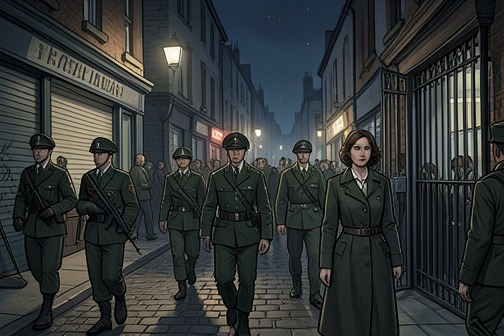
The [Falls Curfew](entity:event-recall-event-falls-curfew-bfa36392571f) is presented as an episode in which the scale of military intervention met the routines of civilian life in [Belfast](entity:location-recall-location-belfast-8a60016bc9a1). Accounts cited in the book refer to three thousand soldiers, doors axed down, and panic; archival footage, meanwhile, records women shopping during a lull in the shooting. The contrast matters: the curfew’s history is not only a record of force, but also of how ordinary activity persisted within its reach.
## Background and setting
The curfew belongs to a period when Catholics in [Northern Ireland](entity:location-recall-location-northern-ireland-c23b7da68651) faced entrenched discrimination in employment, housing, and political representation. [Stormont](entity:location-recall-location-stormont-729677d071cf) had governed the region for half a century without a Catholic holding executive office, while emigration helped keep the Catholic population virtually static despite a higher birth rate. These conditions form part of the wider background to the conflict. They do not, by themselves, explain every action taken during the curfew, but they help make clear why military intervention took place in a society already divided by political and religious inequality.
The book also places the curfew within a year of hopes for peaceful protest and their sharp reversal. On the Belfast-to-[Derry](entity:location-recall-location-derry-d46e7068265a) march in January 1969, participants had imagined that nonviolent action might redraw the conflict’s lines, away from Catholics against Protestants and toward young people challenging an older order. The march was met with threats and attacks along its route. That earlier experience supplies a wider contrast for the curfew: the promise that public protest might change political conditions existed alongside an intensifying conflict in which military force entered civilian neighbourhoods.
## Military presence and intrusion
The reported figure of three thousand soldiers gives the curfew a striking scale. The account does not make that number an abstract measure of deployment: it sets it beside the breaking down of doors. The image of doors being axed down marks a boundary crossed, from control of streets into the domestic spaces behind them. In the book’s description, the operation also appears as a means of inducing panic. Its force is therefore represented not simply through the number of troops or the physical damage, but through the disturbance created among people living under the operation.
Yet the surviving images do not show civilian life stopping altogether. Archival footage records women heading to a shop on Omar Street during a lull in the shooting on Saturday, 4 July 1970. The detail is modest and specific: a trip to buy something, made possible by a pause in gunfire. It neither cancels the danger nor proves that the area had returned to safety. Instead, the brief errand makes visible the uneven rhythm of the curfew, in which daily needs continued to assert themselves during interruptions in violence.
Another archival reference records young men bathing. Set alongside footage of women going to the shops, this detail complicates any picture of a neighbourhood represented only through confrontation. The everyday is present, but under conditions defined by military presence and shooting. These fragments do not lessen the gravity of the operation; they show what its gravity enclosed. Ordinary acts remain legible precisely because the surrounding circumstances make them precarious.
## Record and significance
The account of the Falls Curfew is assembled through sharply different kinds of evidence: a large troop figure, the forceful entry through doors, a description of panic, and visual records of people bathing or shopping during a lull. Together they resist a single, simplified image of the event. Military scale and domestic vulnerability belong to the same account, as do fear and the continuation of routine. The curfew is thus rendered not as an isolated spectacle of force, but as an intrusion into the texture of neighbourhood life.
That structure also connects the event to the book’s larger concern with how conflict is remembered. Its epigraph observes that wars are fought once on the battlefield and again in memory. Later, the narrative describes a society in which political denials and the discipline of party narratives constrain what can be said about the past, even as public tours turn former flashpoints into sites of historical visitation. The Falls Curfew’s archival images carry a different kind of insistence: they preserve concrete moments that resist reducing the past either to military action alone or to a reassuring story of ordinary life restored. The episode remains consequential in the book because the record keeps both realities in view.
Event 66
La Mon bombing
The [La Mon bombing](entity:event-recall-event-la-mon-bombing-c87ae925d7fe) was a devastating 1978 attack on a restaurant in [Belfast](entity:location-recall-location-belfast-8a60016bc9a1): a device containing a napalm-like substance killed a dozen people and horribly burned thirty more. In the book’s retrospective account, the bombing also marks a turning point in the life of Wee [Pat McClure](entity:character-recall-character-pat-mcclure-26b23269b576), head of the [Unknowns](entity:character-recall-character-unknowns-b130c4534a21). His arrest in its aftermath left him shaken and worried about how much the authorities knew about the republican organization.
## The bombing and its immediate aftermath
The account gives the human scale of the attack in stark terms: twelve people were killed, and thirty were badly burned by the device’s napalm-like substance. It does not describe how the device was planted or identify its perpetrators. Instead, it follows one consequential aftermath through McClure, whom a later interviewee had seen shortly after the bombing.
McClure was arrested after the blast and held by police for a week. The experience unsettled him, particularly because he feared that the [RUC](entity:organization-recall-organization-845946bf4b89) Special Branch appeared to possess information about the Provos. The book records his response in a brief declaration: “I’m out.” In this account, the words register not simply as disillusionment but as a decision to withdraw from the danger of the organization’s exposed and scrutinized world.
## McClure’s departure and later life
Not long after the bombing, McClure left Belfast with his wife and children. People who knew him had believed the family moved to Canada; the later investigation established that they had instead settled in the [United States](entity:location-recall-location-united-states-2f533bc8d0b9), in Connecticut. The correction matters because McClure’s disappearance from Belfast had become part of the mystery surrounding his fate.
McClure died in 1986. For the five years before his death, he had worked as a guard at the Cheshire Correctional Institution, a high-security prison. When [Hugh Feeney](entity:character-recall-character-hugh-feeney-52ae40f86edb), a fellow Unknown, learned that McClure might have become “a screw,” he was quietly appalled. The contrast between McClure’s standing among his former comrades and his later prison work gives the bombing’s aftermath an unexpected coda: the man who had led the Unknowns had left the country, entered a different kind of institution, and remained absent from the republican world that had revered him.
## Violence and the work of memory
The bombing appears in a narrative concerned not only with the violence of the conflict but with what could be known about it afterward. The author’s inquiry first encountered McClure through accounts of his arrest, fear, and departure; only later did the family’s actual destination and his prison employment come to light. The movement from rumor to correction illustrates how the history of the conflict survived in fragments, and how a person’s private life could remain hidden even from former comrades.
That uncertainty sits within a broader post-conflict landscape the book describes as unresolved. Belfast could present the Troubles as distant history through tourist tours of former flashpoints, even as political divisions and the authority of paramilitary hierarchies remained consequential. The La Mon bombing’s place in this account therefore extends beyond the casualties of 1978: its aftermath becomes one of the traces through which a concealed and contested past is recovered, without turning the recovered details into a complete explanation of the event.
Event 67
Northern Bank robbery
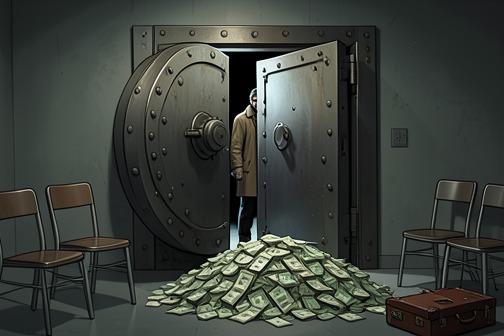
The [Northern Bank robbery](entity:event-recall-event-northern-bank-robbery-ef81edf518d5) was a twenty-six-million-pound theft in December 2004, carried out while the IRA was giving up its weapons and the decommissioning process was almost complete. Its scale made it the largest bank robbery in [United Kingdom](entity:location-recall-location-united-kingdom-b48cd04982cf) history at the time; its timing made it a test of what the end of armed conflict meant in practice.
## The robbery and its timing
The robbery occurred years after the [Good Friday Agreement](entity:event-recall-event-good-friday-agreement-f0a8e2fc0bef). The IRA no longer needed money to buy weapons, and the process of decommissioning, overseen by [Father Alec Reid](entity:character-recall-character-father-alec-reid-9312736ed5e7), was nearly complete when the thieves took the money. The juxtaposition was stark: the organization was surrendering its weapons while a major robbery was adding a vast sum to its resources.
## Alleged involvement and political response
[Bobby Storey](entity:character-recall-character-bobby-storey-0e12f5aacfe4), a senior republican figure and close confidant of [Gerry Adams](entity:character-recall-character-gerry-adams-6d84cf7a2514), was widely believed to have been involved in the robbery. The account does not establish his role as a proven fact. His reputed connection nevertheless sharpened the political significance of the theft, particularly because Storey remained a prominent figure in republican politics after the peace process.
## Aftermath and significance
For critics of Sinn Féin, the robbery reinforced the impression that the IRA had become a mafia organization. [Dolours Price](entity:character-recall-character-dolours-price-f885017ba474) questioned what the money was for if, as people were being told, the war was over. Her response drew attention to a contradiction the robbery had made difficult to ignore: political transition and weapons decommissioning were underway, yet the organization was associated with a theft on an unprecedented scale. The event therefore became not only a major crime but also an argument about whether the IRA's methods and purposes had changed with the peace process.
Event 68
Massereene Barracks shooting
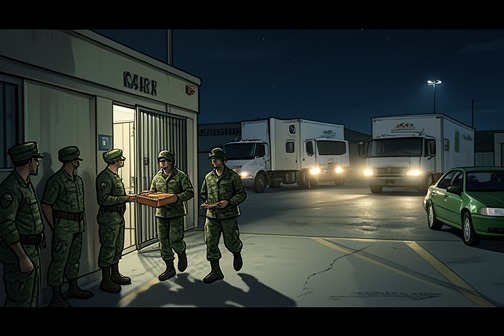
The [Massereene Barracks shooting](entity:event-recall-event-massereene-barracks-sho-d1e2739f7cfc) was a deadly attack by the [Real Irish Republican Army](entity:organization-recall-organization-real-irish-repub-172c2cff246f) on soldiers at a [Northern Ireland](entity:location-recall-location-northern-ireland-c23b7da68651) base on 7 March 2009. Two soldiers were killed while waiting for pizza before deployment to Afghanistan; two more soldiers and both delivery drivers were wounded. The assault brought lethal violence against British forces back into view after twelve years without a British soldier being killed in Northern Ireland, making the attack a sharp reminder that the peace process had not ended dissident armed activity.
## Setting and Target
On Saturday nights, soldiers at [Massereene Barracks](entity:location-recall-location-massereene-barracks-4fc0995583cd) often ordered pizza from a nearby Domino’s. Shortly before ten o’clock, two young soldiers stepped out to the brick gatehouse at the base entrance to collect their food. Dressed in desert camouflage, they were due to fly to Afghanistan a few hours later for a six-month tour. Two delivery cars arrived in quick succession with overlapping orders from the same restaurant.
The ordinary routine and the soldiers’ imminent departure framed the attack: they had come outside for food before a deployment overseas. A third car, a green sedan, arrived as the deliveries were being made. Two gunmen in dark clothing and balaclavas opened fire.
## The Shooting
After a sustained first volley, the gunmen approached the soldiers, who were lying on the ground, and fired repeatedly at close range. They discharged more than sixty rounds in roughly half a minute, then escaped in the green car. Patrick Azimkar, aged twenty-one and from north [London](entity:location-recall-location-1bfd335cdd1b), and Mark Quinsey, aged twenty-three and from Birmingham, were killed. Two other soldiers and both delivery drivers were wounded; one driver was a local resident and the other an immigrant from Poland.
The attack therefore extended beyond its two military victims. The delivery workers had been carrying out an ordinary job, but the Real Irish Republican Army’s spokesman later claimed that they too were legitimate targets because their service to the soldiers amounted to collaboration. The claim widened the group’s asserted responsibility from an attack on the armed forces to violence against civilians whose work brought them into contact with those forces.
## Claim and Investigation
Twelve years had passed since the last British soldier was killed in Northern Ireland. The Real Irish Republican Army claimed responsibility in a telephone call to a [Dublin](entity:location-recall-location-dublin-d76fcbad2c3f) newspaper. The chief constable of the [Police Service of Northern Ireland](entity:organization-recall-organization-police-service-o-88a3814d22b2) characterized the attackers as a small and increasingly desperate group seeking to draw the wider community back into conflict, a description that emphasized the gap between the gunmen’s actions and the wishes of most residents.
A major investigation followed, with several arrests. Eight months after the shooting, heavily armed police officers entered a house in [Andersonstown](entity:location-recall-location-andersonstown-c60987754acf). Investigators had traced the telephone used to claim responsibility: a pay-as-you-go handset bought at a Tesco supermarket in Newtownabbey the day after the attack. CCTV footage showed [Marian Price](entity:character-recall-character-marian-price-658a98519733) purchasing the phone. The image recorded her looking directly toward the surveillance camera as she reached into her wallet.
After two days of questioning about the barracks shooting, Marian Price was released without charge. Eighteen months later she was detained again and charged with providing property for terrorist purposes; she also faced a separate charge connected with a dissident rally in [Derry](entity:location-recall-location-derry-d46e7068265a). The account establishes the phone purchase and the subsequent charges, but does not establish that she was convicted of involvement in the shooting.
## Aftermath and Significance
The assault demonstrated that the end of large-scale conflict had not removed the capacity or intent of dissident groups to kill. Northern Ireland was described as peaceful apart from occasional dissident attacks, and the Massereene killings were an especially stark instance of that continuing violence. The victims’ scheduled flight to Afghanistan made the encounter part of a military deployment, but the gunmen brought the conflict back to the barracks gate and injured people delivering food.
The attack also sits within a broader unresolved struggle over how the conflict would be remembered and discussed. The book frames the Troubles as a war fought both on the battlefield and later in memory, while noting that there was no formal process for deciding how to commemorate or understand it. Political discipline and silence shaped that afterlife: republican leaders sought to preserve a particular account of the armed struggle, even as persistent paramilitary hierarchies could, paradoxically, restrain members and help prevent violence from reigniting on a wider scale. Against that uneasy background, the Massereene shooting marked both the persistence of armed dissent and the limits of any simple claim that the conflict had simply disappeared.
Event 69
Boston College Belfast Project subpoena litigation
The [Boston College Belfast Project subpoena litigation](entity:event-recall-event-boston-college-belfast-2f4a28d0d73c) turned a confidential oral-history archive into contested evidence in investigations of the Troubles. Its decisive significance lay in the collision between the project’s promise to protect participants until after their deaths and legal demands for recordings concerning [Jean McConville’s abduction and murder](entity:event-recall-event-jean-mcconville-s-abduc-2218d6c6e8de). The fight exposed the fragility of those promises, disrupted the archive’s intended custody, and showed how historical testimony could be consequential without necessarily furnishing admissible or sufficient proof of criminal guilt.
## An archive built on silence
The project grew from [Ed Moloney](entity:character-recall-character-ed-moloney-9d7f20a1f93b)’s proposal that [Boston College](entity:location-recall-location-boston-college-d69f5179339f) record combatants’ accounts of the conflict. The obstacle was not simply persuading people to speak: paramilitary activity was illegal, and violating the internal code of silence could earn a participant the label of informer and place that person in danger. Moloney’s solution was to promise that testimony would remain sealed until the interviewee had died. The archive was imagined as a time capsule: it could preserve fresh memories while shielding living participants from prosecution and their former comrades’ judgment.
The project’s method reflected that risk. Rather than send graduate students to interview former militants, Moloney proposed using another former paramilitary, [Anthony McIntyre](entity:character-recall-character-anthony-mcintyre-a9506a6098eb), as interviewer. McIntyre communicated with Moloney by encrypted email, kept a limited paper trail, and carried a MiniDisc recorder to interviews in [Belfast](entity:location-recall-location-belfast-8a60016bc9a1) and elsewhere. He spent ten hours or more with each participant over several sittings; trusted typists prepared transcripts, and the recordings and transcripts went to Boston College’s [Burns Library](entity:organization-recall-organization-burns-library-e3e94d38888b). Interviewees were identified in the archive by letters rather than names, with the key linking codes to identities kept separately in signed contracts.
One of those interviewees was [Brendan Hughes](entity:character-recall-character-brendan-hughes-1230acbdf136), whom McIntyre had known since meeting him in prison in 1974. Their longstanding closeness gave the conversations an intimate quality. Hughes, like McIntyre, had become disillusioned with the peace process and had broken with [Gerry Adams](entity:character-recall-character-gerry-adams-6d84cf7a2514) and Sinn Féin. That relationship mattered when authorities later sought the recordings: the archive did not contain detached observations alone, but accounts produced through personal trust and a promise of secrecy.
## The subpoenas and the broken promise
In spring 2011, Moloney learned that Boston College had received a subpoena passed on by the [United States Department of Justice](entity:organization-recall-organization-united-states-de-a9a6b733a21b) under a mutual legal assistance treaty with the [United Kingdom](entity:location-recall-location-united-kingdom-b48cd04982cf). The request originated with the [Police Service of Northern Ireland](entity:organization-recall-organization-police-service-o-88a3814d22b2) and demanded the original recordings of all interviews with Hughes and [Dolours Price](entity:character-recall-character-dolours-price-f885017ba474) in connection with an alleged murder. The project’s architects convened an emergency call. Tom Hachey said the college would not allow its interviewers or interviews to be compromised, but McIntyre and Moloney feared that the institution might ultimately surrender the material.
That fear was grounded in a serious weakness in the confidentiality arrangements. When Moloney prepared contract language in 2001, he asked Bob O’Neill whether the proposed wording should go to the university’s lawyers. O’Neill indicated that he would consult them, but the agreements apparently received no legal review. They promised confidentiality without warning participants that a court order might override it. The assurance McIntyre and loyalist interviewer Wilson McArthur had described to participants as effectively ironclad therefore had no such qualification.
Before the end of May, Boston College turned over Hughes’s interviews, reasoning that he was dead and that much of his oral history had already appeared in Moloney’s book, *[Voices from the Grave](entity:object-recall-object-voices-from-the-grave-59589fc5bdfb)*. The published account had been edited to shield certain identities for legal and security reasons; the material surrendered to authorities was unredacted. Moloney protested that the authorities now possessed information on which they could act and warned that this disclosure might lead them to seek other participants’ identities. He urged the college to send the entire archive to McIntyre in [Ireland](entity:location-recall-location-ireland-3247a2c8bcbe), arguing that it had a moral obligation to honor its promise. McIntyre was prepared to risk jail rather than hand over the materials himself.
The legal dispute widened. The government argued that the Belfast Project was not journalism, that academic privilege could not protect it from a court order, and that its researchers had promised to conceal evidence of crimes. In August, a second subpoena demanded material relating to the abduction and death of [Jean McConville](entity:character-recall-character-jean-mcconville-defffff134a9). A federal judge ordered Boston College to provide recordings and transcripts for review in December; the college did not appeal. Moloney and McIntyre hired their own lawyers and challenged the decision, while also seeking political support. John Kerry appealed to Hillary Clinton, arguing that the subpoenas could endanger the peace process, and the Massachusetts branch of the American Civil Liberties Union filed a friend-of-the-court brief against them.
## Codes, records, and the Price interviews
The archive’s system of alphabetical codes became central when Judge William Young asked which interviews concerned McConville. McIntyre refused to identify participants, saying that doing so would cross the boundary between academic research and police investigation. O’Neill also declined to help, saying he had not read the interviews. The judge reviewed the republican transcripts himself over several days at [Christmas](entity:time-recall-time-0cffe7da2c4d). He found six participants who mentioned McConville, one only in passing, and authorized release of recordings associated with five.
The resulting disclosure turned on a distinction that had been obscured in public argument. McIntyre had recorded roughly fifteen hours with Price, and those conversations did not mention McConville. Moloney had therefore stated that McIntyre’s interviews contained no such material. But after the Belfast Project interviews ended, Moloney conducted separate, more detailed interviews with Price, then staying at [St Patrick’s Hospital](entity:location-recall-location-st-patrick-s-hospita-13d7267c4e2a) for treatment for depression and PTSD. He recorded one conversation in her hospital room and filmed another in a rented flat. Price agreed that these accounts, too, would be kept confidential until after her death. Although Moloney’s interviews were technically outside the Belfast Project, he placed them in its archive for safekeeping. When two Police Service of Northern Ireland detectives came to Boston College in July 2013, the broad subpoena led the college to surrender these recordings with the rest. The attempt to protect the interviews by placing them in the archive had instead exposed them to the same demand.
## Courtroom consequences and the limits of proof
The litigation proceeded through the [United States](entity:location-recall-location-united-states-2f533bc8d0b9) Court of Appeals for the First Circuit, where Moloney and McIntyre lost but obtained a stay preventing immediate handover while they appealed. In spring 2013, the [Supreme Court of the United States](entity:organization-recall-organization-supreme-court-of-1add93799b76) refused to hear the case. Meanwhile, Boston College’s missing code-identification form for participant Z complicated the later prosecution of [Ivor Bell](entity:character-recall-character-ivor-bell-e3c8d255e4f4): without that document, prosecutors could not produce a paper record proving that Z was Bell. Moloney and McIntyre would not cooperate in closing the gap. A voice analyst later testified that Z was likely Bell, while Bell’s lawyer challenged both the archive’s reliability as evidence and the identification itself.
The case also exposed a distinction between historical disclosure and criminal proof. Bell’s defence argued that the tapes were subjective and did not meet the standards for evidence in a criminal case; it also offered an alibi. The prosecution maintained that Z had acknowledged a critical role in the murder, while the defence interpreted the recording differently. By contrast, prosecutors concluded that allegations against Gerry Adams on the tapes were uncorroborated and insufficient to support a prosecution. The outcome suggested that an interview could create legal jeopardy for a speaker describing his own role while failing to establish a charge against someone implicated by another person’s account.
The subpoena fight thus left no simple settlement between secrecy and accountability. The archive’s confidentiality guarantees could not prevent court-ordered disclosure, its coding system was weakened by missing records, and the transferred interviews did not resolve the underlying questions of responsibility. The book’s framing of war as fought again in memory finds a concrete form here: the struggle over the past continued in contracts, transcripts, legal standards, and competing claims about what testimony could establish.
Event 70
Ivor Bell prosecution
The [Ivor Bell prosecution](entity:event-recall-event-ivor-bell-prosecution-448d7587d532) brought the contested testimony of the [Belfast](entity:location-recall-location-belfast-8a60016bc9a1) Project into a criminal courtroom, where a missing identity form and competing readings of one recorded interview became central to the case. Prosecutors alleged that Bell had a role in the murder of [Jean McConville](entity:character-recall-character-jean-mcconville-defffff134a9). The dispute was not only over what the interview said, but whether the person identified in it as Z could be proved to be Bell. The case thus made the archive’s promise of secrecy, its handling of identity records, and the limits of oral history part of the legal contest over responsibility.
## Background and political setting
The announcement that prosecutors intended to try Bell came amid continuing disputes over how the conflict should be remembered and who could safely speak about it. [The peace process](entity:concept-recall-concept-the-peace-process-74d9c8928caf) had not produced a formal reckoning with the past, while [Gerry Adams](entity:character-recall-character-gerry-adams-6d84cf7a2514) continued to deny ever belonging to the IRA. The book presents those denials as reinforcing the uncertainty surrounding disclosure: if a prominent political figure would not acknowledge his own past, other former combatants had reason to doubt that speaking openly was safe. Sinn Féin leaders also maintained a disciplined account of republican history, while critics such as Bell’s former comrades could be dismissed as opponents of the peace process.
The Belfast Project had been designed to gather accounts that might otherwise remain unspoken. [Ed Moloney](entity:character-recall-character-ed-moloney-9d7f20a1f93b) proposed that [Boston College](entity:location-recall-location-boston-college-d69f5179339f) collect interviews from former combatants and keep them sealed until after participants’ deaths. Since academic interviewers might not win the trust of people who feared prosecution and the stigma of informing, [Anthony McIntyre](entity:character-recall-character-anthony-mcintyre-a9506a6098eb), himself a former IRA member, conducted the republican interviews. Beginning in 2001, he recorded subjects over multiple sittings, sometimes spending ten hours or more with an individual. Recordings and transcripts were sent to the [Burns Library](entity:organization-recall-organization-burns-library-e3e94d38888b); participants’ names were replaced in those materials with alphabetic code names, while separate contracts and forms linked the codes to real identities.
Bell had been an important participant in the history the project sought to preserve. He and Adams had once worked closely in the [Belfast Brigade](entity:organization-recall-organization-belfast-brigade-ce62dcc93e5e) and spent time together at [Long Kesh](entity:location-recall-location-long-kesh-90c48f775ab3). Bell supported armed struggle, travelled to Libya as an IRA representative to obtain weapons, and rose to become chief of staff. Their relationship later fractured over the movement’s electoral direction. Bell and allies plotted against Adams; Bell was court-martialled for treachery, found guilty, and spared a possible death sentence. He withdrew from the movement and thereafter refused to discuss his IRA experiences with journalists. The Belfast Project interview with McIntyre was the one setting in which he had agreed to recount that career.
## The allegation and the coded interview
At the time of the prosecution announcement, Bell was nearly eighty and physically frail. Prosecutors initially said he would be tried for aiding and abetting McConville’s murder. The charge was later changed to soliciting murder. In court, the prosecution referred to a Belfast Project participant known only as Z and argued that this interviewee had acknowledged a role in the killing. Bell’s defense did not accept that the archive established his identity as Z. His lawyer also argued that Bell had not been in Belfast during the period in 1972 when McConville was abducted and that an alibi could be presented.
The identity dispute arose from the archive’s record-keeping. McIntyre did not attach participants’ real names to recordings or transcripts; the identifying forms were stored separately and had been hand-delivered to Bob O’Neill at the Burns Library. Boston College had lost some of those forms, including the one for Z. Prosecutors could therefore produce no surviving document that directly connected that code name to Bell. McIntyre and Moloney knew who Z was, but indicated that they would not cooperate with the court. The missing record turned a safeguard intended to protect participants into a serious evidentiary weakness: the identity the prosecution needed to establish could not be demonstrated through the project’s surviving paperwork.
## Competing readings and evidentiary limits
Prosecutors proposed calling a forensic phonetics expert to compare the voice on the recording with Bell’s. The analyst ultimately testified that Z was likely Bell. The identification was supported, in the narrative’s account, by the interview’s biographical details: the speaker’s history included accompanying Adams to peace talks in 1972, serving as an IRA representative in Libya, becoming chief of staff, and later facing a court-martial for treachery. McIntyre’s familiar, collegial interviewing manner also created a possible complication: he sometimes addressed participants by their first names, so the recording might itself contain Bell’s name.
Identity did not settle the question of what the interview established about McConville’s murder. Bell’s lawyer argued that Z explicitly denied involvement. A [Police Service of Northern Ireland](entity:organization-recall-organization-police-service-o-88a3814d22b2) detective who had listened to the interview interpreted it differently, saying Z acknowledged a critical role in aiding, abetting, counselling, and procuring the murder. These were opposing interpretations of a recording, not a verdict establishing Bell’s guilt. The distinction mattered because the archive could contain historically important testimony while still leaving unresolved what it proved about a particular defendant and what a court could safely treat as evidence.
The wider legal context sharpened that distinction. [Brendan Hughes](entity:character-recall-character-brendan-hughes-1230acbdf136) and [Dolours Price](entity:character-recall-character-dolours-price-f885017ba474) had both maintained that Adams ordered McConville’s murder, but prosecutors concluded that the evidence against Adams amounted to uncorroborated allegations and would not support a successful prosecution. The book draws an unsettling contrast: an interview that implicated its speaker could be used in proceedings, while an interview implicating someone else did not necessarily provide enough corroboration to prosecute that person. This contrast situates Bell’s case within a broader struggle over silence, proof, and responsibility, without making the competing allegations themselves findings of fact.
## The proceedings and their unresolved end
Bell’s case did not provide the McConville family with a completed trial. Michael and his siblings attended the hearings, sitting silently in the public gallery as moral witnesses to a process that might finally examine the killing. At a hearing in December 2016, Bell’s lawyer said that vascular dementia left him unable to follow the proceedings properly and that he could not fairly be tried. The government sought to inspect his medical records and have its own specialists examine him. The episode left the prospect of a trial increasingly doubtful; it did not resolve the dispute over the interview or establish criminal responsibility.
The [McConville children](entity:character-recall-character-1903e5824008)’s attendance gave the proceedings a human and historical dimension beyond the technical contest over Z. Their presence joined a family’s long demand for justice to a case whose central archive had been assembled under promises of confidentiality and later drawn into legal scrutiny. In the book’s account of memory after conflict, the prosecution illustrates how the past returns through imperfect records and contested testimony, while legal outcomes remain narrower than the historical questions that prompted the search for evidence.
Event 71
Death of Dolours Price
The [Death of Dolours Price](entity:event-recall-event-death-of-dolours-price-a40129fc7132) closed a life shaped by armed struggle and imprisonment without resolving what that past had done to her. Price died at sixty-two after her drinking and depression had worsened; a postmortem found a toxic combination of antidepressants, sedatives and antipsychotics in her bloodstream, but no alcohol. The coroner ruled out suicide and recorded death by misadventure. The circumstances remained open to painful interpretation, and her funeral turned private loss into a gathering around the divided memories of the Troubles.
## Final months and death
Price knew about the legal battle in the [United States](entity:location-recall-location-united-states-2f533bc8d0b9) over her interview for the [Boston College](entity:location-recall-location-boston-college-d69f5179339f) project. In the summer of 2012, she said she had put the matter out of her mind and would not lose sleep over it. She claimed indifference, but her drinking intensified, as did her depression. In January 2013 she was briefly hospitalised after falling down a flight of stairs while drunk. She discharged herself, returned to her home in [Malahide](entity:location-recall-location-malahide-304d1b49a471), and continued drinking and taking Valium.
On the morning of her death, her son Danny checked on her before leaving the house and found her in bed asleep. When he returned that evening, she had not moved. He later said he knew immediately that she was dead. The postmortem identified the combination of antidepressants, sedatives and antipsychotics; notably, there was no alcohol in her system at the time. Price was sixty-two. The account establishes the physical circumstances of her death, but not a settled explanation of her intention.
## Funeral and former comrades
The funeral recalled an earlier separation between Price and her family. In 1975, when she and her sister Marian petitioned for compassionate leave from prison to bury their mother, permission was refused. In 2013, Marian was allowed to leave prison for a few hours to attend her sister’s wake at the family home on Slievegallion Drive. The contrast was stark: the sisters who had once been denied leave to grieve together were reunited for a final farewell, though Marian’s freedom lasted only hours.
The next day, black flags hung from lamp posts along the road in [Andersonstown](entity:location-recall-location-andersonstown-c60987754acf). [Stephen Rea](entity:character-recall-character-stephen-rea-ff69a28698da) and his sons carried the coffin through cold rain into St Agnes’s Church, followed by a long cortège. The Mass was said by Monsignor Raymond Murray, formerly chaplain at [Armagh jail](entity:location-recall-location-armagh-jail-d62b9335578b), where Dolours and Marian had been imprisoned. He had also married Dolours and Rea in a secret ceremony at the [Armagh](entity:location-recall-location-armagh-b71dc3c3893d) cathedral in 1983. His reflection on her name connected the public figure and the person mourned: he recalled that Dolours meant sorrows and that she had lived with the lifelong toll of the hunger strike.
[Hugh Feeney](entity:character-recall-character-hugh-feeney-52ae40f86edb), her old friend and co-defendant, attended. He recalled that forty years earlier he and [Gerry Kelly](entity:character-recall-character-gerry-kelly-a0f8dd1a7cde) had been on hunger strike with the Price sisters. At the funeral, those shared histories had led to different destinations: Dolours was being buried, Marian was back in prison, and Kelly had entered politics. Kelly, who had long since fallen out with Price, did not attend. Neither did [Gerry Adams](entity:character-recall-character-gerry-adams-6d84cf7a2514), her former commanding officer. Their absences marked the distance between past comradeship and later political division without making that history disappear from the ceremony.
## The coroner’s finding and competing readings
At the graveside, [Bernadette Devlin](entity:character-recall-character-bernadette-devlin-ca4940f28871) spoke of the accumulated effects of war, loss, imprisonment and inhumanity: they had affected people in heart, soul and spirit, she said, and made every day hard. [Eamonn McCann](entity:character-recall-character-eamonn-mccann-8c41ef953607)’s oration focused on Price’s contradictions. He described her as someone who had lived the ideals she professed with an urgency that others had not, yet had never freed herself from those ideas. His words made imprisonment more than a fact of her earlier life: ideals, too, could become a confinement.
The coroner asked Danny Rea whether his mother had ever spoken of killing herself. He said she had expressed no direct intention, though she had commented on the self-destructive nature of her condition. The coroner ruled out suicide. Carrie Twomey, close to Price in her final years, believed that she had effectively taken her own life. These accounts do not amount to the same conclusion: the official finding was death by misadventure, while Twomey interpreted the long course of self-destruction as a kind of suicide. The book preserves that tension rather than resolving it into certainty.
## A body carrying the past
Price’s death is placed alongside [Brendan Hughes](entity:character-recall-character-brendan-hughes-1230acbdf136)’s reflections on what a hunger strike does to the body. In his Boston College interview, Hughes described the body consuming its fat and then its muscle in order to keep the brain alive. The comparison gives physical force to the account of what followed the strikes: even after Price and Hughes ended them and tried to return to society, they continued to nurse old grudges and replay wartime acts. The narrative presents this as a prolonged inward damage, not as proof of a particular cause of death.
At the funeral’s close, the mourners fell silent beneath the driving rain as a police helicopter sounded in the distance. Before the coffin was lowered, someone retrieved the Irish flag, folded its rain-soaked fabric and handed it to Price’s sons. The gesture joined a family farewell to the political symbols that had followed her through life. In a book concerned with how wars are fought again in memory, Price’s death remains at once a documented medical event, a contested personal loss and a public reckoning with ideals whose hold outlasted the fighting.
Event 72
Discovery of Peter Wilson’s remains
The discovery of Peter Wilson’s remains in 2010 connected a hidden killing to a place his family had unknowingly returned to over many years. The account identifies Wilson as a young man with learning disabilities who had been murdered by the IRA; his remains were exhumed at a beach in [County Antrim](entity:location-recall-location-county-antrim-b9a0e57cffea).
## Discovery at the Beach
The discovery took place in 2010. The account gives no further details about the search or the circumstances of the exhumation, but locates the recovered remains at a picturesque beach in County Antrim—a specific landscape where the consequences of the killing had remained concealed.
## Wilson and His Family
In the decades after Wilson disappeared, his family often visited the same beach, not knowing that his remains were there. The discovery therefore joined two histories of the place: their repeated visits and the undiscovered presence of the person they had lost. The account does not say what the family knew about the site before the remains were found or describe what followed the discovery.
## Memory and the Aftermath
The discovery appears in an account of the continuing effort to confront the unresolved past of the Troubles. Its force lies in the contrast between a familiar place of family visits and the hidden evidence of a murder. The remains made that concealed history materially present, while the years of visits underscore how much could remain unknown even to those closest to the missing person.
Event 73
2012 Belfast City Hall flag protests
The [2012 Belfast City Hall flag protests](entity:event-recall-event-2012-belfast-city-hall-c17dfb814867) turned a decision about the display of the Union Jack into a citywide confrontation. When [Belfast](entity:location-recall-location-belfast-8a60016bc9a1) City Council voted to limit the number of days the flag could fly above City Hall, protesters tried to storm the building and riots erupted across Belfast. The violence made visible a persistent fault line in a society that had formally moved toward peace but remained deeply divided over identity and national belonging.
## A divided city after the peace agreement
Nearly two decades after the [Good Friday Agreement](entity:event-recall-event-good-friday-agreement-f0a8e2fc0bef), Belfast’s neighbourhoods were still divided by religion, with peace walls physically separating communities. More than 90 per cent of children in [Northern Ireland](entity:location-recall-location-northern-ireland-c23b7da68651) continued to attend segregated primary schools. Even everyday routines reflected the divide: in some parts of Belfast, bus stops were informally designated as Catholic or Protestant, and some people walked farther to wait where they would feel safer.
Public symbols marked those divisions across the city. Union Jacks fluttered in Protestant neighbourhoods; Catholic areas often displayed the Irish tricolour or Palestinian flags, the latter expressing solidarity and signalling that many republicans still regarded the North as occupied. Against this background, the question of which days the Union Jack should fly over City Hall was not merely administrative. It touched the competing claims to place and political recognition that remained unresolved.
## The vote and the riots
The City Council’s decision to limit the number of days the Union Jack could be raised above City Hall prompted a direct attempt to storm the building. Rioting then spread through the city, where unionist demonstrators threw bricks and petrol bombs. The episode connected a civic decision about flag display to street violence, showing how quickly disputes over public symbols could become confrontations over communal power.
Flags also obstructed efforts to resolve other outstanding issues. American diplomat Richard Haass chaired multiparty negotiations on matters left open in the peace process, but those talks foundered in no small measure over flags. The dispute at City Hall therefore belonged to a wider political impasse: the communities had not agreed on how the symbols of competing identities could be displayed or governed.
## What the protests exposed
The protests demonstrated the continuing force of tribal loyalties in Belfast. The city centre could appear bustling and cosmopolitan, while neighbourhood boundaries, segregated institutions and contested emblems continued to structure residents’ lives. A decision about the Union Jack brought that contrast into sharp relief: the flag was at once a feature of civic display and a marker caught up in a still-divided political landscape.
The account also sets the confrontation against a more complicated assessment of post-ceasefire paramilitary groups. A Villiers report argued that the cohesion and authority of such organisations had helped move Northern Ireland from extreme violence toward political progress by enabling leaders to influence and restrain members. That observation complicates any simple picture of peace as the disappearance of conflict. The 2012 riots showed that the divisions remained potent; the report suggested that the hierarchies formed during conflict could also help contain the risk of renewed violence.
Event 74
Bloody Sunday (1972)
[Bloody Sunday (1972)](entity:event-recall-event-1972-33f3e169bc9b) is presented as a massacre in which British soldiers shot unarmed civilians. The event became a lasting test of how [Northern Ireland](entity:location-recall-location-northern-ireland-c23b7da68651) would confront violence by state forces: decades later, it remained central to arguments over equal treatment, accountability, and the absence of a consistent way to investigate the conflict’s past.
## Background in a changing conflict
The book places [Bloody Sunday](entity:event-recall-event-bloody-sunday-6d124ab1fb60) within a longer period of political change, without treating it as an isolated rupture. In 1969, student protesters set out from [Belfast](entity:location-recall-location-belfast-8a60016bc9a1) for [Derry](entity:location-recall-location-derry-d46e7068265a) to challenge discrimination against Catholics in Northern Ireland. Catholics faced exclusion from desirable jobs and housing and were denied political power; no Catholic had held executive office at [Stormont](entity:location-recall-location-stormont-729677d071cf) during the preceding half-century. The marchers hoped peaceful protest might redraw the conflict’s divisions, but the violence at [Burntollet Bridge](entity:location-recall-location-burntollet-bridge-7dc489249792) helped disillusion [Dolours Price](entity:character-recall-character-dolours-price-f885017ba474) with that strategy. In 1971, she joined the [Irish Republican Army](entity:organization-recall-organization-irish-republican-4bff46a4b2bf), describing the decision as a return to her family’s republican convictions. These earlier events show the narrowing space in which nonviolent action seemed capable of bringing change; they do not, by themselves, explain the specific circumstances of Bloody Sunday.
## The massacre and its place in the narrative
The account identifies the event as a massacre and states that British soldiers shot unarmed civilians. It does not, in the evidence presented here, supply a fuller account of the day’s sequence or the number of people killed. [Frank Kitson](entity:character-recall-character-frank-kitson-037047748b80) would remain associated with Bloody Sunday, and the book later returns to the massacre when considering the British military and the conflict’s legacy. The emphasis is therefore not only on violence as an episode, but on the enduring responsibility attached to those who exercised state power.
## Accountability after the conflict
The later debate over Bloody Sunday exposes the unevenness of post-conflict justice. In discussion of the case against [Ivor Bell](entity:character-recall-character-ivor-bell-e3c8d255e4f4), his lawyer asked whether British soldiers who shot unarmed civilians on Bloody Sunday would be subjected to the same justice as others accused of conflict-related offences. The question arose in a system with no comprehensive mechanism for addressing the past: investigations and inquests proceeded case by case, while the [Police Service of Northern Ireland](entity:organization-recall-organization-police-service-o-88a3814d22b2)’s legacy unit faced a backlog of nearly a thousand cases. The book presents this ad hoc approach as a source of continuing dissatisfaction, not a settled reckoning.
## Historical significance
The book connects the unresolved legacy of Bloody Sunday to the broader absence of a truth-and-reconciliation process after the [Good Friday Agreement](entity:event-recall-event-good-friday-agreement-f0a8e2fc0bef). The agreement provided for the release of paramilitary prisoners and capped future sentences for Troubles-related crimes at two years, but it did not establish a general process for exchanging testimony for immunity or for resolving contested accounts of past violence. A limited amnesty did apply to people who voluntarily provided information to help recover the remains of the disappeared, but that provision addressed a particular purpose rather than the conflict’s wider record. Bloody Sunday consequently remains a reference point in arguments about whose violence is investigated, how responsibility is measured, and whether a shared history can be addressed through procedures perceived as fair.
Event 75
Maidstone Prison escape (1972)
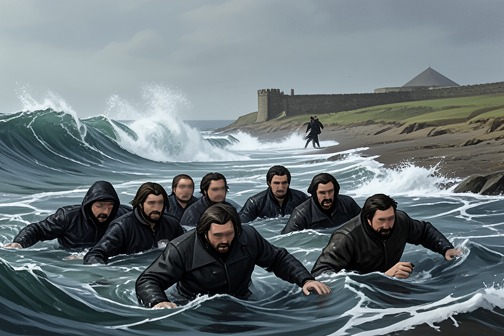
The [Maidstone Prison escape (1972)](entity:event-recall-event-59aa379250dc) was the escape of seven [Irish Republican Army](entity:organization-recall-organization-irish-republican-4bff46a4b2bf) prisoners from a prison ship in [Belfast](entity:location-recall-location-belfast-8a60016bc9a1) Lough. Its defining image is both practical and stark: prisoners leaving a floating jail by swimming through the cold waters, then making their way across the border before the army could contain the breakout. The account places the escape within the conflict’s struggle over imprisonment, mobility and control, while the available details leave the escapees’ individual identities and the operation’s precise mechanics unspecified.
## The Prison Ship
Maidstone was not a land-based prison. The book identifies it as a prison floating in Belfast Lough, a feature that shaped the escape: the route out ran through the water rather than through a breach in a conventional prison wall. Its account begins on a frigid January evening, setting the escape against severe conditions without suggesting that the cold deterred those who undertook it.
Contemporary reporting described seven Irish Republican Army suspects swimming to freedom. That phrasing establishes the scale and method of the breakout, but the material available here does not provide a full account of how the prisoners reached the water, what equipment they used, or how they coordinated their escape. Those details should not be inferred from the outcome alone.
## Escape and Flight
The escape involved seven prisoners, and swimming was the means by which they left the prison ship. The book’s account then follows the flight beyond the immediate escape: by the time the army mobilised, the prisoners had made their way across the border. The sequence gives the event its decisive consequence. Leaving Maidstone was only the first stage; reaching safety depended on putting distance between themselves and the prison before the authorities could respond.
The source trail includes reports published immediately after the escape and a later account in which [Seán Mac Stíofáin](entity:character-recall-character-se-n-mac-st-of-in-855d1ac623f6) discussed why particular escapees had been chosen. This indicates that both the breakout and the selection of those involved became subjects of public and republican explanation. The evidence presented here does not supply Mac Stíofáin’s reasons, however, and therefore cannot establish the prisoners’ individual roles or the selection criteria.
## Place in the Prison Narrative
The escape appears in a chapter focused on Maidstone and is followed by a reference to [Long Kesh](entity:location-recall-location-long-kesh-90c48f775ab3) as a new prison. The juxtaposition connects escape from a prison ship with the continuing question of where republican prisoners would be confined, but it does not by itself establish that the escape directly caused a particular transfer or policy change.
The account’s emphasis falls on movement across boundaries: out of a confined vessel, through the water, and over the border before the army could act. In that compressed progression, the breakout is presented not merely as departure from custody but as a race against mobilisation. Its immediate achievement was the escape of seven prisoners; the cited material does not detail their subsequent individual histories or describe wider institutional consequences.
Event 76
1972 IRA ceasefire and London talks
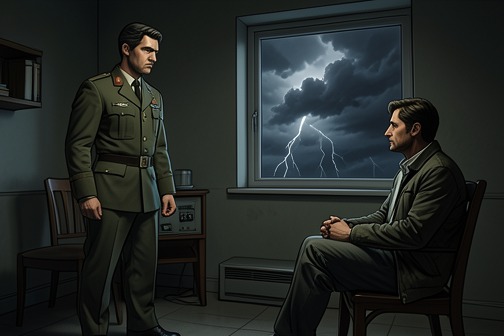
The [1972 IRA ceasefire and London talks](entity:event-recall-event-1972-eb23819df114) were a brief but consequential attempt to turn a pause in violence into a political opening. A secret channel brought representatives of the [Irish Republican Army](entity:organization-recall-organization-irish-republican-4bff46a4b2bf) into a meeting with [William Whitelaw](entity:character-recall-character-william-whitelaw-96a806f8cce7), then the British minister responsible for [Northern Ireland](entity:location-recall-location-northern-ireland-c23b7da68651). The ceasefire was announced as indefinite, yet it lasted scarcely more than two weeks. Its collapse did not erase the significance of the contact: it showed that direct talks were possible, while making plain how quickly a truce could be undermined by unresolved demands and renewed street fighting.
## Causes and Political Background
The ceasefire emerged from a conflict in which peaceful protest had already given way to armed confrontation. In January 1969, student demonstrators set out from [Belfast](entity:location-recall-location-belfast-8a60016bc9a1) for [Derry](entity:location-recall-location-derry-d46e7068265a) to protest discrimination against Catholics in Northern Ireland. Catholics faced exclusion from desirable jobs and housing and had little access to political power; no Catholic had held executive office in the devolved government at [Stormont](entity:location-recall-location-stormont-729677d071cf) during its first half-century. The marchers hoped peaceful protest might redraw the conflict’s divisions, but violence at [Burntollet Bridge](entity:location-recall-location-burntollet-bridge-7dc489249792) helped convince [Dolours Price](entity:character-recall-character-dolours-price-f885017ba474) that marching alone would not bring the change she believed [Ireland](entity:location-recall-location-ireland-3247a2c8bcbe) needed. In 1971 she joined the IRA, a personal turn that reflected the wider movement from street protest toward armed action.
By 1972, the pressures of the conflict were also creating openings for contact. A secret back channel had been developing, and the prospect of a ceasefire became linked to the question of who would be released. One recorded formulation was, “No fucking ceasefire unless Gerry is released.” The condition placed a concrete political stake inside what might otherwise have appeared to be a purely military pause: the IRA’s willingness to stop fighting was entangled with the fate of [Gerry Adams](entity:character-recall-character-gerry-adams-6d84cf7a2514). The ceasefire therefore began not as a settled peace, but as a contested move whose terms and credibility remained in question.
## The Ceasefire and the [London](entity:location-recall-location-1bfd335cdd1b) Meeting
On 26 June, the IRA initiated a ceasefire. The organization also threatened that anyone who violated it would be shot, underscoring that the truce was an order imposed within the movement as well as a public gesture toward the authorities. The Provisionals announced an indefinite truce, a declaration that raised expectations among people who had endured continuing violence. Yet the threat against violators revealed the coercive discipline behind the pause: silence from the guns was demanded, not simply hoped for.
The secret contacts led to a London meeting. The Irish representatives were escorted to it, and Whitelaw came to meet them. The account describes the men striding into the meeting and records that a list of demands was presented; it does not enumerate those demands in the available passage. That distinction matters. The encounter was not merely a ceremonial acknowledgment between adversaries: it placed specific claims before the British side, even though the surviving account here does not permit a full reconstruction of their contents. The meeting’s very secrecy also marked the narrowness of the opening. The talks could proceed through a back channel, but they did not yet amount to a public settlement or a durable framework for ending the conflict.
The account presents the meeting as forceful rather than conciliatory. The British response was later described as having been sabotaged by “absurd ultimatums.” That characterization points to a clash over the terms on which negotiation could proceed, rather than a simple failure to communicate. The ceasefire gave both sides a temporary space in which to test the possibility of talks, but the existence of a meeting did not resolve the incompatible demands brought into it. The truce’s promise and its fragility were present at the same time.
## Collapse and Immediate Consequences
The pause proved short-lived. On 10 July, the truce ended amid renewed street fighting, and reports described five deaths in an hour. The speed of the reversal turned the ceasefire into a measure of how little had been settled: an announcement of indefinite duration could not hold when the underlying confrontation and the disagreement over terms remained active. The renewed violence also placed ordinary civilians back inside the consequences of the failed pause. Earlier accounts of the truce describe civilians emerging into the streets, a visible sign of what a cessation of fighting could briefly make possible; the return to battle closed that space again.
The collapse was not simply the negation of the talks. A secret channel had formed, representatives had met Whitelaw, and demands had been exchanged. Those developments did not produce an agreement, but they established direct contact as part of the conflict’s political landscape. The interval between the ceasefire’s announcement and its breakdown was therefore both an experiment in negotiation and a warning against treating a declared truce as proof that the conflict had been resolved.
## Longer Political and Historical Significance
The meeting belongs to a longer, uneven movement between armed struggle and electoral politics. In 1981, the possibility of having [Bobby Sands](entity:character-recall-character-bobby-sands-cb073d403dee) run for a parliamentary seat from prison created a dramatic new use for electoral politics within the republican movement. Adams later entered electoral politics himself; Dolours Price canvassed for him and drove voters to polling stations. These later developments do not turn the 1972 talks into the start of a straightforward transition, but they show that political engagement would acquire forms unavailable or unacceptable to many republicans at the time of the ceasefire.
The event’s later significance is also sharpened by what the peace arrangements did not provide. The [Good Friday Agreement](entity:event-recall-event-good-friday-agreement-f0a8e2fc0bef) concentrated on the future and offered no general truth-and-reconciliation mechanism for addressing the history of violence. A limited amnesty was available under 1999 legislation for people who voluntarily supplied information to help recover the disappeared, but unresolved Troubles-related murders otherwise remained open criminal cases. The 1972 ceasefire and talks thus stand at an early point in a recurring problem: contact and political arrangements could interrupt violence or reshape its direction without settling how the past would be accounted for. The brief truce ended in renewed fighting; the questions of responsibility and negotiation outlasted it.
Event 77
Jean McConville disappearance and murder
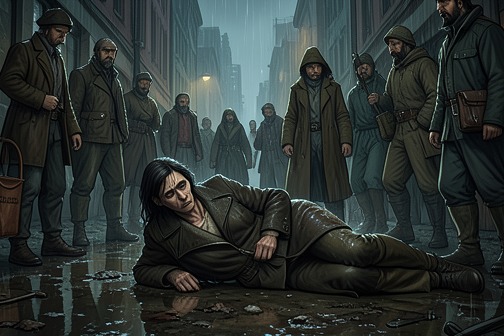
[Jean McConville](entity:character-recall-character-jean-mcconville-defffff134a9)’s disappearance and murder became a defining case of the [Northern Ireland](entity:location-recall-location-northern-ireland-c23b7da68651) conflict: a widow was taken from her family, secretly killed and buried, while the explanations offered for her abduction remained contested for decades. The case turned not only on who ordered and carried out the killing, but also on what could be established from children’s recollections, a police log, statements attributed to the [Irish Republican Army](entity:organization-recall-organization-irish-republican-4bff46a4b2bf), and later recorded testimony. Its unresolved details became part of the wider struggle over who could speak about the conflict, whose account would be believed, and whether the past could be brought to public account.
## Abduction and the disputed chronology
The [McConville children](entity:character-recall-character-1903e5824008) consistently recalled that their mother was taken in early December 1972, after an earlier episode in which she went to play bingo, was seized and beaten, and was found wandering in a dazed state. According to the family’s account, soldiers brought her home to [Divis Flats](entity:location-recall-location-divis-flats-f36db46c6064); she was abducted from there the following evening, while still bearing bruises. The children believed that the abduction took place on 7 December. Their account appeared in the immediate aftermath, including in a January 1973 newspaper report quoting [Helen McConville](entity:character-recall-character-helen-mcconville-d4eeef44c1f2)’s recollection that her mother was taken the next night.
The details of the first episode were stark. A woman found in the street had been badly beaten and had lost her purse, handbag, shoes and coat. The children said soldiers found her and returned her to the family. Yet no official record recovered by the later investigation established a precise date for the night McConville disappeared. A police log examined by Nuala O’Loan offered a different, and important, piece of evidence: a report received at 2 a.m. on 30 November described a woman found at 11 p.m. the previous night, distressed and beaten, who said she had been warned not to give information to the military. The record named her as Mary McConville and gave her address as St Jude’s Walk in Divis Flats. The name and address led the family and investigators to believe that the woman was Jean.
That log placed the beating and warning on 29 November, not on the night before the family’s proposed 7 December abduction. It therefore complicated, rather than settled, the sequence. The children were young, living through conflict and deprivation after their mother vanished; later, Helen and Michael even differed on whether the younger children went to school the day after the bingo-hall episode. But the children had repeatedly placed the event in early December in their first accounts to the press and social services. If the police log was reliable and referred to Jean, more than one night may have elapsed between the warning and her removal. That possibility made the chronology more compatible with the account later given by [Brendan Hughes](entity:character-recall-character-brendan-hughes-1230acbdf136), while leaving the children’s early testimony in tension with it.
## Informer allegations and the killing
The Irish Republican Army’s account was that McConville had informed for the British military. In the version Hughes described, she was questioned, warned to stop, and later found with a second radio after resuming work as an informant. [Dolours Price](entity:character-recall-character-dolours-price-f885017ba474) endorsed the claim, and the organization maintained that McConville had persisted after being warned. The police log appeared to support the narrower claim that someone had warned her, but it could not by itself establish whether she had informed, whether the accusation was true, or what happened after the warning. Hughes’s account also raised a chronological problem if the interrogation occurred on 6 December and the abduction the following night: there would have been little time for McConville to return to work and be supplied with another radio.
Price later gave [Ed Moloney](entity:character-recall-character-ed-moloney-9d7f20a1f93b) a separate, detailed account of the disappearance. She had spoken for about fifteen hours in recorded interviews with [Anthony McIntyre](entity:character-recall-character-anthony-mcintyre-a9506a6098eb) without mentioning McConville, but Moloney’s recordings were a different set of interviews. In one, Price said that she and others were called back to [Dundalk](entity:location-recall-location-dundalk-adc76dac93ed) after McConville had been held there for about four or five days. A local unit had dug a grave, and the plan, as Price recounted it, was to take McConville across a field and shoot her. The local men did not want to carry out the killing, Price said, because McConville was a woman. Moloney put to her that they therefore had to do it; Price made no answer, only a small murmur. Her account implicated her in the final stage of the operation without resolving every question about who issued the order or who fired the fatal shot.
The family’s understanding of the case was also tested against a separate recollection: that McConville had helped a wounded British soldier in Divis Flats. Children remembered the family huddled in darkness and hearing gunfire and the soldier’s moan outside their door, but O’Loan found no army record of a soldier wounded near the flats. The absence of a record did not prove that the episode had not occurred; the records might have been incomplete, or the family’s timing or understanding of the injury might have been mistaken. The uncertainty nevertheless showed how the missing woman’s story had been shaped by memories that could not all be independently confirmed.
## Discovery and public acknowledgment
In 1998, Irish Republican Army representatives acknowledged that the organization had killed McConville. That admission did not resolve the dispute over the informer allegation or settle individual responsibility. Her remains were found in 2003, after years in which her children had lived without knowing where she had been buried. The discovery transformed a disappearance into a confirmed death and gave the family a place and occasion for burial, but it did not end their demand for answers. [Father Alec Reid](entity:character-recall-character-father-alec-reid-9312736ed5e7) attended the funeral in November 2003; subsequent reporting showed that the discovery and burial were not, for the family, the same as justice.
O’Loan’s report brought the conflicting accounts into sharper focus. The McConville children welcomed it as an exoneration of their mother, yet the police log it documented appeared to corroborate that she had been warned by men who believed she was passing information to the military. That evidence could support the existence of an accusation and an assault without proving the accusation true. The distinction mattered: the report could challenge parts of the family’s chronology while still failing to establish that McConville had been an informer. Neither the log nor the later testimony supplied a complete, uncontested reconstruction of the abduction and murder.
## Testimony, prosecution, and the limits of the record
The case acquired another legal dimension through the [Boston College](entity:location-recall-location-boston-college-d69f5179339f) [Belfast](entity:location-recall-location-belfast-8a60016bc9a1) Project. When a court examined the transcripts, it found that six participants had mentioned McConville, though one did so only in passing, and authorized the release of recordings associated with five participants. Ed Moloney and Anthony McIntyre had maintained that Price did not discuss McConville in her interviews with McIntyre. That claim was technically accurate about those recordings, but did not describe Moloney’s separate recordings, in which Price discussed the case at length. The distinction between interviewers and recordings became consequential: the archive contained accounts that public assurances about one part of it had left out.
The prosecution of [Ivor Bell](entity:character-recall-character-ivor-bell-e3c8d255e4f4) further exposed the difficulty of turning retrospective testimony into a legally established account. A voice analyst testified that the speaker identified as Z was likely Bell. Bell’s lawyer argued that even if the identification were proved, the recording did not establish guilt; a police detective who had heard the interview interpreted it as acknowledging a critical role in aiding and procuring the murder. Hughes and Price had both asserted that [Gerry Adams](entity:character-recall-character-gerry-adams-6d84cf7a2514) ordered the killing, but prosecutors concluded that the evidence against Adams consisted of uncorroborated allegations and would not support a successful prosecution. Bell’s case and the decision concerning Adams thus produced sharply different legal outcomes from evidence associated with the same wider history.
## A disappearance that continued in memory
The case unfolded in a society without a formal process for determining how the conflict should be understood or commemorated. The [Good Friday Agreement](entity:event-recall-event-good-friday-agreement-f0a8e2fc0bef) established power sharing, but the conflict ended without an obvious victor; political actors continued to contest their roles and the meaning of the past. Gerry Adams’s refusal to acknowledge that he had been in the Irish Republican Army reinforced a climate in which former participants had reason to doubt whether it was safe to speak openly. Sinn Féin’s disciplined account of the peace process and the armed struggle also drew criticism for marginalizing dissenting republicans and maintaining a political monopoly over republican memory.
McConville’s case carried that unresolved contest into the present. Her children’s search for their mother’s fate, the organization’s admission that it had killed her, the competing accounts of an informer warning, and Price’s recorded recollection all entered public history without producing a single, complete explanation. The book’s epigraph observes that wars are fought again in memory. Here, that second struggle is visible in the gap between a family’s recollection, an official log, a paramilitary account and testimony that could be used differently depending on whom it implicated. The recovery of McConville’s remains ended her physical disappearance; it did not end the dispute over how, why, and by whose authority she was taken and killed.
Event 78
Brendan Hughes Long Kesh escape
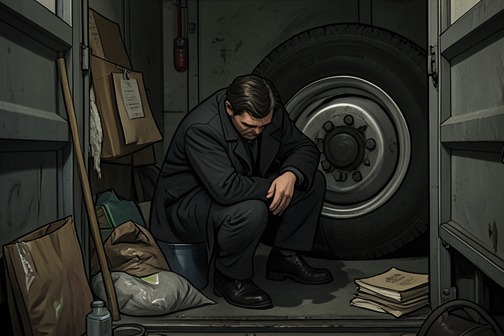
[Brendan Hughes’s escape from Long Kesh](entity:action-recall-action-long-kesh-5f65b8a564f8) depended on turning the prison’s routine refuse removal into a way out. Hidden inside a load carried by a refuse lorry, he endured a journey that lasted several hours, the risk of discovery during a headcount, and the threat of the lorry’s crushing mechanism. The escape’s narrow margin is captured not only by the disguise and timing, but by a remembered disagreement over when a decoy helped—and when it was likely to fail.
## Prison Routine and the Escape
Hughes was a prisoner at [Long Kesh](entity:location-recall-location-long-kesh-90c48f775ab3), where the movement of refuse lorries offered a possible route beyond the prison’s perimeter. The account focuses on the practical vulnerability at the heart of the plan: a person had to be concealed within a vehicle that would otherwise be part of an ordinary institutional routine. A load heavier than usual could attract attention, while a concealed passenger faced hazards once the lorry was on the move.
The escape also involved [Thomas Valliday](entity:character-recall-character-thomas-valliday-74fe5cd19843), another prisoner. Hughes heard Valliday whispering while they were concealed in the lorry. The detail places two prisoners inside the operation’s cramped and dangerous space, though the account does not establish every part Valliday played or describe the precise division of responsibility between them. His presence is registered through the voice Hughes could hear, a human signal in circumstances where silence and concealment mattered.
The broader prison context included earlier escape methods. [Francie McGuigan](entity:character-recall-character-francie-mcguigan-df6f25197fbd) had once donned borrowed black robes to get out of Long Kesh, and John Francis Green also managed to escape. These precedents show that the prison’s boundaries had been breached before, but Hughes’s route was distinct: it relied not on a disguise worn in public, but on remaining physically hidden beneath the ordinary appearance of a refuse load.
## Concealment and the Journey
Hughes was placed in the centre of an old mattress, which others helped roll around him. The arrangement turned a familiar object into a covering, but it did not make the body inside it safe. The mattress enclosed him while the lorry carried him away, and the account emphasizes that the concealment made breathing difficult. Protection and danger were therefore built into the same device: the covering hid him from view while restricting the air he could draw.
The refuse lorry trundled around for four to five hours. The duration made the escape more than a brief passage through a gate. Hughes had to remain hidden through an extended journey, unable to control where the vehicle went or how long it would continue. During that time, he heard Valliday whispering. The smallness of that exchange contrasts with the scale of the risk: both men were inside a vehicle whose ordinary function could turn lethal for anyone concealed in its load.
The route brought the lorry into a British Army compound. That destination heightened the danger rather than resolving it. Hughes was still inside the vehicle, and concealment had to hold while the lorry remained exposed to a place associated with the forces on the other side of the conflict. The account makes the journey’s physical setting decisive: escape was not simply a matter of crossing the prison boundary, because the vehicle carrying Hughes could continue into another secured environment.
## The Headcount and the Decoy
The afternoon headcount at 4 p.m. was a fixed point against which the plan had to be measured. If Hughes was absent and the prison could not be made to believe otherwise, the escape would become apparent. The decoy therefore mattered not as a general distraction but as a means of manipulating the prison’s count of its prisoners.
The recollections differ over the decoy’s timing and effect. [Gerry Adams](entity:character-recall-character-gerry-adams-6d84cf7a2514) remembered a decoy at the headcount that kept the escape from being discovered that day. Hughes recalled that the ruse had enabled him to get out in the first place, but believed it would be exposed at the afternoon count. The accounts track closely in other respects, yet this contrast leaves the headcount as a point of tension: one recollection describes a delay in discovery, while the other anticipates that the deception could not survive the next count. The escape’s success thus did not depend on a frictionless plan; it sat alongside a practical uncertainty about how long the cover story could hold.
## The Lorry’s Machinery and the Escape’s Risk
Even after the lorry had carried Hughes beyond the prison, its machinery remained a danger. Sawdust crept into his eyes as he lay quietly inside. The detail narrows the scene to bodily endurance: he could not move freely to clear his eyes without risking detection, and the material surrounding him was both evidence of the lorry’s work and part of the immediate discomfort of hiding in it.
Then a giant spike plunged down. Hughes pictured it running straight through him. The image gives the vehicle’s mechanism a force more immediate than the prison’s abstract security: the escapee faced the possibility that the machinery used to compress refuse would strike the concealed body among it. His stillness was therefore not merely a tactic for avoiding notice; it was necessary to survive inside a space whose operation he could not safely interrupt.
The escape’s significance lies in the collision of routine and danger. A refuse lorry, a rolled mattress, a headcount, and a descending spike each belonged to a concrete circumstance of the attempt. Together they show how Hughes’s passage out of Long Kesh depended on exploiting an opening in prison procedure while enduring the risks that the opening created. The uncertainty over the decoy and the remembered threat of the machinery keep the episode from appearing effortless: escape was achieved through concealment, but every stage exposed how close concealment could come to discovery or injury.
Event 79
1973 London bombings
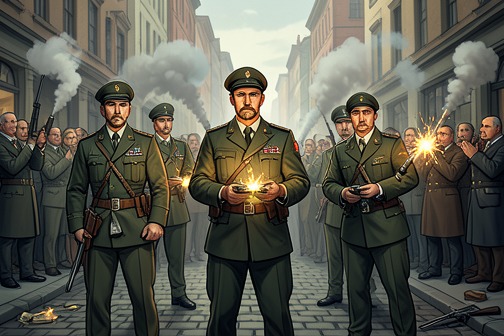
The [1973 London bombings](entity:event-recall-event-1973-f95b8980e786) were a Provisional IRA attack intended to bring the conflict to the British mainland through coordinated car bombs at four [London](entity:location-recall-location-1bfd335cdd1b) sites. On 8 March 1973, two devices exploded and injured nearly 250 people, while the other two were defused. [Dolours Price](entity:character-recall-character-dolours-price-f885017ba474) was a leading member of the bombing team; the operation ended with arrests and imprisonment, and later testimony placed its authorization within the senior leadership of the [Belfast Brigade](entity:organization-recall-organization-belfast-brigade-ce62dcc93e5e).
## Origins and planning
The bombing plan emerged from discussions among senior members of the Belfast Brigade. In a later interview, [Brendan Hughes](entity:character-recall-character-brendan-hughes-1230acbdf136) described the idea as having been discussed at brigade meetings attended by himself, [Gerry Adams](entity:character-recall-character-gerry-adams-6d84cf7a2514), [Ivor Bell](entity:character-recall-character-ivor-bell-e3c8d255e4f4), [Pat McClure](entity:character-recall-character-pat-mcclure-26b23269b576) and Tom Cahill, whom he identified as the group’s principal figures at the time. Hughes later told his interviewer that Adams had authorized the 1973 London mission. That statement came in a confidential oral-history interview, which Hughes understood would remain sealed until his death; it was a retrospective account, not a public acknowledgment made during the bombing campaign.
The team prepared four cars for the operation. Six vehicles had been hijacked at gunpoint in [Belfast](entity:location-recall-location-belfast-8a60016bc9a1) in February and driven to the [Republic of Ireland](entity:location-recall-location-republic-of-ireland-37b598657754). By early March, the cars had reappeared in [Dublin](entity:location-recall-location-dublin-d76fcbad2c3f), repainted and fitted with false number plates. Four were selected for the London mission: a Ford Corsair, a Hillman Hunter, a Vauxhall Viva and a green Ford Cortina. Each was equipped with a large incendiary device containing more than a hundred pounds of powder explosives and gelignite. The explosives were concealed beneath the rear seat and connected by detonating cord to a timer housed in a box beneath the front passenger seat; the timer had been fashioned from a household alarm clock.
## The operation in London
Before dawn on 8 March, the bombers left their hotels, retrieved the prepared cars and drove them into position while parking was still easy. A rail strike had suspended parking restrictions, so vehicles that might ordinarily have been removed were left where they stood. By 7:30 a.m., the four devices were in place: the Hillman Hunter at a British Army recruiting centre in [Whitehall](entity:location-recall-location-whitehall-ae3b9db3b8cd), the Ford Corsair outside [New Scotland Yard](entity:location-recall-location-new-scotland-yard-4bcbd3c3ddaf), the Vauxhall Viva by the British Forces Broadcasting Service on [Dean Stanley Street](entity:location-recall-location-dean-stanley-street-050183b89d78), and the Cortina at the [Old Bailey](entity:location-recall-location-old-bailey-1fe06b0bf1ce). Their timers were set for 2:50 p.m. Most of the crew then travelled by bus from Cromwell Road to Heathrow Airport, intending to fly to Dublin on an 11:20 a.m. plane; the Price sisters and [Hugh Feeney](entity:character-recall-character-hugh-feeney-52ae40f86edb) were among those scheduled to leave.
Just after 2 p.m., a man telephoned The Times in London. Elizabeth Curtis, a young member of the paper’s news desk, heard him rapidly list descriptions and locations of cars. She struggled to understand the call, but transcribed what she could before he warned, “The bombs will go off in one hour.” The bombers had intended to give advance notice, mindful of the civilian deaths on [Bloody Friday](entity:event-recall-event-bloody-friday-a9adac883a82), but the warning system did not ensure that every device was found in time.
Police discovered a bomb at New Scotland Yard and defused it. The long timer led investigators to suspect that the bombers might be trying to leave the country before the explosions, so [RUC](entity:organization-recall-organization-845946bf4b89) Special Branch officers at ports and airports received an order to close the exit points and question Irish travellers. At the Old Bailey, however, a control-room error garbled the warning and delayed the response. The Hillman at Whitehall exploded; later, the Cortina outside the Old Bailey also detonated. The two remaining devices were defused. The difference between the devices found and those that went off turned on the police response as well as the bombers’ plan: advance warning existed, but it did not reach every target effectively.
## Casualties and accountability
The explosions made the scale of the attack brutally visible. At Whitehall, the Hillman Hunter was ripped apart by a sheet of flame that rose forty feet; the blast shattered windows in nearby offices and shops and hurled people from the pavement. At the Old Bailey, the Cortina detonated amid an attempted evacuation. The force tore away the façade of the George pub, exposed its lounge to the street, and threw a police officer who was escorting jurors twenty feet. A police photographer was flung across the road, and Martin Huckerby, a journalist for The Times, was cut on his face and hands and taken to St Bartholomew’s Hospital.
Between the two blasts, nearly 250 people were injured. Bloodied survivors emerged through smoke and hot dust while ambulances carried casualties to nearby hospitals. Striking non-medical staff at those hospitals abandoned their picket lines to help. Frederick Milton, a fifty-eight-year-old caretaker at Hillgate House beside the Old Bailey, was covered in blood but resisted being taken to hospital, choosing instead to assist other injured people. He collapsed a few hours later and died. An autopsy found that the heart attack had begun before the explosion, so the medical evidence did not support a murder charge arising from his death.
Dolours Price and other members of the bombing team blamed the casualties on the authorities, arguing that police had taken too long after the telephone warnings to find the devices and alert the public. That account served as a convenient moral deflection: the bombers had planted the devices, and their warning arrangements had not prevented people from being hurt. Yet the police acknowledged that human error in the control room had garbled the warning about the Old Bailey bomb and significantly delayed the response. The failure did not absolve the bombers; it made the consequences of the operation more complicated than either a claim of adequate warning or a simple account of police negligence could suggest.
## Arrest, imprisonment, and the afterlife of the operation
The escape plan failed at its final stage. [Dolours Price and Marian Price](entity:relation-recall-relation-dolours-price-and-ma-f3ddddaf4796) were arrested at Heathrow Airport, taken into custody, and later tried at [Winchester Castle](entity:location-recall-location-winchester-castle-21b00e4ec0e0). Their imprisonment at [Brixton Prison](entity:location-recall-location-brixton-prison-1f2109b23cb2) and subsequent hunger strike extended the consequences of the bombing campaign beyond London: an operation intended to carry the conflict onto the British mainland became the beginning of a prolonged struggle over the sisters’ imprisonment and political status.
The episode also marked a sharp contrast with the political path that followed. Dolours Price later canvassed for a Sinn Féin candidate for Belfast City Council and moved away from violence as a means of pursuing [Irish unity](entity:concept-recall-concept-irish-unity-b50744f64331). In 1983, Gerry Adams, who had been her officer commanding, sought a seat at [Westminster](entity:location-recall-location-westminster-797ba54e0a11) representing [West Belfast](entity:location-recall-location-west-belfast-27ebba5f4bec). Their transition from clandestine armed action toward electoral politics did not erase the earlier campaign; it made the question of how that campaign should be remembered more consequential.
That question remained unsettled in the book’s later account of the conflict. Brendan Hughes discussed the London mission in a confidential oral-history interview, believing that his words would remain sealed until his death. His account placed the planning within the Belfast Brigade’s senior circle, while public denials and party discipline shaped what could be said about republican armed struggle. The bombings thus recur not only as a violent operation but as a test of who could acknowledge responsibility and whose version of the past would prevail. The later political order depended, in part, on disciplined organizations capable of restraining their members; to former participants and critics, that same discipline could look like an effort to suppress dissent and monopolize memory.
Event 80
Price sisters’ hunger strike for transfer to Northern Ireland
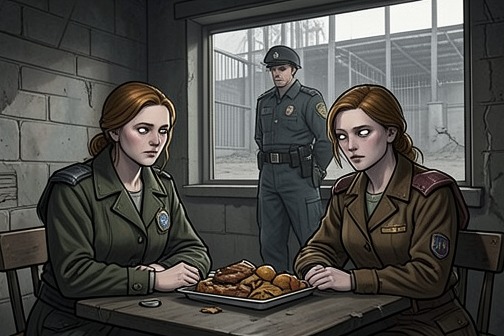
The [Price sisters’ hunger strike for transfer to Northern Ireland](entity:event-recall-event-4a55638ddf58) was a 206-day prison protest by [Dolours Price and Marian Price](entity:relation-recall-relation-dolours-price-and-ma-f3ddddaf4796), joined by [Gerry Kelly](entity:character-recall-character-gerry-kelly-a0f8dd1a7cde) and [Hugh Feeney](entity:character-recall-character-hugh-feeney-52ae40f86edb), that turned the sisters’ bodies into the ground on which the [British government](entity:organization-recall-organization-66a95d21d932)’s refusal to recognise their political status was contested. At [Brixton Prison](entity:location-recall-location-brixton-prison-1f2109b23cb2), their demand for transfer was met not with release or immediate agreement but with force-feeding: a daily medical procedure that became a prolonged struggle over who controlled their bodies and how their imprisonment would be defined.
## Background and Demands
The hunger strike followed the sisters’ conviction in connection with the [London](entity:location-recall-location-1bfd335cdd1b) bombings. A November 1973 newspaper headline reported that eight people had begun a strike after being jailed for life. The Price sisters entered Brixton determined to continue until death if necessary, rather than treat hunger as a brief gesture. Their demand was specific: to be transferred to prisons in [Northern Ireland](entity:location-recall-location-northern-ireland-c23b7da68651) and recognised as political prisoners. Gerry Kelly and Hugh Feeney, held in different prisons, joined them.
The demand drew its force from a much older republican tradition of hunger striking. In 1920, [Terence MacSwiney](entity:character-recall-character-terence-macswiney-649b7fd810a1) had refused food in Brixton for seventy-four days, seeking release from imprisonment on sedition charges; he died in custody. His death, followed by public mourning and international protest, helped establish self-sacrifice through hunger as a powerful language of Irish republican resistance. MacSwiney’s declaration that “It is not those who inflict the most but those who suffer the most who will conquer” gave that tradition a moral framework. The Price sisters’ protest revived it in the same prison, but the immediate objective was transfer and political status, not release.
Their surroundings sharpened the sense of confinement. Brixton was a crowded, overwhelmingly male prison; Dolours and Marian were the only women held there. They were kept in separate cells, escorted through the corridors, and permitted half an hour of exercise in the yard each day. Dolours was assigned the number 286185, an institutional identity that stood in stark contrast to the political identity she and her sister insisted upon. They accepted water but refused food, maintaining a strike that the wider prison system could not simply treat as an ordinary disciplinary refusal.
## Force-Feeding at Brixton
On 3 December, after the strike had been underway for two and a half weeks, doctors and nurses took Dolours from her cell and restrained her in a chair bolted to the floor. She was secured with bedsheets. Already weakened by more than two weeks without food, she struggled as medical staff prised open her jaws and forced a wooden device with a hole through her mouth so that feeding could begin. The procedure was a physical imposition carried out under medical authority; its clinical setting did not make it less coercive.
Two days later, the doctors began force-feeding Marian as well. The visits became a daily ritual: at ten each morning, doctors and nurses entered the sisters’ cells, tied them down, and fed them through tubes. The food included raw eggs, orange juice, and liquid Complan. Dolours described the early experience in a letter, writing, “We are learning to breathe a bit more easily when the tube is down.” The matter-of-fact sentence records an adaptation to danger, not consent to the procedure. During the feedings, a radio was turned up to cover the sisters’ screams.
[Force-feeding](entity:concept-recall-concept-9c7eeeab2a4c) created a stalemate. The intervention kept the women alive, but it also inflicted physical and mental trauma and did not secure their cooperation with the policy they opposed. In May, the British government decided to stop the procedure. By then the sisters had spent months trying to endure it without showing fear. They changed tactics, offering what Dolours called “maximum resistance”: struggling against restraint and clamps so fiercely that it became difficult for doctors to insert the tubes safely. Her account described the indignity and pain of the struggle, including the pressure of a steel clamp on her gums. Their resistance made the medical operation harder to carry out and withdrew the cooperation it required.
## A Political and Medical Stalemate
The government faced the prospect that either sister might die in custody. Officials feared that a death could provoke “massive retaliatory violence,” and the republican movement was preparing for the possibility of a violent response. Yet the authorities did not grant the sisters’ demand at once. Instead, the dispute narrowed around the practice of artificial feeding, and around whether a prisoner’s body could be compelled to sustain a life that the prisoner was risking to make a political claim.
[Roy Jenkins](entity:character-recall-character-roy-jenkins-c36c373cec9f) later explained the policy change in Parliament. He described force-feeding as a “distasteful task” and said that after 167 days the doctors at Brixton had stopped because “the minimal cooperation necessary for this process was withdrawn by the sisters”. He also blamed [Albert Price](entity:character-recall-character-albert-price-3e55cd4fc455) and [Chrissie Price](entity:character-recall-character-chrissie-price-f0fd93015262), alleging that rather than discouraging their daughters from what he called a “slow suicide,” they had urged them on. The government’s account framed the feeding as a medical process and the strike as self-destruction; the sisters’ account insisted that they had not set out to die, but to obtain defined political demands. That difference in framing was central to the conflict, not a minor dispute over terminology.
## Ending and Aftermath
On 8 June, Dolours and Marian issued a statement with Gerry Kelly and Hugh Feeney announcing that they would end the strike. They said that 206 days earlier they had begun it to demand political-prisoner status and transfer to Northern Ireland. They cited Jenkins’s assurance that they would be returned and stated, “Ours was never a suicide mission,” explaining that their purpose had been to secure what they regarded as just and minimal demands. The statement presented the end of the strike as a response to an undertaking, not a renunciation of the political claim that had sustained it.
The promised transfer did not follow immediately. Reports placed the sisters in Durham in December 1974, months after the announcement that the strike would end. The delay made the outcome partial: the strike stopped, but the practical fulfilment of the transfer demand remained pending. The episode’s chronology therefore resists a simple account of victory or defeat. The women survived, force-feeding ended, and an assurance of transfer was given; yet it took months for the promised relocation to occur.
The strike also belongs to the Price sisters’ broader trajectory from protest into armed republican activity and, later, political change. Dolours had joined the [Irish Republican Army](entity:organization-recall-organization-irish-republican-4bff46a4b2bf) in 1971, when women were admitted as full members for the first time; her own republican lineage and ambition were described as likely factors in that change, alongside the mass imprisonment of men. After her release, she eventually abandoned violence as her own means of pursuing a united [Ireland](entity:location-recall-location-ireland-3247a2c8bcbe) while continuing to support republican politics and canvassing for Sinn Féin. Against that later turn, the Brixton strike marks a different kind of confrontation: a demand made from inside prison, where political identity was asserted through refusal, endurance, and the struggle over the treatment of the body.
Event 81
Arrest of Gerry Adams and Brendan Hughes (1974)
The 1974 arrest of [Gerry Adams](entity:character-recall-character-gerry-adams-6d84cf7a2514) and [Brendan Hughes](entity:character-recall-character-brendan-hughes-1230acbdf136) brought two prominent Provisional IRA figures back into British custody and sharpened a conflict that extended beyond capture itself: who the prisoners were to be understood as, and what status they would have behind bars. The surviving details place the operation at a rented flat in a fashionable [Belfast](entity:location-recall-location-belfast-8a60016bc9a1) suburb, where police cars and armoured vehicles converged. It followed an earlier joint capture of Adams and Hughes, whose treatment in custody had already made arrest a scene of physical coercion and public display.
## Background and an Earlier Capture
The raid took place after years in which political protest and armed organization had become increasingly entangled. On 1 January 1969, student protesters set out from Belfast for [Derry](entity:location-recall-location-derry-d46e7068265a) to oppose discrimination against Catholics in [Northern Ireland](entity:location-recall-location-northern-ireland-c23b7da68651). Their march embodied a hope that peaceful action might redraw political divisions, turning a conflict between communities into a generational struggle over justice. That hope was shaken by violence along the route. For Adams and Hughes, whose later careers developed inside the republican movement, the changing political landscape included both public protest and clandestine armed activity.
The 1974 arrest was not their first experience of capture together. In an earlier episode, while on the run, Adams noticed someone in the car. A hasty decision followed, and British troops appeared in force. The two men were beaten and tortured; water was used to revive one captive before the beating resumed. British forces took trophy photographs of the prisoners, who were in a bad way. Hughes remained defiant, but the episode showed how quickly clandestine movement could end in military custody. It is important to distinguish that earlier capture from the 1974 flat raid: the book’s account presents them as separate moments in the pressure placed on the same two men.
## The Raid on the Flat
The 1974 operation began with a rented flat. Contemporary reporting described two senior IRA men being captured in a fashionable Belfast suburb, and the account records a convoy of police cars and armoured vehicles at the scene. The scale of the response set the arrest against a broader security struggle: the authorities were not simply encountering an individual in hiding but targeting figures associated with the organization’s command and operations.
Disguise was part of the circumstances surrounding the capture. One man appeared, in the contemporary description, like a banker in a three-piece suit. Press accounts often called the suit pinstriped, but Hughes later said it was grey check. That difference preserves a small but telling detail of the event: the appearance intended to pass as respectable civilian dress did not prevent the operation from identifying and capturing its targets. The evidence also mentions a soldier in camouflage and an officer’s taunt during the arrest, details that puncture any impression of a quiet or orderly surrender. The sequence ended in custody, not escape.
## Imprisonment and the Status of Prisoners
The political meaning of arrest changed as government policy changed. Internment officially ended toward the close of 1975. Paramilitary suspects would now be charged and imprisoned as ordinary criminals rather than detained indefinitely as political prisoners. For republicans, that distinction went to the heart of their claim that they were soldiers in a war, not criminals. Internment had permitted prisoners to wear their own clothes and associate with paramilitary colleagues; the new regime instead placed convicted prisoners in individual cells in the H Blocks at [Long Kesh](entity:location-recall-location-long-kesh-90c48f775ab3) and gave them prison uniforms shared with ordinary offenders.
In 1976, republican prisoners began the blanket protest by refusing to wear those uniforms. Their demand for special category status was a demand to be treated as political prisoners. When the dispute escalated into the dirty protest, Brendan Hughes became the commanding officer inside the prison. Prisoners refused to leave their cells, and waste spread into the corridors; Hughes advised them to smear it on the walls. This was a later consequence of the penal system into which the arrests had placed republican leaders, not an action carried out during the 1974 raid. It reveals how confinement became another arena in which the movement contested the government’s definition of its members.
## Diverging Paths and Lasting Significance
Adams and Hughes remained connected through imprisonment, but their political roles developed differently. Adams was released in 1977. On his last day at Long Kesh, he and Hughes discussed strategy: Adams argued that Sinn Féin should work more closely with the armed organization and that the IRA should adopt a more secure cellular structure. He left the prison to pursue that reorganization, while Hughes stayed behind to manage the prisoners and their protest. The contrast between the man walking out with a brown paper bag and the comrade left inside gives the arrest’s aftermath a longer arc than the police operation alone.
The two arrests therefore belong to a continuing contest over movement, identity, and authority. Capture exposed the vulnerability of leaders who had to live clandestinely; prison then subjected them to an institutional system designed to classify them as ordinary offenders. Hughes’s later leadership of the protests and Adams’s subsequent political strategy demonstrate different responses to that pressure. The raid did not settle the conflict over political status. Instead, the prison struggle made that unresolved question visible in uniforms, cells, association rights, and the prisoners’ refusal to accept the identity imposed on them.
Event 82
Warrenpoint ambush
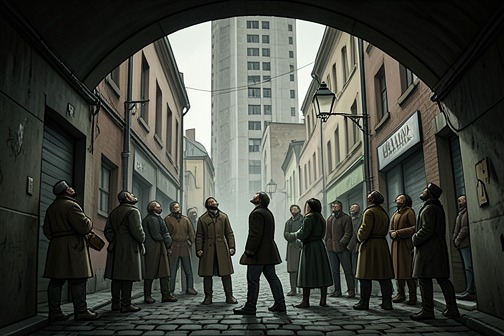
The [Warrenpoint ambush](entity:event-recall-event-d6533bdd11bd) is identified in the available evidence through a reference to the [Irish Republican Army](entity:organization-recall-organization-irish-republican-4bff46a4b2bf) bombings of August 1979, in the same context as the death of Lord Louis Mountbatten and a newspaper headline reporting the deaths of 17 soldiers. The evidence does not describe the ambush’s location, participants, sequence, or precise casualty circumstances, so those details cannot be established here.
## Identification in the 1979 Record
The book’s reference to an August 1979 Guardian report places the ambush within a wider day of Irish Republican Army violence. The headline cited there links the bombing campaign with Mountbatten’s death and the deaths of 17 soldiers, but does not, in the supplied passage, specify how those deaths were divided among the attacks. The evidence therefore establishes the event’s historical association without supplying a narrative of its conduct.
## The Conflict’s Unsettled Memory
The book frames the Troubles’ aftermath as a struggle over public memory as well as political settlement. The [Good Friday Agreement](entity:event-recall-event-good-friday-agreement-f0a8e2fc0bef) created power-sharing rather than a decisive victor, and no formal process emerged to settle how the conflict should be understood or commemorated. In that wider setting, the Warrenpoint ambush belongs to a past whose events continued to be interpreted amid political silence and competing accounts.
Event 83
Airey Neave car bombing in Westminster

[Airey Neave car bombing in Westminster](entity:event-recall-event-60716d8f94c9) was the assassination of [Airey Neave](entity:character-recall-character-airey-neave-dc05445ab92a) on 30 March 1979. Neave was [Margaret Thatcher](entity:character-recall-character-margaret-thatcher-be3b0ca8af0a)’s closest adviser on [Northern Ireland](entity:location-recall-location-northern-ireland-c23b7da68651); his death therefore joined a violent attack to the political leadership shaping the government’s approach to the region.
## Neave’s Political Role
Neave’s importance in the account is established through his place beside Thatcher. He was identified as her closest adviser on Northern Ireland, a role that made the bombing more than the killing of an individual politician: it struck a trusted source of counsel on one of the government’s central political questions.
## The Bombing
On 30 March 1979, Neave was driving when a car bomb killed him in [Westminster](entity:location-recall-location-westminster-797ba54e0a11). The account identifies the date, the vehicle and the setting, but the available evidence does not establish further operational details about the attack. Its stark sequence is enough to mark the event’s rupture: a senior adviser was killed while travelling in the political centre of the [United Kingdom](entity:location-recall-location-united-kingdom-b48cd04982cf).
## Immediate Aftermath
Thatcher was stricken after learning of Neave’s death. The reaction underscores the closeness of their working relationship and the personal force of the loss within her circle. The bombing ended Neave’s role as her adviser on Northern Ireland, at a moment when his counsel had been closely bound to the government’s handling of the conflict.
Event 84
1980 IRA hunger strike
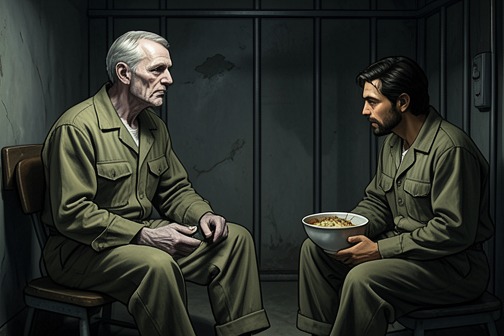
The [1980 IRA hunger strike](entity:event-recall-event-1980-8e4149a9f83b) made the dispute over republican prisoners’ status a contest conducted through the body: refusing food was a political demand, but it also placed the strikers’ lives and their leadership under immediate pressure. [Brendan Hughes](entity:character-recall-character-brendan-hughes-1230acbdf136) led the strike. Its most revealing crisis came when [Seán McKenna](entity:character-recall-character-se-n-mckenna-00d33ae20130) began to lapse and Hughes, confronted with the possibility of losing him, called for him to be fed. The episode exposed a painful gap between the principle of resistance and the responsibility to keep a comrade alive.
## Background: Criminalisation and Prison Protest
The strike followed the end of internment and a change in how the [British government](entity:organization-recall-organization-66a95d21d932) treated paramilitary prisoners. From late 1975, suspects were to be charged and imprisoned as ordinary criminals rather than detained as political prisoners. For the republican movement, this was not merely a change in classification: it challenged the claim that IRA volunteers were soldiers in a war. Convicted prisoners were confined in individual cells in the H Blocks at [Long Kesh](entity:location-recall-location-long-kesh-90c48f775ab3), issued prison uniforms, and treated under the same regime as ordinary offenders.
The prisoners’ rejection of that status had already taken material form. In autumn 1976, republicans began the blanket protest, refusing prison clothes and wrapping themselves in blankets. Their demand for special category status, which would treat them as prisoners of war, was refused. The protest escalated as relations with guards worsened: beatings and restrictions on towels made leaving cells more dangerous, and prisoners eventually refused to leave even to wash or use the toilet. The resulting dirty protest turned the cells themselves into a site of confrontation. By the time the hunger strike began, the argument over political status had been sustained through clothing, confinement, and the conditions of daily life; now it would be carried by refusing food.
## The Strike and Its Leadership
The 1980 strike began in the autumn, with Hughes at its head. The account records that seven men had embarked on it, while retrospective accounts give different numbers for the wider response: Peter Taylor put the number at 170, whereas Hughes said in his [Boston College](entity:location-recall-location-boston-college-d69f5179339f) oral history that it was over ninety. These figures are not presented as a settled count of the men who began the strike. They point instead to uncertainty about how many had answered or stood ready to answer the call, an uncertainty that becomes important when the event is remembered through different accounts.
The contrast between a wider show of willingness and the seven men who had embarked on the strike makes the leadership question concrete. A hunger strike could express collective resolve, but its consequences unfolded in individual bodies, at different rates and with different risks. Hughes was not only a figurehead: the record identifies him as the person who led the men, and it places him at the centre of a decision made when one striker’s condition became critical.
## McKenna’s Crisis
As the strike continued, McKenna grew increasingly fearful, and his condition worsened. He began to lapse. Hughes saw two priests standing with Dr Ross; the account then records Hughes finally calling for McKenna to be fed. A doctor instructed orderlies, and the intervention made the abstract stakes of the protest immediate: preserving the strike’s collective position could mean allowing a comrade to approach death, while intervening meant breaking the fast he had undertaken.
Hughes felt deeply ashamed afterward. That response complicates any simple portrayal of the strike as an unbroken display of discipline. His call to feed McKenna was a decision made in a moment of danger, but the shame that followed shows that it did not leave the political or moral conflict behind. The same leader responsible for sustaining the protest had to face the limits of what he could ask another prisoner to endure. McKenna’s failing eyesight and lapses, recorded in later accounts, make the bodily cost more than a general symbol: the strike threatened particular capacities and lives, while leadership required choices about when that threat had gone too far.
## Stakes and Afterlife
The hunger strike arose from a prison struggle over whether republican prisoners would be recognised as political actors or processed as criminals. The earlier blanket and dirty protests had made the conflict visible in the H Blocks’ clothes, cells, and routines. The fast intensified that confrontation by making the prisoners’ own survival part of its stakes. In this setting, a demand for political recognition could not be separated from the danger imposed on those making it, or from the responsibility borne by those leading them.
The strike is also preserved through accounts that do not supply a single, uncontested number for those who responded. Hughes’s oral history and Taylor’s account differ, while the episode of McKenna’s deterioration and Hughes’s reaction gives the event a more intimate measure than a headcount. The book’s broader concern with the conflict’s second life in memory applies here: the strike is recalled not only as a clash between prisoners and government policy, but as a test inside the republican movement, where solidarity, strategy, and the duty to protect one another could come into painful conflict.
Event 85
1981 IRA hunger strike
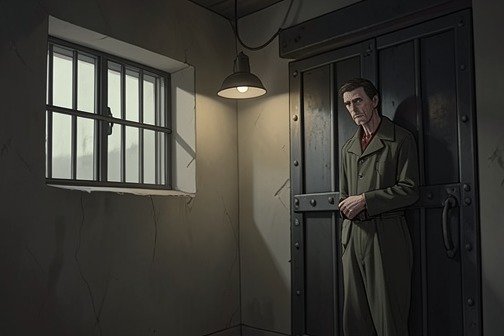
The [1981 IRA hunger strike](entity:event-recall-event-1981-17846cc87bfe) turned the treatment of republican prisoners into a public confrontation over political status, bodily autonomy, and the limits of British authority. It began with [Bobby Sands](entity:character-recall-character-bobby-sands-cb073d403dee) refusing food at [Long Kesh Prison](entity:location-recall-location-long-kesh-prison-fb40da8552b3), but the campaign soon reached beyond the prison walls: Sands stood for election to the [British Parliament](entity:organization-recall-organization-866525c52f6d) while on strike, and his victory made the prisoners’ demand a matter of electoral as well as penal politics. His death, followed by the deaths of nine other hunger strikers, gave the protest a cost that the authorities had not prevented and that the republican movement could not easily contain.
## Origins in the prison struggle
The strike grew from the conflict over the [British government](entity:organization-recall-organization-66a95d21d932)’s decision to treat convicted paramilitaries as ordinary criminals rather than political prisoners. Internment had ended in 1975. The new arrangements placed prisoners in individual cells in the H Blocks at [Long Kesh](entity:location-recall-location-long-kesh-90c48f775ab3), issued them prison uniforms, and denied the special category status that would have recognised their political claims. To the republican prisoners, the uniform embodied a deeper denial: it grouped volunteers who understood themselves as soldiers with ordinary offenders.
Prisoners began the blanket protest in 1976, refusing to wear prison clothing and covering themselves with blankets instead. The dispute escalated as relations with prison staff deteriorated. Beatings during trips to wash and use the toilet helped drive prisoners to remain in their cells; their refusal to use chamber pots led to urine flowing under the doors and into the corridors. The protest then became a dirty protest, with prisoners smearing their excrement on cell walls. Under [Brendan Hughes](entity:character-recall-character-brendan-hughes-1230acbdf136), the prisoners’ commanding officer, this worsening confrontation was not simply a demand over clothing. Their stated claims included the right not to wear uniforms, to associate with other prisoners, and to receive mail. The conditions became degrading and dangerous, but the prisoners’ escalating defiance did not persuade the authorities to grant special category status.
The 1981 strike followed an earlier hunger strike and drew on a wider republican history in which the body could become the final instrument of protest. The book’s account also places it against the earlier experience of [Dolours Price](entity:character-recall-character-dolours-price-f885017ba474) in [Brixton Prison](entity:location-recall-location-brixton-prison-1f2109b23cb2). Price and her sister Marian had refused food to demand transfer to [Northern Ireland](entity:location-recall-location-northern-ireland-c23b7da68651), and the British authorities had force-fed Dolours. That earlier ordeal makes the stakes of the later protest especially stark: hunger striking was not a metaphorical refusal but a struggle in which bodily control, institutional coercion, and the possibility of death met directly.
## Sands begins the strike
On 1 March 1981, Sands stopped eating. His last morsel was a prison-ration orange, which tasted bitter. He began the strike at Long Kesh as a prisoner whose refusal was meant to challenge the classification imposed on him and his fellow republicans. The protest did not remain his alone. Two weeks later another prisoner began a hunger strike, a third followed a week after that, and the number eventually reached ten.
The British government gave no indication that the men’s action would change its position. [Margaret Thatcher](entity:character-recall-character-margaret-thatcher-be3b0ca8af0a) described the strikers as men of violence playing what might be their last card. That response sharpened the central impasse: the prisoners sought recognition of a political identity, while the government maintained its refusal to concede the status they demanded. The strike made that dispute visible through the prisoners’ declining bodies, while the authorities faced the prospect that a death inside the prison could provoke consequences outside it.
## The election changes the stakes
Four days after Sands began refusing food, the death of [Frank Maguire](entity:character-recall-character-frank-maguire-959d5f6d0c78) created a vacancy in the British House of Commons. Maguire had represented Fermanagh and South Tyrone. His brother initially considered standing for the seat, but republicans urged him to reconsider, and Sands became the candidate. The plan was an explicit political gamble: an imprisoned hunger striker running for office could attract attention to the strike, while an electoral victory would force the authorities to confront the public status of a newly elected Member of Parliament.
The campaign marked a departure for a movement with a long tradition of abstentionism. Many republicans had viewed electoral politics as a route to accommodation, and the divisions that produced the Provisional IRA had included suspicion that political participation would dilute revolutionary purpose. Sands’s candidacy did not resolve that argument, but it put it under pressure. He won the by-election on 10 April. The victory established that a prisoner’s claim could carry substantial electoral support and helped make political action part of the movement’s strategy, even as the hunger strike continued.
## Deaths and political consequences
Sands died on 5 May 1981. His death did not end the strike: nine more hunger strikers died after him. The sequence made the consequences of the confrontation cumulative. Each death renewed attention to the prisoners’ demands and intensified the conflict between the government’s refusal to recognise political status and the republicans’ insistence that their imprisoned volunteers were not ordinary criminals.
The authorities did not force-feed the 1981 hunger strikers. The book contrasts that restraint with the earlier forcible feeding of Dolours Price and traces the policy context to [Roy Jenkins](entity:character-recall-character-roy-jenkins-c36c373cec9f)’s announcement concerning hunger strikers. The contrast underscores how the same institutional setting could produce different exercises of power over the protesting body; it does not mean that the prisoners’ demands were granted. Rather, the strike ran its course through death and political pressure instead of compulsory feeding.
The election and the deaths left effects beyond the immediate prison dispute. Sands’s victory demonstrated the political reach of the protest, and nine further deaths made clear that electoral success had not, by itself, ended the confrontation. The strike strengthened the connection between republican politics and electoral campaigning, a turn reflected in [Gerry Adams](entity:character-recall-character-gerry-adams-6d84cf7a2514)’s later embrace of an electoral strategy alongside armed struggle. Its significance therefore lies both in the prisoners’ demand for recognition and in the change it helped make possible: the prison protest became a landmark in the movement’s movement toward political participation, while the deaths remained an enduring measure of the cost of the impasse.
Event 86
1988 Milltown Cemetery attack
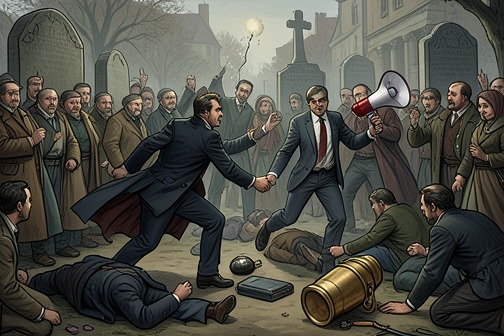
The [1988 Milltown Cemetery attack](entity:event-recall-event-1988-03e027db8ebd) interrupted an IRA funeral with a lethal loyalist assault. Michael Stone, a loyalist from [East Belfast](entity:location-recall-location-east-belfast-88a3f99c3f0f), attacked the mourners; three people were killed by grenades, but Stone did not succeed in hitting [Gerry Adams](entity:character-recall-character-gerry-adams-6d84cf7a2514). The funeral became a scene of sudden violence and pursuit, followed by another large funeral, binding public mourning to the continuing struggle over who could claim, narrate, or contain the conflict’s memory.
## The Funeral and the Attack
The attack unfolded at Milltown Cemetery during a republican funeral. The event’s surviving record is mediated in part through archival footage and contemporary newspaper accounts, which preserve the abrupt turn from ceremony to danger: Stone reached into his jacket, Adams seized a megaphone, and a slow-motion chase ensued. The cited accounts identify Stone as an East Belfast loyalist and report that three people were killed by grenades. The assault did not achieve its apparent aim of hitting Adams, but it made the funeral itself a site of renewed violence.
The sequence matters because the cemetery was not simply a backdrop. A funeral gathers people to mark death and give it a public form; here, the gathering was attacked, and the act of mourning became inseparable from immediate physical danger. The pursuit of Stone, recorded in archival footage, carried the violence beyond the initial assault. The available account does not resolve every detail of the chase, but it makes clear that the attack and its aftermath were witnessed as a public spectacle rather than remaining a hidden operation.
## Adams and the Failed Attack
Adams’s intervention with a megaphone is a distinct turn in the episode. As the crowd’s attention shifted into the chase, he took hold of a means of public address. Stone did not succeed in hitting him. That failure did not make the attack inconsequential: the attempt placed a prominent republican political figure within the violence at a funeral, and the footage preserved both the assault’s disorder and Adams’s visible response.
The episode also sits within a wider tension between armed conflict and political life. In later years, critics of Sinn Féin leadership would argue that the party controlled the story told about republican armed struggle, while the persistence of paramilitary hierarchies could also be understood as helping leaders restrain members and prevent renewed violence. Those later interpretations do not establish the motives of Stone or the precise intentions of anyone at the cemetery. They do, however, show why an attack at a highly visible republican funeral could acquire meaning beyond its immediate casualties: it entered a political landscape where violence, authority, and public memory remained closely entangled.
## Funerals, Memory, and Aftermath
A second large funeral was arranged after the attack. This return to funeral ritual gave the violence a public aftermath: death was not only reported but commemorated in another mass gathering. The recurrence underscores a pattern central to the book’s treatment of the conflict, in which funerals and other acts of remembrance became part of the struggle over how the past would be understood. The cemetery’s role in the episode was therefore both immediate and enduring: it was the site of an assault and a place where the consequences were publicly mourned.
The book frames the aftermath of the Troubles as an unresolved contest over memory. The [Good Friday Agreement](entity:event-recall-event-good-friday-agreement-f0a8e2fc0bef) created power-sharing rather than a settlement in which one side emerged triumphant, and there was no formal process for deciding how the conflict should be commemorated or understood. In that context, the Milltown attack stands as more than a violent interruption of a funeral. Its images and reports preserve an event that later political narratives could not simply absorb into a single agreed account. The funeral, the failed attack on Adams, the chase, and the second gathering remain linked as parts of a public history in which mourning and political interpretation continued side by side.
## Place in the Wider Conflict
The attack’s later resonance is sharpened by the contrast between [Belfast](entity:location-recall-location-belfast-8a60016bc9a1)’s outward change and the persistence of division. The city centre could appear bustling and cosmopolitan, while neighbourhoods remained divided by religion and peace walls continued to separate communities. Former combatants could guide visitors through Troubles-era flashpoints, turning sites of conflict into destinations for historical recollection. Yet the book also describes the continuing power of political discipline and competing accounts of the past. Milltown’s funeral assault belongs to that unsettled history: an event fixed in footage and press accounts, but remembered within a society that never reached a common verdict on the conflict or its commemorations.
Event 87
1988 killings of two British corporals
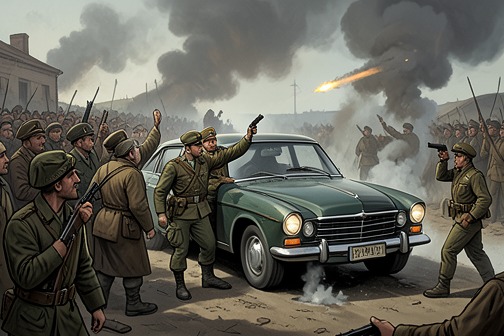
The [1988 killings of two British corporals](entity:event-recall-event-1988-01e31b56683e), Derek Wood and David Howes, unfolded at a republican funeral in [Belfast](entity:location-recall-location-belfast-8a60016bc9a1), where a vehicle’s sudden arrival became the beginning of a fatal confrontation. Wood was twenty-four and Howes twenty-three. The account follows the violence as it gathers around the soldiers, while later evidence and persistent rumours leave open questions about why they were there. The episode is presented not only as a killing, but as an event whose meaning remains entangled with the conflict’s unsettled memory.
## The funeral and the sudden arrival
The funeral brought hundreds of mourners together. Into that gathering, a vehicle accelerated unexpectedly. The account’s abrupt description of its arrival gives the scene a sharp reversal: a public act of mourning becomes a moment of danger before those present can understand what is happening. The event is not narrated as a planned encounter; the suddenness of the vehicle’s appearance is central to the account’s unfolding tension.
The crowd converged on the soldiers. In the confusion, Wood fired into the air. That detail matters to the sequence: the account records a shot fired by one of the men, but does not present it as stopping the crowd or restoring control. Instead, the confrontation continued, and the soldiers were dragged from the vehicle. The text does not supply a settled explanation for every action in the crush; it shows how quickly the soldiers’ presence, the crowd’s response and the violence became inseparable.
## The killing of Wood and Howes
[Father Alec Reid](entity:character-recall-character-father-alec-reid-9312736ed5e7) ran towards the scene as events escalated. His presence connects the violence around the soldiers to the larger funeral gathering: he was not a distant observer but a priest moving into a dangerous crowd. The book recounts the soldiers being thrown from the vehicle and left there. Their deaths were not abstract casualties of the conflict. Wood was twenty-four; Howes was twenty-three, two young men whose ages give the episode a stark human measure amid the disorder.
The account’s details resist a clean, reassuring ending. The crowd’s movement and the soldiers’ exposure are conveyed through a series of sudden actions rather than a detached summary. Reid’s attempt to reach them does not undo what has happened. The passage thus sets the physical urgency of intervention against its limits: someone can run towards the injured, call for help and still arrive in a scene where the violence has already taken its toll.
## Orders, rumours and the limits of certainty
A contemporary account described the soldiers as having defied orders. That claim complicates the question of how they came to be at the funeral, but does not by itself establish what orders they had received or why they were there. Rumours in Belfast persisted that their presence was not accidental and that they might have been engaged in covert surveillance. The book distinguishes those rumours from what the account can establish: they continued to circulate, but are not offered as proven fact.
This distinction matters because the episode sits within a conflict where uncertainty could itself become politically consequential. A disputed explanation for the soldiers’ presence might shape how the event was remembered, but it cannot replace evidence. The narrative holds the two possibilities apart: the soldiers may have arrived by mistake, while rumours suggested a covert purpose. It leaves that tension visible instead of resolving it through conjecture.
## Memory and the unfinished conflict
The book’s treatment of the killings belongs to its wider account of how the Troubles outlasted the fighting as a struggle over memory. Its epigraph states, “All wars are fought twice, the first time on the battlefield, the second time in memory.” The episode’s surviving fragments—a sudden vehicle, a shot into the air, a crowd, two young soldiers and a priest running towards them—acquire significance through the later arguments about what happened and what can be known. The movement from scene to recollection does not make the facts less important; it makes the distinction between documented events and contested explanations essential.
That distinction also belongs to the post-conflict setting the book describes. The [Good Friday Agreement](entity:event-recall-event-good-friday-agreement-f0a8e2fc0bef) established power sharing, but [Northern Ireland](entity:location-recall-location-northern-ireland-c23b7da68651) did not have a formal process for deciding how to commemorate or understand the Troubles. [Gerry Adams](entity:character-recall-character-gerry-adams-6d84cf7a2514) continued to deny that he had been in the IRA, while [Martin McGuinness](entity:character-recall-character-martin-mcguinness-d891600c5db8) acknowledged his membership in the context of an inquiry into [Bloody Sunday](entity:event-recall-event-bloody-sunday-6d124ab1fb60), where he had immunity from prosecution. These examples do not settle the history of the corporals’ killings. They show why accounts of individual events remained part of a broader, unresolved argument about disclosure, responsibility and silence.
The later Belfast described in the book had busy city-centre streets and a Troubles Tour led by former combatants, yet religious division still shaped daily life. More than 90 per cent of children attended segregated primary schools, and peace walls continued to divide neighbourhoods. In that setting, the killings belong to a past that could be presented to visitors as history while still carrying force in the city’s lived divisions. The book also notes the counter-intuitive argument that surviving paramilitary hierarchies could help restrain members and manage the transition away from extreme violence. That argument does not excuse or explain this particular killing; it underscores the difficult balance between containing violence and confronting its legacy. Wood and Howes’s deaths therefore remain both a specific tragedy at a funeral and part of a conflict whose public memory never became settled.
Event 88
Castlereagh break-in
The [Castlereagh break-in](entity:event-recall-event-ef3b89dc0fcf) was an intrusion into [Northern Ireland](entity:location-recall-location-northern-ireland-c23b7da68651)’s intelligence hub that turned the security of secret files into a public controversy. The book reconstructs it through contemporary reports about sharply dressed intruders, a room identified as 2/20, a clue left at the scene, and allegations that police helped the [Irish Republican Army](entity:organization-recall-organization-irish-republican-4bff46a4b2bf) obtain Special Branch material. The surviving account is less a settled explanation than a chain of reported details and competing claims: the breach is clear, but responsibility for enabling it remains contested.
## The intelligence hub and the breach
The episode is situated at [Castlereagh](entity:location-recall-location-castlereagh-6bc76b4e4fbb) security and interrogation centre, a place associated with the collection and handling of intelligence. The book’s cited reporting describes the intruders as three sharply dressed men who walked into [Belfast](entity:location-recall-location-belfast-8a60016bc9a1)’s intelligence hub. A separate report focuses on Room 2/20, locating the break-in within the centre’s internal security and records operation rather than presenting it as an ordinary burglary. The available account does not specify the full contents of the room or establish precisely how the intruders entered and moved through the facility.
The reports’ attention to the gate gives the approach to the building particular significance. The break-in was not described simply as a distant attack on a secure institution: the reporting foregrounded what happened at the threshold, where access and security should have been controlled. Yet the evidence summarized in the book does not resolve how that access was achieved. That gap matters because the central question raised by the episode was not only how material was removed, but whether the breach could have occurred without assistance from within or around the security system.
## Objects, traces, and competing accounts
One report singled out a pair of headphones placed by the intruders. Another said that they left behind only one clue. These details give the raid an investigative shape: the headphones are a concrete object associated with the scene, while the singular clue becomes a point around which accounts of the break-in could turn. The book’s references do not identify the clue or explain what the headphones were used for, so neither can safely be treated as a definitive answer to the question of who planned or facilitated the operation.
The aftermath was quickly framed in more consequential terms than a theft of property. A contemporary report alleged that police helped the Irish Republican Army steal [RUC](entity:organization-recall-organization-845946bf4b89) Special Branch secrets. The book also cites a BBC analysis describing the break-in as an act of war. Those descriptions convey the political stakes attached to the compromised intelligence: if sensitive files had been taken, the consequences could extend beyond the building to informers and intelligence networks. But the allegation of police assistance remains an allegation in the material presented here, not an established finding that resolves how the operation was carried out.
## Public consequences and significance
The break-in made the vulnerability of an intelligence centre itself part of the story. Reports about who entered, what they left behind, and whether police had assisted them pulled the focus from the stolen information alone to the possibility that institutional security had been breached from within. In that sense, the episode became an entanglement of access, intelligence, and suspicion: an operation reported as a raid could also be read as evidence of compromised safeguards, while the available accounts did not settle who was responsible.
Its significance also lies in the kind of uncertainty it left behind. The sources cited by the book offer vivid fragments—the men at the hub, the gate, Room 2/20, the headphones, the clue—but do not supply a complete, verified chain of events. The break-in therefore enters the wider account of Northern Ireland’s conflict not as a fully adjudicated narrative, but as a security scandal whose competing explanations exposed how difficult it was to separate operational fact from allegation.
Event 89
IRA weapons decommissioning
The [Irish Republican Army](entity:organization-recall-organization-irish-republican-4bff46a4b2bf)’s weapons decommissioning was a decisive material break with armed struggle: in 2005, the organisation’s arms were reported destroyed. Yet the removal of weapons did not itself resolve the disputed history of the conflict. In the book’s account, decommissioning stands at the intersection of a long shift from protest to armed resistance and electoral politics, and a peace settlement that offered no comprehensive process for addressing past violence.
## From protest to armed politics
The weapons decommissioning followed decades in which political action and armed struggle repeatedly changed their relationship. The civil-rights march from [Belfast](entity:location-recall-location-belfast-8a60016bc9a1) to [Derry](entity:location-recall-location-derry-d46e7068265a) in January 1969 challenged discrimination against Catholics in [Northern Ireland](entity:location-recall-location-northern-ireland-c23b7da68651), where Catholics were excluded from many good jobs and homes and had little access to executive power. Some of the young marchers believed peaceful protest might redraw the lines of conflict, away from Catholic and Protestant communities and toward a generational contest between the young and the old. The violence they encountered at [Burntollet Bridge](entity:location-recall-location-burntollet-bridge-7dc489249792) helped discredit that hope for [Dolours Price](entity:character-recall-character-dolours-price-f885017ba474). In 1971, she joined the Irish Republican Army, insisting on full participation rather than a supporting role; the organisation’s Army Council then permitted women to join as full members.
The movement’s later turn toward elections made the relationship between political participation and force more complex, not simply resolved. During the 1981 hunger strike, the decision to have [Bobby Sands](entity:character-recall-character-bobby-sands-cb073d403dee) stand in a by-election brought a prisoner protest into electoral politics. Sands’s candidacy challenged a longstanding republican suspicion of parliamentary participation, and his success helped demonstrate the political reach of an electoral strategy. By 1983, [Gerry Adams](entity:character-recall-character-gerry-adams-6d84cf7a2514) was standing for [Westminster](entity:location-recall-location-westminster-797ba54e0a11) and Dolours Price campaigned for him, while Adams said he would boycott Parliament if elected. This history matters to the later laying down of arms because the transition was not a single reversal: protest, armed organisation, prison protest, and electoral activity had all formed part of the movement’s changing repertoire.
## The destruction of weapons
The book places the decommissioning in 2005 and cites a contemporary report whose headline announced that the Irish Republican Army had destroyed all its arms. A catalogue of weapons associated with the process was drawn from that report in The New York Times, making the material scale of the act part of the record. Decommissioning was therefore more than a general declaration of changed intentions: the account presents it as a process involving the destruction of an arsenal.
The book’s notes also point to a gun displayed at a meeting associated with the priest involved in decommissioning, where the discussion provoked insults. The juxtaposition gives the weapon a presence beyond its practical military use. Even as arms were being destroyed, a gun could still be displayed and contested in a setting connected with the process. Decommissioning thus involved not only the removal of weapons but also arguments over what they represented and how the act should be understood. The record identifies the display and the hostile response, without making the displayed gun’s precise status in relation to the destroyed arsenal clear.
## Peace without a settled account of the past
The [Good Friday Agreement](entity:event-recall-event-good-friday-agreement-f0a8e2fc0bef) had concentrated on securing peace and establishing power sharing rather than creating a truth-and-reconciliation mechanism. It provided for the release of paramilitary prisoners held at the time of the agreement and capped at two years any future sentences for conflict-related crimes. But it did not establish a general exchange of truthful testimony for legal immunity, or another unified process for accounting for the violence. The Irish Republican Army’s decommissioning consequently took place within a peace settlement that could change political and security arrangements without resolving how the past would be investigated or remembered.
There was a limited exception for people who voluntarily supplied information to help recover the remains of the disappeared, under legislation passed in 1999. That provision did not amount to a general amnesty for conflict-related crimes. The book stresses that unsolved killings remained open criminal cases, so former paramilitaries and former soldiers could still face prosecution. In 2012, David Cameron acknowledged what he called shocking levels of state collusion; the absence of a comprehensive transitional process left such matters to investigations, inquests, and prosecutions conducted case by case. Decommissioning could mark a practical and political break with armed activity, but it could not close those cases or decide questions of responsibility.
## Significance
The event’s significance lies partly in the contrast between a definite material act and an unresolved historical reckoning. Weapons could be destroyed and the armed organisation could move away from military action, while disputes over testimony, justice, and the meaning of past violence continued. The book’s wider account makes clear that peace was not the same as agreement about what had happened: the Good Friday Agreement created a power-sharing framework, but left the past without a single agreed mechanism for accounting for it.
That distinction also gives the display of a gun at a decommissioning-related meeting its force. The weapon could be treated as an object to be destroyed, but it remained capable of carrying political meaning and provoking confrontation. The process therefore marks neither a simple disappearance of the conflict’s legacy nor a complete resolution of it. It records the end of an arsenal as an instrument of organised struggle, while showing that the questions attached to that struggle survived the weapons themselves.
Event 90
Boston College subpoenas

The [Boston College subpoenas](entity:event-recall-event-eaaf5a3440c1) were a legal battle over whether interviews gathered for the [Belfast](entity:location-recall-location-belfast-8a60016bc9a1) Project could be compelled for use in a criminal investigation—and whether an archive’s promise of confidentiality could survive a court order. The case exposed a sharp divide between what oral histories might reveal about the past and what courts could demand, identify and admit as evidence. It also showed that the archive’s protections were less secure than its interviewees had been led to believe.
## An archive built on secrecy
The subpoenas arose from a project devised by [Ed Moloney](entity:character-recall-character-ed-moloney-9d7f20a1f93b), who proposed that BC collect oral histories from people who had taken part in the Troubles. Admitting membership in the [Irish Republican Army](entity:organization-recall-organization-irish-republican-4bff46a4b2bf) could expose former militants to prosecution, while speaking about paramilitary activity could bring the stigma and danger attached to being called a tout. Moloney’s solution was to interview participants while they were alive but seal their testimony until after their deaths, when they would no longer face prosecution or retaliation from former comrades.
The project’s method was designed to reach people who would be unlikely to speak to conventional academic researchers. [Anthony McIntyre](entity:character-recall-character-anthony-mcintyre-a9506a6098eb), a former IRA member and prisoner known as Mackers, approached republicans who had become estranged from [Gerry Adams](entity:character-recall-character-gerry-adams-6d84cf7a2514). He used encrypted email, carried a digital MiniDisc recorder, and met participants for repeated sessions that could total ten hours or more. Recordings and transcripts went to the [Burns Library](entity:organization-recall-organization-burns-library-e3e94d38888b)’s Treasure Room. In the archive’s working materials, participants were identified by letters rather than names; only separate contracts linked those codes to individuals.
That arrangement depended not only on secure storage but also on confidence in the confidentiality promise. When Ed Moloney prepared the participant contracts in early 2001, he suggested that BC’s lawyers review the wording. Bob O’Neill said he would send it to the university’s lawyers, but the agreements were never reviewed by them. They also lacked a qualification explaining that a confidentiality promise could not necessarily withstand a court order. The omissions became consequential when investigators sought access to the archive.
## The subpoenas and the first disclosure
The demands arose in connection with the [Police Service of Northern Ireland](entity:organization-recall-organization-police-service-o-88a3814d22b2)’s investigation of the abduction and murder of [Jean McConville](entity:character-recall-character-jean-mcconville-defffff134a9). In May 2011, BC agreed to turn over recordings of [Brendan Hughes](entity:character-recall-character-brendan-hughes-1230acbdf136), who had died and whose testimony had already been published, in edited form, in [Voices from the Grave](entity:object-recall-object-voices-from-the-grave-59589fc5bdfb). The material surrendered to the authorities was not similarly redacted: Hughes’s transcripts and recordings were unredacted. Ed Moloney objected that investigators now possessed information on which they could act and feared that the release would lead to demands for the identities of other interviewees.
The difference between a published book and a raw archive mattered. Voices from the Grave had been edited to shield identities for legal and security reasons; the surrendered recordings had not. The disclosure therefore did more than confirm that a deceased participant’s account was accessible. It demonstrated how much more an unredacted interview could reveal, and how little the project’s confidentiality arrangements could control what happened once a court compelled the archive to cooperate.
BC agreed to contest a later subpoena concerning interviews relevant to McConville’s disappearance. In court, the project’s defenders argued that its purpose was academic and that its commitments to participants should be respected. But the underlying promise had never been made legally secure in the contracts. The case thus challenged the archive on two fronts: the authorities sought evidence for an investigation, while the project’s own practices left doubt about what protections it had actually established.
## Identifying the interviews
A judge asked McIntyre to help determine which coded interviews discussed McConville. McIntyre refused, arguing that doing so would cross the boundary between academic research and police investigation. O’Neill also declined, saying he had not read the interviews. Over several days during [Christmas](entity:time-recall-time-0cffe7da2c4d), Judge William Young read the republican transcripts himself. He found six participants who mentioned McConville, although one had referred to her only in passing, and authorized the release of recordings associated with five participants.
The dispute over [Dolours Price](entity:character-recall-character-dolours-price-f885017ba474)’s testimony revealed a consequential distinction within the archive. McIntyre had interviewed Price for roughly fifteen recorded hours, and those conversations did not mention McConville. Ed Moloney and McIntyre had therefore maintained that her Belfast Project interviews contained no material that could justify the subpoena. But Price had also given Moloney a separate, detailed account of McConville’s disappearance. Those recordings were not part of McIntyre’s interview with her. The claim about what was absent from one set of tapes was technically accurate, but it did not describe everything Price had recorded for the archive.
The distinction illustrates why an oral-history archive cannot be treated as a single, uniform body of testimony. Who conducted an interview, what the participant discussed, and which recording the court examined all shaped what could be said about its contents. A denial about one interview did not settle the question of what existed elsewhere in the archive.
## Appeals, codes and the limits of proof
Moloney and McIntyre appealed the disclosure decision to the [United States](entity:location-recall-location-united-states-2f533bc8d0b9) Court of Appeals for the First Circuit and lost. A stay temporarily barred BC from handing over the interviews while they sought further review, but in spring 2013 the [Supreme Court of the United States](entity:organization-recall-organization-supreme-court-of-1add93799b76) refused to hear their case. The legal contest had failed to establish the broad protection the project’s interviewees had expected.
The archive’s coded identities created a separate evidentiary problem in the prosecution of [Ivor Bell](entity:character-recall-character-ivor-bell-e3c8d255e4f4). One Belfast Project participant, identified as Z, was said by prosecutors to have acknowledged a role in the McConville murder. Bell’s lawyer argued that the tapes were unreliable and inadmissible, and that Bell was not Z. BC had lost the separate form linking Z’s code name to the interviewee’s real identity, leaving prosecutors without that document to prove the identification. A voice analyst later testified that Z was likely Bell; a police detective who had heard the interview interpreted its account differently from the defence. The recording could be historically suggestive while its identity and meaning remained disputed in court.
The contrast sharpened a central difficulty in using oral history as criminal evidence: a participant’s account, its identification, its reliability and its admissibility are separate questions. The subpoenas compelled access to material that the project had gathered for posterity, but they did not make every allegation in it legally provable. The case left the Belfast Project’s promise of silence compromised, while the testimony’s capacity to settle responsibility remained limited.
Event 91
Belfast–Derry civil rights march
The [Belfast–Derry civil rights march](entity:event-recall-event-belfast-derry-civil-rig-fdb079af4597) was a student-led protest against systemic discrimination against Catholics in [Northern Ireland](entity:location-recall-location-northern-ireland-c23b7da68651), but it became more than a journey between two cities. As unionist opposition and violence confronted the marchers, the event exposed the vulnerability of peaceful protest and marked a decisive turning point in [Dolours Price](entity:character-recall-character-dolours-price-f885017ba474)’s political trajectory. The march’s history joined a public demand for equal rights to a private conversion: Price came to see armed struggle, rather than peaceful demonstrations, as the route to change.
## Background and Aims
On the cold, clear morning of 1 January 1969, students assembled outside City Hall in [Donegall Square](entity:location-recall-location-donegall-square-84b8dc3fa653), central [Belfast](entity:location-recall-location-belfast-8a60016bc9a1). They planned to walk roughly seventy miles to [Derry](entity:location-recall-location-derry-d46e7068265a) over several days, protesting the systematic discrimination Catholics faced in Northern Ireland. Partition had left Protestants a majority within Northern Ireland but a minority across the island, while Catholics were a minority in the six counties but a majority on the island as a whole. Each community could experience itself as embattled, though the imbalance of political and economic power within Northern Ireland was stark.
Northern Ireland had about a million Protestants and half a million Catholics. Catholics were often excluded from good housing and jobs and lacked the political power to improve their circumstances. The devolved government at [Stormont](entity:location-recall-location-stormont-729677d071cf) had existed for half a century without a Catholic holding executive office. Exclusion from shipbuilding and other attractive professions helped drive Catholics to emigrate to England, America, or Australia. Despite a Catholic birth rate approximately twice that of Protestants, the Catholic population remained virtually static in the three decades before the march, as emigration drained the community.
The marchers’ chosen method was peaceful protest, but some hoped that confrontation might expose injustice to a wider audience. The televised police crackdown on the Selma march had suggested that an overreaction could itself provoke change. In 1969, when young people around the world seemed to be challenging established authority, the students imagined that Northern Ireland’s divisions might be recast as a conflict between young and old, or between the future and the past, rather than simply Catholics and Protestants or republicans and loyalists.
## Route and Confrontation
The procession encountered opposition as it passed through Protestant villages that were unionist strongholds. Local men carrying sticks blocked the route, and police accompanying the marchers directed them around the villages. Men associated with Major Bunting’s side walked alongside, taunting the protesters. One carried a Lambeg drum; its heavy beat summoned other counterprotesters from nearby homes. The march thus proceeded under pressure, with the police cordon offering protection while also requiring the demonstrators to detour.
On the fourth and final day, at a crossroads ten miles outside Derry, the procession had grown to hundreds. A man with a megaphone warned, “There’s a good possibility that some stones may be thrown.” He asked, “Are you prepared to accept the possibility of being hurt?” The marchers answered, “Yes!” Their response expressed a willingness to bear injury for the cause, but it also sharpened the danger gathering along the route. The march culminated in the ambush at [Burntollet Bridge](entity:location-recall-location-burntollet-bridge-7dc489249792), an encounter that gave the protesters’ hopes of peaceful resistance a violent counterpoint.
## From Protest to Armed Struggle
For Dolours Price, the march and the attack at Burntollet Bridge altered the meaning of political action. She had hoped that peaceful resistance could overcome injustice; after the ambush, she concluded that marching would not convert those confronting the movement. She later described joining the IRA as a return to the convictions on which her family’s republican legacy had been built. In 1971, she approached a local commander and asked to join; her formal induction took place in the front room of the Price family home. Her sister Marian joined as well.
Price’s insistence that women serve as fighting soldiers rather than in an auxiliary role also had consequences for the organization. After she rejected an offer to join [Cumann na mBan](entity:organization-recall-organization-cumann-na-mban-b3f9855e0907), the Provisionals’ Army Council decided that women could join as full members for the first time. Her republican background and determination likely helped drive the decision; Price also thought the mass imprisonment of men may have made admitting women necessary. The march did not alone determine these later developments, but the experience at Burntollet Bridge was the stated turning point in Price’s own rejection of nonviolence.
## Significance and Later Political Change
The march stands at the beginning of a longer contest over methods as well as rights. Price’s path from peaceful protest to IRA membership shows how violence could narrow the space in which nonviolent action seemed effective for an individual participant. Yet the later history of republican politics was not a simple, one-way progression from protest to armed struggle. During the 1981 hunger strike, republicans put [Bobby Sands](entity:character-recall-character-bobby-sands-cb073d403dee) forward for a parliamentary by-election, a departure from a movement long wary of electoral politics. In 1983, Price canvassed for [Gerry Adams](entity:character-recall-character-gerry-adams-6d84cf7a2514), drove voters to polling stations, and supported his campaign for [West Belfast](entity:location-recall-location-west-belfast-27ebba5f4bec) even though he said he would boycott [Westminster](entity:location-recall-location-westminster-797ba54e0a11) if elected.
Those later turns do not erase the march’s immediate significance. Its route made discrimination visible as a political grievance and made the risks of asserting that grievance visible too. In the book’s account, the march is at once a collective act of peaceful protest and a personal hinge in Price’s story: the hope that public demonstration might change minds gave way, after Burntollet Bridge, to her decision to join an armed organization.
Event 92
Burntollet Bridge ambush
The [Burntollet Bridge ambush](entity:event-recall-event-burntollet-bridge-ambus-f2cf8809f70e) was an organized assault on civil-rights marchers on the final day of their January 1969 journey from [Belfast](entity:location-recall-location-belfast-8a60016bc9a1) to [Derry](entity:location-recall-location-derry-d46e7068265a). The attack left marchers injured while they held to a pledge not to fight back; for [Dolours Price](entity:character-recall-character-dolours-price-f885017ba474), it also became a lasting rupture between the hope of peaceful persuasion and the conviction that [Ireland](entity:location-recall-location-ireland-3247a2c8bcbe)’s political conditions would not change through marching alone.
## Background and the march
On 1 January 1969, student protesters gathered outside City Hall in [Donegall Square](entity:location-recall-location-donegall-square-84b8dc3fa653), Belfast, to begin a march of roughly seventy miles to Derry. Their several-day procession protested systemic discrimination against Catholics in [Northern Ireland](entity:location-recall-location-northern-ireland-c23b7da68651). The political imbalance was stark: the region had about a million Protestants and half a million Catholics, yet Catholics were often excluded from good jobs and housing and had little access to executive power. In the half-century of devolved government at [Stormont](entity:location-recall-location-stormont-729677d071cf), no Catholic had held executive office. Many Catholics left Northern Ireland to find work elsewhere, helping keep their population nearly static despite a birth rate approximately twice that of Protestants.
The marchers’ understanding of their protest was shaped by international examples of peaceful resistance, including the Selma march in the [United States](entity:location-recall-location-united-states-2f533bc8d0b9). Some believed that a violent response to nonviolent demonstrators might expose injustice and help bring change. There was also a hope that political divisions could be reframed: not simply as Catholics against Protestants or republicans against loyalists, but as young people challenging an older order. That expectation faced a harsher test as the route passed through unionist strongholds. Local men gathered to block the march, while police escorting the procession directed it around villages. At one point, men aligned with [Ronald Bunting](entity:character-recall-character-ronald-bunting-f77654eeb55b)’s following taunted the marchers as a Lambeg drum sounded, its heavy beat drawing more counter-protesters.
By the march’s fourth and final day, hundreds of people were moving along the road toward Derry. The night before, while marchers slept on the floor of a hall in Claudy, Ronald Bunting had assembled loyalist followers in Derry. At a meeting in the Guildhall, [Ian Paisley](entity:character-recall-character-ian-paisley-730e426351e6) portrayed the civil-rights demonstrators as IRA men in disguise and urged his audience to defend the city. Bunting then encouraged those wishing to take a manly role to arm themselves with whatever protective measures they considered suitable. During the night, men gathered large rocks from a local quarry and placed them at intervals along the route, preparing an ambush near [Burntollet Bridge](entity:location-recall-location-burntollet-bridge-7dc489249792), where the road narrowed beside the River Faughan.
## The ambush and its immediate aftermath
On the final morning, [Eamonn McCann](entity:character-recall-character-eamonn-mccann-8c41ef953607) reminded the marchers that they had committed themselves to nonviolence and said that the day would test that promise. As the procession moved along a narrow country lane toward Burntollet Bridge, hedges hemmed in the road and the crossing over the River Faughan formed a bottleneck. A man wearing a white armband appeared on the rising ground, gesturing with his arms; others emerged along the ridgeline, also marked with white bands. With hundreds of marchers crowded below and little room to escape, stones began to fall.
Attackers appeared from the fields and lanes on both sides, throwing stones, bricks and milk bottles. The marchers at the front ran toward the bridge while those behind tried to retreat from the barrage. [Dolours Price and Marian Price](entity:relation-recall-relation-dolours-price-and-ma-f3ddddaf4796) were caught in the middle. They climbed over a hedge, but the assault continued: men ran down from the higher ground carrying cudgels, crowbars, lead pipes and wooden laths. Some wore motorcycle helmets; others wielded planks studded with nails. Marchers covered their heads with their coats, stumbled through the confusion and reached for one another as the attackers struck them.
Those driven into the fields were knocked down and kicked, in some cases until they lost consciousness. One attacker hit a young girl on the head with a spade. Two newspaper photographers were beaten and stoned, and the crowd took their film and threatened them against returning. Ronald Bunting, who had helped lead the loyalist gathering, was present amid the violence, swinging his arms as though conducting it; his coat sleeves were marked with blood. He seized a protest banner, which was set alight. The assault thus reached beyond the bodies of the marchers to their public record and symbols: photographers were prevented from keeping their images, and the demonstrators’ banner was destroyed.
The marchers did not fight back. Price found herself among young people whose faces were cut and whose eyes were running with blood. She waded into the icy river; in the distance, marchers were being pushed from the bridge into the water. There she looked directly at an attacker holding a club. The hatred she saw in his glazed eyes remained a moment she returned to throughout her life. Her attempt to hold to nonviolence did not soften the encounter or produce recognition between the opposing sides; in her later understanding, the look revealed the limits of persuasion by peaceful demonstration.
A Royal Ulster Constabulary officer eventually waded into the river to break up the attack. Price grabbed his coat and would not let go as he helped her to safety. Yet the intervention did not dispel her fear: although dozens of officers were present, most had done little to stop the beating. It was later alleged that the attackers’ white armbands helped their police allies distinguish them from the marchers; many of Ronald Bunting’s men were members of the police auxiliary, the B-Specials. The episode therefore raised, for Price, not only the question of who had attacked the march, but also whether the police presence had protected the marchers at all.
On the way to Altnagelvin Hospital in Derry, Price cried, caught between relief, frustration and disappointment. She and Marian eventually returned to Belfast bruised and battered and told their mother, [Chrissie Price](entity:character-recall-character-chrissie-price-f0fd93015262), what had happened. Chrissie’s response was to ask why they had not fought back. The question sharpened the conflict between the marchers’ chosen discipline and the violence inflicted upon them: their refusal to retaliate had been a pledge, but it offered no immediate protection from the attackers.
## From protest to armed struggle
The ambush became a turning point in Dolours Price’s understanding of what peaceful protest could achieve. She later connected her change of mind to the moment she met the attacker’s gaze in the river: she concluded that she would not convert her opponents by marching, and that no amount of peaceful demonstration would bring the change Ireland needed. She came to describe joining the [Irish Republican Army](entity:organization-recall-organization-irish-republican-4bff46a4b2bf) as a return, a homecoming to convictions rooted in her family’s republican history. The attack did not by itself explain the conflict’s turn toward armed struggle, but the book presents it as a decisive experience in Price’s own political trajectory.
Price returned to school after the march and later enrolled at St Mary’s Teacher Training College, having failed to gain admission to art school. In 1971, she approached a local commander and asked to join the Irish Republican Army. Her induction took place in the front room of the family home on Slievegallion Drive: she raised her right hand, pledged to promote the organisation’s objectives, and promised obedience to superior officers. Her mother sat in the next room with a cup of tea, apparently unaware of the ceremony. [Marian Price](entity:character-recall-character-marian-price-658a98519733) also joined, and the sisters continued attending school while disappearing at night and returning late. Their father later said that after Burntollet Bridge they were never the same.
Price’s experience also exposed a limit within the republican movement itself. [Seán Mac Stíofáin](entity:character-recall-character-se-n-mac-st-of-in-855d1ac623f6) initially proposed that she join [Cumann na mBan](entity:organization-recall-organization-cumann-na-mban-b3f9855e0907), the women’s auxiliary, but she rejected a supporting role and insisted on serving as a fighting soldier. A special meeting of the Provisional Army Council then authorised women to join as full members for the first time. The decision was probably driven in substantial part by Price’s ambition and republican lineage; she also speculated that the mass imprisonment of men had made the change necessary. In this way, the march’s aftermath extended beyond the injured protesters: for Price, it marked a passage from nonviolent demonstration into armed commitment, while her insistence on equal participation helped alter the organisation’s rules.
## A rupture, not a complete explanation
The ambush became a vivid measure of the distance between the marchers’ belief that public, disciplined protest could expose injustice and the violence they encountered on the road. Its force in Dolours Price’s story lies not in proving that armed struggle was inevitable, but in showing how one experience could overturn her confidence in peaceful persuasion. Her later decision to join the Irish Republican Army followed within a broader political crisis and a family history of republican commitment; Burntollet Bridge gave that shift a personal point of rupture. The event therefore stands both as an assault on a civil-rights march and as a remembered turning point whose meaning continued to shape one participant’s political life.
Event 93
Falls Road curfew
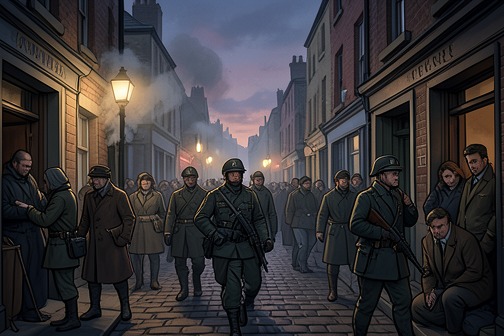
The [Falls Road curfew](entity:event-recall-event-falls-road-curfew-34290edbaef1) was an episode in [Belfast](entity:location-recall-location-belfast-8a60016bc9a1) during the Troubles, dated to July 1970. The book’s references establish its place in the city’s conflict chronology, while its broader account shows why such events remained consequential: the violence ended without a decisive victor, and the history of the conflict continued to be disputed and incompletely acknowledged.
## Place and Historical Setting
The curfew is situated in Belfast’s history of deepening division. The book traces the outbreak of rioting in the summer of 1969, the relocation of Catholic residents, and the city’s increasingly segregated geography before listing the Falls Road curfew in July 1970. It places the episode between that earlier upheaval and the rising casualty figures of 1969–72, a period in which Catholic neighbourhoods experienced a wartime siege mentality.
## Place in the Conflict
The reference to the curfew gives a date and a location, but does not detail its orders, duration, participants, or immediate effects. Its position in the chronology nevertheless locates it among the events through which Belfast’s conflict took shape. The book also identifies [Bloody Friday](entity:event-recall-event-bloody-friday-a9adac883a82) in July 1972 as a later episode in the city’s history, and notes that 1972 was the Troubles’ bloodiest year; these later events belong to the wider chronology, not to the curfew itself.
## Memory and the Unsettled Past
The book’s account of the period after the [Good Friday Agreement](entity:event-recall-event-good-friday-agreement-f0a8e2fc0bef) places episodes such as the curfew within a continuing struggle over how the Troubles should be remembered. The agreement established power-sharing, but neither side emerged triumphant, and there was no formal process for deciding how the conflict should be commemorated or understood. The historical record remained shaped by silence and political narratives: [Gerry Adams](entity:character-recall-character-gerry-adams-6d84cf7a2514) refused to acknowledge that he had been in the IRA, while [Martin McGuinness](entity:character-recall-character-martin-mcguinness-d891600c5db8) acknowledged his membership in 2001 in the context of the [Bloody Sunday](entity:event-recall-event-bloody-sunday-6d124ab1fb60) inquiry.
## Significance
The curfew’s documented place in the book is brief, but its chronology connects it to a city transformed by rioting, displacement, and communal division. The book’s framing of the aftermath adds a further significance: the conflict’s end did not settle the meaning of its events. Belfast continued to carry the past in contested accounts, even as public life moved into a new political arrangement.
Event 94
Operation Demetrius
[Operation Demetrius](entity:event-recall-event-operation-demetrius-3edd357bfdb8) was the August 1971 internment sweep in [Northern Ireland](entity:location-recall-location-northern-ireland-c23b7da68651). Its defining feature in the book’s account is the selectivity of its target: the sweep was directed only at Catholics. The operation belongs to the history of internment without trial, but the evidence presented here establishes that central fact rather than detailing arrest totals, individual cases, or the operation’s precise procedures.
## Background and [Counterinsurgency](entity:concept-recall-concept-e6b1ad82db77)
The book situates internment within [Frank Kitson](entity:character-recall-character-frank-kitson-037047748b80)’s broader counterinsurgency career. Before and during his work in Northern Ireland, Kitson had developed ideas about counter-gang operations and low-intensity warfare; he commanded the 39 Airportable Brigade, and the account explicitly connects his role to internment. This context places the sweep within a military approach to the conflict, while the available evidence does not identify Kitson as its sole planner or specify his precise operational responsibility for it.
The selectivity of the sweep is essential to its significance. Because it was directed exclusively at Catholics, internment was not presented as a measure applied evenly across Northern Ireland’s communities. That distinction situates the operation within the divisions of the conflict and shaped the policy’s place in the historical record.
## Duration and Political Afterlife
Internment officially ended in late 1975, but its end did not settle how the violence of [The Troubles](entity:state-recall-state-the-troubles-358150e12a16) would be investigated or remembered. The book describes the [Good Friday Agreement](entity:event-recall-event-good-friday-agreement-f0a8e2fc0bef) as having no general truth-and-reconciliation mechanism and no broad exchange of testimony for amnesty. Its limited amnesty applied to people who voluntarily provided information to help recover the bodies of the disappeared; it did not establish a comprehensive process for accounting for conflict-related crimes.
The resulting absence of a common framework left old cases open to police investigation and prosecution, while recollections of the conflict remained contested. In the book’s wider account, the peace settlement’s focus on the future did not resolve disputes over the past. Operation Demetrius therefore sits within a history whose consequences outlasted the policy itself: the official end of internment did not end arguments about responsibility, justice, and the meaning of past violence.
## Memory and Historical Narrative
The book’s epigraph states that wars are fought first on the battlefield and again in memory. That idea informs its treatment of Northern Ireland after the ceasefires and peace agreement: the past remains active through public commemoration, political narratives, and disagreements over who may speak about the conflict. The [Belfast](entity:location-recall-location-belfast-8a60016bc9a1) Project is presented as an attempt to address the lack of a formal truth process by recording accounts from former paramilitaries, but secrecy and fear shaped who would participate and what could safely be said.
The operation’s place in this larger narrative is not reduced to a single military episode. Its exclusive targeting of Catholics is a concrete historical distinction; its later significance lies in how that history remains part of a wider struggle over evidence and accountability. The book’s account emphasizes that ending an emergency policy and reaching a political settlement did not, by themselves, produce an agreed account of what had happened.
Event 95
1972 IRA ceasefire (June)
The June [1972 IRA ceasefire](entity:state-recall-state-1972-ira-ceasefire-bd076863470a) was a temporary interruption of the armed conflict, not its resolution. The chronology places it amid secret talks with the [British government](entity:organization-recall-organization-66a95d21d932) in July and ends with [Seán Mac Stíofáin](entity:character-recall-character-se-n-mac-st-of-in-855d1ac623f6) announcing that the ceasefire was over, making its short duration central to its significance.
## Background to the Ceasefire
The book sets the ceasefire against a longer failure to secure political equality through protest. On 1 January 1969, student demonstrators assembled at [Belfast](entity:location-recall-location-belfast-8a60016bc9a1) City Hall to march to [Derry](entity:location-recall-location-derry-d46e7068265a) against discrimination against Catholics in [Northern Ireland](entity:location-recall-location-northern-ireland-c23b7da68651). Catholics faced exclusion from desirable jobs and housing, while no Catholic had held executive office at [Stormont](entity:location-recall-location-stormont-729677d071cf) in the preceding half-century. The marchers’ hope that peaceful action could shift the political balance belonged to a moment when young people imagined that the conflict might be recast as a struggle between future and past rather than between religious communities.
That hope did not hold for everyone. After the attack at [Burntollet Bridge](entity:location-recall-location-burntollet-bridge-7dc489249792), [Dolours Price](entity:character-recall-character-dolours-price-f885017ba474) concluded that peaceful protest would not bring the change she believed [Ireland](entity:location-recall-location-ireland-3247a2c8bcbe) needed. In 1971 she joined the Provisional IRA, taking an oath to promote its objectives and obey orders. Her path from student protest to armed membership illustrates the political and organizational landscape in which the ceasefire later occurred; it does not, by itself, establish the reasons for the IRA leadership’s decision to call one.
## The Pause and the July Talks
The book’s chronology identifies a Provisional [IRA ceasefire](entity:state-recall-state-ira-ceasefire-30e7cb5cd2cc) in June 1972 and records secret talks with the government the following month. It does not specify the ceasefire’s exact start date, its terms, or the sequence of particular negotiating sessions. The distinction matters: the ceasefire and the July talks are linked in the account by chronology, but the available evidence does not establish that any specific proposal or agreement caused the pause.
The event therefore appears not as a settlement but as a brief interval within an unresolved conflict. The same chronology records that the Provisional IRA was also in conflict with the Official IRA and that its armed campaign continued to shape events in the period. The ceasefire did not mark a lasting departure from armed struggle.
## End of the Ceasefire
In July 1972, Seán Mac Stíofáin announced the end of the ceasefire. The account does not supply the announcement’s wording or explain the decision’s immediate cause, so neither should be inferred. What it does establish is the sharp reversal: a pause in June was followed within weeks by a public declaration that it was over.
That ending defines the ceasefire’s historical weight. It briefly interrupted the conflict while secret talks took place, but it did not produce a durable cessation of violence or a political settlement. In the book’s wider chronology, the episode belongs to a conflict that would later move through prison protest and electoral strategy as well as armed action; those later developments underscore that the June pause was one moment in a longer, unsettled process.
Event 96
Secret talks with the British government (July 1972)
The [Secret talks with the British government (July 1972)](entity:event-recall-event-1972-9d3174d09f6f) were a discreet contact between the [Irish Republican Army](entity:organization-recall-organization-irish-republican-4bff46a4b2bf) and the [British government](entity:organization-recall-organization-66a95d21d932) amid an unsettled ceasefire. Their significance lies in that juxtaposition: a movement engaged in armed conflict was also in communication with the government it opposed. The available evidence establishes the talks and associates them with [Gerry Adams](entity:character-recall-character-gerry-adams-6d84cf7a2514) and [Seán Mac Stíofáin](entity:character-recall-character-se-n-mac-st-of-in-855d1ac623f6), but does not disclose what was said or agreed.
## Background and Setting
The talks took place in the summer of 1972, after the Irish Republican Army’s June ceasefire. That pause formed the immediate political context for the July contact; it did not, on the evidence available, amount to a settled end to the conflict. The indexed chronology records the talks and, later in July, Seán Mac Stíofáin’s announcement ending the ceasefire. It does not establish the talks as the cause of that announcement.
The wider conflict had grown from conditions that made peaceful protest appear to many Catholics inadequate. In 1969, students marched from [Belfast](entity:location-recall-location-belfast-8a60016bc9a1) to [Derry](entity:location-recall-location-derry-d46e7068265a) against discrimination in [Northern Ireland](entity:location-recall-location-northern-ireland-c23b7da68651), where Catholics faced exclusion from desirable jobs and housing and had little access to executive power. The marchers’ early expectation that peaceful resistance might force change gave way, for some participants, to a conviction that armed organization was necessary. This history helps situate the talks within a conflict that had moved from public protest to armed action, but it does not explain the specific bargaining position of either side in July 1972.
## Participants and the Limits of the Record
The book’s index connects Gerry Adams with secret talks with the government in July 1972 and separately records Seán Mac Stíofáin’s participation in secret talks that month. It identifies these republican leaders as associated with the contact, but the available material does not provide a complete delegation list, identify the government representatives, or describe the location or format of the meeting. It therefore supports a cautious account of the talks’ existence and political setting, not a reconstruction of their proceedings.
The distinction matters because secrecy is part of the event’s historical character. The record supplied here names the contact without preserving its substance: there are no documented proposals, exchanged commitments, or direct quotations from the meeting. Any claim about its terms or whether either side regarded it as successful would go beyond the evidence.
## Ceasefire and Aftermath
The July chronology places the contact between the IRA’s June ceasefire and Mac Stíofáin’s announcement that the ceasefire had ended. That sequence shows how narrow the opening for negotiation was. It does not show that the talks themselves produced the breakdown, nor does the evidence specify what intervened between the meeting and the announcement.
The episode consequently stands less as a fully documented negotiation than as evidence that secret political contact occurred alongside continuing armed conflict. Later developments in republican politics—including electoral activity associated with Adams—belong to a longer shift in strategy, not to an outcome that can be attributed to these talks on the evidence available. The meeting’s documented significance is the fact of contact, and the brief, unresolved interval it occupied between ceasefire and renewed confrontation.
Event 97
Bloody Friday
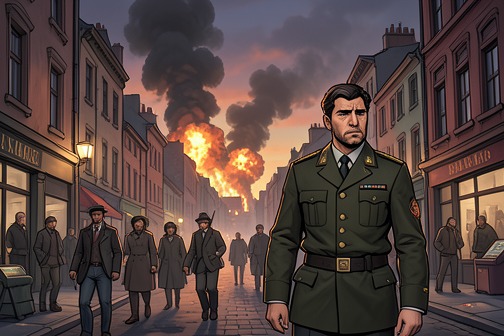
[Bloody Friday](entity:event-recall-event-bloody-friday-a9adac883a82) was a Provisional IRA bombing operation in [Belfast](entity:location-recall-location-belfast-8a60016bc9a1) in July 1972, remembered not only for bombs exploding across civilian areas but for the unresolved question of who bore responsibility for the decisions behind it. [Brendan Hughes](entity:character-recall-character-brendan-hughes-1230acbdf136), who oversaw the operation and later described himself as the man on the ground, said that [Gerry Adams](entity:character-recall-character-gerry-adams-6d84cf7a2514) had made the decisions. Their competing positions—Hughes’s anguish over the deaths and Adams’s carefully qualified account of civilian casualties—turned the event into a lasting conflict over memory as well as command.
## Background and Operation
Bloody Friday took place in a year the book identifies as the bloodiest of [The Troubles](entity:state-recall-state-the-troubles-358150e12a16). The Provisional IRA had been targeting commercial property, and Bloody Friday became the most consequential instance of that campaign in the evidence presented here: bombs exploded across civilian areas of Belfast, and civilians were killed. The scale and setting made the distinction between intended targets and actual consequences central to the later arguments about the operation.
Hughes was the senior figure who oversaw the bombing operation, but his later account distinguished operational presence from strategic authority. He told interviewer [Anthony McIntyre](entity:character-recall-character-anthony-mcintyre-a9506a6098eb) that he had been on the ground that day, while asserting that Adams was making the decisions. That distinction did not erase Hughes’s role in the operation; it framed the question of responsibility as extending from the person directing events on the ground to the person Hughes said was calling the shots.
## Command and Responsibility
The later accounts did not present a simple division between a remorseful commander and an untroubled political leader. Hughes said that there had been no intention to kill people, and expressed regret about what happened. Adams, asked whether he would justify Bloody Friday, said that he would not justify an action in which civilians were killed and that he regretted such deaths. But he also argued that the Provisional IRA did not have a policy of killing civilians and therefore could not be condemned for accidental killings. The accounts thus converged in professed regret while diverging over what that regret meant and who should answer for the deaths.
For Hughes, command carried a burden that lasted long after the operation: senior officers made choices that could send subordinates and civilians to their deaths. He said that he replayed such events continually. His claim that Adams had made the decisions placed responsibility above the level of the man physically overseeing the operation; it also connected the bombings to the wider strategic leadership of the Provisional IRA. The book does not resolve that dispute as a judicial finding. It presents Hughes’s account as part of the later struggle to assign responsibility for the violence and its consequences.
## Retrospective Testimony
Decades later, Hughes discussed Bloody Friday in a series of interviews with McIntyre for the Belfast Project. The interviews gave an account of the operation from a former participant who had known the movement’s leading figures and had served alongside them. In those conversations, Hughes spoke about the event not as a settled item of military history but as one of the actions for which he remained morally burdened. His insistence that there had been no intention to kill people did not remove his regret; it sat beside his account of the deaths and his claim about who had made the decisions.
The political setting had changed by the time this testimony was gathered. Adams had become a prominent figure in the peace process and denied ever having been in the Provisional IRA. Hughes regarded that denial as a way of evading responsibility for events such as Bloody Friday and leaving former subordinates to carry the moral weight. He described himself as disgusted by that imbalance: in his view, the deaths had not produced the united [Ireland](entity:location-recall-location-ireland-3247a2c8bcbe) that might have offered some rationale for the sacrifices. His later verdict was that, as events had turned out, not one death had been worth it.
## Memory and Aftermath
The dispute over Bloody Friday belongs to a larger problem of accounting for The Troubles after the [Good Friday Agreement](entity:event-recall-event-good-friday-agreement-f0a8e2fc0bef). The agreement established power sharing, but the conflict ended without either side emerging as a clear victor and without a formal process for deciding how the past should be understood or commemorated. Adams’s continuing denial of IRA membership, set against accounts from former participants such as Hughes, reinforced a culture in which public acknowledgment of personal roles remained fraught. In that context, Bloody Friday was both a past operation and a present argument about whether responsibility could be spoken aloud.
The Belfast Project interviews made that argument concrete: Hughes’s testimony preserved his recollection of the chain of command and of his own distress, while Adams’s public statements offered a different account of civilian deaths and the IRA’s intentions. The contrast does not settle the historical dispute, but it shows why the event continued to matter after the bombing itself. Its consequences endured in the tension between professed regret and political denial, and in the question of who would carry the moral burden when the people said to have made decisions refused to acknowledge their part in the conflict.
Event 98
Long Kesh escape (1973)
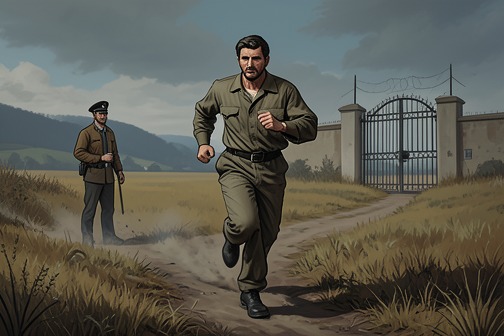
The [Long Kesh escape (1973)](entity:event-recall-event-1973-2731321e3d24) was [Brendan Hughes](entity:character-recall-character-brendan-hughes-1230acbdf136)’s escape from imprisonment after his arrival at [Long Kesh](entity:location-recall-location-long-kesh-90c48f775ab3) in July 1973. It marked a break in his incarceration, but the supplied account records the escape chiefly through its place in his chronology rather than describing its mechanics or immediate circumstances.
## Prison and Context
Long Kesh held a central place in Irish republican experience and imagination. Hughes and [Gerry Adams](entity:character-recall-character-gerry-adams-6d84cf7a2514) arrived there in July 1973. Hughes was an [Irish Republican Army](entity:organization-recall-organization-irish-republican-4bff46a4b2bf) volunteer and soldier, and his escape belongs to a period when the status of republican prisoners was contested as fiercely as their physical confinement.
## The Escape and Its Aftermath
The account identifies Hughes’s escape from Long Kesh in 1973, but does not detail the route, assistance, or precise date. It also traces a later sequence in which he used the identity Arthur McAllister and was arrested again. The escape therefore stands within a longer arc of flight, concealment, recapture, and return to imprisonment, rather than as the end of his conflict with the prison system.
## Long Kesh and Prisoner Status
The prison’s significance changed in the years around Hughes’s incarceration. After internment ended in 1975, convicted paramilitary prisoners were treated as ordinary criminals and held in individual cells in the H Blocks, rather than being permitted to associate freely as many internees had. In 1976 republican prisoners began the blanket protest, refusing prison clothing in a challenge to that criminal classification. These later developments were not the circumstances of the 1973 escape, but they show how Long Kesh became a continuing site of conflict over imprisonment, political identity, and resistance.
Event 99
Winchester Castle trial
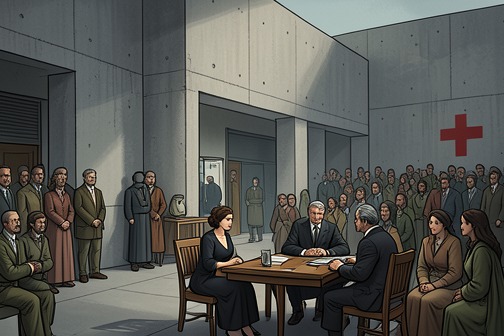
The [Winchester Castle trial](entity:event-recall-event-5c14f5fe2804) was the prosecution of [Dolours Price and Marian Price](entity:relation-recall-relation-dolours-price-and-ma-f3ddddaf4796) after the 8 March [1973 London bombings](entity:event-recall-event-1973-f95b8980e786). The sisters had been arrested at Heathrow Airport; Dolours had served as officer commanding for the operation. The trial placed their roles in the campaign before a court, while contemporary reporting also framed the women through gendered expectations.
## Background and Arrests
The case followed a planned series of [London](entity:location-recall-location-1bfd335cdd1b) bombings. The targets included the London Central Criminal Court, a British Army recruiting centre, the British Forces Broadcasting Service and [New Scotland Yard](entity:location-recall-location-new-scotland-yard-4bcbd3c3ddaf). The operation involved several cars, and police were tipped off on the morning of the attacks. The sisters were arrested at Heathrow Airport after the bombings.
[Dolours Price](entity:character-recall-character-dolours-price-f885017ba474)’s position as officer commanding distinguished her role within the operation; [Marian Price](entity:character-recall-character-marian-price-658a98519733) was also among those arrested and tried. Their subsequent custody and hunger strikes formed part of the longer aftermath of the case, but the available account does not specify the trial’s verdict or sentence.
## Proceedings and Public Framing
The trial took place at [Winchester Castle](entity:location-recall-location-winchester-castle-21b00e4ec0e0) Hall, with [Michael Mansfield](entity:character-recall-character-michael-mansfield-8ace65de6b26) acting as the Prices’ defence lawyer. The proceedings were not only a legal reckoning with the London attacks: the book’s account also identifies gendered media reporting as a feature of the sisters’ trial. Their public representation therefore became part of the event’s significance, alongside the questions of responsibility and punishment raised by the bombings.
Before the trial, the bombers attributed casualties to the police response, and the prisoners refused to wear prison uniforms. These actions carried the conflict over political status into the period surrounding the court case. The available evidence records the trial and its framing, but does not establish the court’s precise findings.
Event 100
Fermanagh and South Tyrone by-election (1981)
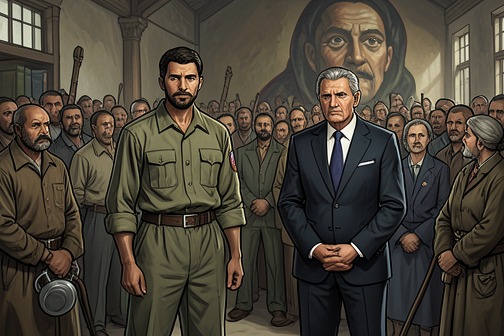
The [Fermanagh and South Tyrone by-election (1981)](entity:event-recall-event-1981-afb0d685d467) transformed a vacancy in Parliament into a test of the political force of the hunger strike. [Bobby Sands](entity:character-recall-character-bobby-sands-cb073d403dee), already refusing food in prison, stood as a candidate and won. His victory brought the Provisional IRA’s long suspicion of electoral politics into sharp tension with a new strategy: using the ballot box alongside armed struggle.
## The vacancy during the hunger strike
On 1 March 1981, Bobby Sands began his hunger strike in [Long Kesh](entity:location-recall-location-long-kesh-90c48f775ab3). Four days later, [Frank Maguire](entity:character-recall-character-frank-maguire-959d5f6d0c78), the nationalist MP for Fermanagh and South Tyrone, died. His death meant a by-election would have to be held, creating an unexpected opening while the prisoners’ protest was attracting attention. Maguire’s brother initially considered standing, but republicans approached him and urged him to reconsider, clearing the way for Sands to run from prison.
The candidacy connected two forms of political visibility: the physical vulnerability of a prisoner refusing food and the public authority attached to an elected seat. A hunger striker’s death might be endured by the [British government](entity:organization-recall-organization-66a95d21d932) as a prison protest; the prospect of an elected MP dying in custody posed a different political challenge. The campaign sought to make that contradiction impossible to ignore.
## Sands’s candidacy and victory
Sands’s run was an audacious publicity strategy, but it was also a departure from a longstanding republican reluctance to participate in parliamentary politics. For generations, abstentionism had expressed the belief that entering the political system could dilute revolutionary commitments. That suspicion had contributed to the 1969 split between the Official IRA and the Provisionals: some republicans feared the Officials had become too political and that participation would lead to accommodation.
Sands nevertheless won the by-election. The result gave the hunger strike an electoral expression and demonstrated that a candidate imprisoned and refusing food could command support at the polls. It did not end the strike or resolve the prisoners’ demands; instead, it altered the political circumstances in which the protest was understood. The ballot offered a public measure of support for a movement whose traditional strategy had been to reject parliamentary legitimacy.
## A changed republican strategy
The by-election helped establish electoral participation as a consequential part of republican politics. Its significance was not simply that a prisoner won a seat, but that the result suggested electoral action could reinforce rather than replace the movement’s other forms of pressure. In later years this approach was described through the image of the ballot paper in one hand and the Armalite in the other.
Sands died before he could take his seat. The victory therefore carried both political possibility and the cost of the hunger strike: electoral success did not save him. Yet the result remained a precedent. In 1983 [Gerry Adams](entity:character-recall-character-gerry-adams-6d84cf7a2514), Sands’s former commanding officer, stood for [Westminster](entity:location-recall-location-westminster-797ba54e0a11) representing [West Belfast](entity:location-recall-location-west-belfast-27ebba5f4bec). [Dolours Price](entity:character-recall-character-dolours-price-f885017ba474) campaigned for him and drove voters to polling stations; Adams won, while announcing that he would not attend Parliament if elected. The later campaign registered how far republican politics had moved from treating electoral participation as an unacceptable compromise.
Event 101
Brighton bombing

The [Brighton bombing](entity:event-recall-event-brighton-bombing-640093f8af98) was an attack during the Conservative Party conference in [Brighton](entity:location-recall-location-brighton-198006e5b23f) in October 1984. In the book’s account, it is associated with [Margaret Thatcher](entity:character-recall-character-margaret-thatcher-be3b0ca8af0a), but the available references do not describe the attack’s course or its immediate consequences.
## Identification and Setting
The event is identified as the Brighton bombing of October 1984 and linked to the Conservative Party conference in Brighton. This establishes its political setting, without specifying further circumstances of the attack.
## Connection to Margaret Thatcher
The book’s index places the bombing among the events associated with Thatcher’s record on [Northern Ireland](entity:location-recall-location-northern-ireland-c23b7da68651). It provides no further account of her response or of the bombing’s effects on her government.
## Place in the Account
The bombing appears as a brief point of reference rather than a developed narrative episode. Its connection to Thatcher situates it within the book’s wider treatment of political violence and the conflict, while the event’s details remain outside the supplied account.
Event 102
Enniskillen bombing
The [Enniskillen bombing](entity:event-recall-event-enniskillen-bombing-e7e12cbb1966) was a November 1987 attack associated in the book’s account with the Provisional IRA. The evidence identifies the event and its setting but does not describe how it unfolded or what followed.
## Identification and Context
The event appears in the book’s index under the Provisional IRA, alongside references to the organisation’s campaign and other bombings. This places the bombing within that account, without supplying details about its perpetrators or planning.
## Limits of the Account
The available references name Enniskillen and give November 1987 as the date. They do not specify a day, target, casualties, or immediate consequences, so those details cannot be established from the cited material.
Event 103
Gibraltar shootings (6 March 1988)
The [Gibraltar shootings (6 March 1988)](entity:event-recall-event-242479619864) were the killing of three IRA members by British forces, including [Mairéad Farrell](entity:character-recall-character-mair-ad-farrell-f1db9af9155e). The book’s index directs readers to its discussion of the event on pages 219 and 221, situating it within a history in which acts of violence remained part of an unsettled public past.
## The Shootings
The event’s identified particulars are its date, 6 March 1988, the deaths of three IRA members, and the involvement of British forces. Mairéad Farrell is named among those killed. These details establish the event’s human and political stakes without reducing it to a symbol: the account identifies people killed by state forces during the conflict.
## The Event in the Book
The book’s opening epigraph presents war as something fought first on the battlefield and then again in memory. That framing resonates with the shootings’ place in the book’s broader examination of the Troubles and their aftermath. The index’s references to pages 219 and 221 locate the event within that historical narrative, though the available account does not specify the shootings’ immediate circumstances or sequence.
## Memory after the Conflict
The book describes the post-agreement period as lacking a formal process for understanding or commemorating the Troubles. It also portrays continued political disputes over who could speak for republican history, and how that history would be remembered. In that setting, the shootings belong to a past that was not simply settled when large-scale violence subsided.
The persistence of that unresolved memory appears elsewhere in the book through contemporary commemorative practices: murals, tours of former flashpoints, and public disputes over flags and political symbols. These are not presented as consequences of the [Gibraltar](entity:location-recall-location-gibraltar-f21480db6ca2) shootings alone. Rather, they show the divided landscape in which the event is remembered, while rival accounts and political discipline continue to shape what can be said about the conflict.
Event 104
Jean McConville abduction and murder
[Jean McConville abduction and murder](entity:event-recall-event-01a9546956b7) became a defining case of the Troubles because the disappearance of a widowed mother of ten left both a family searching for her and a contested account of responsibility. The evidence gathered over decades did not settle every question: recollections and records differ over the chronology, while testimony about the IRA’s suspicions and the killing’s execution complicates any simple reconstruction.
## Background and disappearance
McConville lived with her children in [Divis Flats](entity:location-recall-location-divis-flats-f36db46c6064) in [West Belfast](entity:location-recall-location-west-belfast-27ebba5f4bec). The family’s experience of the conflict included her anxiety about the children’s safety, her help to a wounded British soldier, and her abduction and beating. The children remembered her being taken after an earlier episode in which she had gone to bingo, been seized and questioned, and later been found wandering in a daze. They believed she was abducted on 7 December 1972, the evening after that first ordeal.
The children’s account placed the first seizure in early December and the removal from the flat the following evening. They remembered their mother still nursing bruises when she was taken. The disappearance left the children without her during an already precarious period; later accounts describe their childhood in the war zone, including having to steal and scavenge for food. Their testimony became central to the effort to establish what happened, but the family’s memories did not align in every detail, including whether the younger children went to school the day after their mother was first taken.
## The disputed chronology
A review by Nuala O’Loan identified an old police log that appeared to record McConville’s first seizure. It described a beaten woman found wandering in West Belfast at 11 p.m., named as Mary McConville, with an address at St Jude’s Walk in Divis Flats. The log said that several men had accosted her and warned her to stop giving information to the military. Although the children embraced O’Loan’s report as an exoneration of their mother, this record appeared to support the claim that she had been warned by the IRA.
The log also complicated the family’s chronology. It placed the incident seven nights before 6 December, on 29 November, rather than on the date the children recalled. If that date was accurate, and McConville was taken on 7 December as the children believed, more than one night separated the warning from her abduction. That interval would make the sequence recalled by [Brendan Hughes](entity:character-recall-character-brendan-hughes-1230acbdf136)—an initial interrogation and warning, followed later by a second discovery of a radio—less difficult to reconcile with the timing. The records and memories leave the precise sequence unsettled; the children had begun giving accounts in January 1973 and consistently placed the abduction in early December.
O’Loan’s investigation raised a separate question about another memory associated with the family: the children recalled McConville helping a wounded British soldier at Divis Flats, but army records reviewed by O’Loan contained no evidence of a soldier wounded nearby. The absence of a record did not establish that the episode never happened; the documentation might have been incomplete, or the family might have placed the incident at the wrong time. The discrepancy illustrates how, in a story shaped by violence and loss, both official records and recollection have limits.
## Testimony about the killing
The IRA’s account, endorsed in [Dolours Price](entity:character-recall-character-dolours-price-f885017ba474)’s testimony, portrayed McConville as an informer who had been warned to stop assisting the British and was killed after continuing. That allegation remained disputed; the existence of a warning does not establish that she was an informer. Price’s later account added a specific sequence concerning the killing. She told [Ed Moloney](entity:character-recall-character-ed-moloney-9d7f20a1f93b) that she and others were called back to [Dundalk](entity:location-recall-location-dundalk-adc76dac93ed) after McConville had been there for about four or five days. A local unit had dug a grave, she said, but its members did not want to shoot her, which Price thought was because McConville was a woman. Moloney inferred that the others had therefore been required to carry out the killing. Price did not verbally confirm that inference, responding only with a small murmur.
Responsibility for the order was also contested. Hughes and Price both asserted that [Gerry Adams](entity:character-recall-character-gerry-adams-6d84cf7a2514) had ordered McConville’s execution; Adams was not prosecuted. In the later case against [Ivor Bell](entity:character-recall-character-ivor-bell-e3c8d255e4f4), a voice analyst judged that the interviewee identified as Z was likely Bell. The recording’s meaning remained disputed: Bell’s lawyer argued that Z expressly denied involvement in the murder, while a [Police Service of Northern Ireland](entity:organization-recall-organization-police-service-o-88a3814d22b2) detective said Z acknowledged a critical role in aiding and procuring it. Prosecutors concluded that the evidence against Adams consisted of uncorroborated allegations and would not support a successful prosecution. The difference between allegations about another person and statements potentially implicating the speaker became central to the legal aftermath.
## Oral histories and the legal aftermath
The competing accounts reached investigators and the public partly through oral-history recordings. [Anthony McIntyre](entity:character-recall-character-anthony-mcintyre-a9506a6098eb) interviewed Price for about fifteen hours for the [Belfast](entity:location-recall-location-belfast-8a60016bc9a1) Project, but those conversations did not mention McConville. A separate set of recordings, made by Moloney, did: after visiting Price at [St Patrick’s Hospital](entity:location-recall-location-st-patrick-s-hospita-13d7267c4e2a) in 2010, he recorded a long conversation and later filmed another interview in a rented flat. Price had agreed that her account would remain sealed until after her death, on terms intended to protect participants from prosecution and from reprisals within their former organizations.
The confidentiality arrangements proved vulnerable. The contracts signed by participants contained no qualification warning that a court order might override confidentiality, and no [Boston College](entity:location-recall-location-boston-college-d69f5179339f) lawyer reviewed them. After the Police Service of Northern Ireland sought Belfast Project material, a judge read the republican interviews and authorized recordings associated with five participants to be released because they mentioned McConville. Price’s inclusion did not mean that the interviews conducted by McIntyre discussed her; it was the distinct Moloney recordings that contained detailed testimony. The distinction between interviewers and recordings became consequential in the dispute over what had been promised, what could be compelled, and which account could be used in an investigation.
## Search, remembrance, and significance
McConville’s remains were discovered in 2003, but her murder remained an open criminal case. Her children continued to seek answers and to defend her name against the informer allegation. In the broader campaign for the disappeared, families used blue ribbons as symbols of remembrance and pressed publicly for information, including at a 2005 press conference at the [Linen Hall Library](entity:location-recall-location-linen-hall-library-33d460c9a337). The search for a grave to visit and the demand for an account of what had happened were inseparable from the harm caused by the disappearance.
The case brings together the conflict’s culture of silence, the risks of relying on retrospective testimony, and the unequal legal consequences of what interviewees said. The police log supports the existence of a warning but complicates the remembered dates; Price’s testimony describes a return to Dundalk and a grave already dug, yet leaves her own part in the killing unconfirmed in that exchange. The case therefore remains more than a question of who issued an order: it is also a record of a family’s prolonged search, an unresolved crime, and the limits of what oral histories and official archives can establish.
Event 105
Discovery of Jean McConville's remains (2003)
The 2003 discovery of [Jean McConville](entity:character-recall-character-jean-mcconville-defffff134a9)’s remains transformed a long-running disappearance into a confirmed death, but it did not resolve the murder or the competing accounts of how she was taken and killed. In the book, the recovery matters both as a belated answer to a family’s search and as the beginning of no final settlement: physical remains could be found while responsibility remained disputed and the conflict’s memory politically contested.
## A disappearance without an agreed account
Jean McConville was abducted in December 1972. Her disappearance left her children to live for decades with uncertainty, while rumours, gossip and the absence of an effective police investigation compounded the family’s trauma. The book places the discovery of her body in 2003, but the recovery did not by itself explain the sequence of events that led to her death or establish who bore responsibility.
The unresolved status of the case was part of a larger history. McConville was among the disappeared: people abducted and secretly buried during the conflict, whose families were left without a grave to visit or a reliable account of what had happened. The search for the missing bodies and the families’ desire for somewhere to mourn made recovery more than a forensic matter. It was also a demand that private loss be acknowledged in public.
## Recovery and the search for answers
The discovery brought the search for McConville’s remains to a close, but not the criminal case. The book identifies her murder as still an open case and traces the continuing efforts to find answers through family campaigning, official investigation and later scrutiny of testimony. The [Independent Commission for the Location of Victims’ Remains](entity:organization-recall-organization-independent-comm-50ecea2ebf16) was involved in the wider search for the disappeared, while McConville’s children continued to press for an account of their mother’s fate.
The difference between finding a body and establishing a trustworthy chronology is clear in the disputes over McConville’s abduction. Her children remembered that she was taken in early December, and believed the abduction occurred on 7 December 1972. A police log later found by Nuala O’Loan recorded a beaten woman, identified as Mary McConville but linked to Jean by her address at St Jude’s Walk, wandering in [West Belfast](entity:location-recall-location-west-belfast-27ebba5f4bec) at 11 p.m. The entry said that men had warned her to stop giving information to the military. O’Loan’s report placed this episode on 29 November, rather than 6 December as the children’s recollection suggested. If the log’s date was right, several days—not one night—may have separated the warning from the abduction. The remains’ discovery could not settle that disagreement about the events preceding it.
## Testimony, allegation and uncertainty
Later accounts offered further explanations, but they did not all carry the same evidentiary status. In a separate interview recorded by [Ed Moloney](entity:character-recall-character-ed-moloney-9d7f20a1f93b), [Dolours Price](entity:character-recall-character-dolours-price-f885017ba474) said that she and others had been called back to [Dundalk](entity:location-recall-location-dundalk-adc76dac93ed) after McConville had been there for four or five days. Price described a grave already dug by the local unit and said its members had not wanted to shoot McConville; when Moloney suggested that Price’s group had to do it, she did not answer in words, making only a small murmur. This was a recorded account of involvement, not an independent resolution of who ordered the killing or of every disputed detail.
The book also sets such testimony against the difficulty of reconstructing the past from memory and documents. The [McConville children](entity:character-recall-character-1903e5824008)’s account of the dates differed from the police log, while their recollections of their mother’s disappearance remained emphatic. The story of her helping a wounded British soldier, remembered by several children, was not corroborated by the army records O’Loan consulted. These uncertainties do not erase the recovery or the family’s loss; they show why the remains could confirm a death without producing a single uncontested narrative of the case.
## Public memory after the discovery
The recovery belonged to a broader effort by families to make the disappeared visible. Blue ribbons became symbols of remembrance, and relatives held a press conference at the [Linen Hall Library](entity:location-recall-location-linen-hall-library-33d460c9a337) in 2005. Their demand was not only for information but for a grave to go to. In this sense, McConville’s remains joined a physical place of mourning to a public campaign for answers.
That campaign unfolded in a society without a formal process for deciding how the Troubles should be understood or commemorated. The [Good Friday Agreement](entity:event-recall-event-good-friday-agreement-f0a8e2fc0bef) created power sharing, but the conflict ended in stalemate rather than an acknowledged victory for either side. Political narratives continued to shape what could be said: Sinn Féin’s leadership was described as maintaining a strong account of republican history, while critics such as [Brendan Hughes](entity:character-recall-character-brendan-hughes-1230acbdf136), Dolours Price and [Anthony McIntyre](entity:character-recall-character-anthony-mcintyre-a9506a6098eb) challenged its unwillingness to tolerate dissent. The remains’ discovery therefore resolved the question of where McConville’s disappearance had ended, but not the larger contest over who could speak for the past, whose account would be believed, or whether the family would receive a full accounting.
Event 106
Massereene Barracks murders (7 March 2009)
The [Massereene Barracks murders (7 March 2009)](entity:event-recall-event-2009-da9b7290b898) were a lethal shooting marked by the speed and volume of the attack: more than sixty rounds were fired in half a minute. Two soldiers died and two others were wounded, making the incident a concentrated act of violence with consequences beyond its immediate victims.
## The Attack
The shooting’s scale is captured by the reported volley of more than sixty rounds in thirty seconds. The brief interval between the opening and the end of the gunfire gives the attack its defining character: intense, rapid violence rather than a prolonged exchange.
## Casualties and Significance
Two soldiers were killed, while two other soldiers were wounded. The distinction between those killed and those who survived underscores the human cost of the shooting; the available account establishes these casualties but does not supply further detail about the circumstances of each person’s injuries or the course of the attack.
Event 107
Queen Elizabeth II's visit to Ireland (May 2011)
[Queen Elizabeth II's visit to Ireland (May 2011)](entity:event-recall-event-0bdad90969f1) is presented through its public reception and its place in the book’s later chronology. The available account records that [Dolours Price](entity:character-recall-character-dolours-price-f885017ba474) welcomed the visit, setting that response against contemporary reports of a major terror alert and of growing popular regard for the Queen.
## A visit under security alert
A Daily Express report cited in the book framed the Queen’s arrival in [Ireland](entity:location-recall-location-ireland-3247a2c8bcbe) against a major terror alert. The visit therefore enters the narrative not simply as a royal appearance, but as a public occasion taking place amid continuing security concerns. The material does not detail the itinerary or specific incidents during the visit.
## Public reception
The book also cites a Guardian report published on 19 May 2011, two days after the Daily Express report. Its headline described a show of respect as turning the Queen into a runaway favourite. Alongside that account of public reception, the narrative notes that Dolours Price welcomed the visit, a response that places her in the book’s account of changing attitudes toward the monarchy and the peace-era public landscape.
## Later historical context
The visit is indexed to pages 355–56 and is set in a period when public gestures involving former republican leaders and the monarchy carried particular weight. The book later notes that [Marian Price](entity:character-recall-character-marian-price-658a98519733) was still in prison in June 2012, when the Queen and [Martin McGuinness](entity:character-recall-character-martin-mcguinness-d891600c5db8) took part in their historic handshake. That later event is distinct from the 2011 visit, but the contrast places the visit within a continuing sequence of changing public relations and unresolved personal circumstances.
Event 108
Historic handshake between Elizabeth II and Martin McGuinness (2012)
The 2012 handshake between Elizabeth II and [Martin McGuinness](entity:character-recall-character-martin-mcguinness-d891600c5db8) brought a former IRA leader and the British monarch into a single, highly visible encounter. The book marks it as a historic gesture within the longer shift from armed struggle toward political engagement, while the fact that [Marian Price](entity:character-recall-character-marian-price-658a98519733) remained in prison offers a stark reminder that this transition did not resolve every conflict or consequence.
## The Encounter
The surviving references identify the central action plainly: Elizabeth II shook Martin McGuinness’s hand in 2012. They do not provide the setting, the words exchanged, or the participants’ reactions, so the event’s significance rests here on the identities brought together and on the book’s placement of the handshake within its account of political change.
## From Protest to Political Strategy
The handshake belongs to a history in which peaceful protest and armed action had both been pursued as routes to change. In 1969, student marchers set out from [Belfast](entity:location-recall-location-belfast-8a60016bc9a1) to [Derry](entity:location-recall-location-derry-d46e7068265a) to protest discrimination against Catholics; some believed peaceful protest could redraw the conflict’s divisions, but the violence at [Burntollet Bridge](entity:location-recall-location-burntollet-bridge-7dc489249792) helped convince [Dolours Price](entity:character-recall-character-dolours-price-f885017ba474) that marching alone would not bring the change [Ireland](entity:location-recall-location-ireland-3247a2c8bcbe) needed. In 1971, she joined the IRA as a full member, insisting that she wanted a fighting role rather than a place in its female auxiliary.
The book also traces a later turn toward electoral politics. After [Bobby Sands](entity:character-recall-character-bobby-sands-cb073d403dee)’s candidacy from prison helped make an electoral strategy newly consequential, Price canvassed for [Gerry Adams](entity:character-recall-character-gerry-adams-6d84cf7a2514) in 1983 and drove voters to polling stations. The handshake between Elizabeth II and Martin McGuinness appears against this larger movement from protest and armed action toward political participation and public contact across a former divide.
## A Gesture Amid Unfinished Consequences
The book’s brief reference to the handshake sits beside another fact about 2012: Marian Price was still in prison. That contrast keeps the encounter from standing as a simple resolution. The handshake could register a changed political landscape, but its appearance alongside continuing imprisonment shows that the legacies of the conflict remained present even as political relationships took new forms.
Event 109
Belfast City Hall flag protests (2012–2013)
The [Belfast City Hall flag protests (2012–2013)](entity:event-recall-event-896f8dc7b5f5) turned a council decision about the Union Flag into a public confrontation, with protesters storming City Hall and a later riot in [East Belfast](entity:location-recall-location-east-belfast-88a3f99c3f0f). The episodes placed disputes over national identity and commemoration in the visible civic spaces of a still-divided [Northern Ireland](entity:location-recall-location-northern-ireland-c23b7da68651).
## Background and Setting
The immediate context was a [Belfast](entity:location-recall-location-belfast-8a60016bc9a1) City Council vote concerning the flag displayed at City Hall. The recorded protests show how a decision about a public emblem could become a point of wider contention in a society where historical commemoration and communal division remained politically charged. The book places the dispute against Northern Ireland’s longer history of contested identity, but does not present the earlier civil-rights march or its causes as the direct trigger for this later protest.
## Course of the Protests
The chronology links the council vote with two distinct episodes: on 3 December 2012, protesters stormed Belfast City Hall; on 15 January 2013, a riot broke out in East Belfast amid the Union Flag dispute. Together, the reports trace the movement of the controversy from a decision inside local government to confrontations in and around civic space. The evidence identifies these events but does not specify the vote’s precise terms or provide a detailed account of the protests’ participants and tactics.
## Significance
The protests brought the fragility of civic agreement into view: a council decision about a flag became a flashpoint beyond the council chamber. Set alongside the book’s account of Northern Ireland’s still-divided society and its longstanding rituals of commemoration, the dispute illustrates how symbols remained entangled with competing understandings of the past and of political belonging. The available account establishes the protests’ public escalation, but does not describe a final settlement or their longer-term consequences.
Event 110
Gerry Adams arrest (2014)
The 2014 arrest of [Gerry Adams](entity:character-recall-character-gerry-adams-6d84cf7a2514) over the murder of [Jean McConville](entity:character-recall-character-jean-mcconville-defffff134a9) turned a decades-old disappearance into a test of how [Northern Ireland](entity:location-recall-location-northern-ireland-c23b7da68651) could investigate its violent past. The inquiry drew on disputed recollections and [Belfast](entity:location-recall-location-belfast-8a60016bc9a1) Project interviews, but the arrest did not resolve whether Adams had ordered the killing; prosecutors later concluded that the allegations against him were uncorroborated.
## Background: a past left open
The [Good Friday Agreement](entity:event-recall-event-good-friday-agreement-f0a8e2fc0bef) prioritized a shared political future over a formal reckoning with past violence. It provided for the release of paramilitary prisoners held at the time and capped future sentences for Troubles-related crimes at two years, but established no truth-and-reconciliation process and no general exchange of testimony for legal immunity. Because [The Troubles](entity:state-recall-state-the-troubles-358150e12a16) had not been declared a war, murders such as Jean McConville’s remained open criminal cases rather than being handled as war crimes. A limited amnesty applied to people who voluntarily gave authorities information to help recover the bodies of the disappeared; it did not create a broad mechanism for resolving responsibility for killings.
That framework left police investigations and prosecutions to proceed case by case, amid continuing disagreement over who should be held accountable. By 2018, the [Police Service of Northern Ireland](entity:organization-recall-organization-police-service-o-88a3814d22b2)’s legacy unit had a backlog of nearly a thousand cases. The arrest of a prominent republican leader over an old killing thus took place within a system that was still investigating the conflict without a shared procedure for dealing with its history.
## The McConville evidence and its uncertainties
The case rested in part on accounts whose details remained contested. The [McConville children](entity:character-recall-character-1903e5824008) said their mother was abducted in early December 1972, and believed the date was 7 December. A police log later found by Nuala O’Loan recorded that a woman identified as Mary McConville had been found beaten and warned to stop giving information to the military; her address showed that she was Jean. The log dated that incident to 29 November, seven nights earlier than the children’s recollection of the episode. If the log was accurate and the abduction date remembered correctly, more than one night separated the warning from her disappearance, a chronology closer to [Brendan Hughes](entity:character-recall-character-brendan-hughes-1230acbdf136)’s account than the family’s initial sequence suggested. The records complicated rather than settled the competing versions.
The Belfast Project recordings added another layer. [Dolours Price](entity:character-recall-character-dolours-price-f885017ba474) did not discuss McConville in her recorded interviews with [Anthony McIntyre](entity:character-recall-character-anthony-mcintyre-a9506a6098eb), but she later gave [Ed Moloney](entity:character-recall-character-ed-moloney-9d7f20a1f93b) a separate, detailed account under an agreement to keep it confidential until her death. Price said that she and others were called back to [Dundalk](entity:location-recall-location-dundalk-adc76dac93ed) after McConville had been held there for four or five days; a local unit had dug a grave, but its members did not want to carry out the killing. Brendan Hughes and Price both maintained that Adams had ordered the murder. Those statements were allegations, not a judicial finding.
## Arrest, public response, and prosecutorial outcome
After the Police Service of Northern Ireland questioned Adams, his file was sent to prosecutors. The handling of the case itself raised questions about institutional entanglements: the director of public prosecutions recused himself because his father had previously represented Adams. The recordings also produced conflicting interpretations in the prosecution of [Ivor Bell](entity:character-recall-character-ivor-bell-e3c8d255e4f4). A voice analyst judged that the speaker identified as Z was likely Bell; Bell’s counsel argued that Z explicitly denied involvement in McConville’s murder, while a police detective who had heard the interview said the speaker acknowledged a critical role in aiding and procuring it. The dispute illustrated how the same oral-history material could be read differently in a criminal investigation.
Prosecutors assessed the evidence against Adams as uncorroborated allegations and concluded it would not support a successful prosecution. The outcome exposed an asymmetry: testimony that implicated its speaker could be used in a prosecution, while testimony accusing someone else might not meet the threshold. The arrest therefore placed Adams under criminal investigation without establishing his responsibility for the murder.
The public response made the political stakes visible. On 3 May 2014, [Martin McGuinness](entity:character-recall-character-martin-mcguinness-d891600c5db8) addressed a rally demanding Adams’s release, with [Divis Tower](entity:location-recall-location-divis-tower-1ee16b53cafa) visible in footage of the gathering; [Bobby Storey](entity:character-recall-character-bobby-storey-0e12f5aacfe4) also spoke. The rally connected the immediate demand for release to a longer dispute over whether investigations of conflict-era crimes were being conducted fairly. The arrest did not supply the missing, comprehensive process for examining the past. Instead, it showed how an unresolved killing, confidential interviews, contested memories, and ordinary criminal law could converge in a case that left accountability disputed.
Event 111
Ivor Bell trial in the McConville case
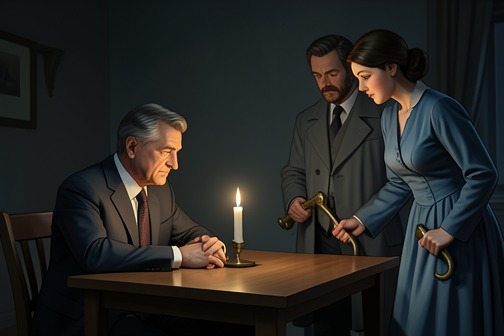
The [Ivor Bell trial in the McConville case](entity:event-recall-event-1fe53d82b247) brought the [Belfast](entity:location-recall-location-belfast-8a60016bc9a1) Project’s secret oral histories into a criminal prosecution and made the archive’s weaknesses part of the case itself. Bell faced allegations concerning the murder of [Jean McConville](entity:character-recall-character-jean-mcconville-defffff134a9), but the prosecution had to establish both that a coded interview belonged to him and that its contents supported the charge. The disputes over identity, reliability and what the recording meant showed how a testimony could carry historical weight without necessarily resolving what a court could prove.
## Background and the case
Bell was one of the few people willing to recount his [Irish Republican Army](entity:organization-recall-organization-irish-republican-4bff46a4b2bf) career in an oral history conducted by [Anthony McIntyre](entity:character-recall-character-anthony-mcintyre-a9506a6098eb) for the Belfast Project. In court, prosecutors pointed to a participant identified as Z, whose interview they said acknowledged a role in the McConville murder. The charges against Bell changed from aiding and abetting to soliciting the murder. The case therefore depended not only on the account’s substance but on connecting its anonymous speaker to the defendant.
The prosecution decision was reported on 4 June 2015. Bell’s lawyer, Peter Corrigan, challenged the use of the [Boston College](entity:location-recall-location-boston-college-d69f5179339f) tapes, arguing that the archive was an academic project riddled with inaccuracies and that its subjective material did not meet the standards required in a criminal case. Corrigan also maintained that Bell had not been in Belfast during the period in 1972 when McConville was abducted and could produce an alibi. These objections put the archive’s research purpose and its evidentiary limits at the centre of the proceedings.
## The coded interview and the missing record
The Belfast Project kept interviewees’ real names apart from the recordings and transcripts, using alphabetic code names in the materials logged at Boston College. Separate forms linked each code to an actual person. Because those forms were sensitive, they had been delivered by hand to Bob O’Neill, director of the [Burns Library](entity:organization-recall-organization-burns-library-e3e94d38888b). By the time of the prosecution, Boston College had lost some of them, including the form for Z. Prosecutors could not produce a document establishing that Z was Bell.
The gap mattered because the project’s organizers knew the identities but declined to assist the court in identifying participants. [Ed Moloney](entity:character-recall-character-ed-moloney-9d7f20a1f93b) and McIntyre made clear that they would not cooperate. A voice analyst was called, and testified that Z was likely Bell. Corrigan argued that even if the speaker were identified as his client, the recording did not implicate Bell in the murder. A [Police Service of Northern Ireland](entity:organization-recall-organization-police-service-o-88a3814d22b2) detective who had heard the interview interpreted it differently, saying the speaker acknowledged a critical role in aiding, abetting, counselling and procuring the murder. The same recording thus became the focus of two distinct questions: who was speaking, and what that person had admitted.
The archive’s vulnerability had been visible before Bell’s case. The participant agreements promised confidentiality until after interviewees’ deaths, but the signed contracts did not qualify that promise by warning that a court order might override it. Although the proposed wording had been sent to O’Neill with a suggestion that university lawyers review it, no lawyer at Boston College reviewed the agreements. In a separate subpoena proceeding, the judge examined the republican interviews himself over several days and found that six participants mentioned McConville; recordings associated with five were authorized for release. The confidentiality promise, the archive’s coding system and its missing identity documents all became consequential once police and prosecutors sought material for an investigation.
## Testimony, timelines and what the recordings contained
The contents of the oral histories were not interchangeable. In roughly fifteen hours of recorded conversations with McIntyre, [Dolours Price](entity:character-recall-character-dolours-price-f885017ba474) did not mention McConville. Moloney, however, later conducted separate interviews with Price, including a recorded conversation at [St Patrick’s Hospital](entity:location-recall-location-st-patrick-s-hospita-13d7267c4e2a) and a filmed interview in a rented flat. In those conversations she discussed McConville’s disappearance in detail. Price told Moloney that she and others had been called back to [Dundalk](entity:location-recall-location-dundalk-adc76dac93ed) after McConville had been held there for about four to five days; she said a local unit had dug a grave but had not wanted to carry out the killing, and that they were then required to do it. This was a separate account, not a passage from the McIntyre interview at issue in the arguments about Z.
The wider record also contained a disputed chronology. McConville’s children said she was taken on 7 December 1972, after an earlier evening when she was seized, questioned and beaten and then returned home. A police log recovered by Nuala O’Loan described a beaten woman found wandering in [West Belfast](entity:location-recall-location-west-belfast-27ebba5f4bec) at 11 p.m., listed as Mary McConville but bearing Jean’s address at St Jude’s Walk. It recorded that men had warned her to stop giving information to the military. The log placed that episode on 29 November, seven nights before the date the children believed their mother was abducted. If the log was reliable and the children’s abduction date accurate, the interval between the warning and the abduction could have been longer than one night, making the timeline recalled by [Brendan Hughes](entity:character-recall-character-brendan-hughes-1230acbdf136) more plausible. The records did not settle the disagreement; they made the sequence itself an issue to be assessed.
## The limits of prosecution and the unresolved past
The allegations against [Gerry Adams](entity:character-recall-character-gerry-adams-6d84cf7a2514) raised a different evidentiary problem. Brendan Hughes and Price maintained that Adams had ordered the murder, but prosecutors concluded that the evidence against him consisted of uncorroborated allegations and would not support a prosecution. The account of the case draws a sharp distinction between a recording said to implicate its own speaker and one that accuses someone else: Bell could face prosecution on the former, while the allegations against Adams did not meet the threshold described by prosecutors. That contrast was not a final historical finding about who ordered the killing; it was a limit on what the prosecution believed it could establish.
The proceedings unfolded in a society without an agreed mechanism for dealing with conflict-era crimes. Investigations, inquests and special inquiries addressed cases individually, while the Police Service of Northern Ireland maintained a legacy unit with a backlog of nearly a thousand cases. Bell’s case therefore became more than a dispute about one interview: it exposed how lost records, promises of secrecy, contested memories and unevenly corroborated accusations could shape whether old allegations reached court. The evidence presented here records the prosecution and its contested basis, but does not establish a verdict in Bell’s trial.
Event 112
Recovery of Joe Lynskey's remains
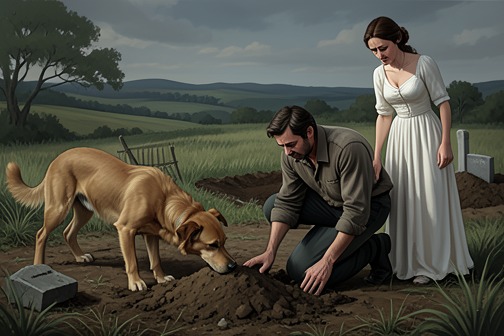
The [Recovery of Joe Lynskey's remains](entity:event-recall-event-d05c5ce05ed4) was the culmination of a search for an IRA disappeared victim whose body had been secretly buried. The search moved from preliminary work with a sniffer dog in 2014 to the discovery of remains and, by September 2015, a proper burial. Its importance lay not only in locating a body: recovery gave the family a place and occasion for mourning, while bringing one unresolved disappearance into public view.
## The search begins
In November 2014, preliminary work to recover Lynskey’s remains began with the assistance of a sniffer dog. The reporting followed the search as a process rather than a single discovery. By early December, Lynskey’s niece was described as hopeful as the dog aided the effort, a small but significant change in a case defined by the absence of a body and certainty about its whereabouts.
The search continued into 2015. In June, families of two IRA disappeared victims visited a search site, and an interview with investigator Geoff Knupfer recorded the brief exclamation, “Something’s here!” The phrase captures the sudden change in a search conducted through patient preliminary work: a place that had yielded no answer could now offer physical evidence. The available account does not specify the precise circumstances or date of the recovery, so the discovery is best understood through the sequence of reports rather than a more exact reconstruction.
## Recovery and burial
By September 2015, investigators had discovered Lynskey’s remains, and the reporting marked the outcome as the recovery of a disappeared man for proper burial. That distinction matters. The search did not undo the killing or the years in which Lynskey’s family lacked his body; it changed what could happen after that absence. The remains could be returned to the human and communal practices of burial, rather than remaining hidden and unresolved.
The family’s presence at the site connected the investigation to the people who had lived with the disappearance. Their hope during the dog-assisted search and their later visit were not substitutes for forensic findings, but they show how the search carried both an investigative and a personal burden. The eventual burial offered a concrete end to the search even as it could not settle every question surrounding Lynskey’s death.
## Disappearance and public memory
The book places Lynskey among the IRA disappeared and notes that he was not on the official list of disappeared victims. That detail underlines the unevenness of public recognition: a person could be known through accounts of the conflict and still remain outside the category through which disappearances were publicly acknowledged. Finding his remains made the absence materially undeniable and enabled a proper burial, but it did not by itself provide a complete accounting of responsibility.
The recovery also belongs to the wider post-conflict struggle over memory. The peace settlement left [Northern Ireland](entity:location-recall-location-northern-ireland-c23b7da68651) without a formal process for understanding or commemorating the Troubles, while political denials and the [Republican code of silence](entity:state-recall-state-republican-code-of-sile-635c6299405d) continued to shape what could be said. Against that background, a search site, the work of investigators, the family’s visits and the recovered remains became part of a different kind of record: not a resolution of the conflict’s contested histories, but an answer to the most immediate question left by Lynskey’s disappearance—where his body could be found and how he could finally be buried.
Event 113
Discovery of the remains of Seamus Wright and Kevin McKee (2015)

The [Discovery of the remains of Seamus Wright and Kevin McKee (2015)](entity:event-recall-event-c55e5580fb60) brought an end to the unresolved absence of two men who had been secretly buried during the conflict. Their remains were found in 2015; their families later visited the site, and the discovery made a proper burial possible. In a book attentive to the long afterlife of violence, recovery is both a concrete change in the families’ circumstances and a turn from uncertainty toward mourning.
## The Long Absence
The book’s index records Seamus Wright and [Kevin McKee](entity:character-recall-character-kevin-mckee-2ebb49a4613c) among those whose remains were discovered in 2015. The discovery mattered because it changed the status of their disappearance: their families no longer faced only an absence without a known burial place. The available account does not give the precise circumstances of the search or identify the site, so the event is conveyed chiefly through its consequence—the recovery of the bodies and the possibility of a proper burial.
## Families at the Site
The event entered public view through reports of the families visiting the site. A report dated 26 June 2015 describes the families of two IRA disappeared visiting it; a later report, dated 16 September, praised their courage and resilience as one of the men finally received a proper burial. These accounts mark distinct stages in the aftermath: first, relatives’ encounter with the place where the remains had been found; then, burial, which gave mourning a public and physical form.
## Recovery and the Record of the Conflict
The discovery belongs to the broader history of the disappeared: people abducted, killed and secretly buried, whose families were left without the ordinary knowledge and rituals associated with death. The book frames the conflict’s aftermath as a struggle over memory as well as a political settlement. It notes that the [Good Friday Agreement](entity:event-recall-event-good-friday-agreement-f0a8e2fc0bef) did not establish a formal process for deciding how the Troubles should be understood or commemorated, while silence and competing accounts continued to shape public life. In that context, finding Wright and McKee’s remains did not by itself resolve every question about the past, but it made a long-denied act of mourning possible.
## Significance
The book’s epigraph observes that wars are fought again in memory. The recovery of Wright and McKee’s remains gives that idea a specific human consequence: a secret burial becomes a known site, and an unresolved absence can move toward funeral and remembrance. The account emphasizes the families’ visit and the eventual proper burial rather than supplying a complete reconstruction of the men’s deaths. Its restraint leaves the discovery’s significance in the change it brought to the living: the dead could be mourned, and their families could return to them in a place rather than only in memory.